


Victorian Wooden Rocking Horse
A victorian wooden rocking horse is a substantial antique toy built for play and display, combining carved pine and genuine horsehair.
Victorian Wooden Rocking Horse
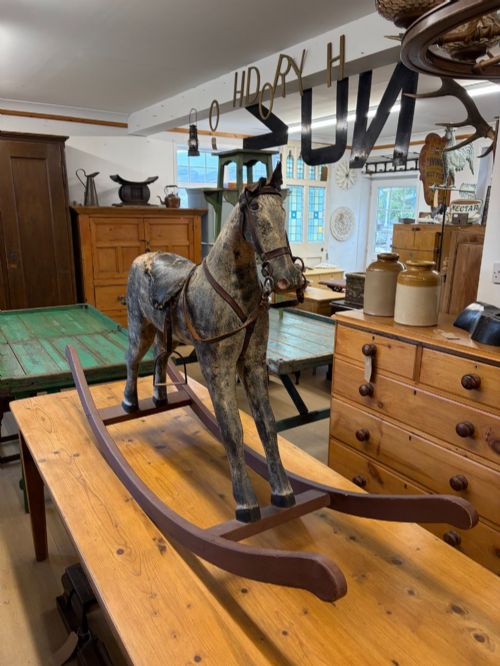
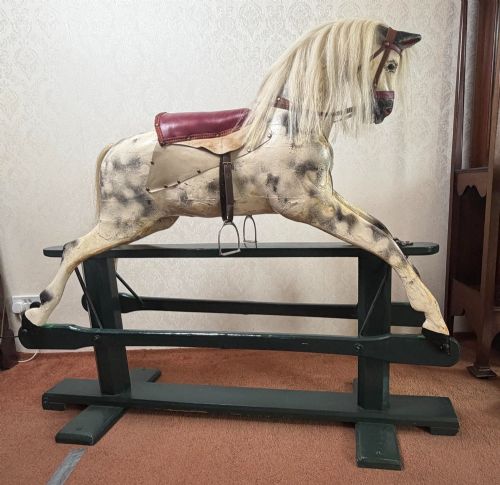
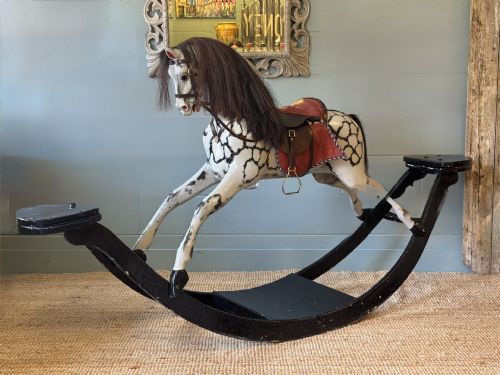
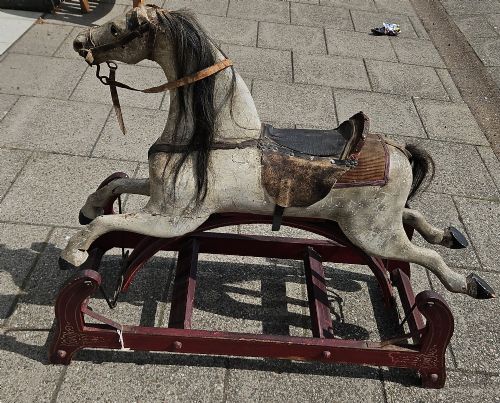
A victorian wooden rocking horse brings nineteenth-century craftsmanship directly into a room, taking the form of a carved ride-on toy mounted on either curved wooden rockers or a safety stand. These pieces range from primitive folk art examples to large, finely painted creations.
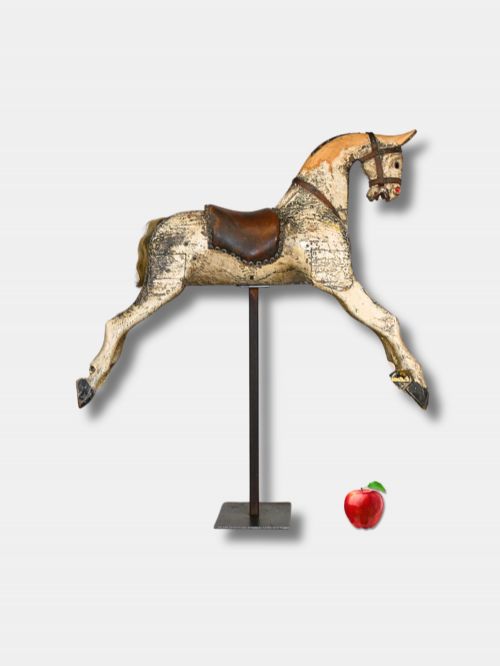
The pieces on this page span the nineteenth century and the early twentieth century, showing styles such as victorian folk art and edwardian variants. Most examples utilise pine and wood, often retaining traces of original paint alongside leather tack and metal components.
Evaluating quality and condition
Quality rests upon the depth of the carving in the head and body, alongside the survival of original paint surfaces rather than later repainting. Stronger examples retain their authentic structural integrity and original tack.
Proportion and scale also separate simpler naive or primitive works from the sophisticated output of major workshops. The presence of an original rocker base or maker's platform elevates the piece considerably.
Listings feature items built from pine, leather, horsehair, and iron, spanning the nineteenth and twentieth centuries.
G & J Lines of London·F.H. Ayres·Collinson
The Victorian Wooden Rocking Horse Glossary
- Folk art
- Objects created by self-taught or traditional artisans outside academic traditions, often seen in naive wooden rocking horses.
- Original paint
- The initial decorative or protective coating applied to the wood, highly prized by collectors for its historical authenticity.
- Safety stand
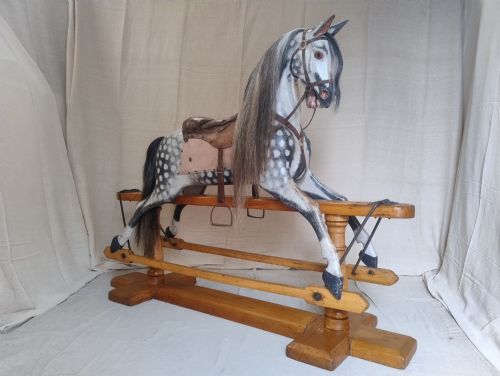
- A rigid wooden frame holding the horse securely via swinging iron irons, preventing the tipping associated with curved rockers.
- Dappled
- A painted spotting technique mimicking grey horse coats, commonly utilised on nineteenth-century ride-on toys.
- Tack
- The harness, reins, and saddle fitted to the horse, frequently constructed from leather and metal.
Victorian Wooden Rocking Horse: Frequently Asked Questions
How do I clean a wooden rocking horse?
Dust the surfaces gently with a dry, soft cloth to remove everyday accumulation without harming the finish. Avoid using modern chemical polishes or water on antique paint and leather.
Inspect the horse periodically to ensure leather tack and metal fixings remain stable. Keeping the piece away from direct sunlight and damp conditions preserves the wood and horsehair.
Were these horses meant for children?
Workshop pieces and simpler folk art examples served primarily as robust toys for nineteenth-century children. Their solid pine construction handled years of active play in nurseries.
Over time, many survived to become decorative objects in domestic interiors. Their scale and presence make them striking focal points in a modern room.
How can I tell an early horse?
Earlier pieces often display primitive or naive carving characteristics combined with early nineteenth-century paint finishes. Construction methods on older examples rely on hand-forged iron and heavy timber.
Later Victorian and Edwardian horses from established makers tend to show more anatomical refinement and standardised stand designs. Examining the underlying wood and fasteners reveals clues about the manufacturing date.
What is the difference between stands and rockers?
Traditional curved wooden rockers allow the horse to move back and forth across the floor during play. This classic format requires adequate clearance space in a room.
Safety stands keep the horse in a fixed footprint while swinging on iron links. This innovation arrived later in the nineteenth century to prevent the toy from tipping over.