
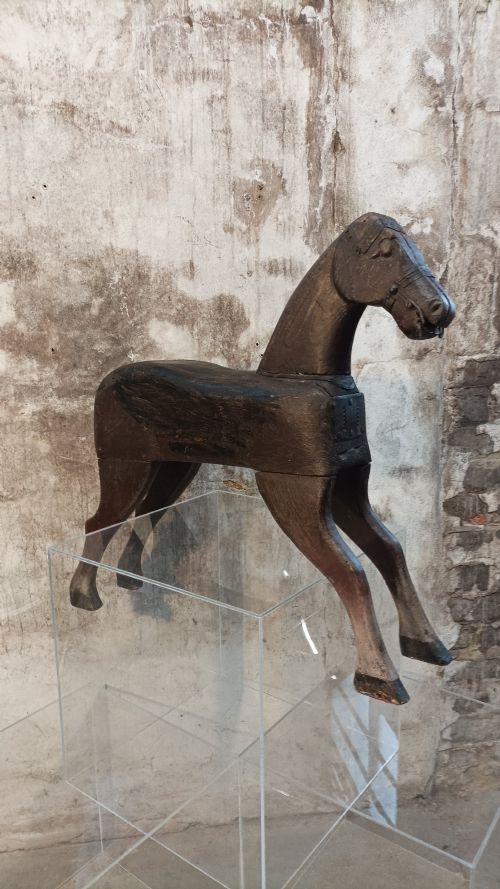


19th Century Toy Horse
These 19th century toy horse examples capture the carved movement and hand-painted folk character that collectors prize for nursery displays.
19th Century Toy Horse
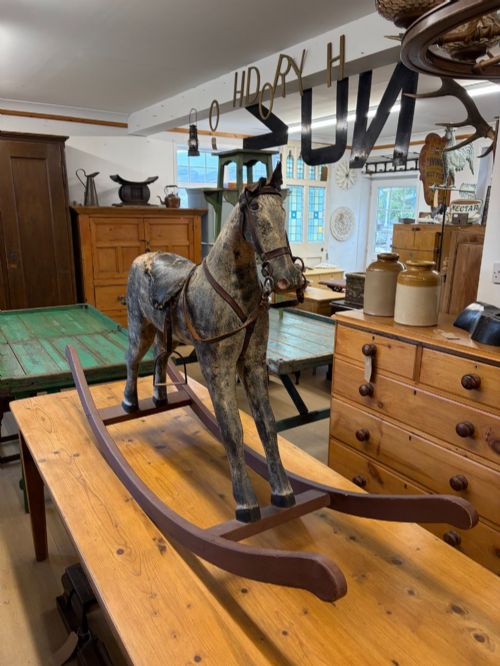
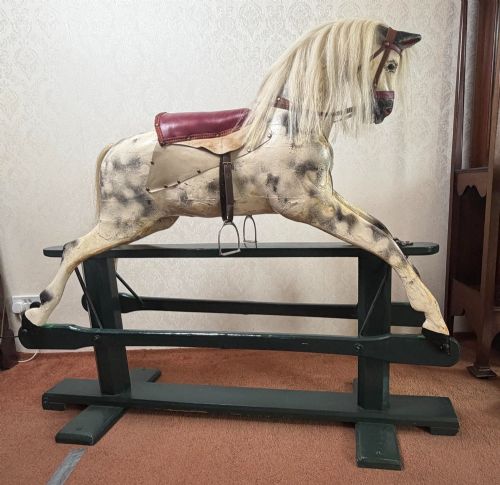
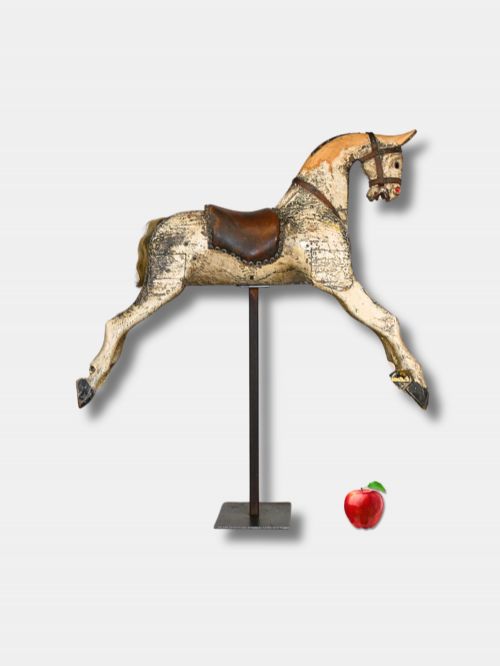
A 19th century toy horse brings domestic history into focus through carved wood and painted surfaces designed for children's play. When you examine this phrase, you find everything from large rocking horses on stands to small pull-along toys and decorative sculptures.
The versions you are most likely to meet on this page are carved wooden rocking horses and simpler pull-along toys from the Victorian era. These pieces often show naive folk art charm rather than factory-standard symmetry, reflecting the hand of local makers.
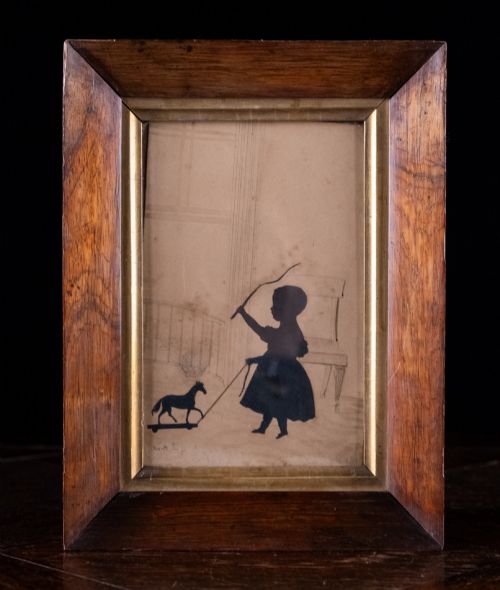
Many examples retain traces of original paint, leather tack, and horsehair manes that document how children engaged with toys generations ago. Alongside standard rockers, you will encounter framed silhouette artwork and unusual ride-on mechanisms like chain-driven tricycles.
How they were made
Makers fashioned these toys primarily from carved wood, using iron for braces and mechanisms, and mounting them on sturdy wooden rockers or stands. Carpenters and toy-makers shaped the bodies by hand before applying layers of paint to finish the surface.
Finishing details relied on organic materials such as leather for saddles and real horsehair for manes and tails. Artisans often added paper and ink details on related artwork pieces to capture the silhouette of child and horse together.
Some children in the eighteen-eighties rode iron-framed mechanical horses driven entirely by bicycle chains.
What varies in quality
Quality rests heavily on the survival of original painted surfaces and the integrity of the carved wooden structure. Pieces that retain their original rockers, leather tack, and horsehair stand apart from those with later replacements or heavy restoration.
The sophistication of the carving distinguishes workshop output from simpler naive folk art pieces. Well-proportioned anatomical carving by known makers commands greater attention than utilitarian workshop examples.
G J Lines·Augustin Edouart
The 19th Century Toy Horse Glossary
- Rocking Horse
- A carved wooden toy horse mounted on curved wooden rockers or a safety stand designed for children to ride. These objects form the largest category within nineteenth-century toy horses.
- Pull-Along Toy
- A smaller toy horse fitted with wheels or mounted on a platform so a child could drag it along the floor. These often date from the late nineteenth century.
- Folk Art
- Objects created by self-taught or traditional craftsmen outside academic artistic traditions. The naive proportions and direct carving methods define this style.
- Original Paint
- The initial surface coating applied by the maker, highly prized by collectors for its authenticity. Surviving early paint layers add significant character to wooden sculptures.
19th Century Toy Horse: Frequently Asked Questions
How do I date a toy horse?
Dating relies on construction methods, tool marks, and the style of the carved wood. Examining paint layers and iron hardware also helps narrow the decade of production.
Comparison with documented examples from periods like the Victorian era provides further context for specific workshop practices.
Were these toys meant for play?
Most pieces served as durable playthings for children in nurseries and parlours. Sturdy construction in wood and iron allowed them to withstand heavy daily use.
Over time, surviving examples transitioned from active playthings into decorative folk art sculptures and collector items.
How do I care for original paint?
Protect fragile surfaces by keeping wooden toys away from direct sunlight and damp environments. Stable indoor humidity prevents the flaking of old paint and horsehair.
Avoid using harsh modern cleaning products on antique wooden sculptures, relying instead on gentle dusting with a dry cloth.
What is the difference between folk art and standard toys?
Folk art pieces display naive proportions and individual hand-carved details from local artisans. They lack the uniform standardisation seen in later commercial factory production.
Standard toys followed specific trade patterns, whereas folk art versions reflect the unique artistic expression of their maker.