

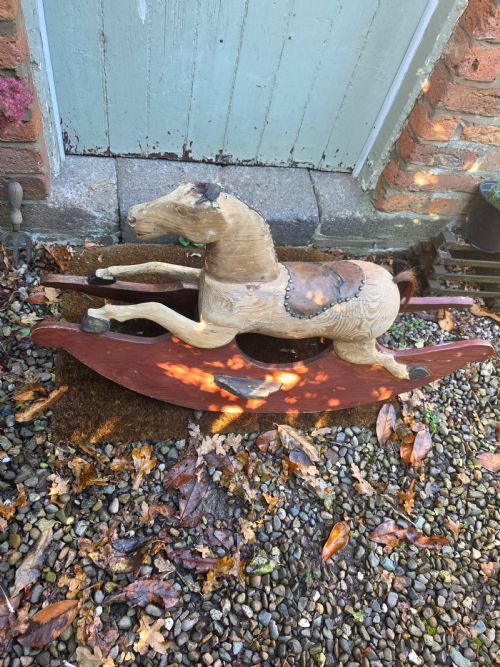
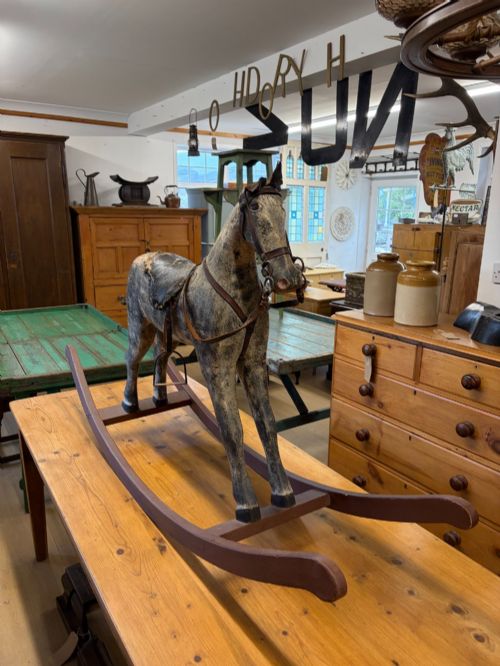
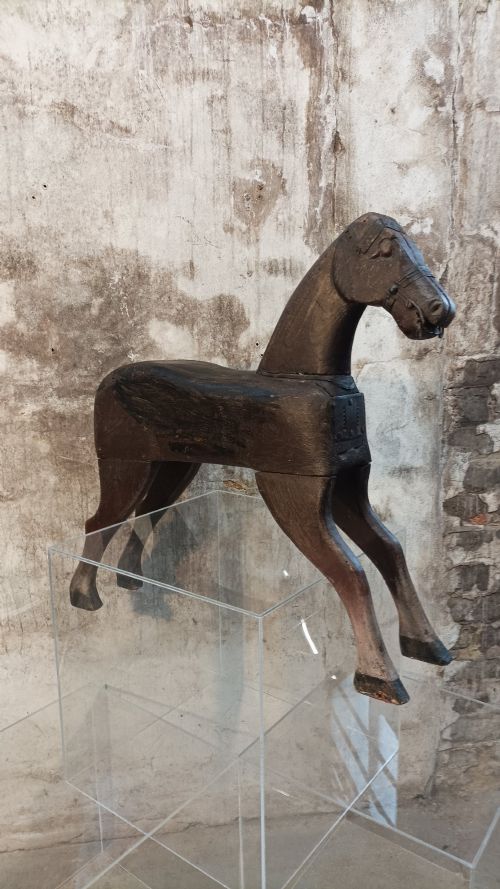
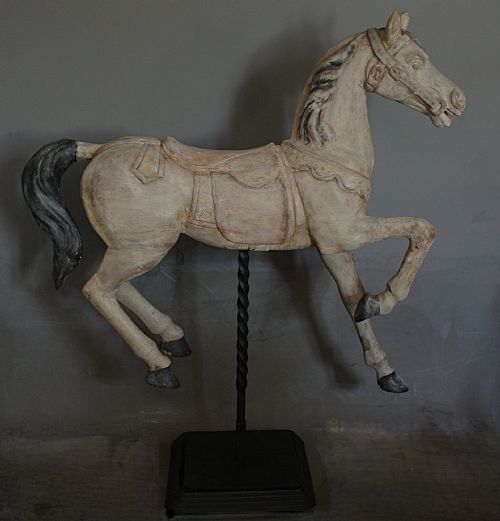


Folk Art Rocking Horse
These folk art rocking horse examples bring genuine charm to a room, crafted from carved wood and finished with old paint.
Folk Art Rocking Horse
When you search for a folk art rocking horse, you encounter hand-carved wooden sculptures from the nineteenth and early twentieth centuries. These pieces encompass traditional nursery toys converted into decorative objects, alongside dedicated naive sculptures.
The versions most frequently met on this page span the Victorian era, the nineteenth century, and the early decades of the twentieth century. Many retain layers of original paint or show the distinct wear of active childhood use.
How they were made
Carpenters and makers carved these figures from solid timber, predominantly pine and other accessible woods, shaping the bodies by hand. Iron brackets and fittings provided the structural support needed for the rocking action.
Makers finished the carved surfaces with layers of paint, sometimes incorporating horsehair for mannes and tails alongside leather tack. The resulting textures reflect the vernacular traditions of nineteenth century workshops and folk artisans.
Folk Art Rocking Horse Retail Price Guide 2026
Typical asking prices for folk art rocking horse among the pieces listed under this phrase on Sellingantiques today, from the lower quarter to the upper quarter. They describe what is for sale here now, not the wider market.
Several horses maintain glass eyes that watch silently over contemporary living rooms after a century of nursery retirement.
What varies in quality
The distinction between ordinary and exceptional pieces lies in the strength of the carving and the character of the surface. A powerful silhouette combined with undisturbed early paint elevates a sculpture far beyond a standard utilitarian toy.
Proportion and stance dictate the visual impact of each piece. Surviving examples that retain their original harness details and untouched patina carry a stronger presence than those stripped or heavily restored.
The Folk Art Rocking Horse Glossary
- Folk art
- Objects created by self-taught or traditional craftsmen outside academic artistic traditions. These pieces prioritise practical utility and regional style over formal academic conventions.
- Naive
- A descriptive term for art or objects lacking formal perspective or proportion, often produced in rural communities. This stylistic independence gives folk carvings their distinct character.
- Original paint
- The initial surface coating applied to an object by the maker or contemporary user. Surviving layers provide crucial evidence of age and historical appearance.
- Pine
- A softwood commonly utilised in vernacular furniture and toy making throughout the nineteenth century. Its availability made it the default material for regional carvers.
Folk Art Rocking Horse: Frequently Asked Questions
Are these rocking horses safe for children?
Most antique pieces function primarily as decorative sculptures or collector items rather than sturdy toys for modern children.
Structural wear and historic timber fragility mean they suit static display better than vigorous play.
How do I clean old painted wood?
Dust surfaces gently with a dry, soft cloth to protect fragile nineteenth century paint layers from moisture damage.
Avoid chemical cleaners and water entirely, as older pigments lift easily from the wooden substrate.
How can I tell the age of a wooden horse?
Examine the tool marks, construction methods, and the composition of the underlying timber and iron fixings.
Surface crackle and pigment analysis often reveal whether paint layers date to the nineteenth century or later.
Where should I place a folk art horse?
Position sculptures away from direct sunlight and sudden temperature shifts to prevent the pine from splitting.
Stable floor spaces allow these substantial carved animals to serve as focal points in a room.