



Pine Rocking Horse
These pine rocking horse examples bring tactile warmth to a room, offering enduring traditional craftsmanship for play and display.
Pine Rocking Horse
A pine rocking horse brings traditional British folk art and antique playthings directly into modern domestic spaces. Buyers searching this phrase encounter sturdy wooden figures fashioned for children across the nineteenth and twentieth centuries.
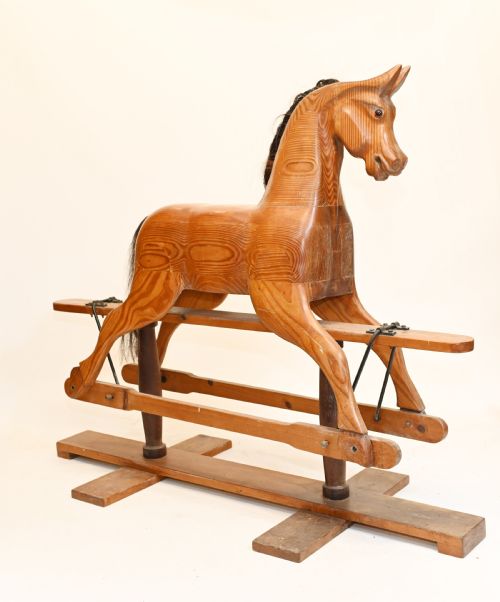
Most items on this page utilise carved pine mounted upon timber frames or trestle bases. Traditional forms range from substantial nursery rocking horses to decorative sculptures suited for interior display.
How they were made
Maker workshops shaped these toys primarily from carved pine and solid wood, building sturdy bodies designed to withstand decades of heavy nursery use. Iron components and metal brackets often secure the rocking mechanisms and swings.
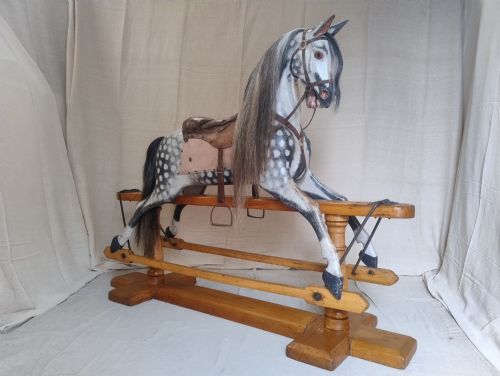
Surface finishes rely heavily on original paint alongside leather tack and genuine horsehair manes. Craftspeople combined traditional woodworking techniques with simple folk art painting to bring each animal to life.
Real horsehair manes give antique rocking horses a tactile charm that invites a quiet pat on the nose from every visitor.
What varies in quality
Quality rests upon the depth of the carving and the preservation of original paint surfaces. Finer examples retain their early leather tack and genuine horsehair, showing expressive facial detail rather than plain block forms.
Makers of note command attention for their robust construction and proportions. Pieces displaying untouched historic paintwork hold greater visual presence than later repainted or heavily restored specimens.
F.H. Ayres·Collinson·Collinson and Sons
The Pine Rocking Horse Glossary
- Pine
- A softwood utilised extensively for the bodies and bases of traditional British rocking horses due to its workable nature. Carvers found it reliable for shaping sturdy forms.
- Horsehair
- Natural hair employed for the mane and tail of traditional rocking horses. This organic material adds authentic texture to antique pieces.
- Folk art
- Traditional decorative items created by craftspeople outside the academic mainstream. These pieces often display charming vernacular character.
- Tack
- The harness, saddle, and bridle fittings attached to a rocking horse. Leather forms the primary material for these accessories.
- Trestle base
- A supporting frame structure beneath the rocking horse that provides stability during motion. Pine timbers typically form this foundation.
Pine Rocking Horse: Frequently Asked Questions
How do I date a pine rocking horse?
Dating relies upon construction methods, timber choice, and remaining surface finishes like original paint. Nineteenth century examples often display heavier hand carving and simpler framing.
Twentieth century pieces from makers like Collinson introduce alternative proportions and distinct structural hardware. Comparing the tack and materials helps narrow down the decade of manufacture.
Were these rocking horses meant for play?
These pieces served primarily as nursery toys for children before transitioning into decorative objects. Playworn condition often indicates genuine historic use by young riders.
Sturdy pine construction ensured the horses could handle active swinging. Today they function equally well as sculptural focal points in living spaces.
How do I clean an antique rocking horse?
Gentle dusting with a dry cloth preserves historic paint surfaces and horsehair manes. Avoid harsh chemical cleaners that might strip away original patination.
Leather tack benefits from occasional light conditioning if it remains supple. Keeping the wooden frame away from direct heat sources prevents timber splitting.
What is folk art style on these horses?
Folk art style reflects traditional craft traditions rather than formal academic sculpture. Carvers prioritized sturdy utility and expressive charm over strict anatomical precision.
Original paint applications on these horses frequently showcase simple, bold decorative strokes. This vernacular approach gives each nineteenth century toy its individual character.