
Victorian Wooden Footstool
These Victorian wooden footstool pieces offer solid timber frames and period upholstery, bringing practical comfort and traditional character to a room.
Victorian Wooden Footstool
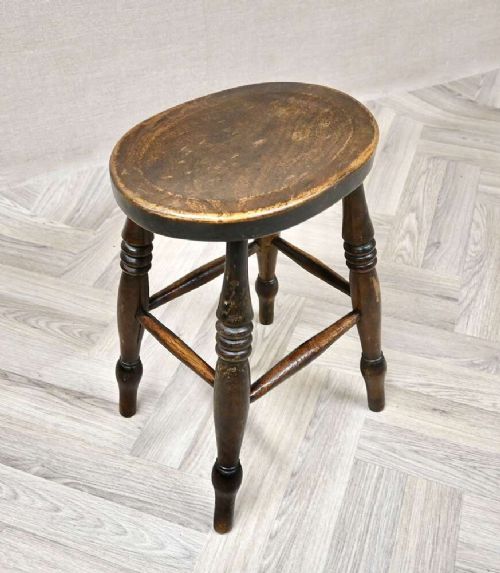
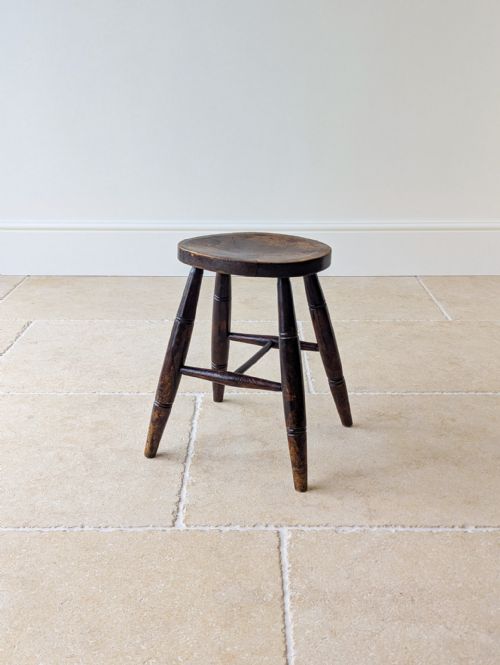
When you search for a victorian wooden footstool, you encounter low seating designed for resting feet or sitting at dressing tables during the nineteenth century. These items range from simple country vernacular forms to carved parlour seating.
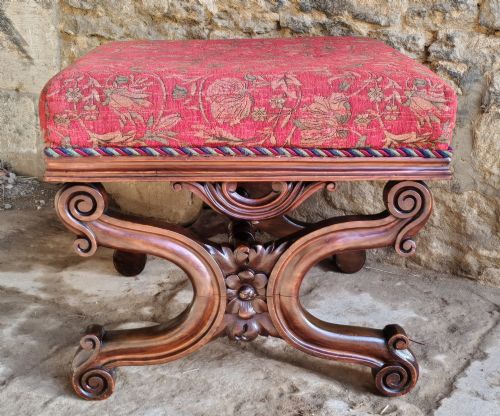
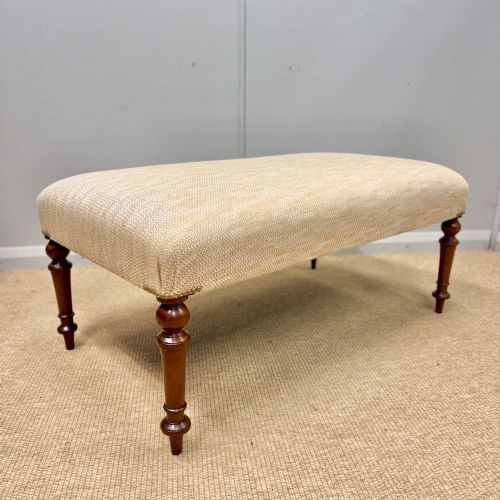
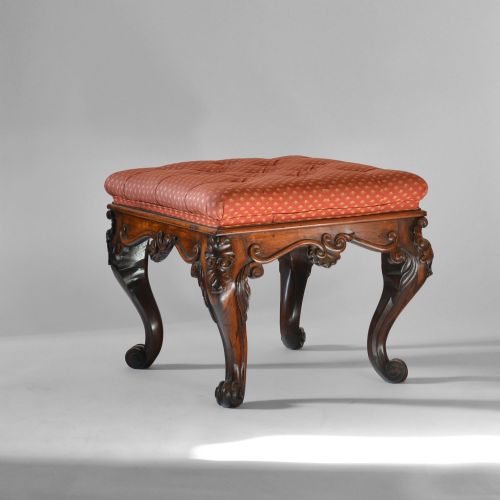
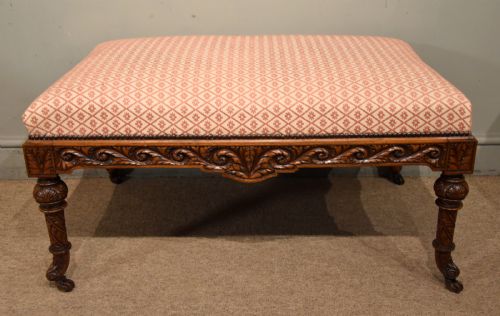
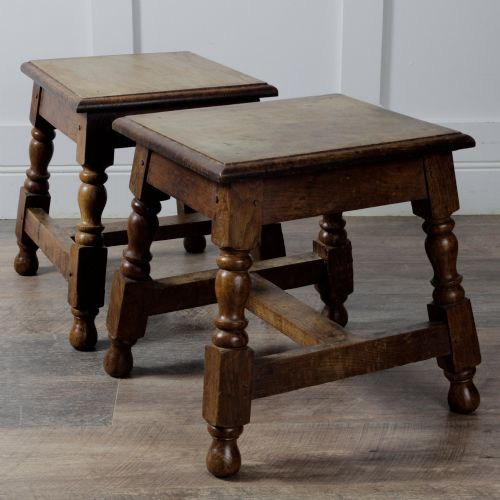
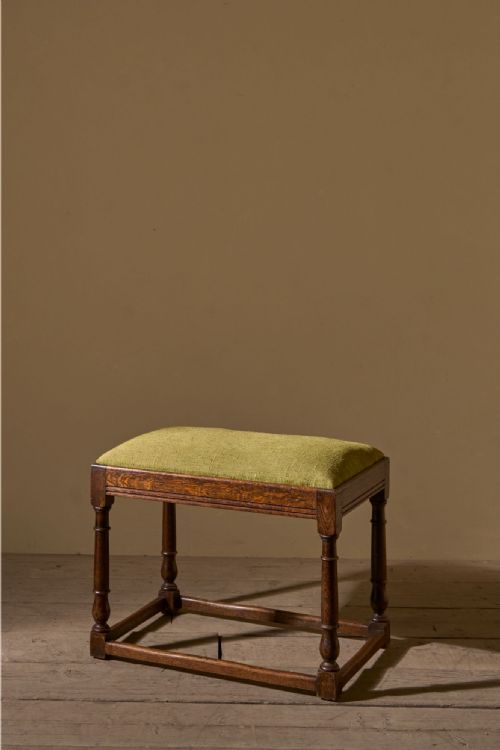
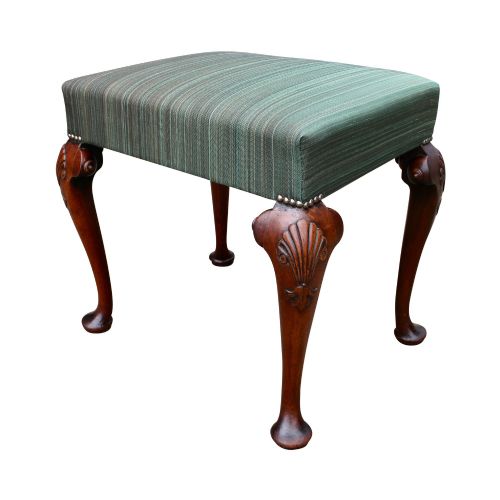
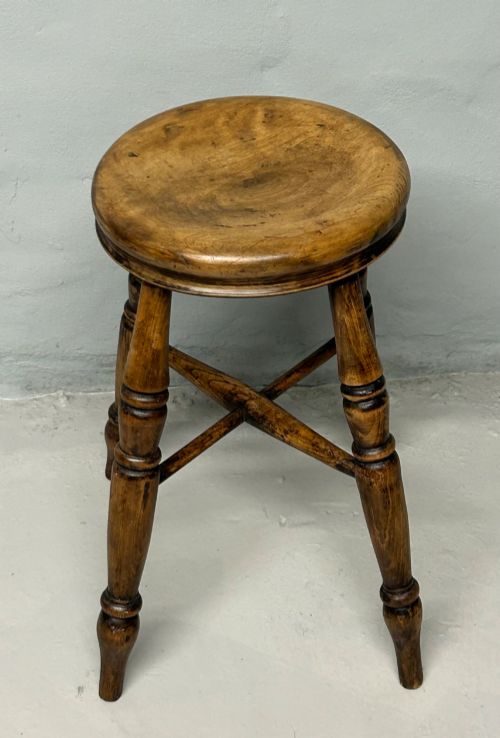
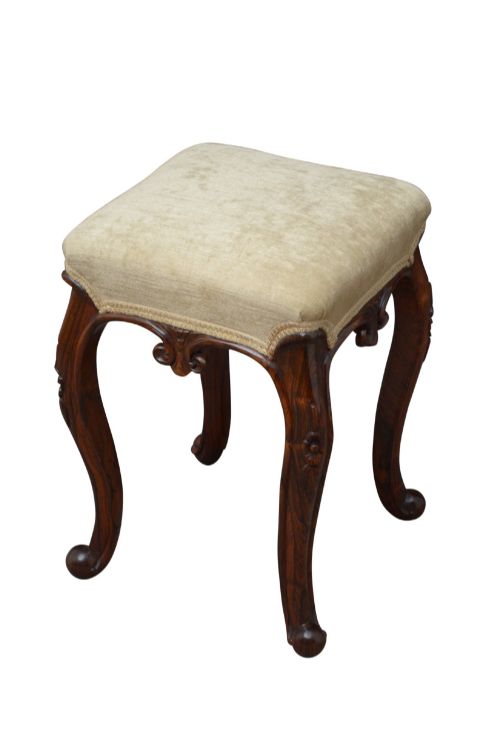
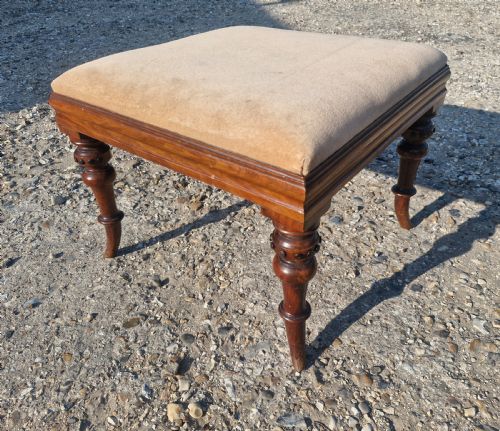
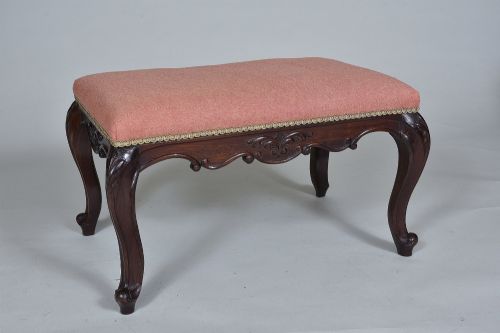
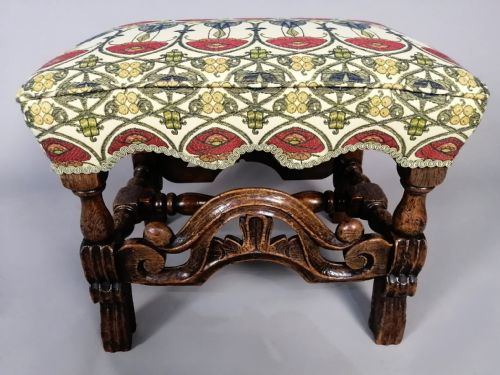
The most common examples on this page are sturdy timber frames paired with varied upholstery, including green linen, tapestry, and newly applied fabrics. Forms extend from oblong and circular shapes to low stools with cabriole legs.
Origins span formal English Victorian workshops as well as country regions, alongside occasional Anglo-Indian imports. Buyers select them for domestic utility and traditional aesthetic presence in sitting rooms and bedrooms.
How they were made
Maker construction relies heavily on native and exotic hardwoods such as mahogany, oak, rosewood, walnut, elm, and beech, shaped through turning, joining, and carving. Artisans often utilised cabriole legs, ball feet, and jointed frames.
Upholstery techniques incorporated fabric, needlework, tapestry, and woven cane or rattan secured to wooden bases. Adjustability mechanisms and metamorphic designs also appear among the working mechanisms.
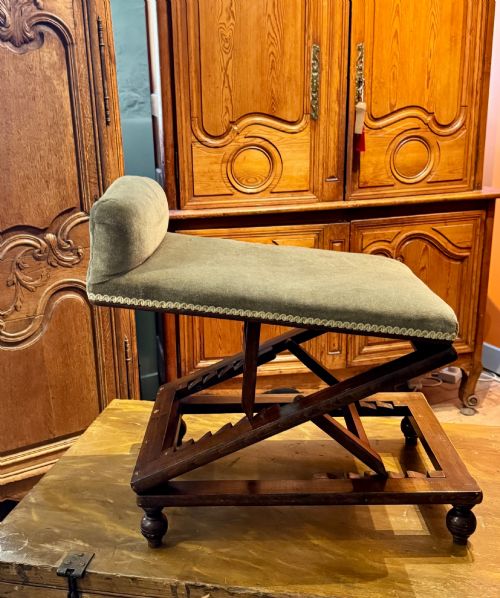
Some nineteenth-century models convert into gout stools, offering weary feet an adjustable incline after a long day.
What varies in quality
Quality differences emerge in timber selection, from dense burr yew, rosewood, and walnut down to simpler pine and beech. Carving depth and precision on legs and frames also distinguish standard vernacular items from finer parlour pieces.
The refinement of the joinery and the execution of upholstery define the upper tier of pieces. Intricate details such as parcel gilding, inlay work, and specialised forms like gout stools elevate specific examples.
The Victorian Wooden Footstool Glossary
- Cabriole leg
- A furniture leg that curves out and then tapers inward, mimicking an animal's leg. This design appears frequently on formal Victorian seating.
- Joint stool
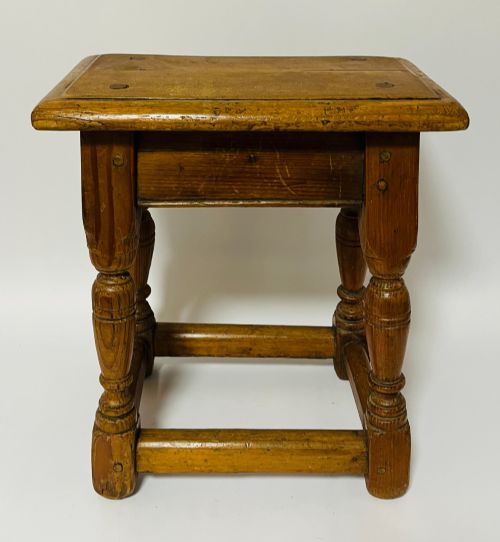
- An early form of wooden stool constructed with mortise and tenon joints rather than turned legs. Examples are found in oak and pine.
- Metamorphic stool
- A piece of furniture designed to transform its shape or function, such as a gout stool with an adjustable mechanism.
- Vernacular
- Everyday objects made by local craftspeople using regional materials, distinct from high-style urban workshop production.
- Aesthetic Movement
- A late nineteenth-century design style emphasising visual and artistic qualities over moral or narrative purpose, often utilising ebonised wood.
Victorian Wooden Footstool: Frequently Asked Questions
How do I use a footstool?
These low seats function primarily for resting feet while sitting in an armchair or beside a fireplace. They also serve as dressing table seats or small standalone stands.
Their compact size allows them to move easily around a room depending on daily needs.
What woods were used?
Cabinet makers and country joiners utilised a wide selection of timber including mahogany, oak, rosewood, walnut, elm, beech, and pine.
More decorative pieces incorporated exotic woods like goncalo alves and burr yew for visual grain pattern variation.
Are the fabrics original?
Many items feature newly applied fabric, needlework, or tapestry upholstery chosen to preserve the utility of the wooden frame. Original textiles survive less frequently due to natural wear over time.
Listings specify whether the upholstery is new or retains period needlework and cane seating.
How do I tell periods apart?
Dating relies on stylistic clues, construction methods, and timber choice. Country vernacular pieces often show simpler joined or turned construction in oak and elm.
Formal Victorian pieces display carved rosewood or walnut with decorative cabriole legs and specific upholstery styles.