
Victorian Wooden Dining Set
A victorian wooden dining set brings together matching or paired seats for the table, grounded in nineteen-century craftsmanship.
Victorian Wooden Dining Set
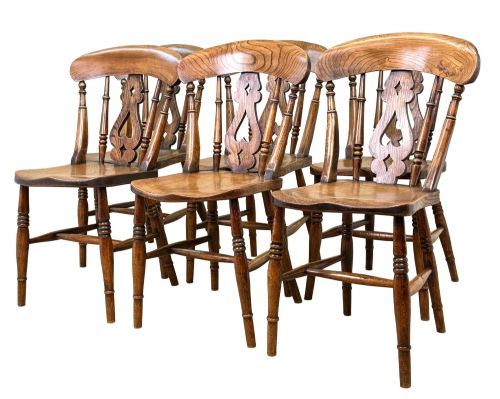
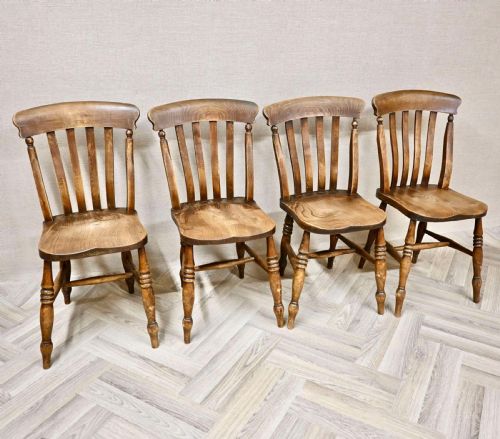
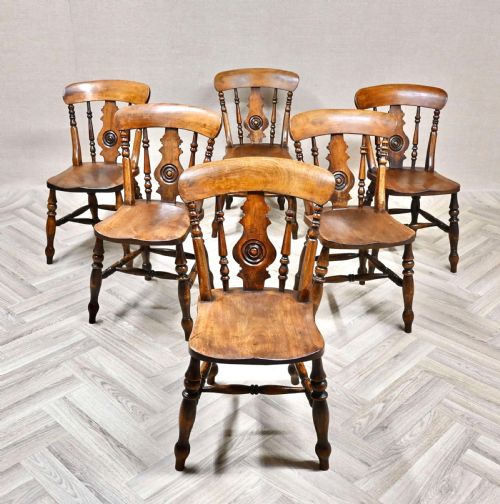
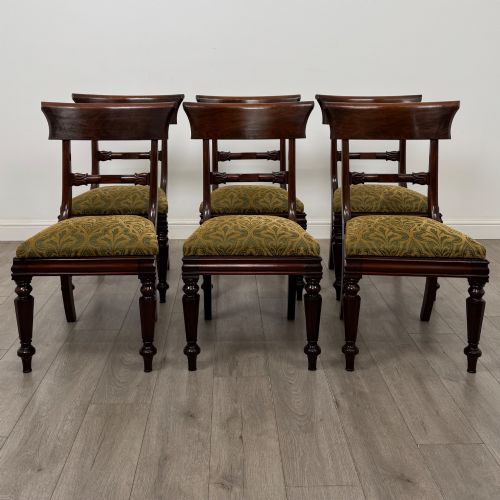
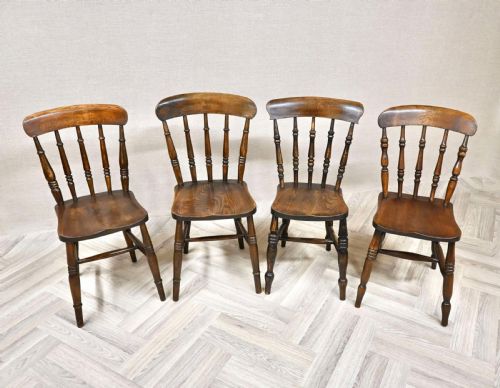
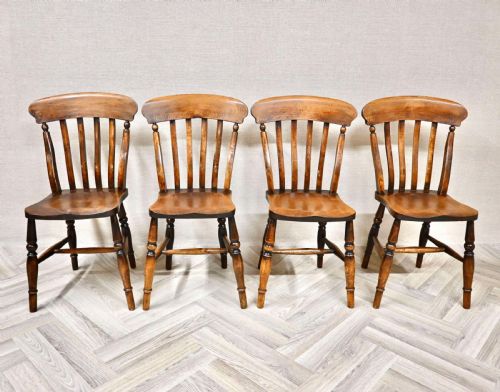
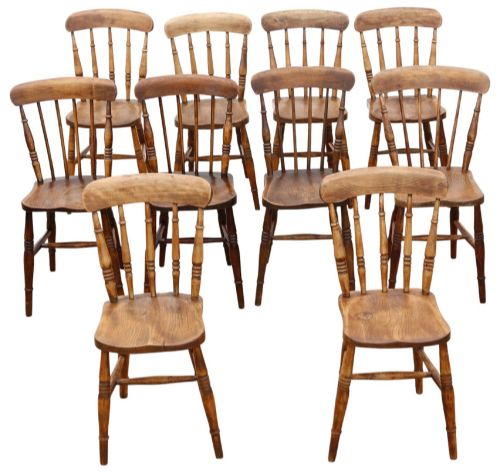
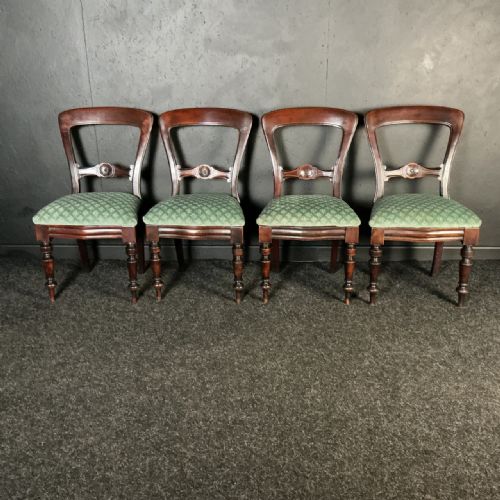
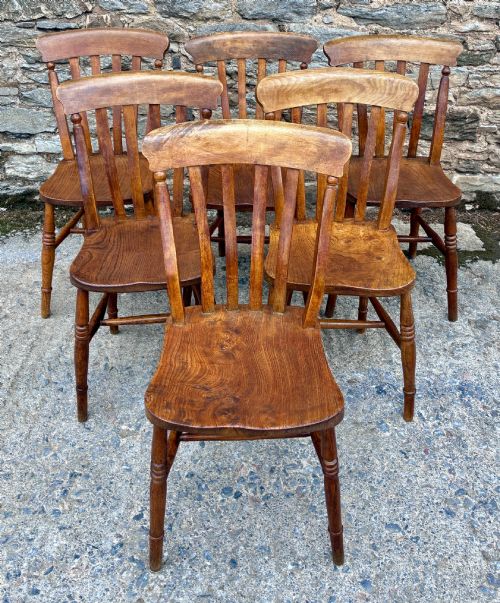
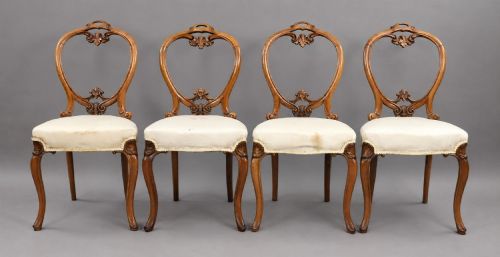
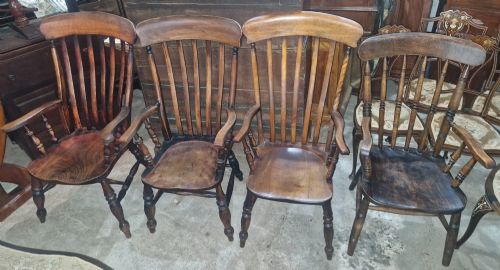
A victorian wooden dining set comprises matched or gathered groups of chairs designed for the nineteenth-century dining room or kitchen. These collections range from formal mahogany balloon back forms to sturdy elm and beech country Windsor chairs.
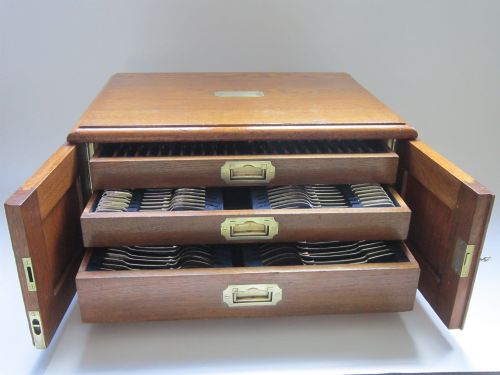
The sets on this page predominantly consist of dining chairs, kitchen chairs, and salon chairs offered in groups of four, six, eight, or ten. Buyers also encounter occasional cutlery canteens alongside the primary seating groups.
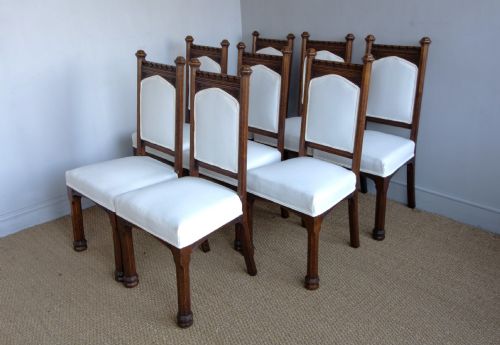
Origins span formal English workshops and regional vernacular traditions, including Thames Valley and farmhouse kitchen production. Pieces often reflect revival movements such as Gothic Revival, Hepplewhite, and Chippendale.
Materials and Construction Techniques
Construction relies heavily on native timbers such as mahogany, walnut, elm, beech, and ash, selected for their structural strength and grain. Timber was turned, carved, and joined using traditional mortise and tenon methods.
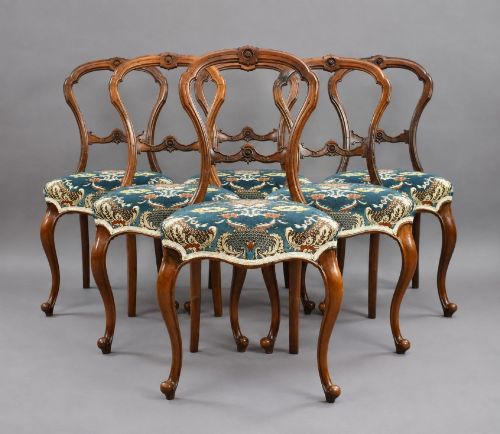
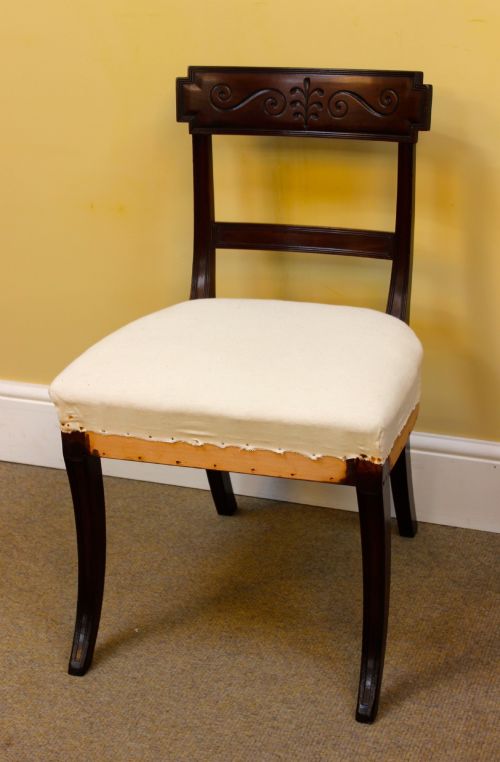
Country Windsor chairs utilise steam-bent wooden hoops and spindles fitted into solid wood seats. Formal dining chairs employ carved mahogany or walnut frames, frequently with upholstered drop-in seats covered in fabric, textile, leather, or velvet.
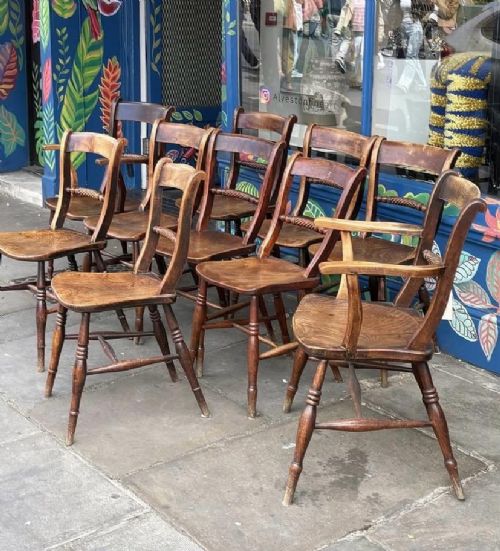
Several kitchen chairs arrive with generous saddle seats carved deep by generations of restless sitters.
Distinctions in Quality
Quality rests upon timber selection, timber thickness, and the crispness of hand-carved detail on splats and rails. Sets that retain uniform colour, matching grain patterns, and original structural integrity command greater respect.
Harlequin sets assembled from related individual pieces depend on close harmony in height and timber tone. Finer sets display sophisticated joinery, restrained decorative carving, and substantial gauge timber without excessive replacement parts.
The Victorian Wooden Dining Set Glossary
- Balloon back
- A chair back shaped like a rounded oval resembling an inflated balloon. This form is common in Victorian walnut and mahogany dining chairs.
- Windsor chair
- A chair constructed with a solid wooden seat into which the legs and back spindles are direct-inserted. These chairs often feature bentwood hoops and armbows.
- Harlequin set
- A collection of chairs that match in style, period, and material but were gathered together rather than manufactured as a single original batch.
- Carver
- An armchair designed with elbow rests, traditionally placed at the head of a dining table to match a set of smaller side chairs.
- Barley twist
- A decorative turning technique resembling a twisted rope, seen on chair legs and stretchers during the nineteenth century.
Victorian Wooden Dining Set: Frequently Asked Questions
What defines a harlequin dining set?
A harlequin set is a collection of chairs sharing common stylistic traits, materials, and periods, assembled to function together around a table rather than originating from a single workshop batch.
Buyers often choose these groups for their character and the way individual subtle variations add visual interest to a dining room.
How do country Windsor chairs differ from formal dining chairs?
Country Windsor chairs utilise turned spindles and solid wooden seats designed for robust domestic use in farmhouses and kitchens. They rely on steam-bent elements rather than heavy carved frames.
Formal dining chairs are typically constructed from mahogany or walnut, featuring upholstered seats and elaborate carved backs intended for the dining parlour.
What timber types appear most frequently in these sets?
The listings show a strong presence of mahogany and walnut for formal parlour seating, alongside elm, beech, and ash utilised for country kitchen and Windsor chairs.
Each timber offers distinct grain patterns and structural properties suited to the specific style of chair.
Are all chairs in a set identical?
Not necessarily, as many historic sets are gathered as harlequin groups sharing matching forms and timbers. Other groups were manufactured as complete matching sets from the outset.
Checking the uniformity of timber grain and turning details helps clarify whether a set shares a single origin.