
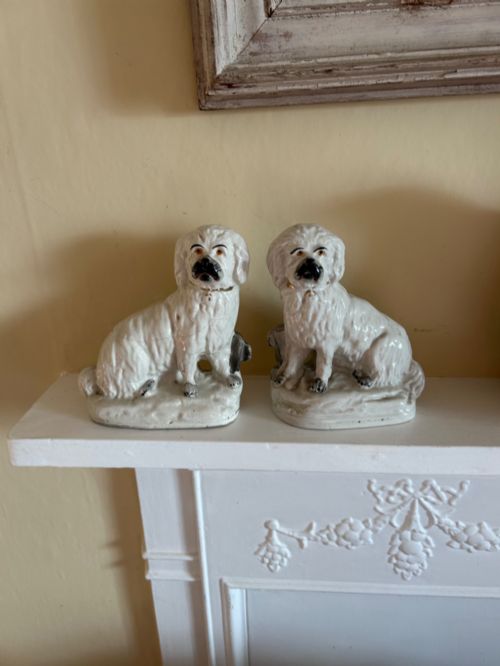


Victorian White Spaniel Pair
A victorian white spaniel pair brings the steady hearth-side presence of nineteenth-century pottery directly to your mantelpiece.
Victorian White Spaniel Pair
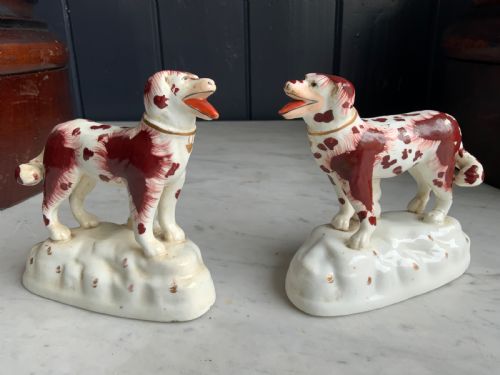
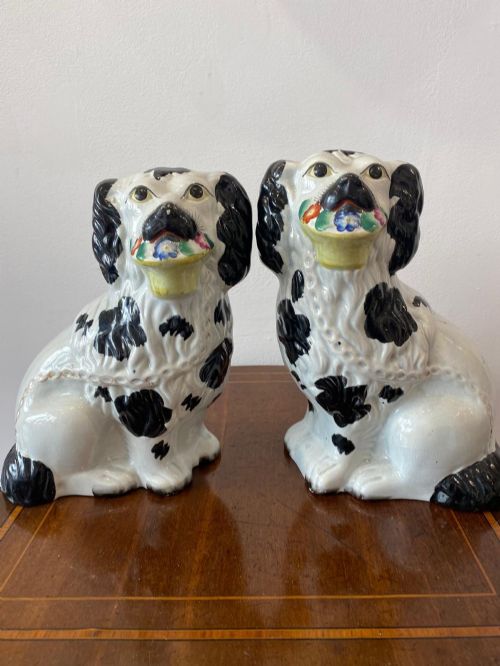
When you search for a victorian white spaniel pair, you find nineteenth-century ceramic figures modelled as seated dogs designed for fireside placement. The most common version you will meet on this page is the classic Staffordshire comforter spaniel, usually finished with white glaze and gilt details.
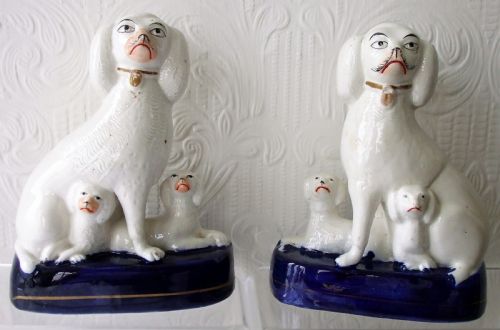
These ceramic figures appear in various forms, including standard seated spaniels, pairs with pups, dogs on blue cushions with encrusting, and even specialised pottery dog quill holders. Dating spans from the Regency era through to nineteen-hundred, with the Victorian period strongly represented across the inventory.
How They Were Made
Production relied on traditional Staffordshire pottery techniques, moulding hollow ceramic forms that were subsequently hand painted and fired. Certain examples incorporate applied encrusting on bases or cushions to provide decorative texture.
Listings feature earthenware and ceramic Staffordshire figures decorated with enamel, gilt, and lead glaze.
What Varies in Quality
Quality rests primarily in the crispness of the modelling and the finesse of the hand painting on the face and coat. Superior examples display carefully rendered eyes and distinct facial expressions rather than hasty brushwork.
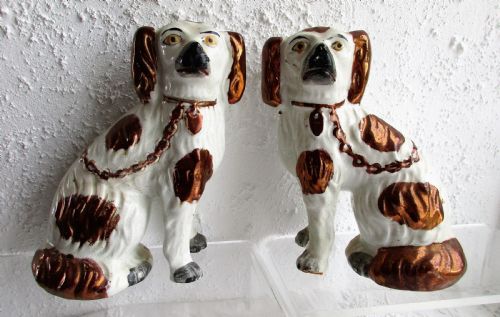
The application of secondary elements such as gilt accents, copper lustre, and decorative encrusting determines the distinction between standard production pieces and finer decorative pairs. Size and proportion also play a role, with larger figures demonstrating greater ambition in the kiln.
Beswick
The Victorian White Spaniel Pair Glossary
- Comforter spaniels
- Staffordshire pottery figures designed in pairs to sit on either side of a fireplace. They represent the popular pet dogs of the nineteenth century.
- Staffordshire pottery
- Earthenware ceramics produced in the pottery towns of Staffordshire, England. This regional industry supplied the domestic market with popular mantel figures.
- Copper lustre
- A metallic glaze finish that imparts a coppery sheen to pottery surfaces. Potters used this technique to highlight collars and lockets on dog figures.
- Enamel
- Opaque coloured decoration applied over the glaze and fired at a lower temperature. This material provides the characteristic red, black, and tan markings on the spaniels.
- Quill holders
- Functional ceramic figures featuring a receptacle for writing quills alongside the animal motif. These practical desk items combine utility with domestic ornamentation.
Victorian White Spaniel Pair: Frequently Asked Questions
What are comforter spaniels?
Comforter spaniels are ceramic mantel figures modelled after the small toy spaniels kept by Victorian households. Potters produced them in matching pairs to sit facing each other on either end of a fireplace.
These ornamental dogs served as domestic companions in parlours before the widespread adoption of central heating. Their presence marked a comfortable, settled middle-class interior.
How do I style a pair?
Place the dogs facing inward toward each other on a mantelpiece, shelf, or sideboard surface. Their traditional symmetry makes them effective anchors for framing a central clock or mirror.
Keep surrounding objects simple to let the painted details and gilt highlights stand out against the room. They integrate easily into both traditional cottage interiors and eclectic modern spaces.
How do I tell periods apart?
Dating relies on observing changes in modelling style, glaze composition, and colour palettes across the nineteenth century. Earlier Regency and mid-century pieces often feature simpler brushwork and distinctive copper lustre or black markings.
Later Victorian examples tend toward crisper moulding, brighter white glazes, and heavier gilt application. Examining the base and the weight of the earthenware provides further clues to age.
Are all white spaniels glazed?
Almost all Staffordshire spaniels feature a protective ceramic glaze over the earthenware body to seal the porous clay. White examples use a transparent lead glaze over a white slip or body to create the pale finish.
This glossy coating protected the enamel colours and hand-painted details from dust and soot in coal-heated rooms. The glaze depth and crackle patterns help identify the age of the piece.