

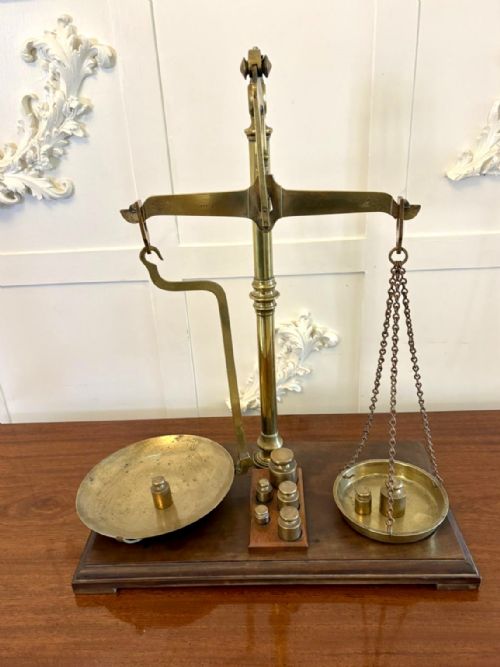


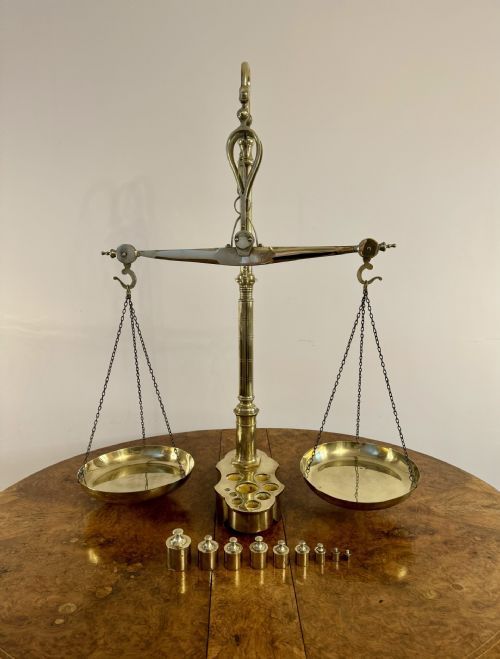


Victorian Weighing Scales
Victorian weighing scales are heavy functional instruments in brass, iron, and mahogany that bring honest nineteenth-century utility and polished metal gleam into modern rooms.
Victorian Weighing Scales
Victorian weighing scales span domestic and commercial designs, including delicate apothecary and postal balances alongside heavy grocers and butchers beams. These instruments served shops, surgeries, and offices before digital measurement replaced mechanical balance.
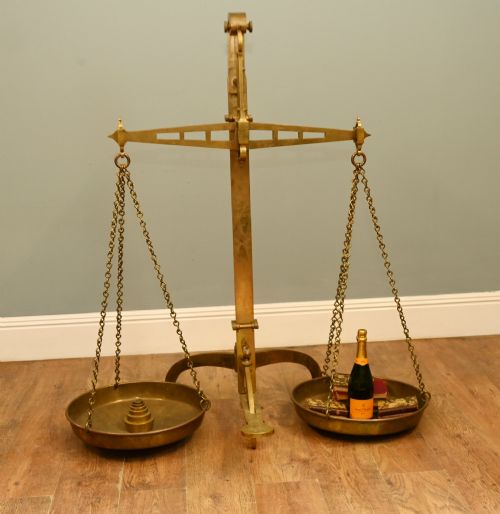
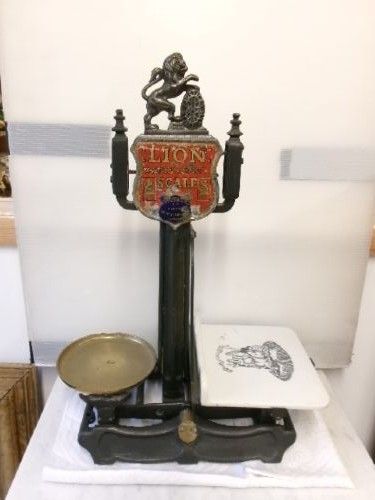
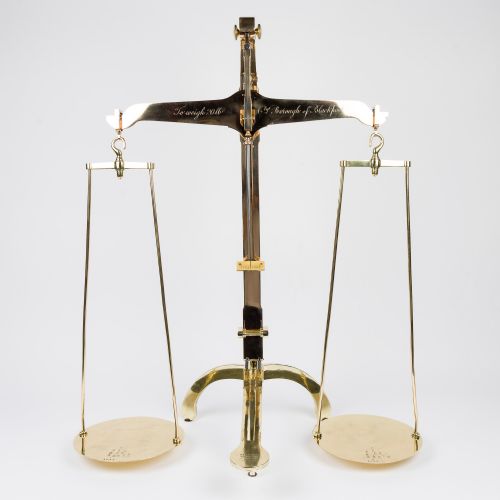
The versions most common here are brass beam scales mounted on mahogany or oak bases, often accompanied by their original weights. Floor standing floor models and countertop grocers scales also appear regularly from the nineteenth and early twentieth centuries.
Utility ranges from small desk postal scales to monumental butcher scales and personal weighing machines. Many carry maker stamps from British firms and civic verification marks from borough inspectors.
Materials and construction
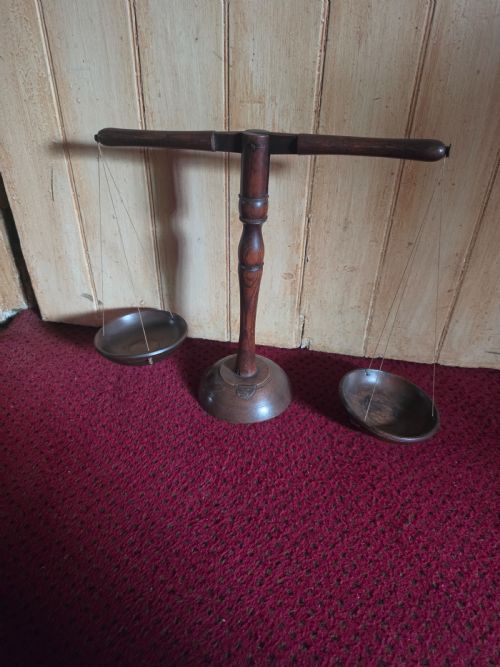
Maker construction combines cast iron and wrought iron for structural strength with polished brass for beams, pans, and indicator arms. Wooden bases utilise dense hardwoods like mahogany and oak, frequently shaped with fitted drawers to store matching weights.
Metal components involve casting, forging, and precise turning to achieve balanced movement across the fulcrum. Surfaces show the functional integration of brass hardware screwed directly to polished timber plinths.
Victorian Weighing Scales Retail Price Guide 2026
Typical asking prices for victorian weighing scales among the pieces listed under this phrase on Sellingantiques today, from the lower quarter to the upper quarter. They describe what is for sale here now, not the wider market.
Listings feature scales constructed from brass, mahogany, oak, cast iron, and wrought iron across the nineteenth and early twentieth centuries.
Factors of quality and finish
Quality rests upon the crispness of maker signatures, the survival of matching original brass weights, and the integrity of the beam mechanism. Finer examples display refined cast brass detailing and substantial timber bases rather than basic industrial iron.
Makers with established reputations for scientific and commercial accuracy command attention through superior finishing and precise calibration. Complete sets retaining their original ceramic scale pans or makers stamps represent the upper tier of surviving instruments.
Day and Millward·Parnall and Sons·Fairbanks Scales·Ratcliff Birmingham·W and T Avery·Bartlett and Sons·De Grave and Co·De Grave Short and Co·Young and Son
The Victorian Weighing Scales Glossary
- Balance scale
- A weighing device operating on a central fulcrum with equal arms supporting two suspended pans. This mechanical setup relies on gravitational equilibrium to determine mass.
- Beam scale
- A heavy-duty weighing instrument featuring a rigid metal bar suspended centrally. These robust units managed commercial loads in shops and warehouses.
- Apothecary balance
- A sensitive precision scale utilised by chemists and doctors for measuring small medical doses. They often sit within fitted wooden storage boxes with tiny brass weights.
- Postal scales
- Compact desktop devices designed for weighing letters and parcels to calculate postage rates. They frequently incorporate stepped brass weight platforms.
- Treen
- Small utilitarian wooden objects made by turning or carving. In scale sets, this term refers to turned wooden structural elements or containers.
Victorian Weighing Scales: Frequently Asked Questions
How do I clean brass scale beams?
Use a soft dry cloth to remove dust and preserve the aged metal surface. Avoid harsh chemical polishes that strip away the historical patina accumulated over generations.
Gentle cleaning maintains the warm golden glow without erasing the original tool marks and manufacturer stampings.
Can these scales still weigh accurately?
Most antique balances retain their central fulcrum and move freely, but they require professional calibration for precise modern measurements. They function primarily as decorative and historical display objects today.
Minor shifts in the metal components over time mean commercial accuracy cannot be guaranteed without adjustment.
Where did grocers scales get used?
Grocers scales stood on shop counters across nineteenth-century towns, handling bulk produce and everyday provisions. Many originated in cooperative societies and municipal borough markets.
Their heavy iron and brass construction was built to withstand constant daily trade use.
How do I spot a maker mark?
Inspect the brass beam, indicator plate, or the wooden base for stamped company names and city origins. Maker stamps often record firms from London, Birmingham, Bristol, or regional trading centres.
Inspector verification stamps also appear, showing crowns and borough numbers stamped into the soft brass.