


Victorian Weather Glass
A victorian weather glass measures atmospheric pressure to predict changes in meteorological conditions, combining scientific utility with fine nineteenth-century cabinetmaking.
Victorian Weather Glass
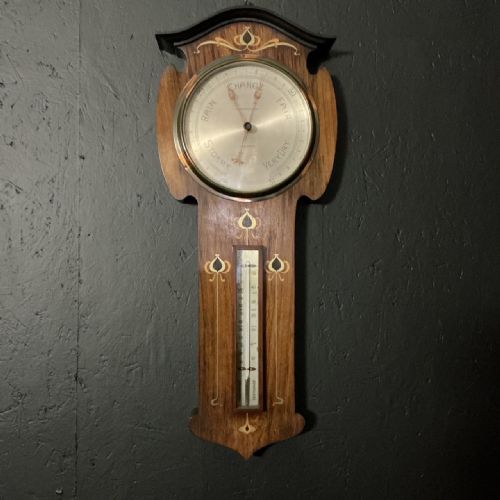
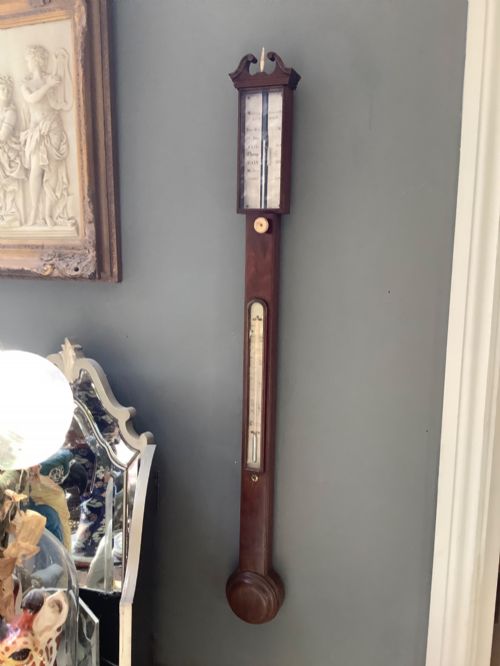
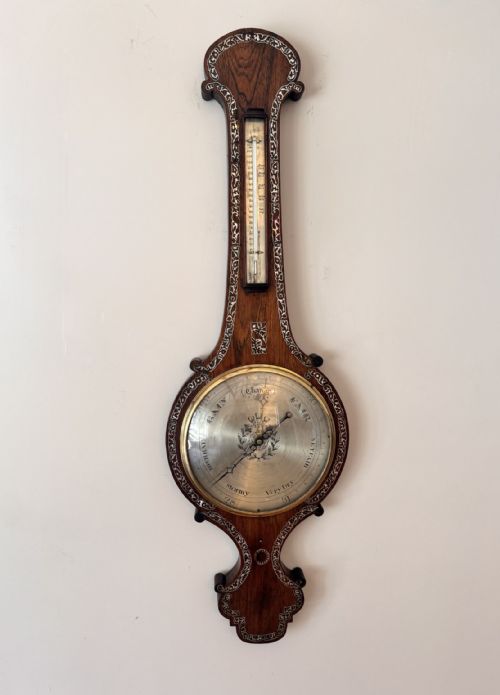
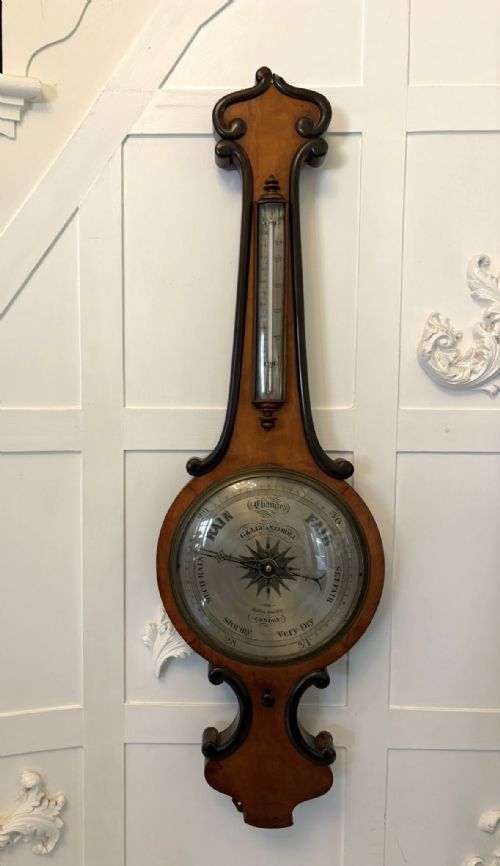
When you search for a victorian weather glass, you encounter atmospheric instruments housed in timber frames, most commonly wheel or banjo barometers alongside stick barometers and barographs. These pieces belong predominantly to the Victorian period, though examples stretch from the Georgian era into the Edwardian years.
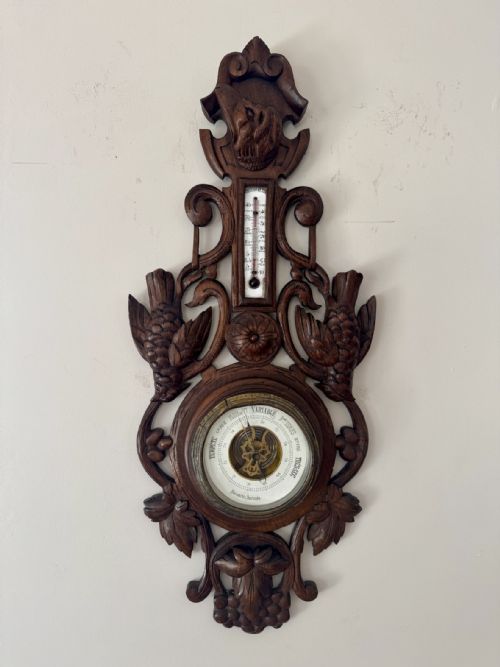
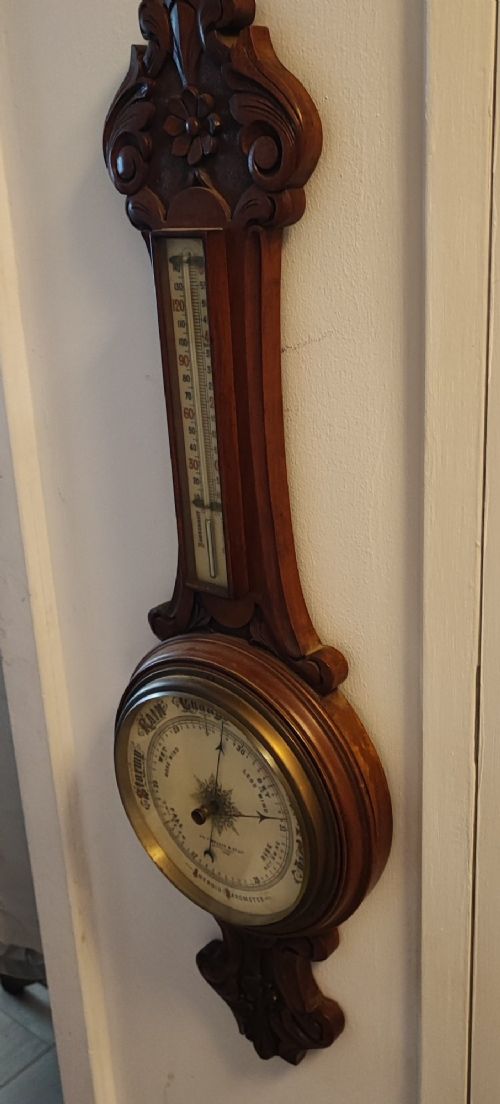
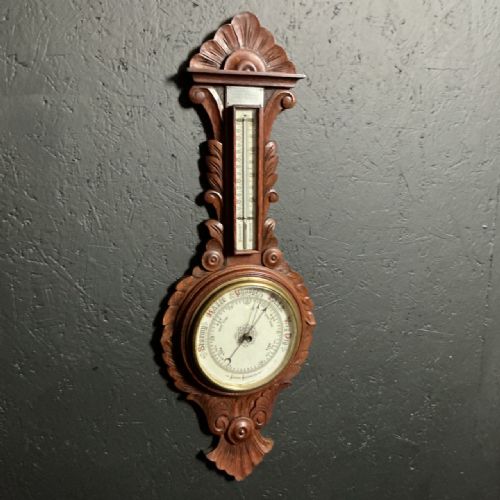
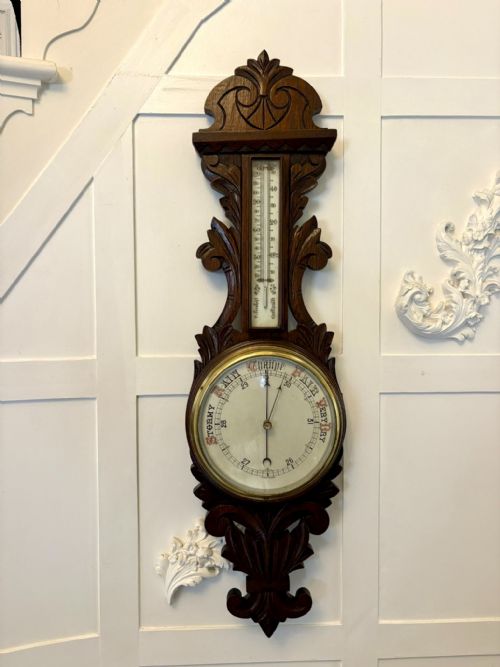
The version you meet most frequently on this page is the aneroid or wheel barometer housed in carved oak, mahogany, walnut, or rosewood. Many incorporate auxiliary thermometers, ceramic dials, and bevelled glass covers within their wooden cases.
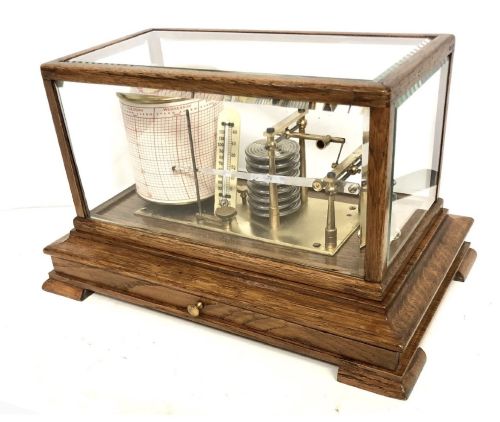
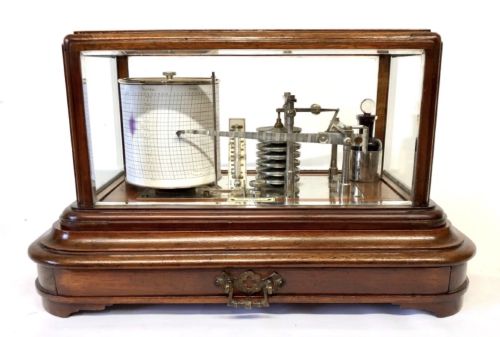
Beyond domestic wall pieces, the selection includes marine stick barometers and desk-friendly barographs with chart drawers. The stylistic range spans simple geometric oak designs to ornate Black Forest carvings featuring birds and foliage.
Assessing quality in meteorological instruments
Quality rests in the crispness of the timber carving and the precision of the cabinetwork. Fine examples exhibit deeply chiselled foliage and birds in carved oak or walnut, whereas lesser pieces rely on plain or mechanically stamped surrounds.
The sophistication of the internal mechanism dictates distinction, separating standard domestic barometers from barographs equipped with chart drawers or signed precision stick barometers by notable scientific instrument makers.
Victorian Weather Glass Retail Price Guide 2026
Typical asking prices for victorian weather glass among the pieces listed under this phrase on Sellingantiques today, from the lower quarter to the upper quarter. They describe what is for sale here now, not the wider market.
Listings feature oak, mahogany, walnut, and rosewood alongside brass, glass, bone, and ceramic elements.
Elliott Brothers·G and L Guanziroli·Gaupp and Co·Negretti and Zambra
The Victorian Weather Glass Glossary
- Aneroid barometer
- An instrument that measures atmospheric pressure without liquids by using a flexible metal box. It expands or contracts with pressure shifts to move the dial pointer.
- Stick barometer
- A tall, vertical instrument containing an exposed glass tube filled with mercury. It allows direct observation of the mercury column height.
- Barograph
- A recording barometer that traces pressure fluctuations onto a paper chart fitted to a rotating drum. These units often include a thermometer and a dedicated chart drawer.
- Banjo barometer
- A domestic wall barometer shaped like a banjo, featuring a circular dial at the base and a long trunk above. It typically houses a thermometer and hygrometer alongside the main pressure gauge.
- Marine barometer
- A specialised hanging barometer designed for use at sea, gimbal-mounted to remain vertical during vessel movement. These instruments frequently feature enclosed brass cisterns and sturdy wood or metal cases.
Victorian Weather Glass: Frequently Asked Questions
How do I read a stick barometer?
A stick barometer relies on a vertical column of mercury in a glass tube that rises and falls with atmospheric pressure. You observe the height of the mercury against a calibrated scale to determine incoming weather changes.
Changes happen gradually over hours rather than instantly. Higher readings generally indicate settled conditions, while falling levels point towards unsettled weather or rain.
What is the difference between aneroid and mercury barometers?
Mercury barometers use liquid metal in an open glass tube to weigh the atmosphere directly. Aneroid barometers replace liquid with a sealed metal capsule that flexes under pressure variations.
Aneroid versions proved safer and easier to transport around the home. Mercury instruments remained favoured for scientific precision and traditional appearance.
Where should I hang a wall barometer?
Choose an interior wall free from direct sunlight, central heating radiators, and excessive drafts. Rapid temperature shifts can affect the internal mechanism and distort readings.
Solid internal partitions provide the most stable mounting surface. Ensure the case hangs completely plumb so the dial pointer moves freely.
How do I identify a Black Forest barometer?
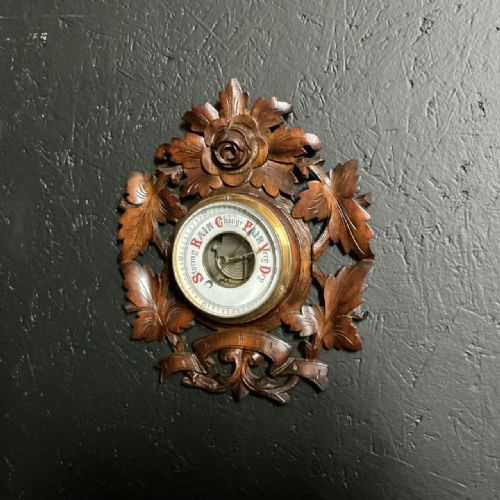
Black Forest barometers feature deeply carved wooden frames depicting naturalistic subjects like birds, oak leaves, and trailing vines. The timber is typically dark oak or walnut with high-relief detailing.
These pieces originate from the Black Forest region of Germany, celebrated for woodcarving traditions. They often house aneroid movements behind ceramic or painted metal dials.