


Victorian Wash Bowl Pitcher
These victorian wash bowl pitcher sets are robust ceramic and glass ensembles designed for the bedroom, offering tactile charm and historic utility.
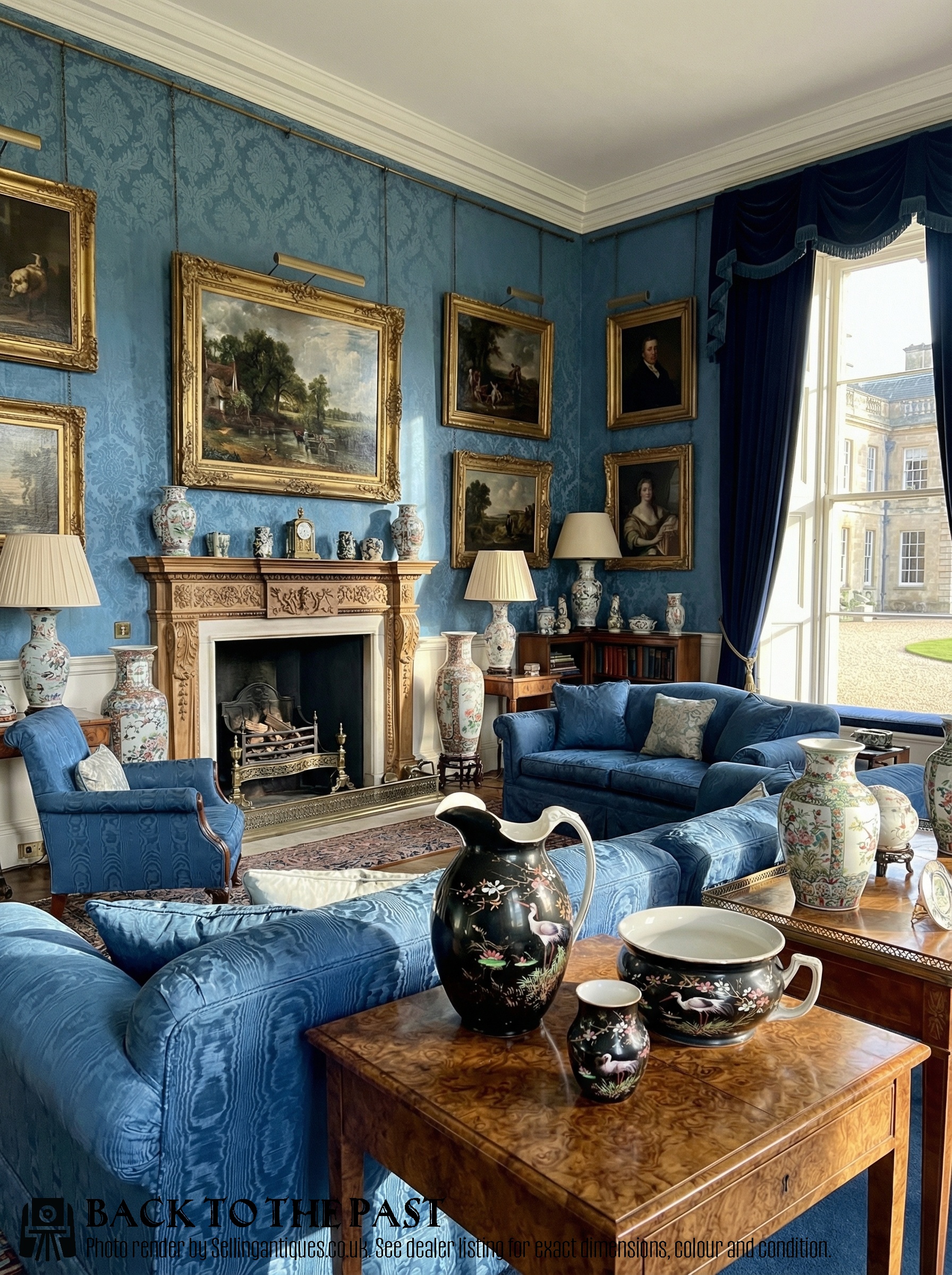
Victorian Wash Bowl Pitcher
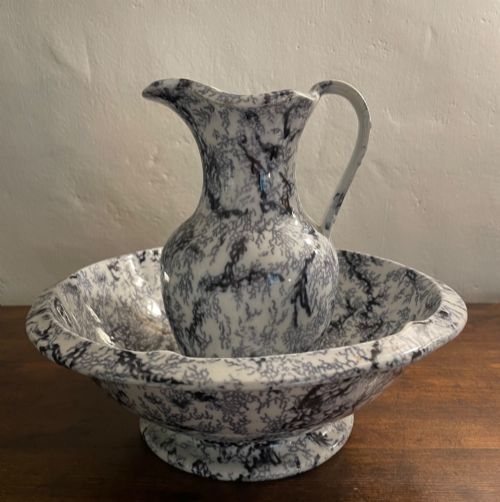
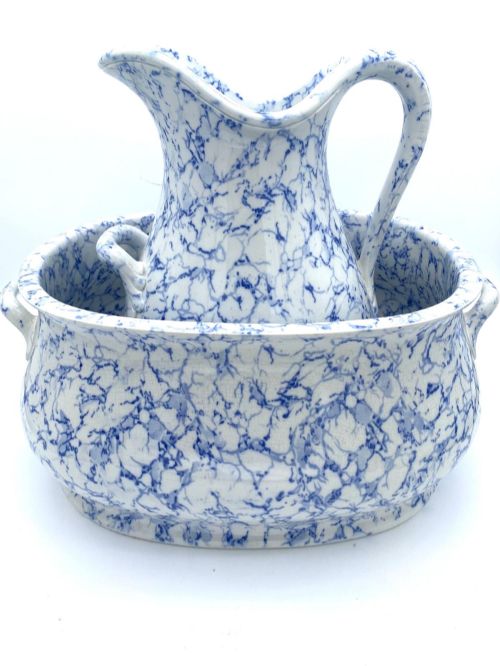
A victorian wash bowl pitcher set typically comprises a large basin paired with a matching jug, designed for personal ablutions before the widespread adoption of plumbed bathrooms. These sets appear primarily in ceramic, earthenware, and porcelain forms, alongside occasional glass and ironstone variations.
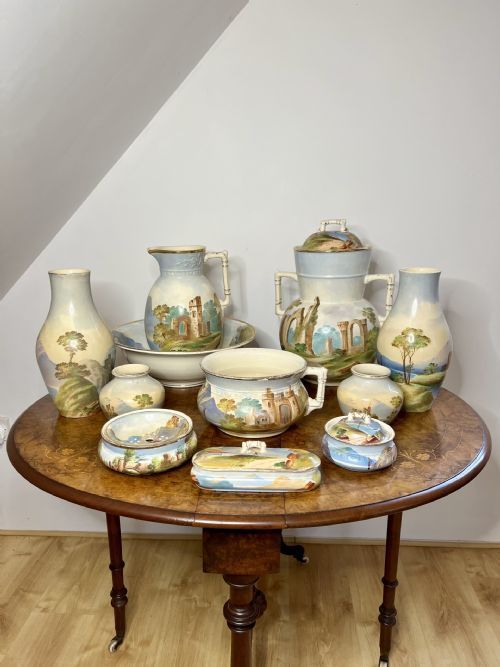
The selections span the nineteenth century into the twentieth, encompassing Victorian, Edwardian, and Aesthetic Movement styles. Buyers encounter full wash sets accompanied by washstands, as well as miniature interpretations and footbaths.
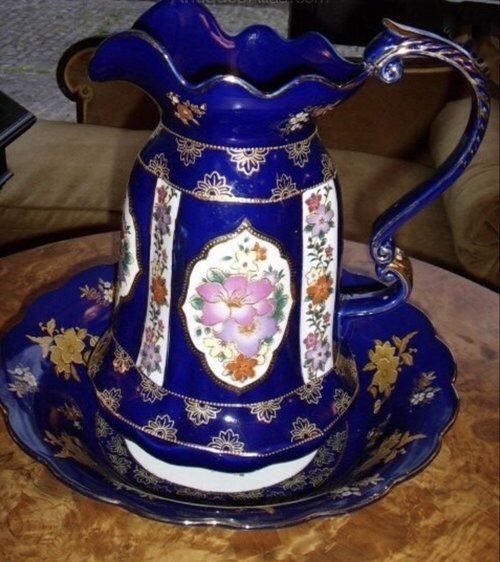
Makers such as Minton, Masons, and Doulton Burslem produced these wares, incorporating flow blue decoration, cobalt glazes, and floral motifs. Pieces range from large domestic sets to compact shaving stands.
Materials and methods
Potters shaped earthenware, ironstone, and porcelain bodies before applying intricate glaze techniques, including cobalt blue application and flow blue transfer printing. Some ceramic items received gold leaf, enamel, or gilt highlights over the fired surface.
Glass sets utilised hot-forming methods, seen in cranberry glass examples from the later nineteenth century. Woodwork appeared in associated bentwood washstands designed to support the heavy ceramic vessels.
Miniature jug and bowl sets allowed Victorian children to practice proper morning ablutions with appropriately sized equipment.
Judging the range
Quality rests upon the crispness of the transfer printing or the hand-painted execution of floral designs across the glaze. Weight and refinement of the ceramic body, particularly in ironstone and porcelain, distinguish standard domestic ware from superior productions.
The presence of precious metal highlights, such as gilt or gold leaf, alongside complex moulding and complete multi-piece sets, elevates the standing of the ensemble.
Minton·Masons Ironstone·Doulton Burslem·Mark Jones and Sons
The Victorian Wash Bowl Pitcher Glossary
- Flow blue
- A cobalt blue transfer printing style where the pigment intentionally bled slightly into the surrounding white glaze during firing. This technique created a soft, hazy appearance favoured by nineteenth-century ceramic producers.
- Ironstone
- A heavy, durable type of earthenware patented in the nineteenth century to imitate Chinese porcelain. It resists chipping and forms a sturdy base for large jugs and basins.
- Cranberry glass
- A rich red glass created by adding gold chloride to the molten batch. It gained popularity during the Victorian era for decorative tableware and wash sets.
- Aesthetic Movement
- A late nineteenth-century design style that emphasised visual beauty over narrative meaning. It influenced ceramics through stylised floral patterns and Japanese-inspired motifs.
- Washstand
- A dedicated wooden piece of furniture designed to hold a jug and bowl set. Some versions incorporated marble tops or mirrors.
Victorian Wash Bowl Pitcher: Frequently Asked Questions
How were victorian wash bowl pitcher sets used?
These sets served personal hygiene before indoor plumbing became common in homes. Water was poured from the pitcher into the bowl for washing hands and face.
They stood on bedroom washstands or dedicated furniture pieces, often accompanied by soap dishes and chamber pots.
How do I display a wash set today?
Many owners place the basin and jug on sideboards, large tables, or original washstands as decorative focal points. The pieces work well in bathrooms and hallways for holding dried flowers or towels.
Larger sets require sturdy support surfaces due to the weight of the thick ceramic and ironstone materials.
Are all these sets made of ceramic?
While the majority of listings comprise earthenware, ironstone, and porcelain, alternative materials exist. Glass versions, such as cranberry glass sets, appear alongside ceramic examples.
Some groupings also include wooden bentwood stands designed specifically to hold the basins and jugs.
What is the difference between Victorian and Edwardian sets?
Victorian sets often feature heavier ornamentation, deep cobalt or flow blue decoration, and robust ironstone bodies. They reflect the ornate tastes of the nineteenth century.
Edwardian sets tend towards lighter floral designs and brighter palettes, aligning with the turn of the century shift in interior aesthetics.