
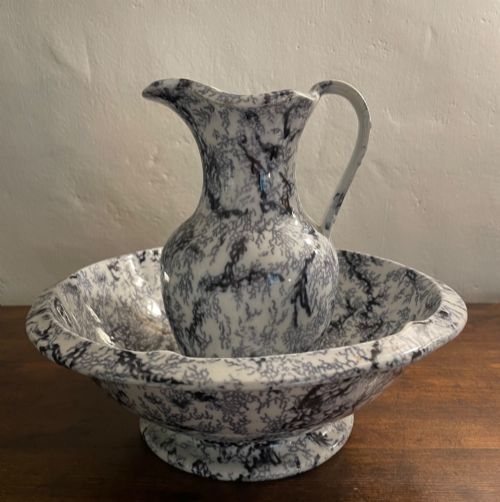


Victorian Ewer Set
A victorian ewer set brings utility and display together in ceramic and glass, offering a matched setup for the washstand or table.
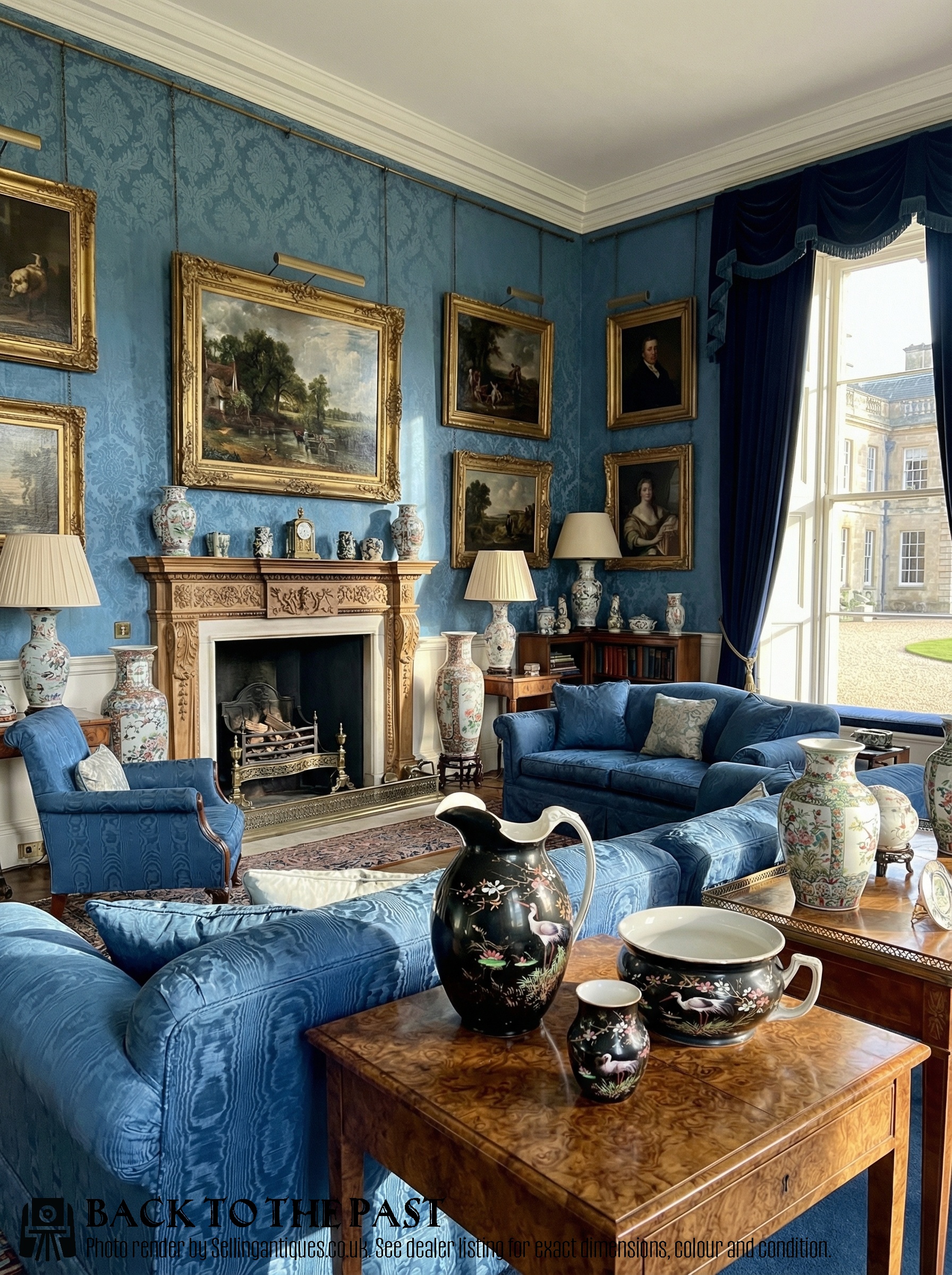
Victorian Ewer Set
A victorian ewer set comprises matched pouring vessels and basins, principally encountered here as large jug and bowl combinations for the washstand alongside specialised claret sets and oil cruets. These groupings combine functional water containers with matching receptacles, taking forms such as octagonal ironstone jugs and bathroom sets.
The objects stem from periods spanning the early nineteenth century through the Edwardian era, with strong representation from the eighteen-eighties alongside earlier staffordshire pieces and later art nouveau iterations. Buyers encounter complete bathroom sets, individual basins with matching pitchers, and glass ewer sets with stands and goblets.
Makers and potteries utilised distinct regional styles including chinoiserie, imari, and aesthetic movement decoration upon earthenware, ironstone, and porcelain bodies. The compositions range from utilitarian chamber sets to decorative Venetian glass table pieces.
Factors of Quality
Quality rests upon the crispness of the moulding and the precision of the glazed decoration across both jug and basin. Superior examples maintain matching patterns and consistent gilding across every component of the set.
The complexity of the form dictates distinction, separating standard utility ware from pieces featuring specialised glasswork, silver mounts, or distinct stylistic movements like art nouveau and aesthetic design.
Listings feature ironstone, porcelain, and earthenware alongside cut glass and Venetian latticino.
Doulton Burslem·Davenport·Colen Hewer Cheshire·Hamilton and Co
The Victorian Ewer Set Glossary
- Ewer
- A large pitcher with a flared spout and curved handle, designed for holding and pouring water. It forms the central vessel of a wash set.
- Ironstone
- A heavy, durable type of earthenware patented in the nineteenth century to rival Chinese porcelain. It resists chipping and forms a sturdy base for heavy glaze.
- Flow Blue
- A cobalt transfer printing technique where the blue colour bleeds slightly into the surrounding white glaze during firing. This creates a soft, hazy aesthetic effect.
- Latticino
- A Venetian glassblowing technique featuring fine opaque white glass threads twisted within clear glass. It produces delicate linear patterns across the body.
- Imari
- A decorative style inspired by Japanese export porcelain, utilising a palette of underglaze blue, iron red, and gilt. Victorian potteries adapted these motifs for ironstone vessels.
Victorian Ewer Set: Frequently Asked Questions
What is a victorian ewer set used for?
These sets served practical washing and serving purposes in bedrooms and dining spaces before modern indoor plumbing. The large basins and pitchers provided water for morning ablutions, while smaller glass sets held wine or condiments at the table.
Today, collectors utilise them as decorative focal points or display pieces in period interiors.
How do I clean a ceramic wash set?
Wash ceramic and ironstone surfaces gently using warm water and mild soap with a soft cloth. Avoid harsh scrubbing pads that can damage aged enamel and gilt highlights.
Glass sets require similar care, avoiding extreme temperature changes to protect delicate handles and silver mounts.
How do I date a jug and bowl set?
Dating relies on identifying the pottery mark on the base, stylistic indicators such as art nouveau curves or aesthetic movement motifs, and the type of ceramic body used. Ironstone and heavy earthenware point toward the mid-to-late nineteenth century.
Changes in decorative techniques and registered design numbers also help narrow down the period of manufacture.
Are all pieces in a set original to each other?
Most surviving sets assembled by makers were sold as unified groups, sharing identical patterns, glazes, and potter's marks across the jug and basin. Checking the registry marks and colour consistency helps confirm matching components.
Glass sets often include matching stands and goblets produced together as a unified service.