




Victorian Walnut Work Box
A victorian walnut work box combines practical storage for needlework with the rich grain of burr timber and fitted interiors designed for nineteenth-century pastimes.
Victorian Walnut Work Box
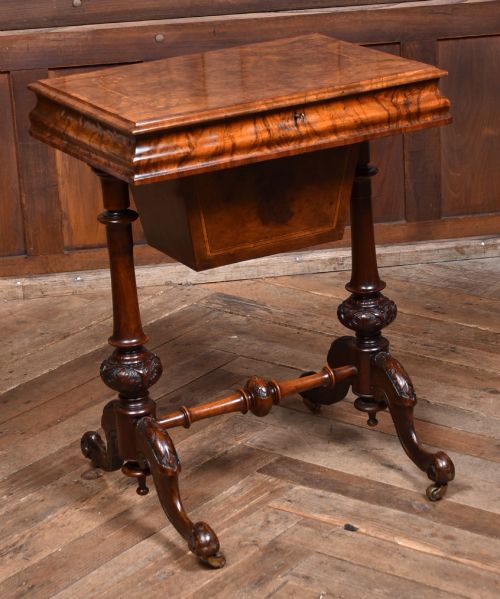
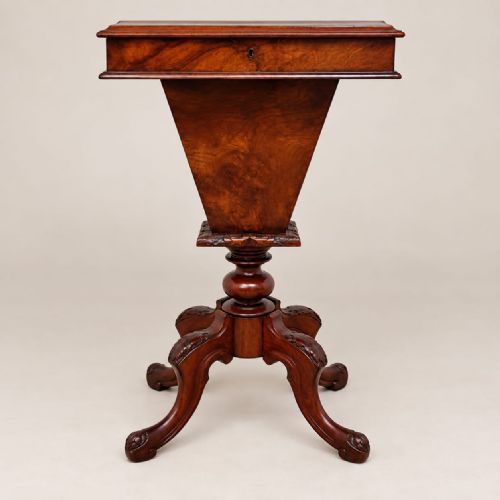
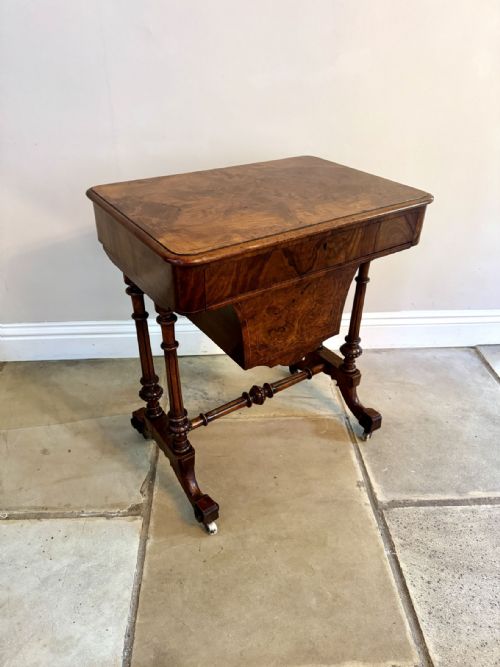
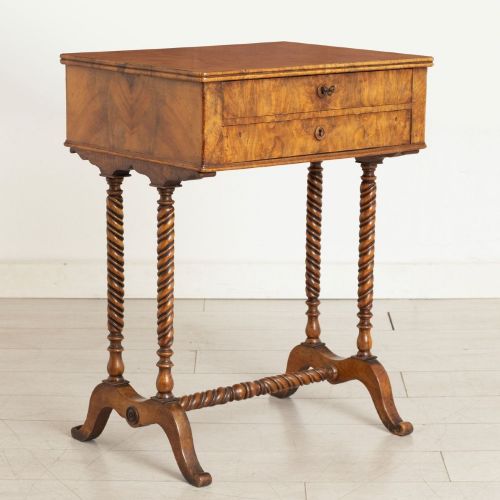
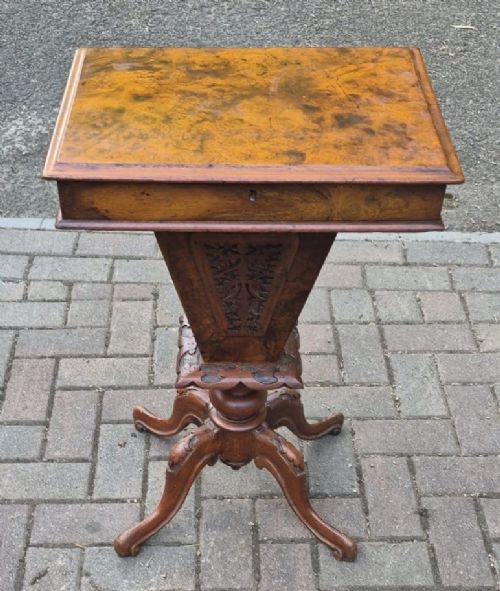
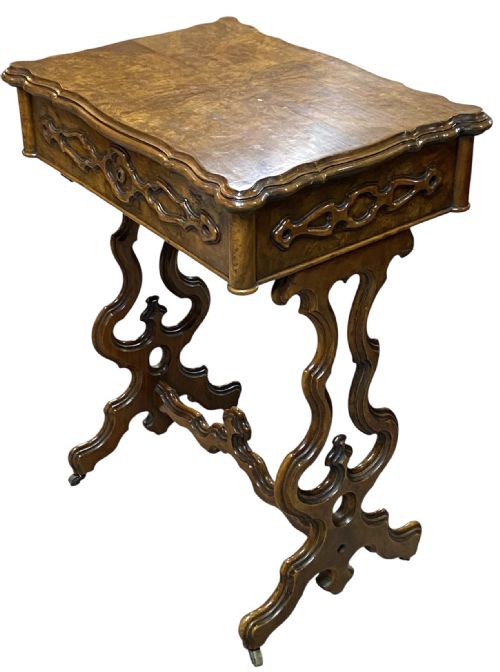
A victorian walnut work box typically takes the form of a freestanding sewing table, a trumpet-shaped pedestal piece, or a portable tabletop casket designed to house threads, needles, and crafts.
The pieces on this page span the mid to late nineteenth century, predominantly utilising burr and figured walnut veneers over solid carcases.
Many examples double as games or writing surfaces, incorporating folding tops, chess boards, and internal compartments lined with fabric.
Materials and Construction
Cabinet makers selected figured and burr walnut for its distinctive swirling grain, applying thin veneers to stable secondary timbers.
Decoration often relied on wood inlay, boxwood stringing, and marquetry, alongside specialised techniques like Tunbridge ware mosaic detailing.
Support structures range from carved and turned pedestals and tripod bases to four-legged occasional tables with fitted internal trays.
Victorian Walnut Work Box Retail Price Guide 2026
Typical asking prices for victorian walnut work box among the pieces listed under this phrase on Sellingantiques today, from the lower quarter to the upper quarter. They describe what is for sale here now, not the wider market.
Materials recorded across the inventory include solid walnut, burr walnut veneers, boxwood stringing, brass fittings, and silk fabric linings.
Assessing Craftsmanship
The selection of timber grain heavily influences desirability, with tightly figured burr walnut commanding attention over plain planks.
Internal fittings reveal the standard of production, particularly the presence of partitioned lift-out trays, original silk linings, and working brass locks.
Precision in the marquetry and inlay work, where individual pieces of contrasting wood fit flush without gaps, distinguishes workshop output.
Waring & Gillow·Parkins & Grotto
The Victorian Walnut Work Box Glossary
- Burr walnut
- A wood harvested from walnut tree growths that produces intricate, knotted grain patterns. Cabinet makers prized this veneer for decorative lid tops and panel fronts.
- Trumpet work box
- A form featuring an octagonal or circular body widening towards the base above a faceted pedestal and carved feet. This silhouette became popular during the middle decades of the nineteenth century.
- Tunbridge ware
- Small-scale mosaic woodwork created by gluing together thousands of tiny tinted wood prisms to form geometric or pictorial motifs. It frequently decorates the lids of nineteenth-century boxes.
- Marquetry
- The art of forming decorative patterns on wooden furniture by arranging veneer slices of different colours and species. Makers applied this technique to tabletop surfaces.
- Fitted interior
- A compartmented wooden tray inserted beneath the lid to organise sewing implements, bobbins, and thimbles. These inserts often lift out to reveal deeper storage space below.
Victorian Walnut Work Box: Frequently Asked Questions
What were work boxes used for?
These boxes stored sewing paraphernalia including spools, needles, pins, and lace bobbins. Ladies utilised the internal trays and compartments to keep their needlework organised during the Victorian era.
Many designs also incorporated spaces for writing letters or playing chess, making them versatile pieces for a nineteenth-century parlour.
Are these tables sturdy enough for daily use?
Yes, these nineteenth-century tables were built using solid joinery and dense hardwoods like walnut. Freestanding sewing and lamp tables function well in modern sitting rooms.
Care should be taken to protect polished walnut surfaces from moisture and direct heat to preserve the antique finish.
How can I tell the period?
Mid-nineteenth-century examples often display rich burr walnut veneers, brass stringing, and elaborate marquetry. Later Victorian pieces from the 1880s and 1890s sometimes feature simpler turned supports and fitted velvet linings.
Checking for hand-cut dovetails and original brass hardware helps confirm age.