

Victorian Walnut Tripod Table
A victorian walnut tripod table brings nineteenth-century warmth and compact utility to any room.
Victorian Walnut Tripod Table
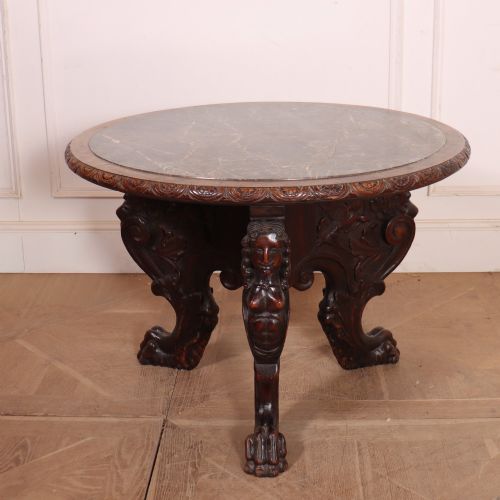
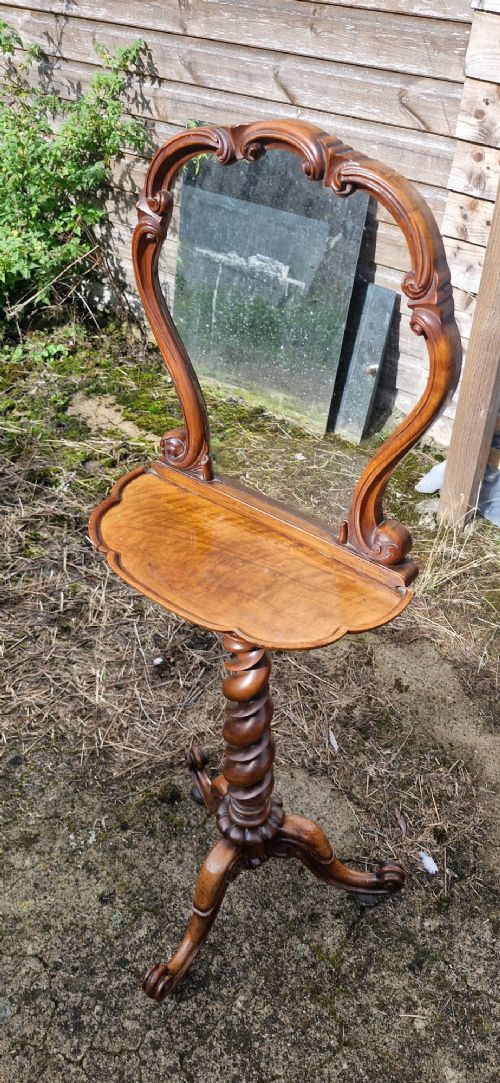
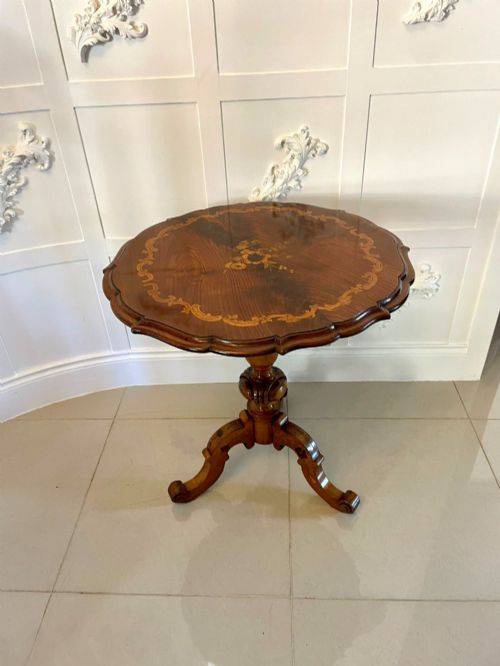
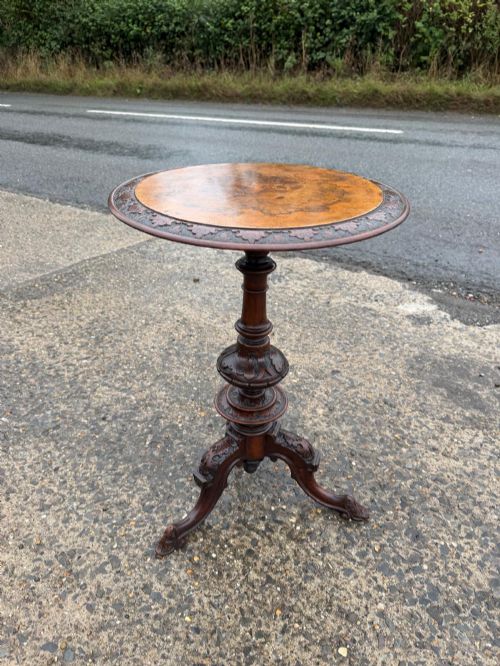
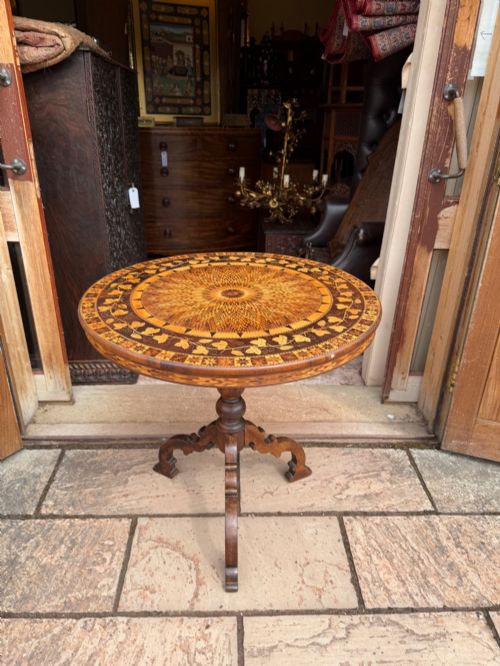
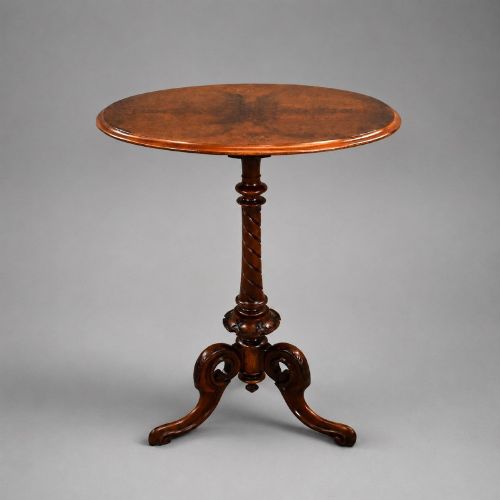
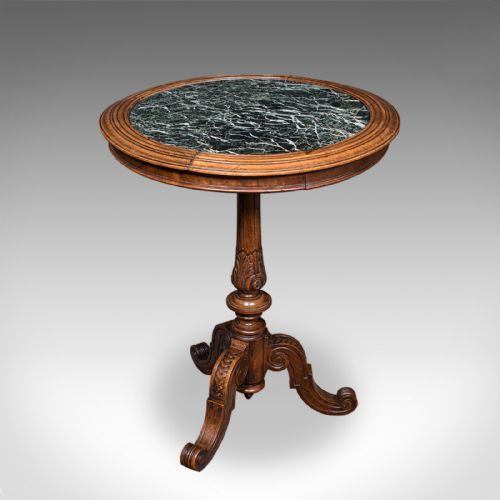
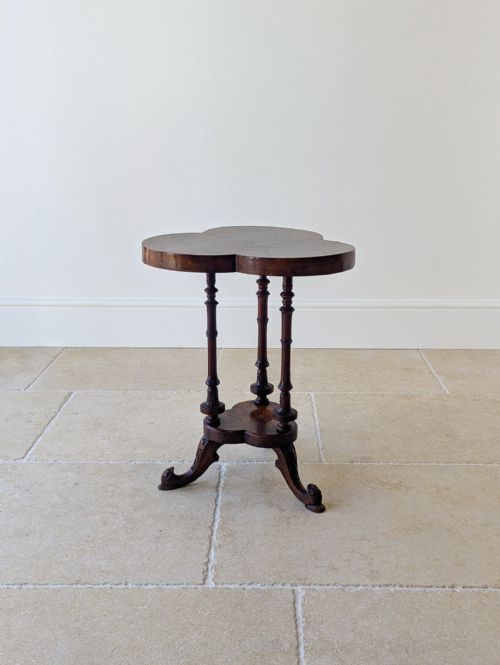
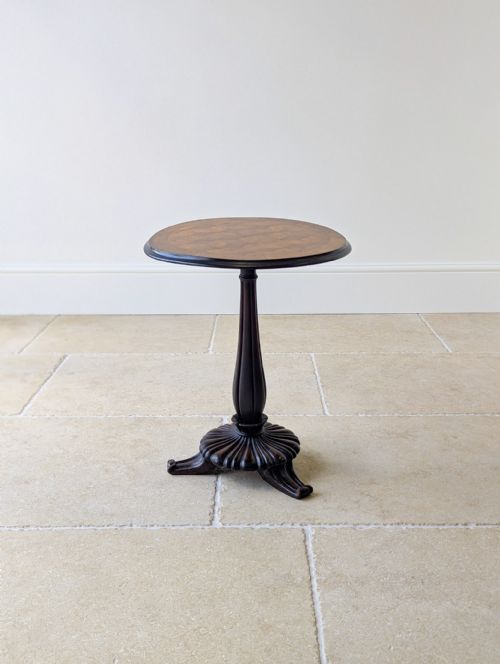
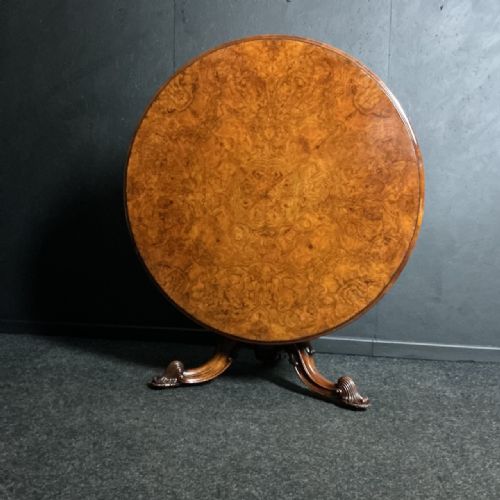
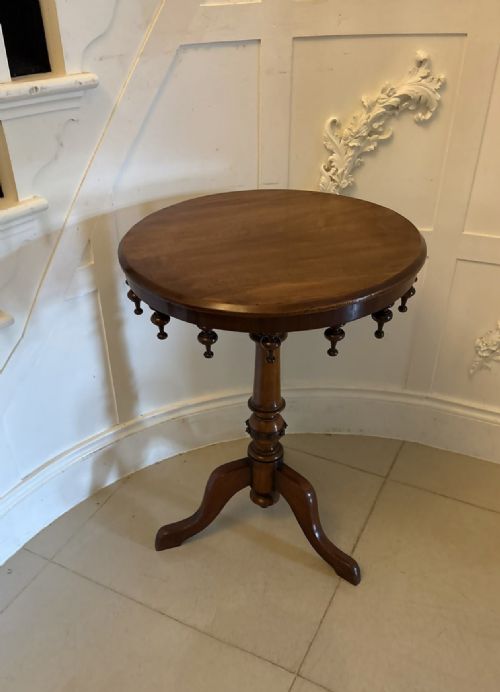
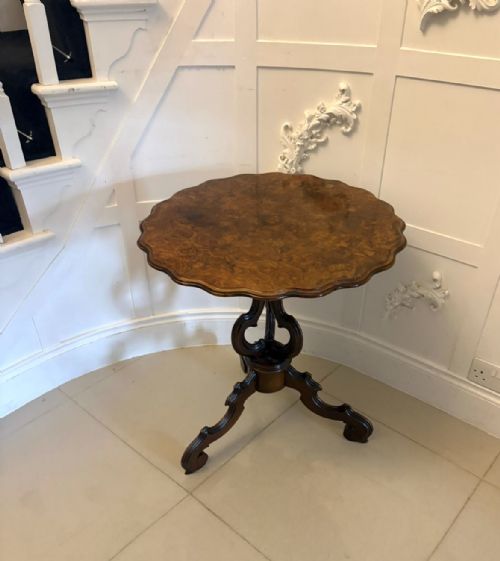
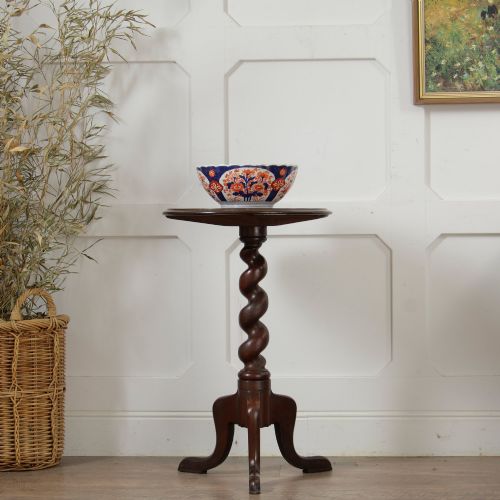
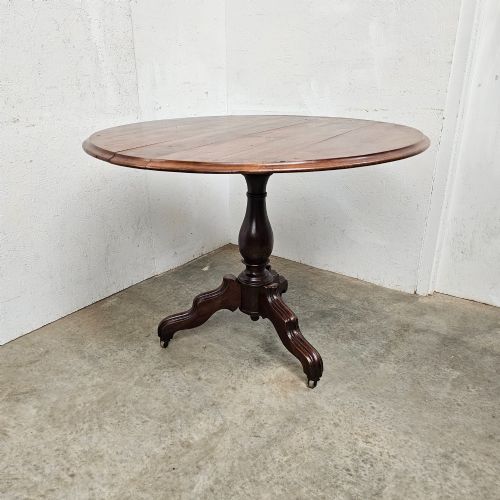
A victorian walnut tripod table is a compact pedestal piece designed for occasional use as a wine, lamp, or games surface, supported by three branching legs. Buyers exploring this selection will frequently encounter round, oval, scalloped, or trefoil tops in rich burr walnut, often featuring marquetry inlay or tilt-top mechanisms.
The surviving inventory spans several decades of the nineteenth century, with many examples originating from around the eighteen-sixties. Alongside standard lamp and wine tables, the listings include games boards, decanter tables, and occasional stands suited for period interiors.
Materials and construction
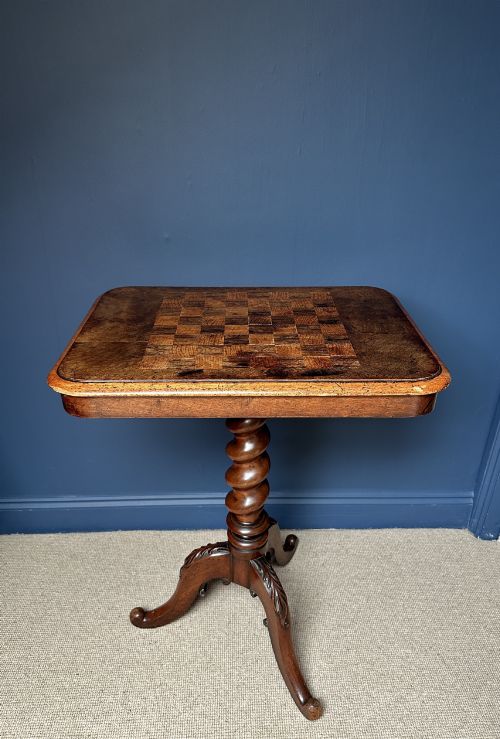
Cabinetmakers utilised solid walnut and figured burr walnut veneers applied to stable secondary woods, creating dramatic, highly figured table tops. Delicate marquetry, boxwood inlay, and parquetry were frequently integrated into the surfaces, alongside carved details such as barley twists or bobbin galleries.
The central pillar meets a three-legged tripod base, which balances the piece while offering structural stability. Many examples incorporate tilt-top mechanisms with brass catches, allowing the top to be stored vertically against a wall when not in use.
Defining craftsmanship
Quality in these pieces rests primarily on the choice of timber and the precision of the cabinetwork. Tables featuring richly figured burr walnut and intricate, well-preserved marquetry inlay stand apart from plainer, standard veneer versions.
Structural harmony also dictates value, seen in the clean proportions of the turned pedestal and the secure fit of the tripod legs. Superior examples maintain stability without excessive reinforcement, preserving the original mechanism and joinery.
The Victorian Walnut Tripod Table Glossary
- Burr walnut
- A prized timber harvested from tree growths, yielding highly swirled and mottled grain patterns that decorators favour for table tops.
- Tripod base
- A support structure composed of three curved legs radiating from a central pillar, common on small nineteenth-century tables.
- Tilt-top
- A hinged mechanism beneath the table surface allowing the top to pivot vertically for storage or display.
- Marquetry
- Decorative inlay work using various woods and materials to create pictorial or geometric patterns on the surface.
- Sorrento
- A style of Italian woodwork and marquetry inlay associated with decorative nineteenth-century occasional tables.
Victorian Walnut Tripod Table: Frequently Asked Questions
Where should I put a wine table?
These compact pieces fit easily beside an armchair, sofa, or in an empty corner where surface space is limited. Their small footprint makes them practical for holding a glass, book, or small lamp without crowding a room.
They also function well as bedside tables or display stands for small sculptures and plants. The tilt-top variety offers the flexibility of folding away when floor space is needed.
How do I spot a tilt-top mechanism?
Look underneath the table top where the central pillar meets the surface to find a wooden or brass catch and hinge assembly. This allows the top to pivot ninety degrees into a vertical position.
Original mechanisms should move smoothly without excessive wobble in the hinge. Many nineteenth-century examples feature a small brass button or latch that locks the top firmly in place when horizontal.
What is the difference between a lamp table and a games table?
Lamp and wine tables feature plain or inlaid solid tops designed to hold small decorative objects or drinks. Games tables typically incorporate an inlaid chess or checkerboard directly into the walnut surface, sometimes with storage compartments beneath.
While both share the characteristic tripod base, games tables were specifically built for recreation and social pastimes in Victorian parlours. Lamp tables focus primarily on display and everyday occasional use.
How do I care for a walnut surface?
Keep the wood away from direct sunlight and heat sources to prevent the burr walnut veneer from drying out or splitting. Use coasters under drinks and felt pads under any objects placed on the polish.
Apply a traditional beeswax polish occasionally to nourish the timber and maintain its natural lustre. Avoid synthetic sprays or excessive moisture during routine cleaning.