

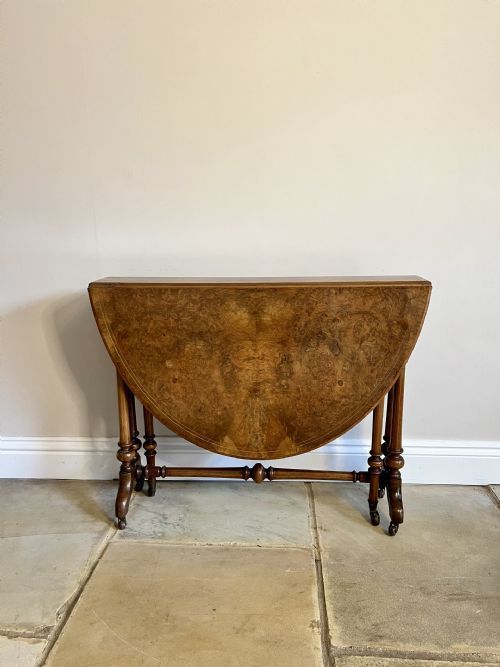


Victorian Walnut Sutherland Table
A Victorian walnut Sutherland table provides a folding drop-leaf design that sits neatly against a wall until drawn out for tea or occasional use.
Victorian Walnut Sutherland Table
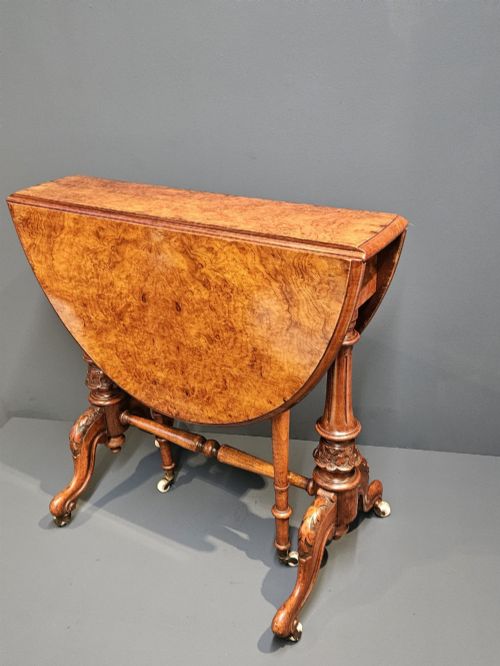
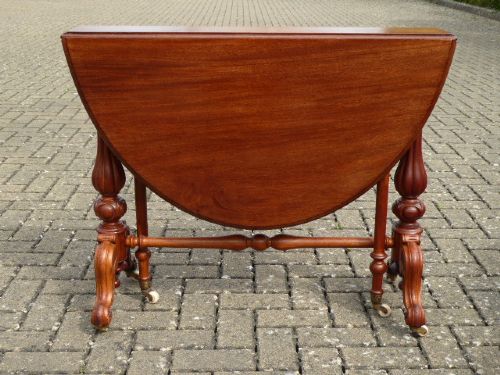
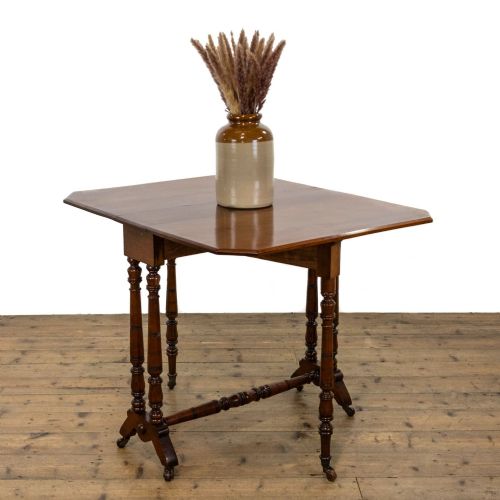
A victorian walnut sutherland table is a narrow drop-leaf occasional table supported by pivoting gate legs on each side. The design allows the twin leaves to drop almost vertically when not required, occupying minimal floor space in a Victorian interior.
Most examples found in the listings are constructed from walnut or burr walnut, frequently incorporating smaller scaled formats known as baby or miniature Sutherland tables. These variants function practically as side, lamp, or coffee tables within modern rooms.
How they were made
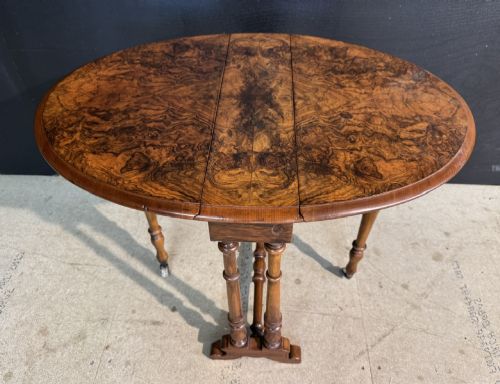
Cabinet makers utilised solid walnut and decorative burr walnut veneers applied to secondary timbers to create the primary surfaces, often enhancing the tops with boxwood stringing and floral marquetry inlay.
The characteristic folding mechanism relies on delicate gate legs hinged to a narrow central fixed top, supported by wooden or ceramic castors fitted to the base of each leg.
Victorian Walnut Sutherland Table Retail Price Guide 2026
Typical asking prices for victorian walnut sutherland table among the pieces listed under this phrase on Sellingantiques today, from the lower quarter to the upper quarter. They describe what is for sale here now, not the wider market.
The narrowest examples fold down so flat they can practically hide behind a Victorian armchair.
What varies in quality
The standard of a piece rests largely on the choice and figuring of the burr walnut veneer selected for the top, alongside the crispness of any inlaid marquetry and boxwood details. Superior examples display carefully matched grain patterns across both dropping leaves and the central section.
Constructional refinement also separates the output, visible in the stability of the pivoting gate action, the slenderness of the turned supports, and the retention of original brass and ceramic castors.
The Victorian Walnut Sutherland Table Glossary
- Burr walnut
- A prized wood veneer taken from the wart-like growths on walnut trees, yielding swirling, highly figured grain patterns. It was frequently deployed on the primary surfaces of superior Victorian furniture.
- Marquetry
- Decorative patterns formed by fitting together small pieces of different coloured wood veneers into a design. Floral motifs are common on Victorian tables.
- Gate leg
- A hinged leg that swings outward from the frame to support an extended drop leaf. In these tables, a pair of gate legs on each side sustains the wide leaves.
- Drop leaf
- A hinged section of a table top that can be raised to increase surface area or lowered when space is restricted. These leaves hang vertically alongside the narrow central support.
Victorian Walnut Sutherland Table: Frequently Asked Questions
How do I use a Sutherland table today?
These tables function well folded against a living room wall as a decorative side or lamp table. When extra surface space is needed, simply lift both leaves and swing the gate legs outward.
The narrow profile when folded makes them exceptionally versatile for smaller rooms or hallways where a standard table would obstruct movement.
What is a baby Sutherland table?
A baby Sutherland table is simply a reduced-scale version of the standard Victorian design. They share the same pivoting gate-leg action and drop leaves but in much smaller dimensions.
Cabinet makers produced these compact variants for lighter domestic use, and they frequently serve as low coffee tables in contemporary settings.
How can I tell if the walnut veneer is original?
Examine the grain continuity across the fixed centre top and the folding leaves to ensure the timber matches naturally. Original veneers will show signs of age, such as fine craquelure in the polish and honest wear consistent with nineteenth-century use.
Replacements or modern patches often present a different hue or lack the depth of figure found in period burr walnut.
Did these tables always have castors?
Most period examples were fitted with small brass and ceramic castors attached to the feet to make moving the slender gate legs easier across carpets. The presence of original castors adds to the authenticity of the piece.
Some smaller models occasionally relied on plain wooden feet, but mounting on castors remains standard for the form.