
Victorian Walnut Storage Cabinet
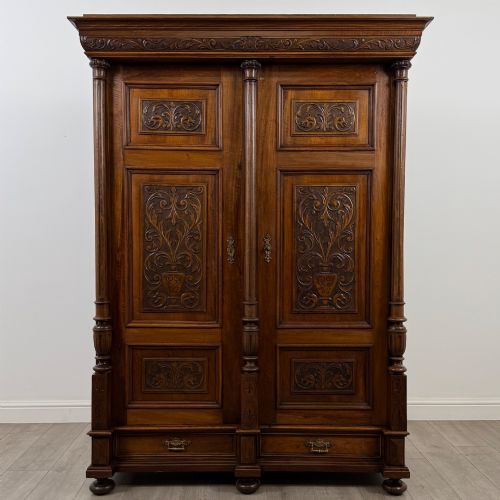
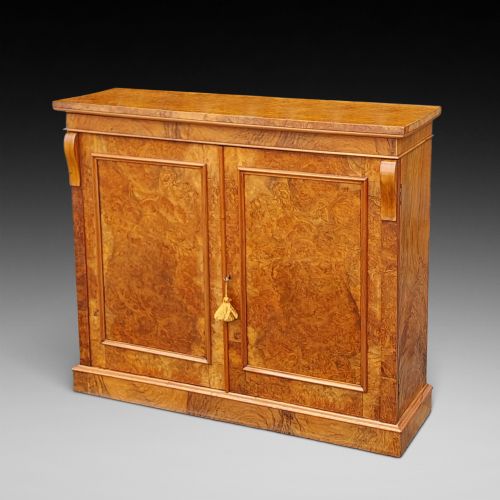
A victorian walnut storage cabinet offers substantial interior capacity wrapped in decorative timber veneer, fulfilling practical storage needs with period style.

Victorian Walnut Storage Cabinet
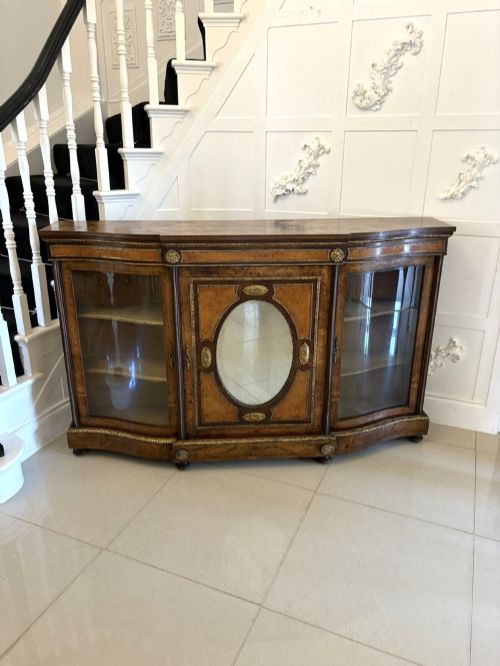
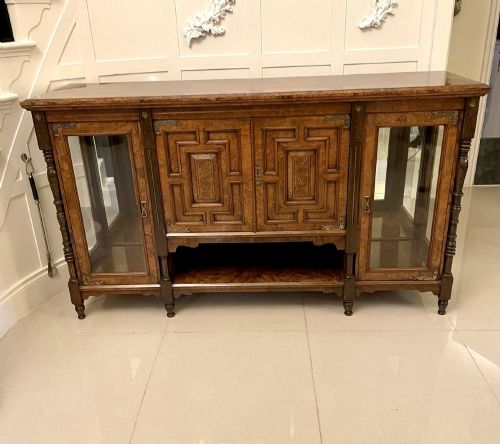
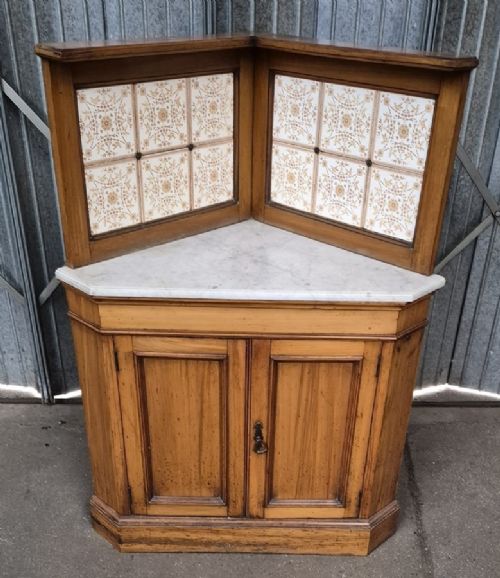
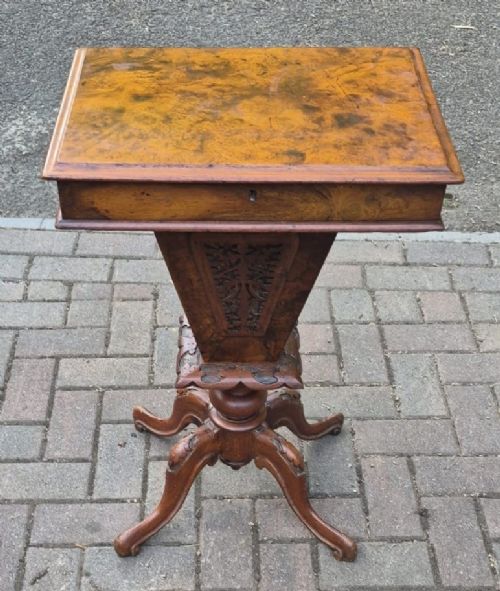
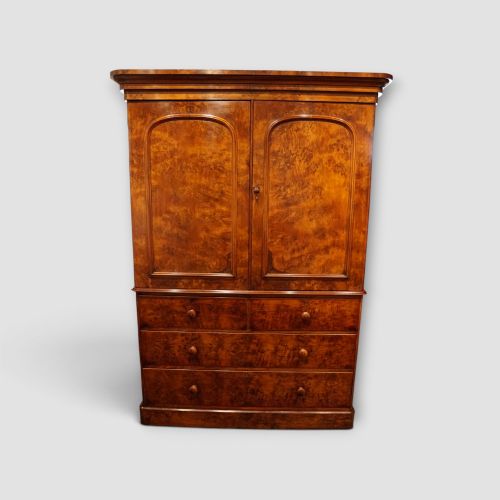
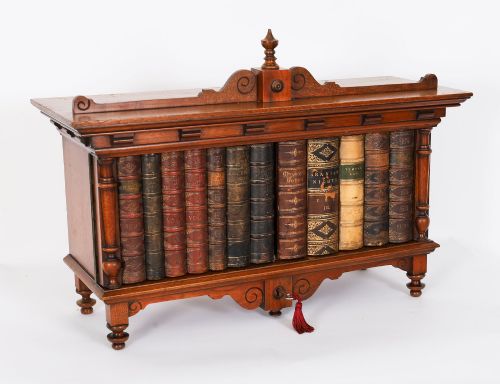
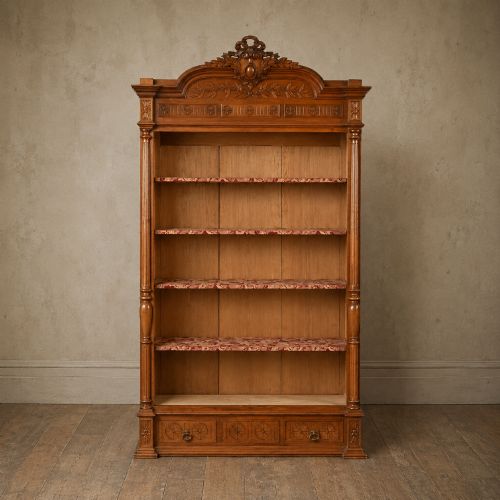
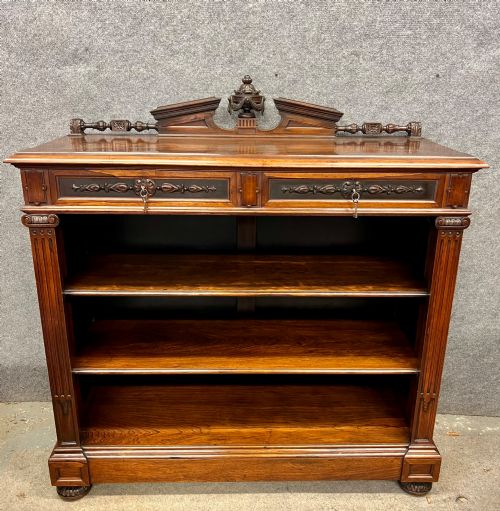
A victorian walnut storage cabinet encompasses diverse forms designed for domestic utility and display across the nineteenth century. Buyers encounter credenzas, side cabinets, music cabinets, linen presses, and collectors chests originating from British and continental workshops.
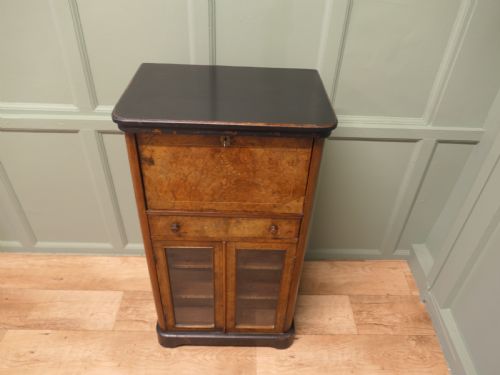
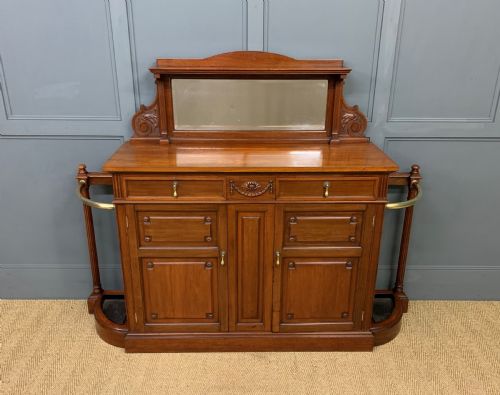
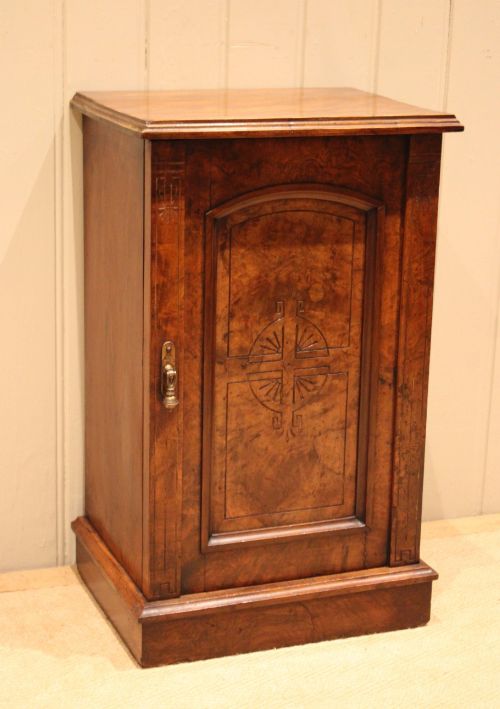
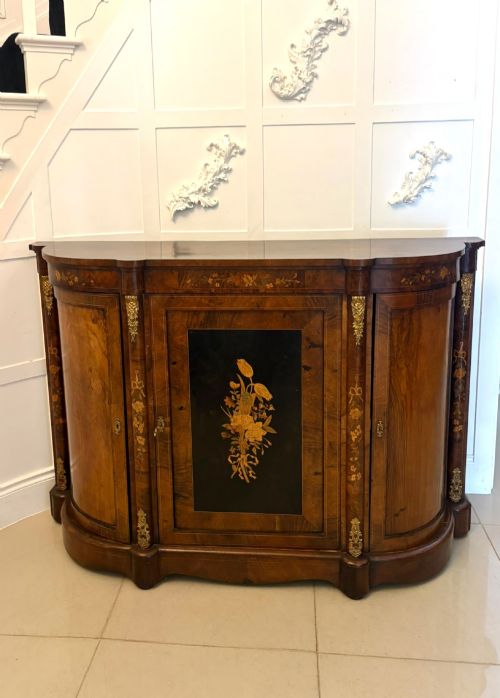
The most common variants on this page utilise burr walnut veneer with rich grain patterns, often configured as credenzas with glass doors or compact bedside and music cabinets. Pieces span the decades from the eighteen-fifties through to the late nineteenth century, reflecting varied regional preferences for domestic organisation.
Gradations of Make
Quality separates ordinary utility pieces from exceptional salon furniture through the selection of timber veneers and the precision of marquetry work. Elaborate ormolu mounts and finely executed carved details distinguish superior examples from plain carcases.
The integrity of internal drawer construction, original locking mechanisms, and the alignment of doors indicate the level of craftsmanship invested during manufacture. Finer pieces demonstrate careful book-matching of burr walnut figures across facade surfaces.
Several cabinets on this page were built specifically to hold sheet music for Victorian pianists.
Shoolbred and Co.·Maison Gagneau·Walker and Sons
The Victorian Walnut Storage Cabinet Glossary
- Burr walnut
- A veneer sliced from the gnarly growths of a walnut tree, yielding complex, swirling grain patterns. This decorative wood defines the primary aesthetic of high-end nineteenth-century cabinets.
- Credenza
- A sideboard or display cabinet featuring enclosed cupboards flanked by glass-fronted compartments. These pieces frequently incorporate marquetry and ormolu mounts.
- Ormolu
- Gilded bronze used for decorative mounts, feet, and key escutcheons on nineteenth-century furniture. It provides metallic contrast against dark walnut timber.
- Marquetry
- Intricate patterns formed by fitted veneers of different woods, such as boxwood, inlaid into the cabinet surface. Floral motifs are common in this period.
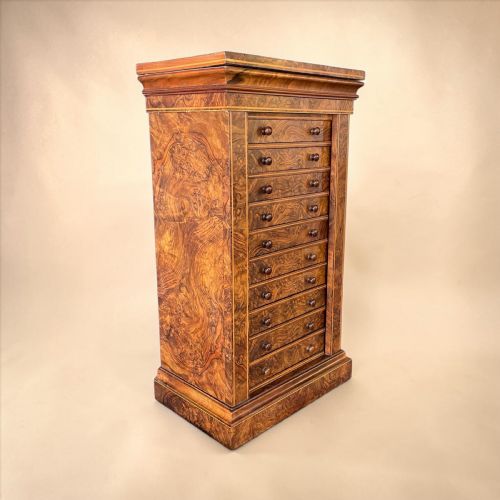
- Wellington chest
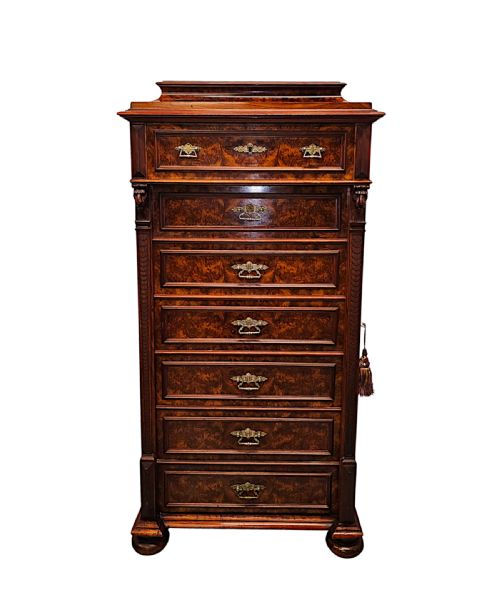
- A tall, narrow chest of drawers secured by a locking side stile that fastens over the drawer edges. This form maximises vertical storage space.
Victorian Walnut Storage Cabinet: Frequently Asked Questions
What fits inside a music cabinet?
Music cabinets contain internal shelves or vertical sliding compartments originally designed to organise sheet music and folios. These spaces suit modern storage of papers, flat items, or small household objects.
Buyers often place these compact pieces in reception rooms or hallways where floor space is limited. Their compartmentalised interiors maintain order without requiring a large footprint.
How do I identify a collectors cabinet?
Collectors cabinets feature multiple shallow internal drawers enclosed by one or two locking doors. These drawers often possess glass lids or specialised linings for housing specimens.
Such pieces date primarily from the nineteenth century and reflect Victorian interests in natural history and antiquities. The secure locking doors protected delicate items from dust and handling.
Where should I place a credenza?
Credenzas suit dining rooms, hallways, or living spaces where surface display and concealed storage are required. Their low profile allows items to be placed on top while cabinets store tableware or linens.
The glass-fronted side sections on many examples provide display space for ceramics or glassware. Positioning them away from direct heat sources protects the walnut veneer and polished finish.
What is a Wellington chest used for?
A Wellington chest provides tall, vertical drawer storage while occupying minimal floor space. The locking side bar secures all drawers simultaneously with a single key.
This nineteenth-century form works well in bedrooms or studies for clothing and documents. The narrow proportions allow placement in tighter corners where standard chests do not fit.