

French Rococo Cabinet Chest
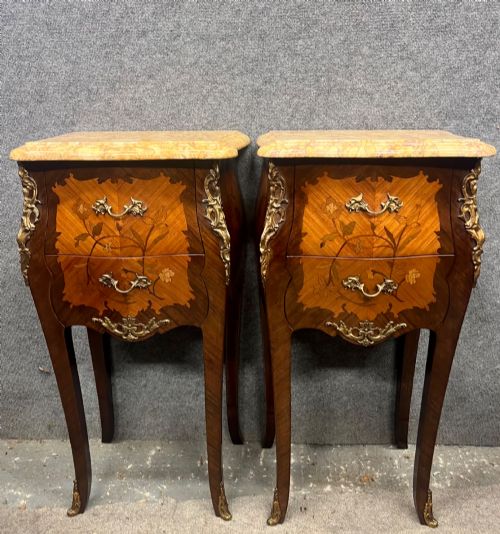
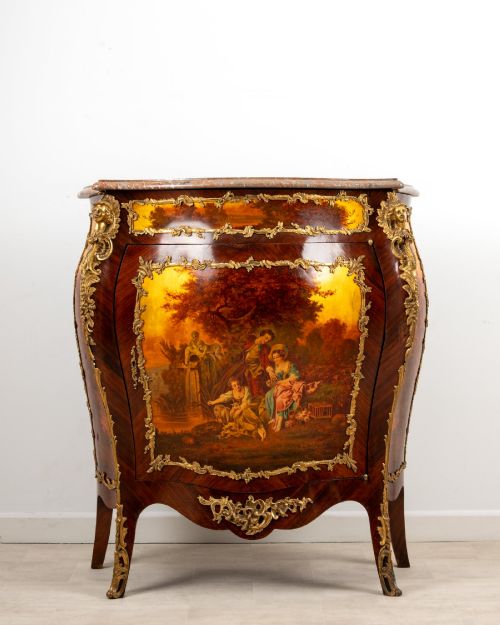
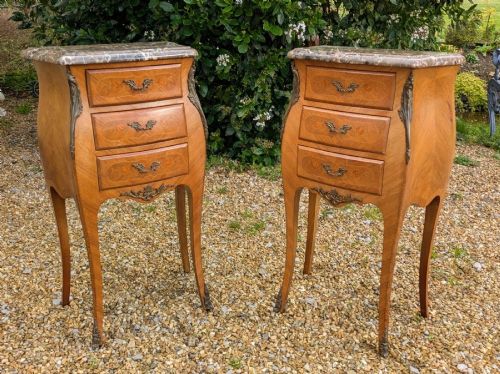
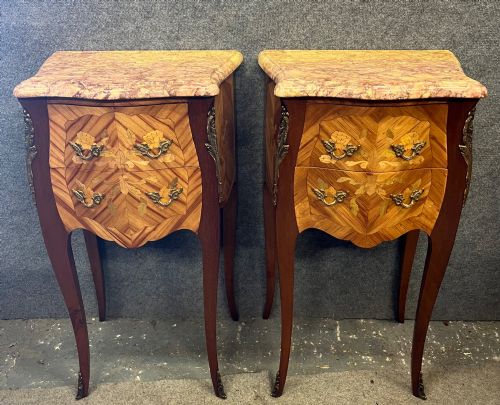
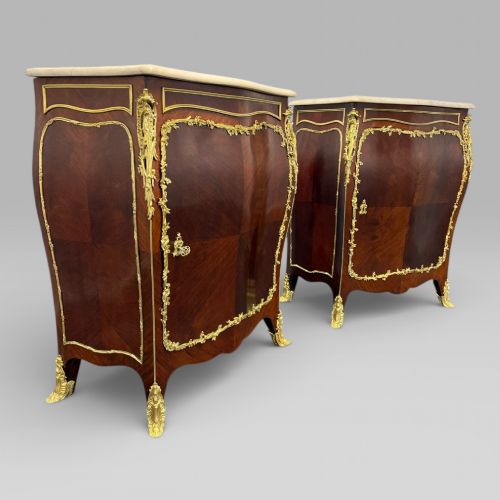
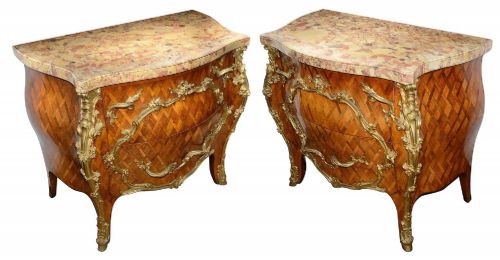
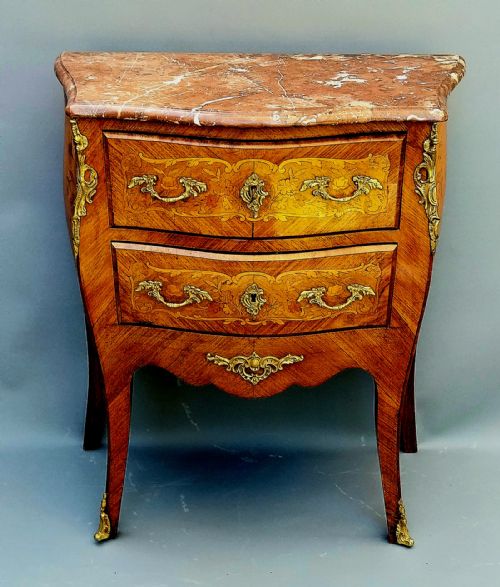
These french rococo cabinet chest pieces bring serpentine lines, rich marquetry and marble tops into a room.
French Rococo Cabinet Chest
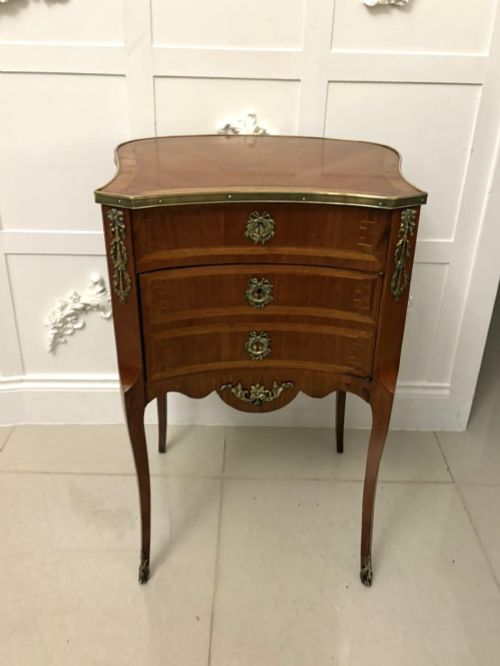
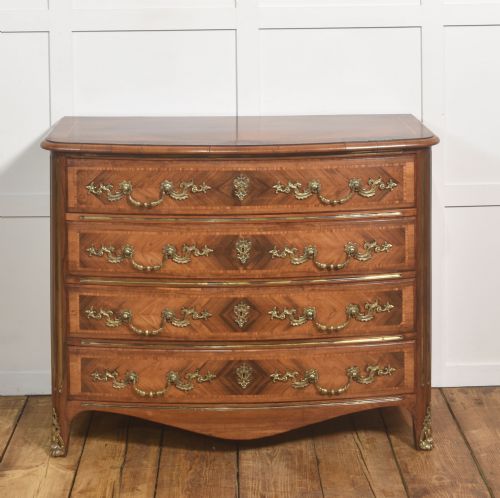
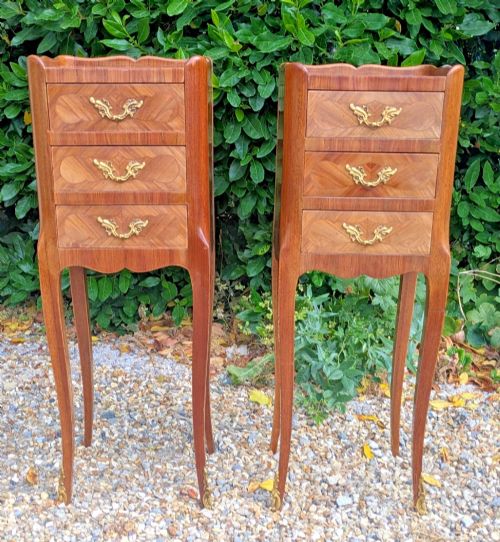
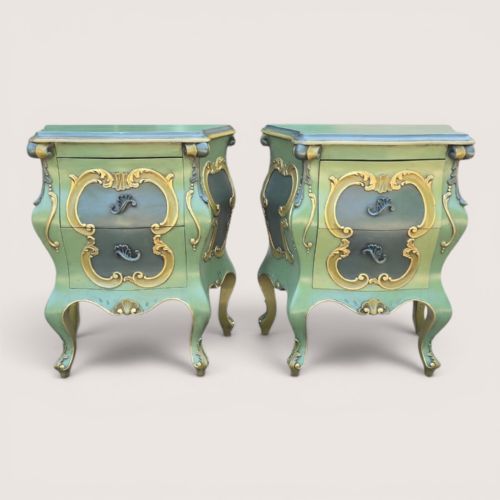
A french rococo cabinet chest combines curved silhouettes with decorative mounts, appearing across periods from the eighteenth century to the twentieth. Buyers looking at this selection encounter commodes, bedside tables, and side cabinets shaped by Louis XV and Rococo Revival influences.
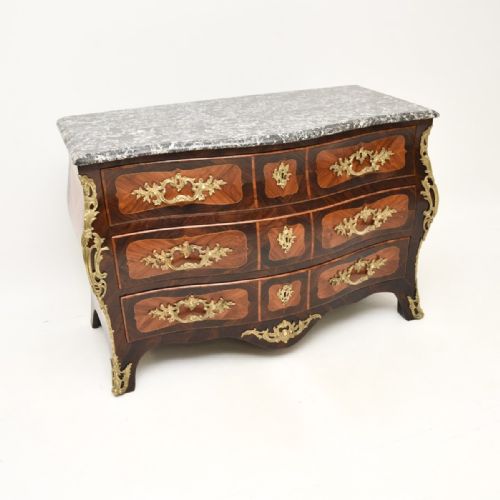
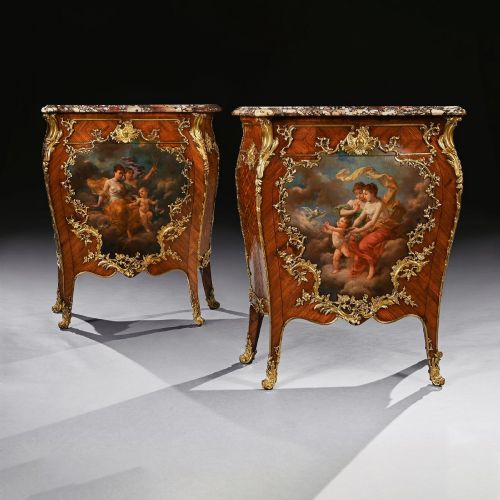
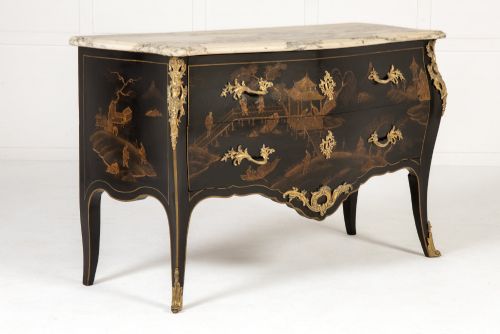
The most frequent examples on this page are marble-topped commodes and smaller bedside chests featuring marquetry inlay or painted finishes. These forms range from eighteenth-century originals to later revival pieces produced around nineteen-twenty and nineteen-thirty.
How they were made
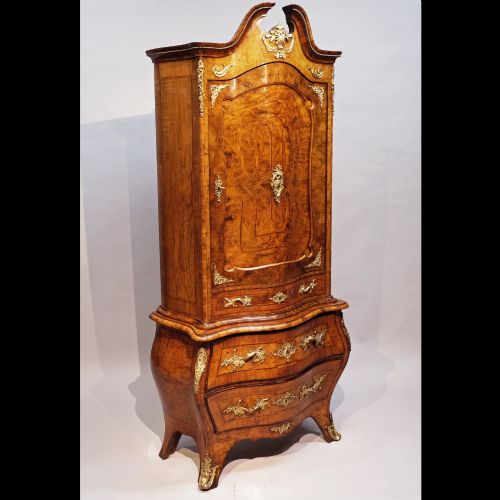
Cabinet makers utilised foundational timbers such as walnut, kingwood, fruitwood, and burr walnut, often applying intricate marquetry patterns across curved drawer fronts and sides. Selected pieces incorporate Vernis Martin lacquer or Chinoiserie japanning beneath clear protective finishes.
Structural forms frequently feature shaped marble slabs fitted strictly to serpentine or bombé contours. Cast or chased ormolu and gilt bronze mounts accent corners, handles, and apron centres, completing the assembly.
Listings span eighteen-hundred to nineteen-thirty, uniting eighteenth-century originals with later revival pieces in walnut, kingwood, and marble.
What varies in quality
Quality separates along the precision of the timber matching and the crispness of the bronze or ormolu chasing. Superior examples display meticulously aligned veneer grains across complex curves without distortion.
Heavier, better-integrated metal mounts and heavier, well-figured marble tops distinguish the finer items from standard production pieces. The depth and execution of the marquetry work dictate the standing of individual cabinets.
Jacques Bircklé·E. Kahn·Gaudreaux
The French Rococo Cabinet Chest Glossary
- Commode
- A decorative chest of drawers or low cabinet developed in France during the eighteenth century. They frequently feature marble tops and elaborate mounts.
- Bombe
- A swelling, outward-curving contour applied to the front and sides of furniture. This shape requires advanced woodworking skill to execute properly.
- Ormolu
- Gilt bronze applied as mounts and feet on fine cabinetry. The process involves mercury gilding on bronze castings.
- Marquetry
- The art of applying small pieces of veneer to form decorative patterns and pictures. Makers use various exotic and native woods to achieve tonal contrast.
- Serpentine
- A furniture front or top curving inward centrally and outward at the ends. It echoes organic rococo lines.
French Rococo Cabinet Chest: Frequently Asked Questions
How do I identify a true period piece?
Period pieces from the eighteenth century show construction methods, timber shrinkage, and hand-cut joinery consistent with their age. Revival items from later centuries adopt similar stylistic vocabulary but reveal different internal secondary woods.
Examining the underside, drawer linings, and backboards provides clear indicators of manufacturing eras. Documentation or maker stamps also help establish the date of origin.
Where should I place a commode?
These cabinets suit living rooms, hallways, or bedrooms where their decorative surfaces and storage prove useful. Their finished backs and detailed fronts allow placement against walls or within open room layouts.
Pairing bedside cabinets with low bed frames balances proportions. Larger commodes function effectively beneath large mirrors or artwork.
How do I care for marble and wood?
Marble tops require protection from acidic liquids and harsh chemical cleaners to prevent surface etching. Regular dusting with a soft cloth maintains both stone and polished wood surfaces.
Applying appropriate wax preserves wood finishes without building up heavy residues. Direct sunlight should be avoided to protect sensitive veneers and lacquers.
What is the difference between styles?
Louis XV and Rococo styles emphasise asymmetrical curves, naturalistic leaf motifs, and flowing lines. Later nineteenth and twentieth-century revivals replicate these forms with varying degrees of decorative intensity.
Understanding these distinctions involves looking at the exaggeration of the curves and the choice of mount designs. Earlier pieces tend to show restrained elegance compared to later revivals.