


Victorian Walnut Sculpture
Victorian walnut sculpture brings the deep tones and intricate carving of the nineteenth century into domestic spaces through figures, animals, and architectural furnishings.
Victorian Walnut Sculpture
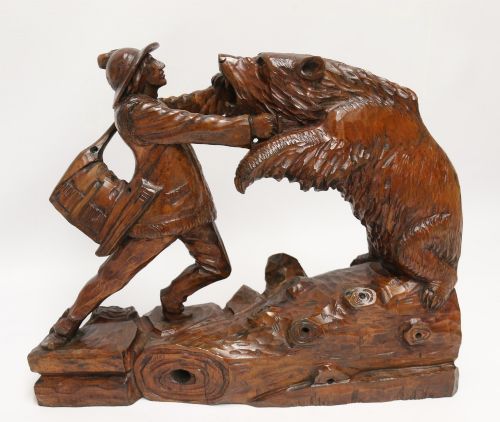
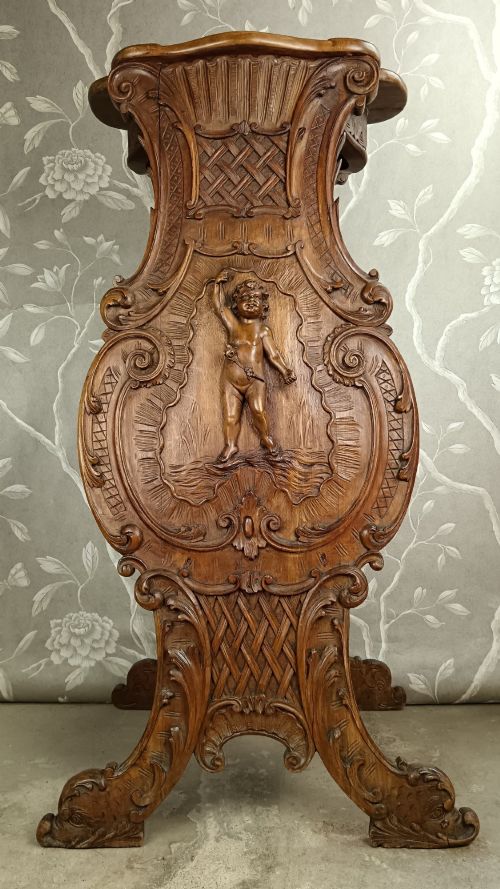
When you search for victorian walnut sculpture, you encounter a range of carved objects spanning from the mid-nineteenth century to the end of the 1890s. The selection on this page centres heavily on Black Forest animal carvings, alongside architectural pedestals, wall masks, and functional items like tobacco boxes and inkwells.
The objects take diverse forms, from large hall stands and pedestal stands to small decorative figures, bird studies, and wall-hanging panels. Animal subjects dominate the groupings, particularly bears, dogs, lions, and birds executed with spirited realism.
Stylistically, these pieces draw upon Black Forest traditions, Italian Renaissance Revival, Victorian Gothic, and the Aesthetic Movement. Most examples emerge from the broader nineteenth century, with specific dates clustering around eighteen-sixty and eighteen-ninety.
How they were made
The makers relied primarily on walnut, burr walnut, and related timbers such as lindenwood, carving the dense grain by hand to achieve deep relief and fine textural detail. Certain elements incorporate ebonised wood and gilding to heighten contrast and visual emphasis.
Construction techniques combine solid timber carving with structural joinery, particularly in larger furniture forms like pedestals, columns, and hall stands. Glass components occasionally appear in functional desk accessories such as inkwells.
Listings feature works from the nineteenth century, including specific dates such as eighteen-sixty and eighteen-ninety alongside general Victorian periods.
What varies in quality
The distinction between standard works and master pieces lies in the depth of the carving and the anatomical precision of the subject matter. Fine items demonstrate spirited naturalism in animal fur, plumage, and facial expressions without stiffness.
Scale and ambition also differentiate the tier of pieces, separating modest novelty items from large exhibition pieces, elaborate wall panels, and substantial architectural furniture.
Gillow & Co.·Luigi Frullini
The Victorian Walnut Sculpture Glossary
- Black Forest carving
- A style of wood carving originating from the Brienz region of Switzerland and the Black Forest in Germany, famous for realistic animal figures and rustic furniture. Bears and forest wildlife are typical motifs of this tradition.
- Burr walnut
- A prized veneer or timber taken from the gnarled growths on walnut trees, showing highly figured, swirling grain patterns. It adds rich visual movement to furniture surfaces.
- Ebonised wood
- Timber treated with chemical stains or black finish to imitate expensive ebony. It was frequently utilised during the Victorian period for dramatic contrast.
- Pedestal
- A tall support or column used to elevate a sculpture, bust, or decorative vase. Victorian examples often feature carved walnut enrichment in revival styles.
- Renaissance Revival
- A nineteenth-century design movement that drew inspiration from sixteenth-century Italian and French architecture and ornamentation. It favours robust proportions and classical motifs.
Victorian Walnut Sculpture: Frequently Asked Questions
What animals appear most often in these sculptures?
Bears, dogs, lions, tigers, hawks, and eagles dominate the animal subjects within these nineteenth-century wood carvings.
These creatures were often depicted with great character in functional objects like inkstands, tobacco boxes, and hall stands.
How do I care for carved walnut furniture?
Keep carved walnut pieces away from direct heat sources and strong sunlight to prevent the timber from drying out or splitting.
Dust the intricate carvings gently with a soft brush to protect the fine details of the wood.
What is the difference between a pedestal and a plinth?
A pedestal generally refers to a tall, freestanding column or pillar designed to elevate a statue or decorative object above floor level.
A plinth is typically a shorter base or block serving a similar foundational purpose for a sculpture or architectural element.
Where were Black Forest carvings made?
Black Forest carvings were produced primarily in the Brienz region of Switzerland and the Black Forest area of Germany during the nineteenth century.
Skilled woodcarvers in these regions specialised in realistic representations of local wildlife and rustic forest themes.