


Victorian Wooden Sculpture
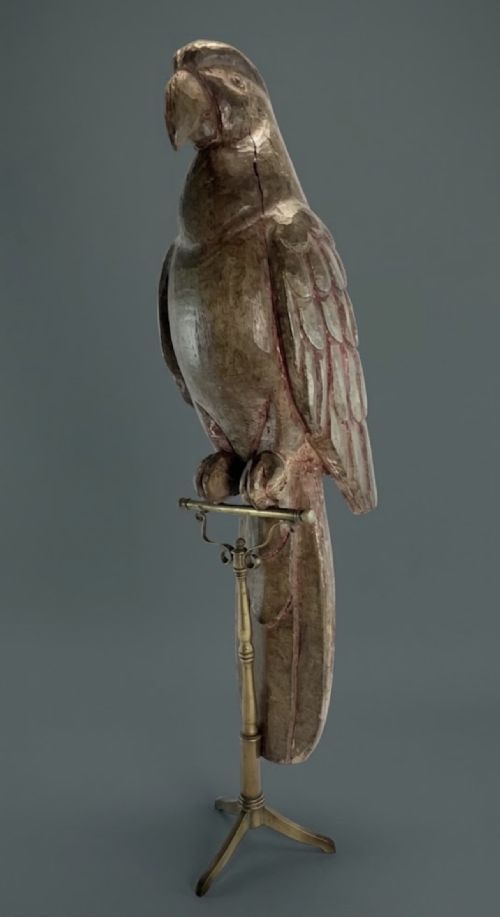
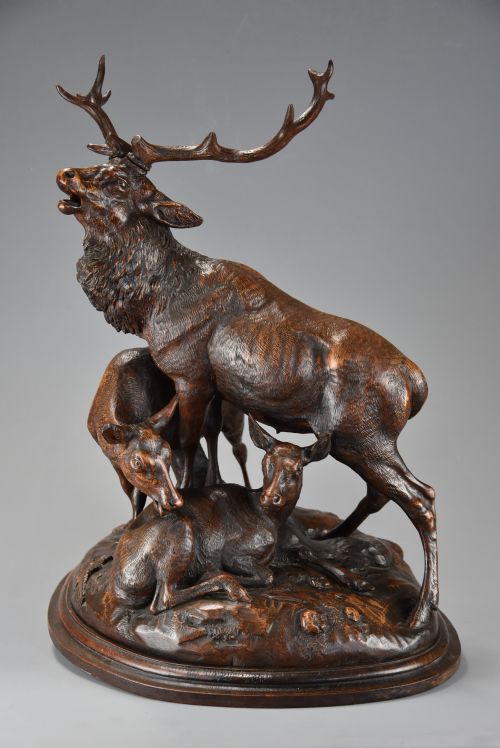
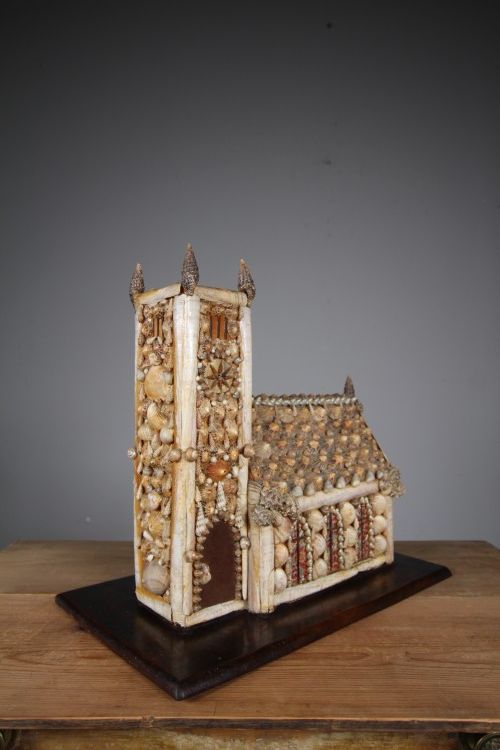
Victorian wooden sculpture brings character and texture into a room, spanning animal studies, figures, and architectural pedestals.
Victorian Wooden Sculpture
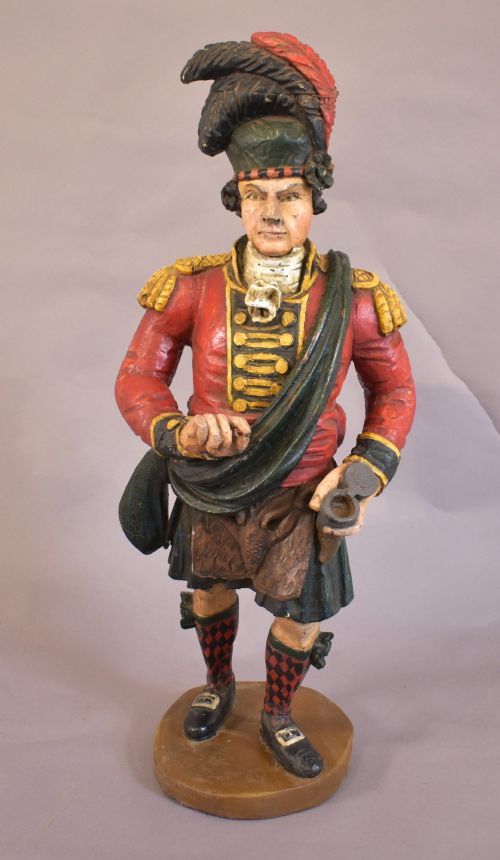
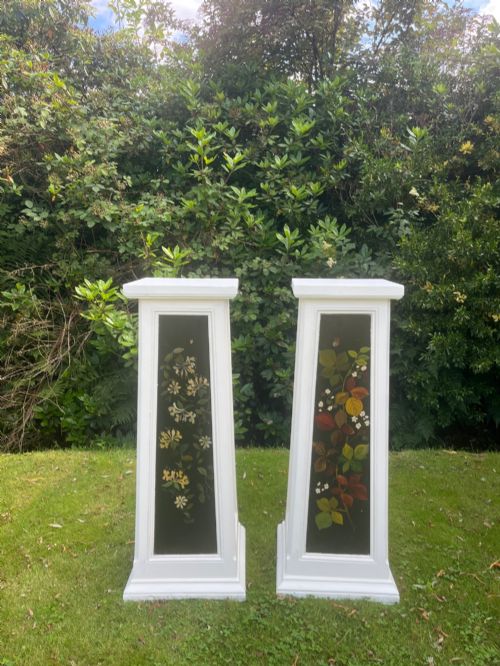
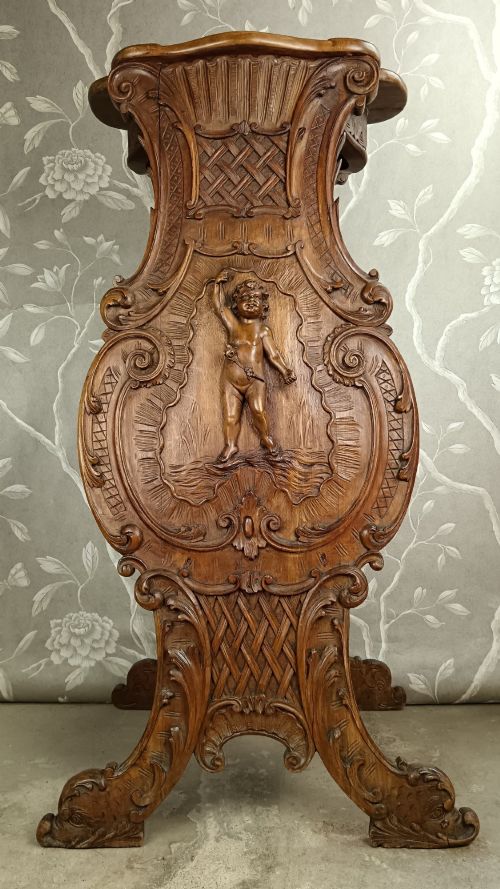
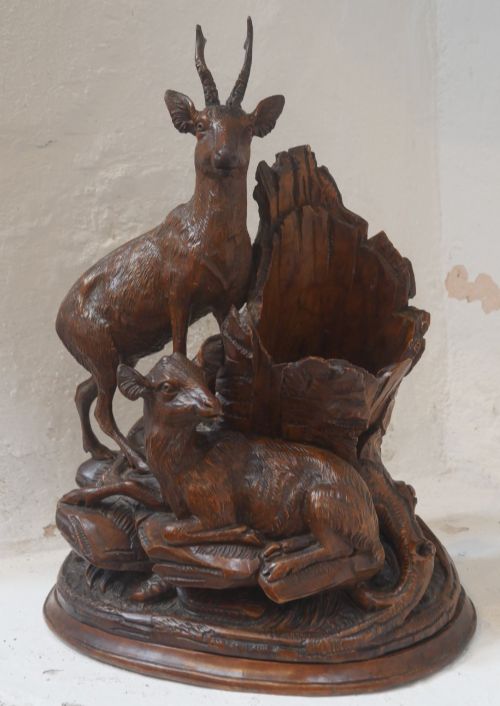
Victorian wooden sculpture encompasses a diverse range of carved forms, from animal figures and trade signs to architectural pedestals and religious studies. Buyers seeking victorian wooden sculpture often encounter Black Forest animal carvings, folk art objects, and walnut or oak display stands.
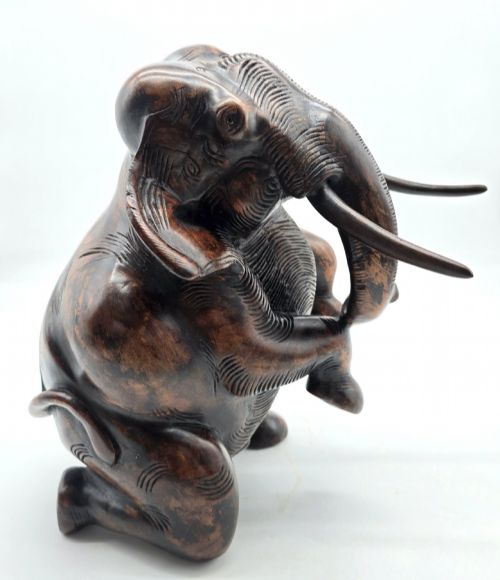
The objects span domestic decorative pieces, such as tobacco boxes and umbrella stands, alongside grander display furniture like columns and pedestals. Works frequently reflect specific regional traditions, including Swiss Black Forest carving, English folk art, and Anglo-Indian craftsmanship.
Makers utilised various timber types to suit the subject, ranging from soft linden wood for detailed animal fur to dense walnut and oak for architectural supports. These pieces served both decorative and functional roles in nineteenth-century interiors, functioning as practical holders or purely visual focal points.
Materials and carving techniques
Carvers shaped these pieces primarily using hand tools on regional timbers like walnut, oak, sycamore, and linden wood. Linden wood offered a soft, even grain suited to the deep undercut foliage and animals characteristic of Black Forest work.
Surface treatments varied from polished natural wood and dark staining to polychrome paint and gilding, as seen on trade signs and religious figures. Iron and brass components occasionally provided structural support or hardware, while marble bases anchored heavy maritime and figural models.
Listings feature items spanning the nineteenth century up to the nineteen-thirties, incorporating walnut, oak, linden wood, and iron.
Defining quality in carved wood
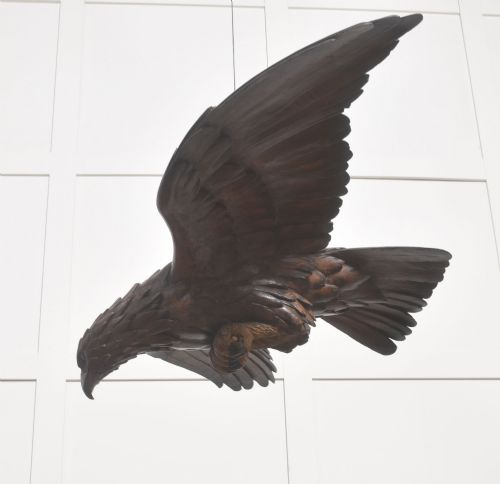
Quality rests in the anatomical accuracy and depth of the carving, distinguishing lifelike animal musculature from stiff, generalised forms. Finer examples display subtle tool marks and patient detailing in fur, feathers, and facial expressions.
The choice of timber and stability of construction also separate standard items from superior pieces, particularly in large furniture elements like pedestals and columns. Well-seasoned woods resist splitting, preserving the crisp edges of acanthus leaves and figural reliefs over generations.
Gillow & Co.·J. Huggler
The Victorian Wooden Sculpture Glossary
- Black Forest
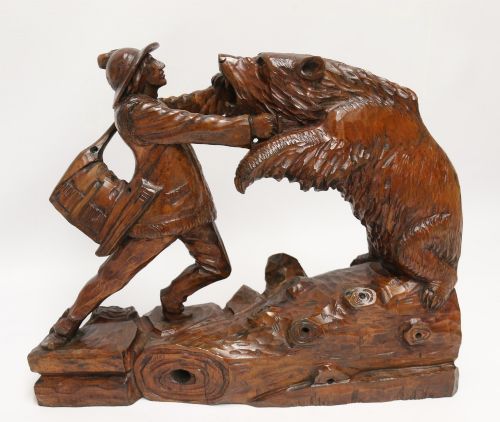
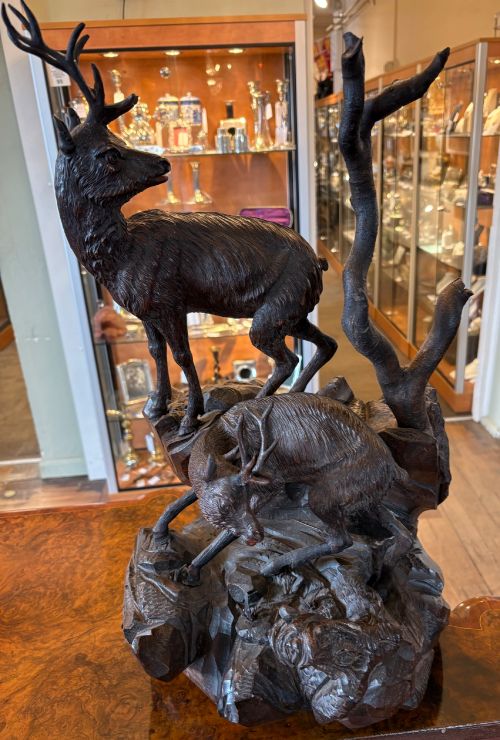
- A style of wood carving originating from the Swiss region, typically depicting bears, deer, and dogs in naturalistic poses. These items often function as practical objects such as umbrella stands or humidors.
- Linden wood
- A pale, fine-grained timber favoured by nineteenth-century carvers for its malleability and lack of splintering. It allows for intricate undercutting in figural groups.
- Grand Tour
- A cultural journey undertaken by nineteenth-century Europeans collecting souvenirs like Egyptian revival figures or classical architectural fragments. These objects often combined carved wood with granite or marble bases.
- Trade sign
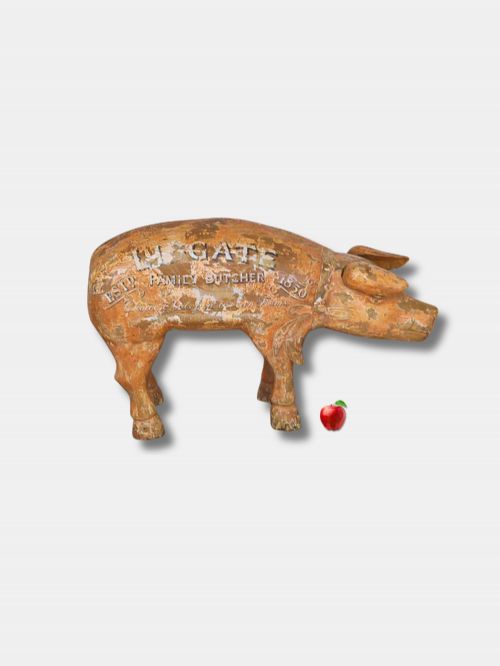
- A large carved wooden object hung outside a business to advertise its trade, such as a butcher's shop or tobacconist. They are characterised by robust construction and bold painted finishes.
- Memento mori
- An artistic reminder of the inevitability of death, frequently manifested in nineteenth-century anatomical or skeletal studies. These pieces encouraged contemplation of mortality.
Victorian Wooden Sculpture: Frequently Asked Questions
What are Black Forest carvings?
Black Forest carvings are wooden animal sculptures and functional objects originating from nineteenth-century Switzerland and Germany. They frequently depict bears, deer, and dogs with realistic glass eyes and detailed fur textures.
These pieces were popular Victorian souvenirs and household accessories, often incorporating trays, hooks, or boxes. They highlight the high level of technical skill achieved by regional woodcarvers during the period.
What is folk art sculpture?
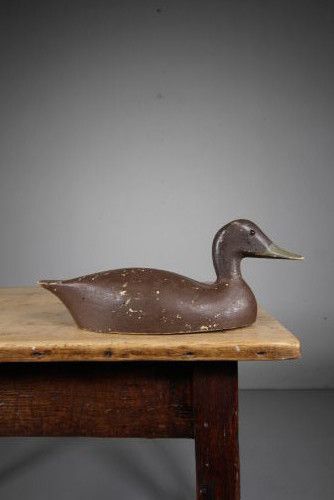
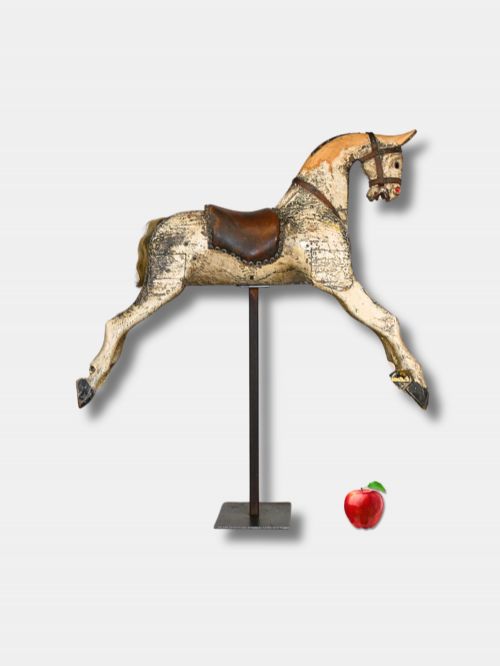
Folk art sculptures are vernacular objects carved by self-taught or local artisans outside formal academic traditions. Examples include trade signs, pull-along toys, and decoy ducks.
These pieces prioritise utility and bold visual presence over academic precision, often featuring painted or polychrome surfaces. They offer insight into nineteenth-century daily life and regional craftsmanship.
How do I care for wooden sculptures?
Wooden sculptures require stable indoor humidity levels and protection from direct sunlight to prevent wood shrinkage and fading. Dusting gently with a dry, soft cloth maintains the surface without introducing moisture.
Avoid placing antique wooden items near direct heat sources like radiators. Periodic light waxing may nourish unfinished or polished timbers depending on the specific surface treatment.