

Victorian Walnut Rack
When you handle a victorian walnut rack, you meet a piece designed to organise books, papers, or garments with undeniable nineteenth-century grace.
Victorian Walnut Rack
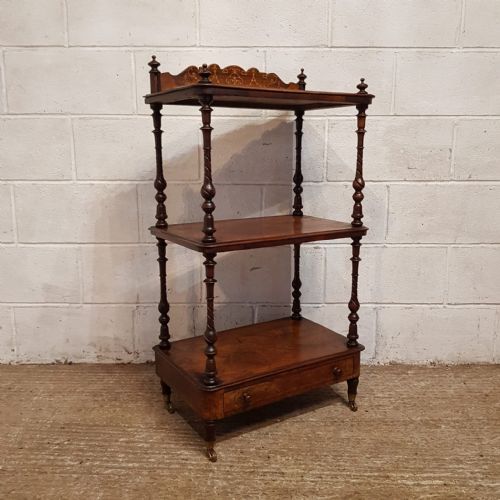
A victorian walnut rack encompasses diverse utilitarian forms intended for domestic organisation, ranging from desktop letter holders to freestanding magazine stands and hall stands.
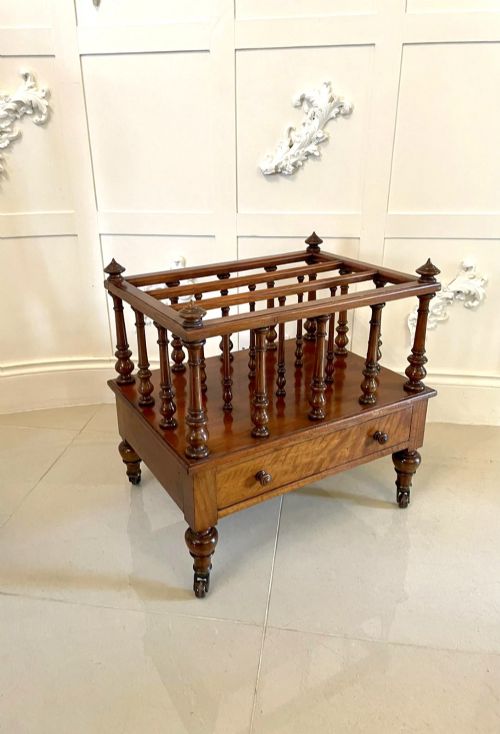
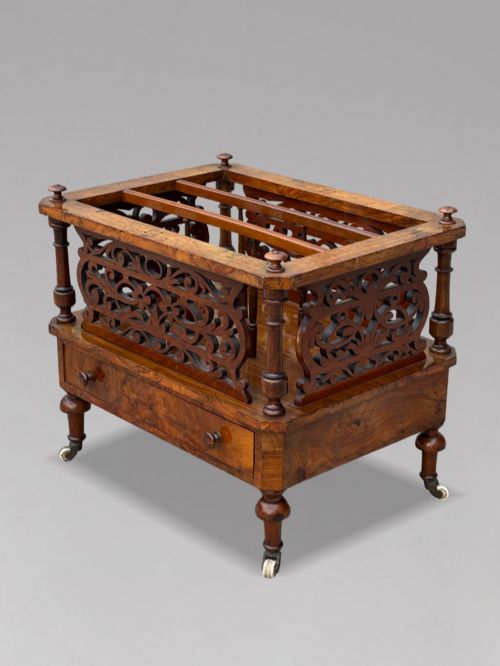
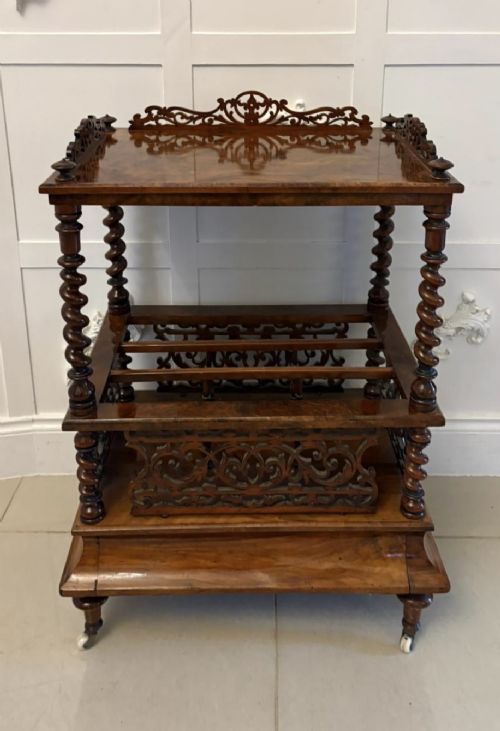
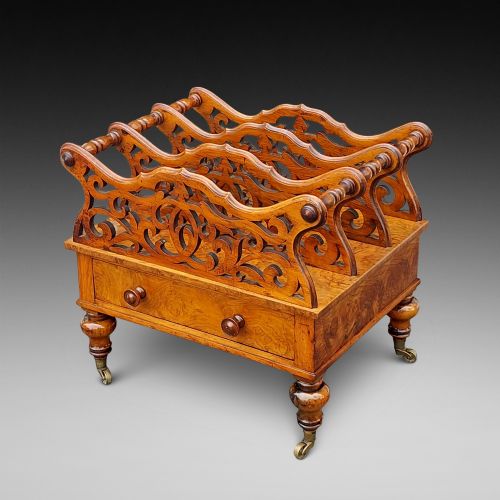
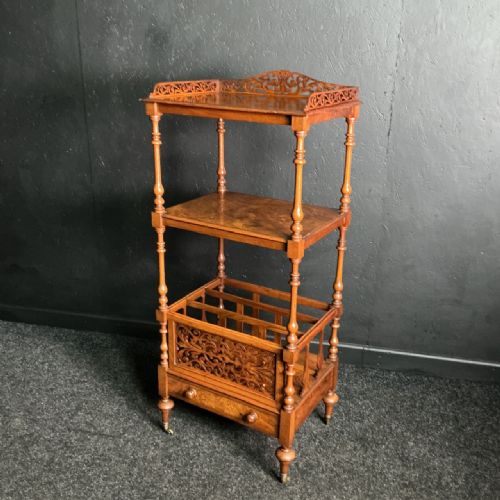
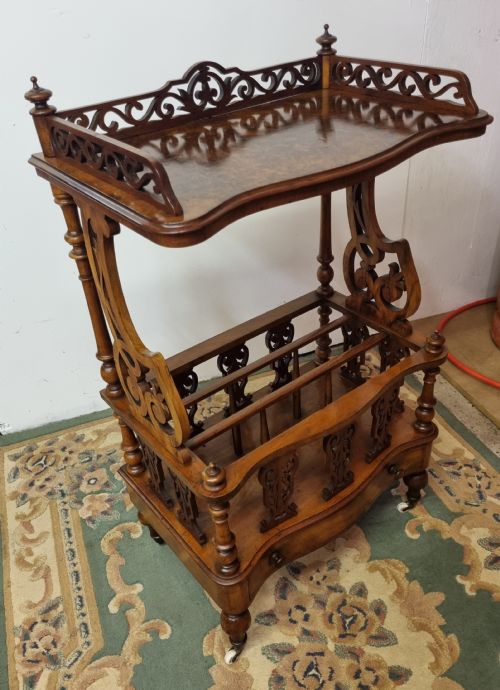
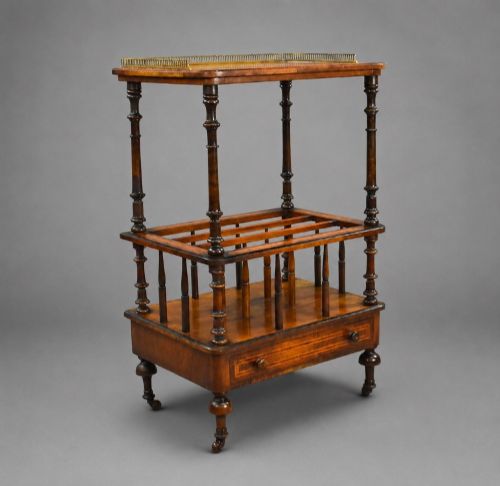
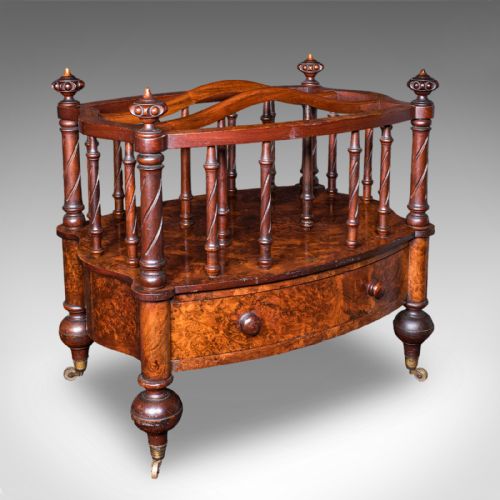
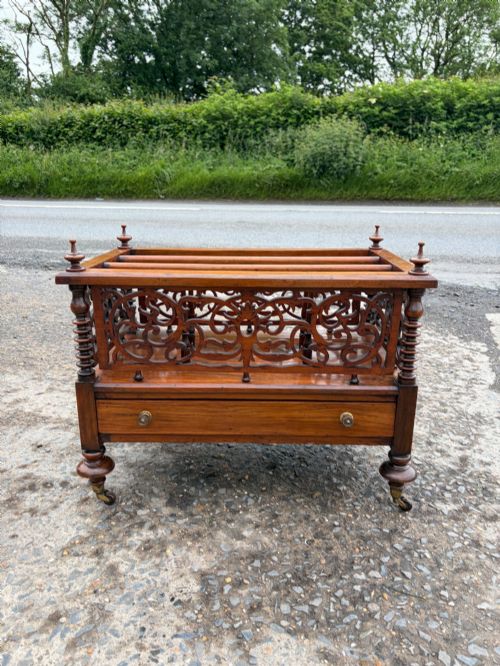
The most common version encountered within these pieces is the Canterbury, often featuring compartmentalised divisions above low castors for storing journals or sheet music.
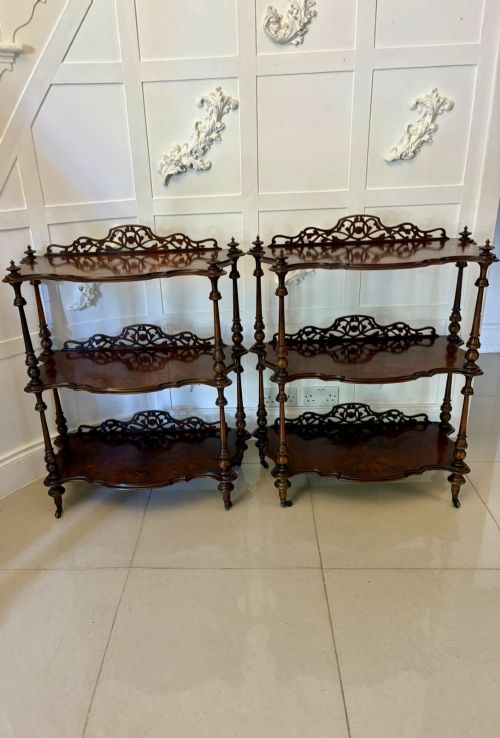
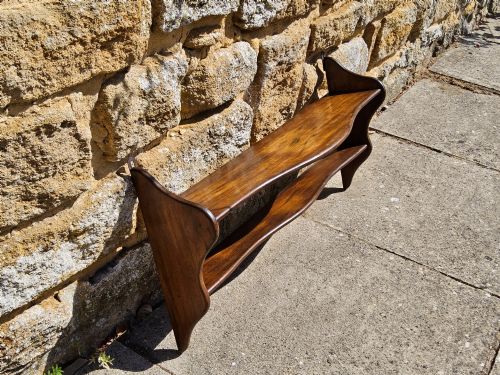
Makers also produced specialised iterations such as book slides, wall shelves, and umbrella stands, all sharing a foundation in rich nineteenth-century timber.
How they were made
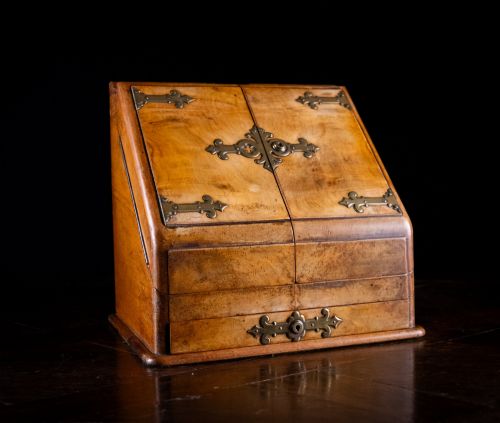
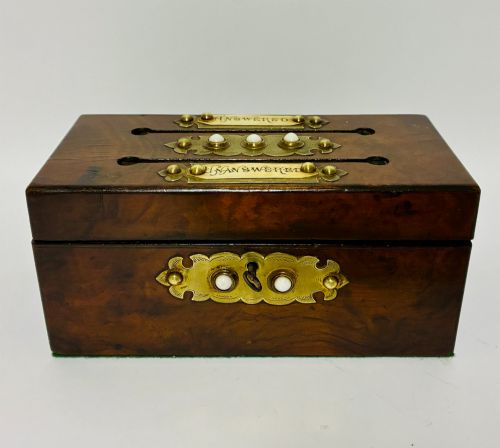
Cabinet makers relied heavily on figured walnut and burr walnut veneers, laid over secondary timbers to display intricate swirling grain patterns across flat surfaces and shaped panels.
Many items incorporate functional brass mounts, hinges, and sliding mechanisms that allow book slides or stationery cabinets to adjust smoothly during daily use.
Craftsmen occasionally carved whimsical forest creatures into hallway stands, ensuring visitors were greeted by a wooden bear or gnome.
What varies in quality
The distinction between ordinary utility items and exhibition pieces lies in the selection of timber, where high-figured burr walnut and delicate marquetry inlay elevate the visual presence.
Joinery execution also separates standard production from superior workshop output, evident in the crispness of turned spindles, carved fretwork, and the harmonious integration of brass hardware.
Jas. Shoolbred·Edwards & Roberts·Betjemanns·Trollope and Co
The Victorian Walnut Rack Glossary
- Canterbury
- A low stand featuring slatted partitions, originally designed to hold sheet music or periodicals near a piano.
- Burr walnut
- A prized timber veneer harvested from the irregular growth knots of the tree, creating dense and swirling natural patterns.
- Book slide
- An expanding desktop rack featuring hinged or sliding ends to keep volumes upright between brass-mounted supports.
- Marquetry
- The art of forming decorative patterns by fitting together contrasting veneer slices into a prepared surface.
Victorian Walnut Rack: Frequently Asked Questions
What is a Canterbury used for?
A Canterbury served as a moveable rack for holding sheet music, unbound books, and daily newspapers within nineteenth-century drawing rooms.
Lower sections frequently incorporated a shallow drawer for smaller writing accessories or tuning keys.
How do I identify burr walnut?
Burr walnut is immediately recognised by its clustered, swirling grain patterns formed from tree growths rather than straight timber lengths.
Cabinet makers used these dramatic veneers on prominent exterior surfaces like tabletops and fall-front cabinet doors.
Where were book slides placed?
Book slides sat upon library tables, desks, or mantelpieces to corral small collections of frequently consulted reference volumes.
The extending mechanism allowed owners to adjust the length as their reading selection changed throughout the day.
Are these pieces strictly for display?
While possessing considerable decorative presence, these items remain fully functional for holding modern books, magazines, and correspondence.
Their sturdy timber construction and brass fittings suit active daily use in contemporary homes.