

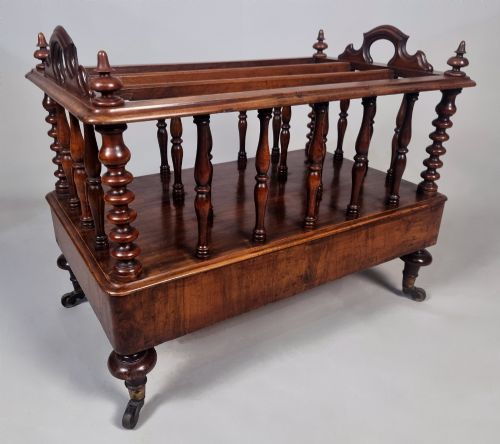
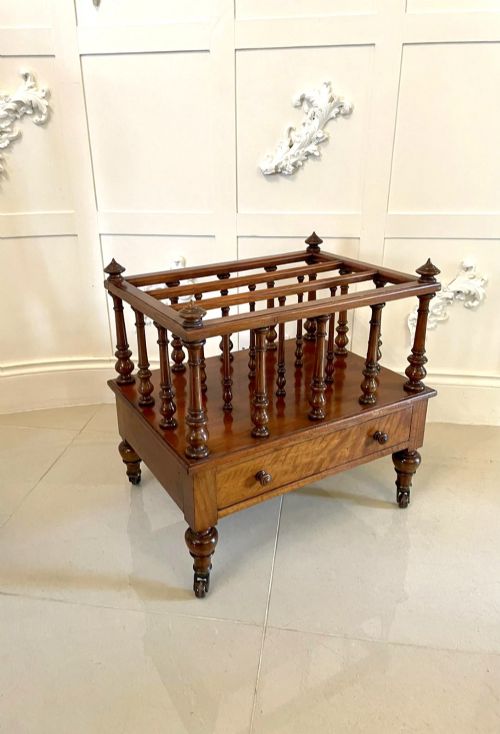
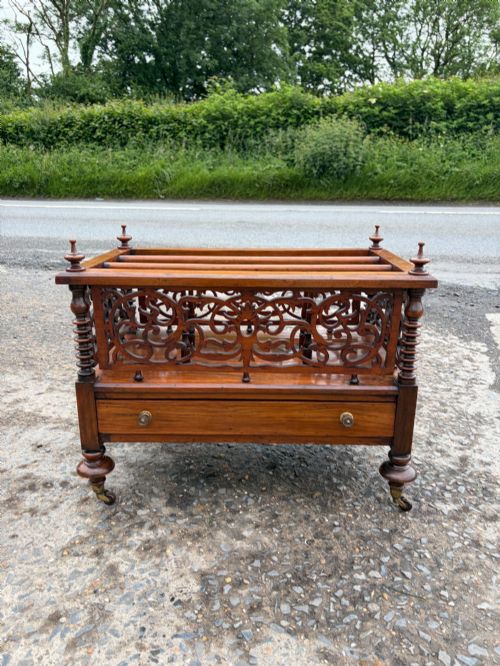
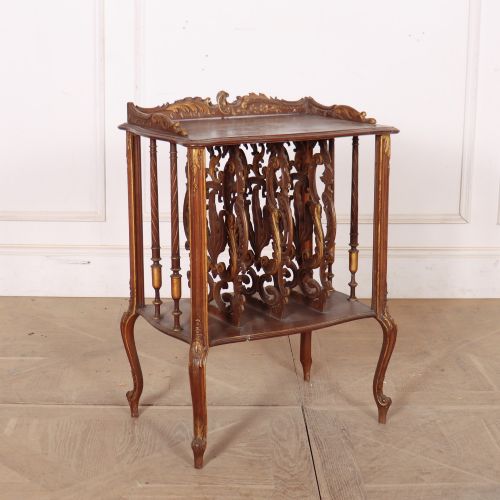


Walnut Paper Holder
These walnut paper holder pieces are domestic storage stands for periodicals and music, and collectors prize them for their rich timber figures.
Walnut Paper Holder
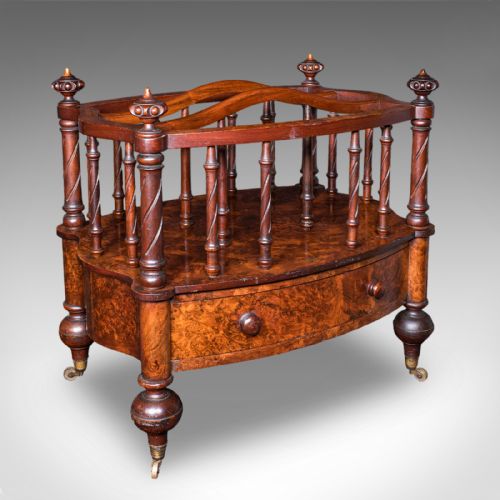
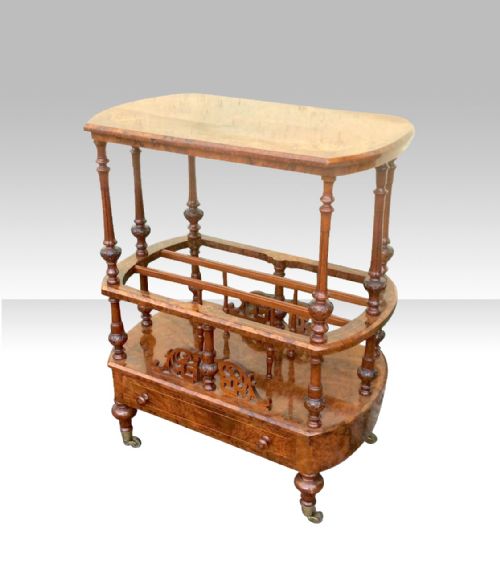
A walnut paper holder takes the form of a Canterbury, a magazine rack, or a music stand designed to keep folios and journals tidy in the parlour. The examples available on this page lean heavily towards Victorian and Regency periods, spanning several decades of the nineteenth century.
Most pieces you meet here function as canterburys with divisions for papers, often featuring a base drawer for smaller items. You also encounter magazine racks and stands that combine music storage with the traditional newspaper holder layout.
The origins span English and French workshops, utilising woods such as burr walnut, figured walnut, and black walnut. These domestic furnishings reflect the changing reading habits of the nineteenth century household.
How they were made
Cabinetmakers built these stands using solid walnut and applied veneers of burr or figured walnut to prominent surfaces to show off the grain. Many pieces incorporate wood inlay, marquetry, and fretwork alongside turned supports.
Metal components appear frequently, with brass and copper used for handles, castors, and structural mounts. Gilt highlights also enhance selected French and English stands from the period.
Walnut Paper Holder Retail Price Guide 2026
Typical asking prices for walnut paper holder among the pieces listed under this phrase on Sellingantiques today, from the lower quarter to the upper quarter. They describe what is for sale here now, not the wider market.
Materials recorded on this page include brass, copper, ceramic, and multiple varieties of walnut.
What varies in quality
The selection of timber dictates much of the visual merit, with richly figured burr walnut and intricate marquetry inlay marking out the superior examples. Substantial proportions and well-executed fretwork separate ambitious parlour pieces from simpler utility stands.
The inclusion of fitted drawers, turned columns, and original brass or copper hardware elevates a piece's construction. Simpler versions rely on plain walnut boards with minimal decoration.
The Walnut Paper Holder Glossary
- Canterbury
- A low stand with divisions for holding sheet music or newspapers, typically featuring legs with castors. This form originated in the late eighteenth century and remained popular throughout the Victorian era.
- Burr walnut
- A veneer sliced from the grotesque growths on walnut trees, prized for its swirling, highly figured grain patterns. Cabinetmakers used it on the primary display surfaces of high-end furniture.
- Marquetry
- The art of applying pieces of veneer to a structure to form decorative patterns and pictures. It often appears on Victorian stands alongside stringing and inlay.
- Regency
- An English design period spanning the early nineteenth century, known for classical restraint and elegance. Pieces from this era often show clean architectural lines.
- Fretwork
- Ornamental design executed by cutting openwork patterns through thin boards of wood. Victorian makers applied this technique to the partitions of stands.
Walnut Paper Holder: Frequently Asked Questions
What is a walnut paper holder used for?
These stands were originally built to hold newspapers, magazines, and sheet music in the principal rooms of a Victorian or Regency home. They kept reading materials organised and close to seating areas.
Today, they serve the same practical purpose for contemporary periodicals or vinyl records while adding period character to a room.
How do I date a walnut paper holder?
Dating relies on observing the timber choice, decorative motifs, and overall construction methods relative to known style periods. Victorian examples often show burr veneers and marquetry, whereas Regency pieces tend to display simpler classical lines.
Hardware such as brass castors and handles also offers clues, though many items were repaired or updated over time.
Are these stands difficult to maintain?
Routine care requires only a soft cloth to remove dust from the carved partitions and veneered surfaces. Avoid placing walnut furniture in direct sunlight or near heat sources to prevent timber splitting.
Waxing occasionally helps nourish the polished wood and preserves the depth of the grain.
What styles are common in these pieces?
The selection is dominated by Victorian and Regency designs, with occasional French Rococo Revival influences. These styles manifest in turned uprights, fretwork partitions, and shaped shelves.
Inlaid marquetry and contrasting timber stringing are also frequent stylistic details.