
Victorian Furniture Canterbury
These pieces of victorian furniture canterbury organise sheets and journals near the hearth with timber slats and low upright frames.
Victorian Furniture Canterbury
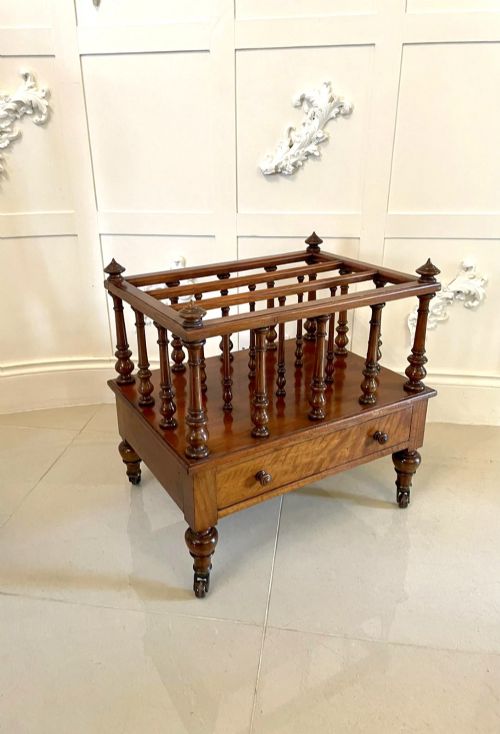
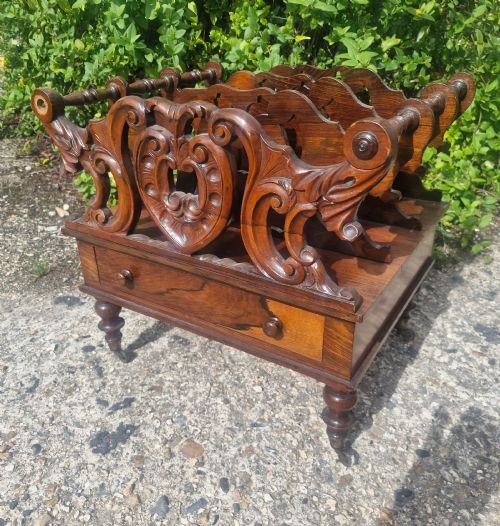
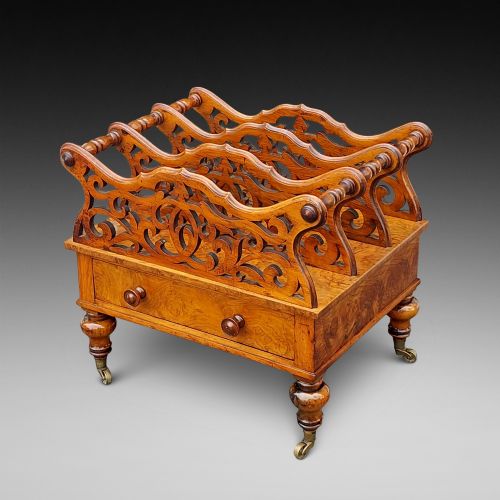
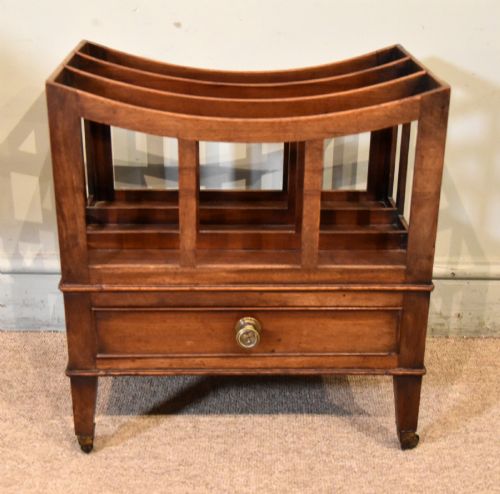
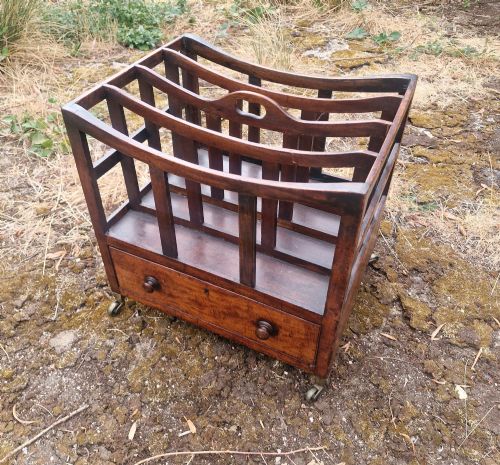
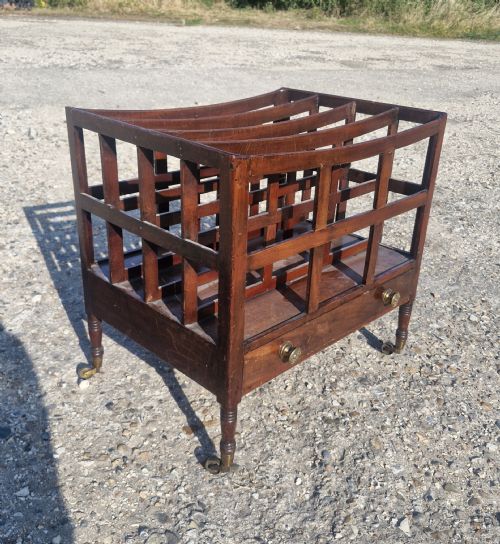
A victorian furniture canterbury is a low, compartmentalised stand designed to hold folios, sheet music, newspapers, and periodicals within reach of a chair or table. These pieces generally sit upon small turned legs, castors, or simple plinths, keeping printed matter clear of the floor.
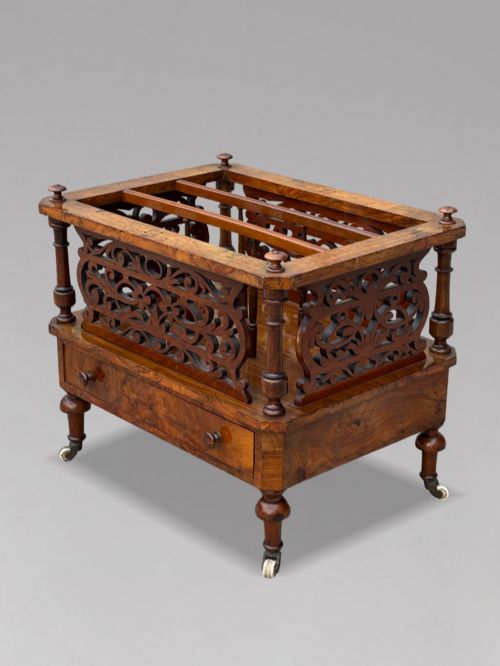
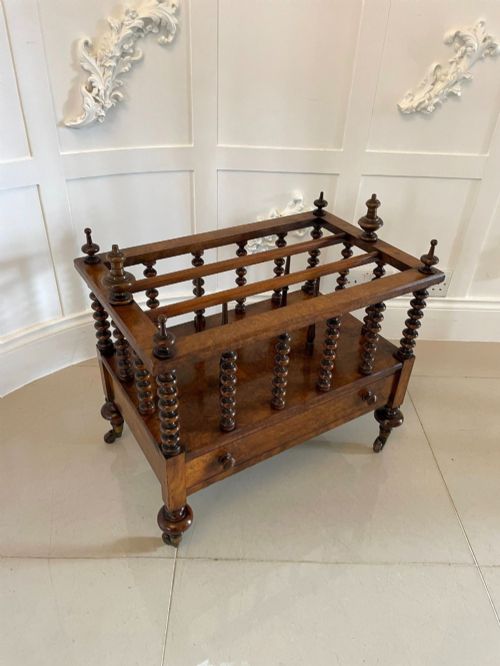
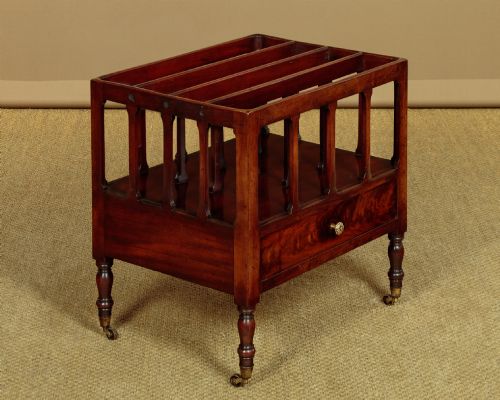
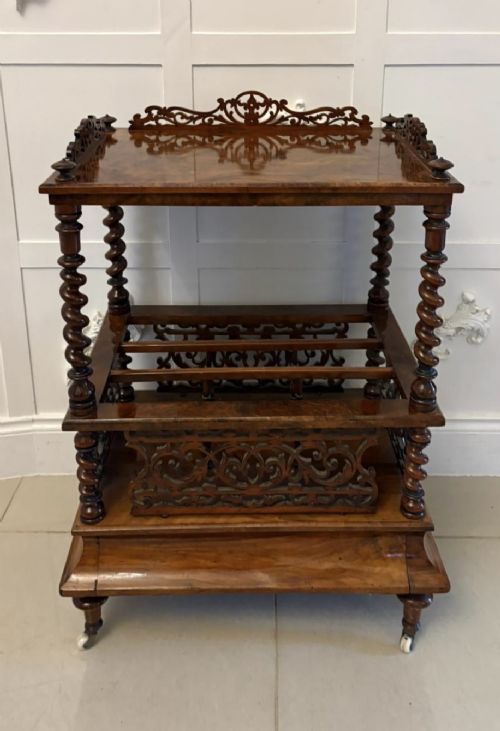
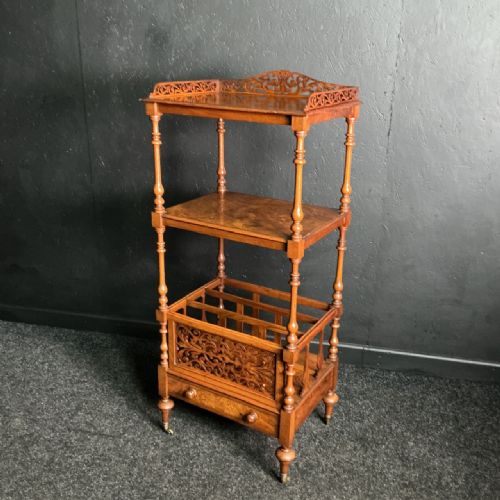
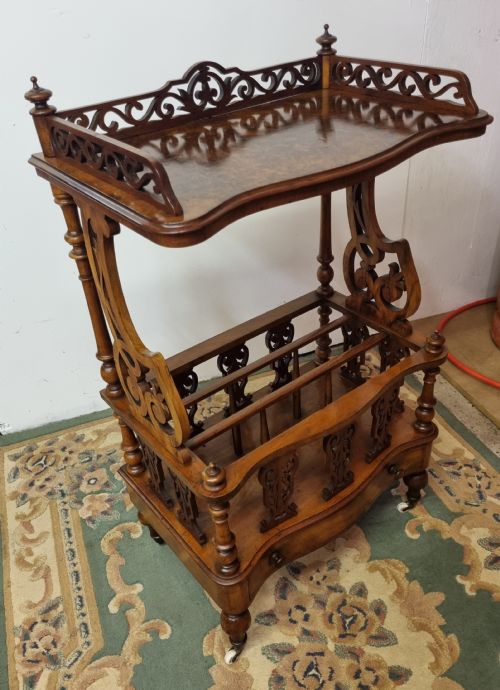
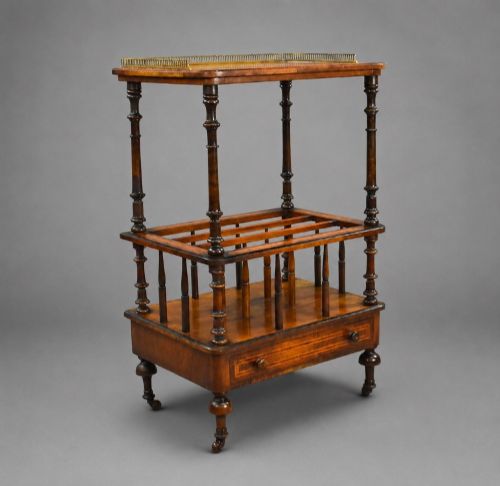
The version most commonly met on this page is constructed from burr walnut or rich mahogany, often combining traditional slatted partitions with a single lower drawer or an upper tier configured as a whatnot or side table. Examples range from compact mahogany models of the early nineteenth century to more ornate walnut pieces fitted with inlaid decoration.
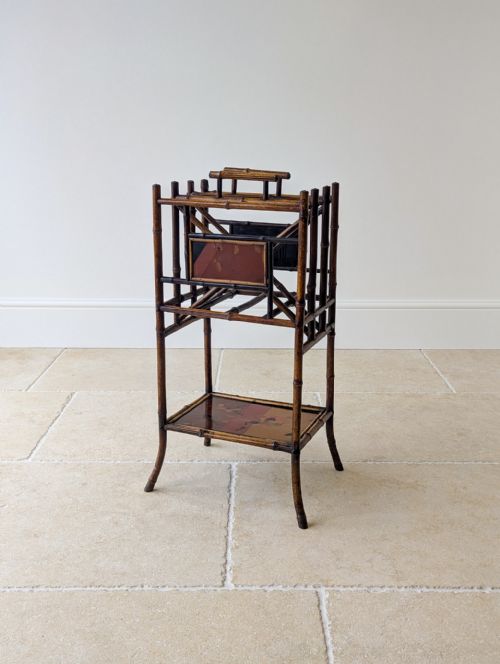
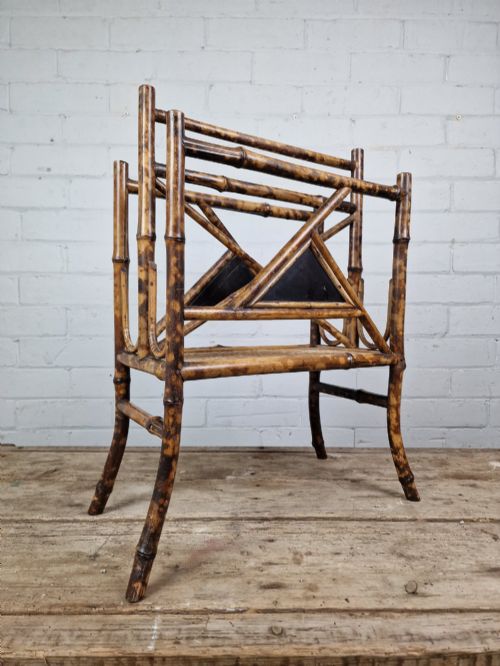
Origins span the nineteenth century, drawing heavily on Victorian and Regency conventions alongside later aesthetic movement interpretations. Makers adapted the form over decades, producing bamboo variants and multi-functional music cabinets alongside standard open racks.
Materials and construction
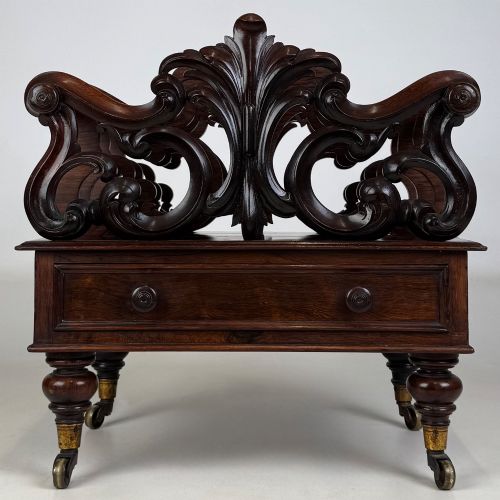
Cabinet makers relied primarily on figured timbers such as burr walnut, rosewood, and solid mahogany, occasionally turning to fruitwood or tiger bamboo for specific aesthetic movements. These woods were chosen for their rich grain patterns and durability under daily handling.
Construction techniques combined traditional joinery for the upright partitions and frame with turned wooden spindles, brass castors, and subtle marquetry inlay. Drawers were typically hand-dovetailed, and tier structures integrated stable shelving to support heavier volumes and music books.
Listings feature multiple timber types including walnut, burr walnut, mahogany, rosewood, fruitwood, and bamboo across the nineteenth century.
Judging quality in these stands
The distinction between ordinary production and superior work rests on the selection of timber veneers, the crispness of the turned spindle work, and the integration of secondary functions like work tops or lower drawers. Finer pieces display carefully matched burr walnut figures and precise inlay rather than generic surface decoration.
Structural integrity also separates grades, visible in the rigidity of the slatted partitions and the quality of the brass fittings. Stands that retain their original castors and undisturbed timber patination show greater integrity than those altered over time.
Edwards and Roberts
The Victorian Furniture Canterbury Glossary
- Canterbury
- A low stand with upright partitions for holding sheet music, folios, and periodicals. The form emerged in the eighteenth century and remained popular throughout the Victorian period.
- Whatnot
- An open set of multi-tiered shelves used for displaying small decorative objects or books. These are frequently incorporated into the upper section of a standard Canterbury.
- Burr walnut
- A highly figured timber prized for its swirling grain patterns created by growth excrescences on the tree. It was widely used for veneering high-end Victorian cabinet furniture.
- Aesthetic Movement
- A late nineteenth century design style that rejected heavy Victorian ornamentation in favour of simplified forms and influences from Japanese art. This period introduced bamboo and tiger bamboo furniture variants.
Victorian Furniture Canterbury: Frequently Asked Questions
What were canterburys originally used for?
These stands were designed to hold sheet music, folios, and unbound journals close to a piano or seating area. They kept musical scores and periodicals sorted and accessible in domestic drawing rooms.
Over time, households also used them for newspapers and general reading material, leading to the alternative designation as magazine racks or tidy stands.
How do I identify a Victorian piece?
Victorian examples typically exhibit characteristic timbers like burr walnut and rosewood, alongside decorative styles ranging from Gothic Revival to the Aesthetic Movement. Construction methods often include machine-assisted dovetailing and standard brass castors.
Earlier Regency pieces tend to feature cleaner mahogany lines, while late nineteenth century variants introduce bamboo and multi-functional cabinet configurations.
Can these stands support heavy books?
While the slatted partitions safely hold softcover journals, sheet music, and thin periodicals, the base structure is not engineered for heavy hardcover volumes or large ledgers. The divisions are primarily meant for upright paper items rather than stacked weight.
Placing excessively heavy books inside risks straining the internal dividers and the lower shelf joints over extended periods.
Where should I place a Canterbury at home?
These compact pieces fit naturally beside a living room armchair, next to a sofa, or adjacent to a piano where reading materials or scores are frequently used. Their low profile ensures they do not block sightlines or overwhelm a room.
Many examples featuring upper tier shelves or work tops also function effectively as small side tables in a hallway or study.