


Victorian Walnut Music Rack
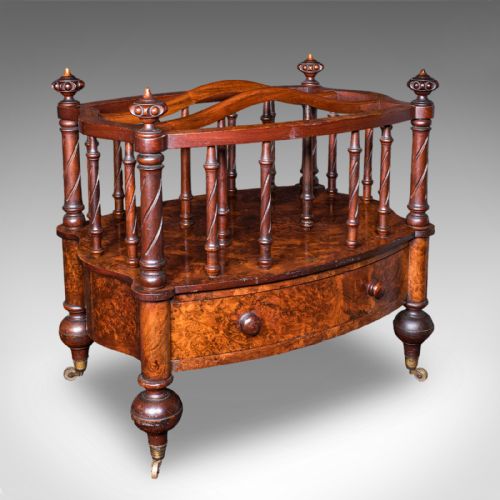
A Victorian walnut music rack is a sturdy repository for scores and folios, bringing warmth and polished grain to a sitting room.
Victorian Walnut Music Rack
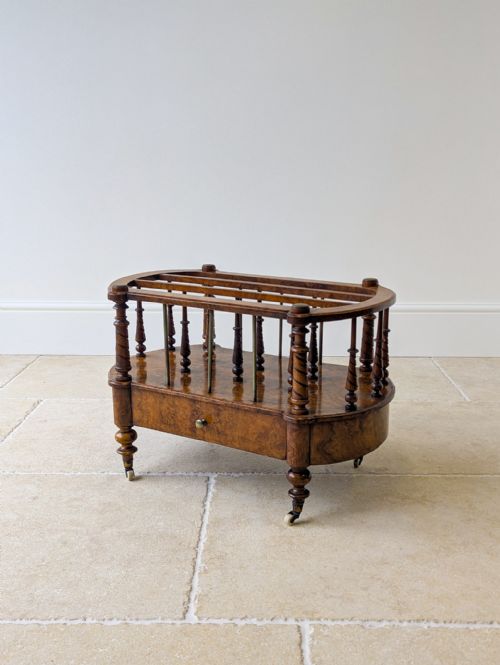
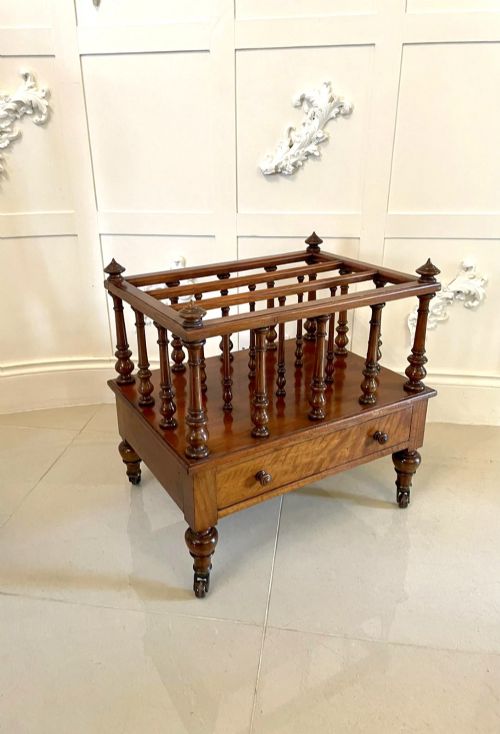
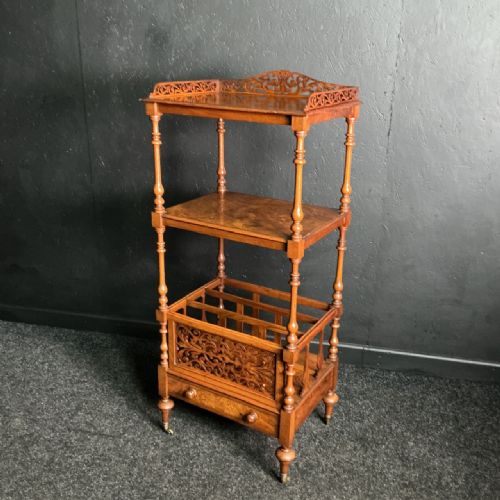
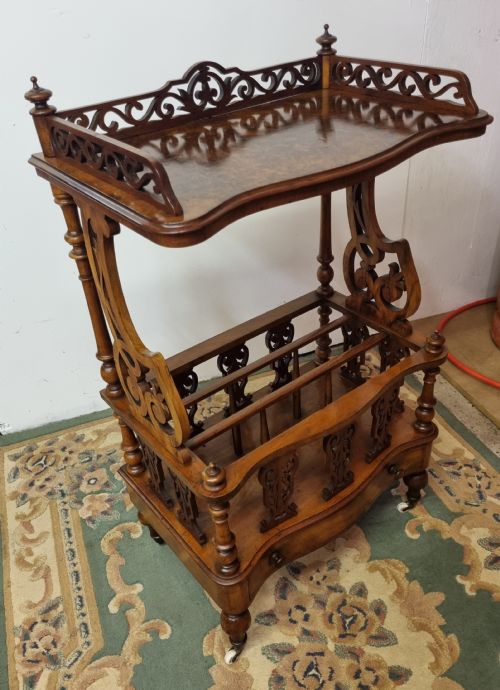
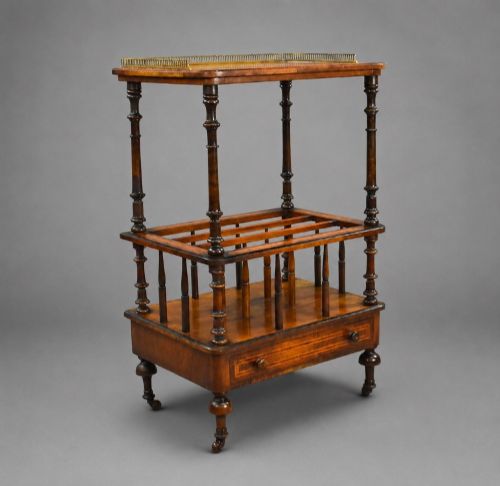
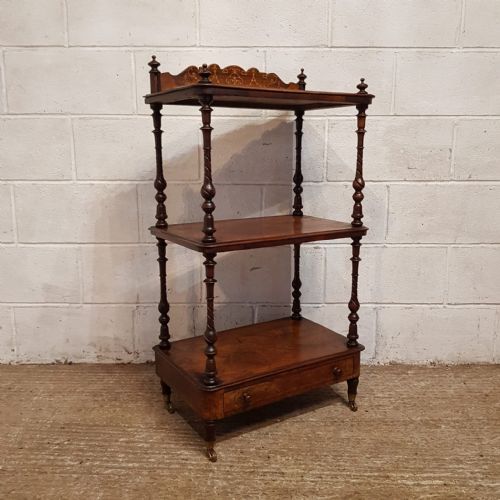
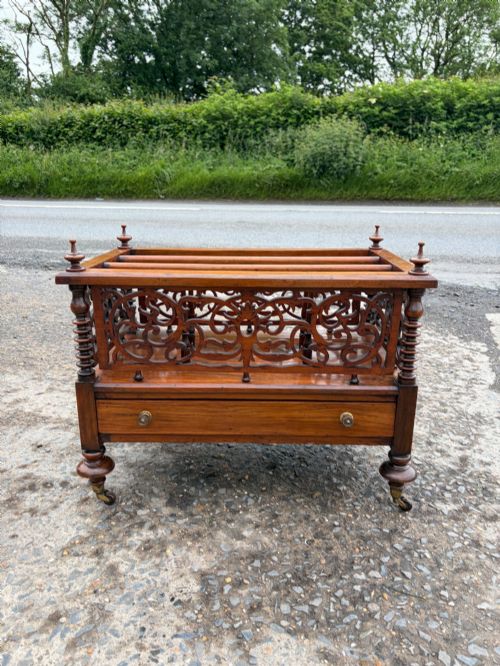
A victorian walnut music rack typically takes the form of a Canterbury or whatnot, designed to hold folios, magazines, and newspapers in upright partitions. These pieces span the nineteenth century, with specific dates clustering around eighteen sixty and eighteen seventy, alongside examples attributed to Regency and Black Forest styles.
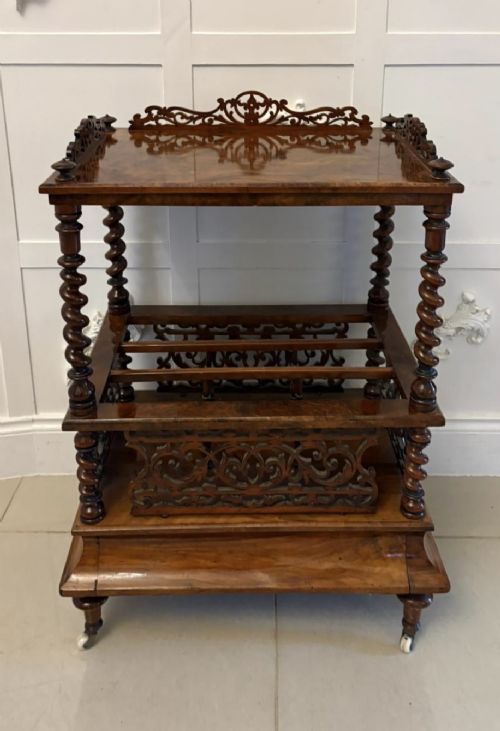
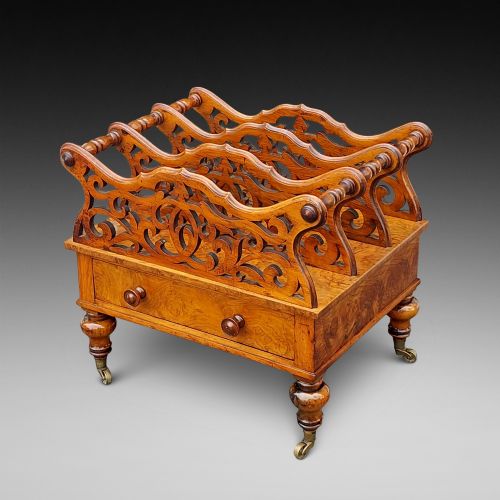
Buyers most frequently encounter burr walnut versions featuring turned columns, fretwork dividers, and sometimes a low drawer or an occasional table top. The selection includes serpentine shapes, oval lamp tables, and freestanding stands intended for domestic music rooms.
Judging execution
Quality rests upon the choice of burr walnut veneer, where rich, highly figured grain patterns elevate the visual impact of the piece far beyond plain timber. The crispness of inlaid marquetry and the delicacy of pierced fretwork partitions distinguish finer workshops from standard production.
Structural integrity depends on the joinery of the dividers and the stability of the turned columns, especially in freestanding examples fitted with drawers or multi-tier shelves. Maker attributions, such as pieces bearing signatures from established firms, add documented provenance to the build.
Some music stands arrive with tiny wheels that rolled across Victorian carpets so the household could chase the sheet music around the parlour.
Edwards and Roberts·Shoolbred
The Victorian Walnut Music Rack Glossary
- Canterbury
- A low stand with partitions for holding music sheets, magazines, or newspapers, often fitted with castors and a drawer below. It originated in the late eighteenth century and remained popular throughout the Victorian period.
- Whatnot
- An open set of shelves used for displaying ornaments and books, frequently combined with a Canterbury base for multi-functional use. These tiered pieces utilise turned supports at each corner.
- Burr walnut
- A veneer sliced from the gnarled growths of a walnut tree, prized for its swirling, highly decorative grain patterns. Cabinetmakers applied it to prominent surfaces like tabletops and compartment dividers.
- Marquetry
- Decorative veneer work forming pictorial or geometric patterns using various coloured woods. It requires precise cutting and fitting into a background veneer.
- Fretwork
- Ornamental woodwork pierced with patterns using a scroll saw or piercing saw. This technique creates lightweight, decorative panels for the partitions of music stands.
Victorian Walnut Music Rack: Frequently Asked Questions
What is a Canterbury used for?
A Canterbury serves as a designated stand for organising sheet music, folios, and periodicals within reach of a piano or seating area. The vertical partitions keep soft-covered publications upright and tidy.
Many examples include lower drawers or flat tops, allowing them to function simultaneously as small side tables or display surfaces for decorative objects.
How do I identify burr walnut?
Burr walnut displays swirling, knotty grain formations that create rich, organic patterns across the surface of the wood. It differs from straight-grained timber by offering complex, mottled movement in the polish.
Cabinetmakers selected these figured veneers for the most visible exterior panels to catch the light and showcase the natural patterning.
Are music racks sturdy enough for heavy books?
These racks are constructed primarily to support paper scores, folios, and weekly periodicals rather than heavy bound volumes. The upright partitions rely on slender turned columns and fretwork rather than heavy load-bearing frames.
Placing massive reference books in the compartments can strain the delicate joinery of the dividers and the base.
Where should I place a Canterbury at home?
A Canterbury sits comfortably beside an armchair, a sofa, or a vintage piano where its compartments remain accessible for daily reading material. Freestanding models look best when viewed from all sides in an open room.
Avoid placing walnut furniture in direct sunlight or beside intense heat sources to protect the polished veneer from drying out.