


Victorian Walnut Music Canterbury
A victorian walnut music canterbury brings refined nineteenth-century melody storage into a room, combining open divisions with a sturdy under-tier.
Victorian Walnut Music Canterbury
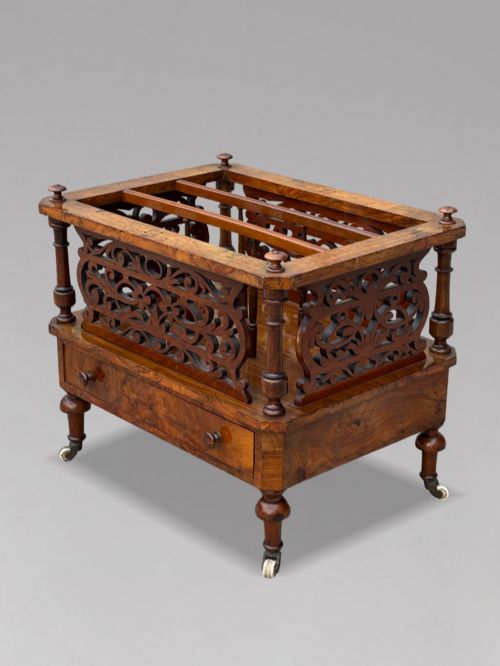
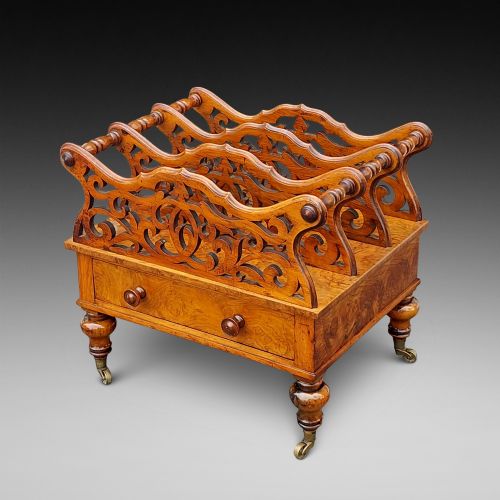
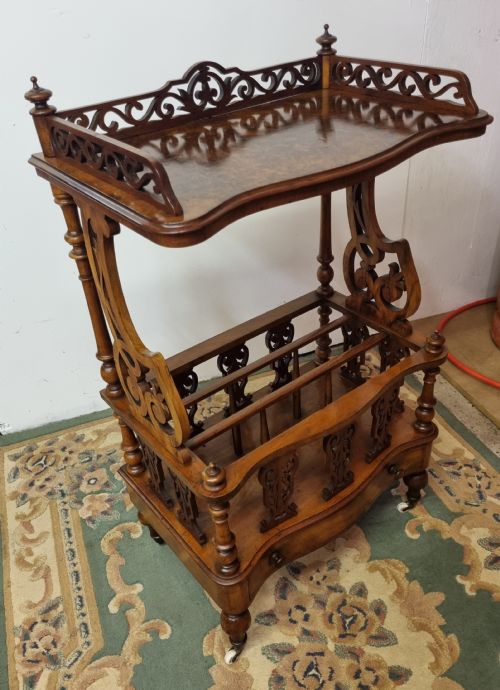
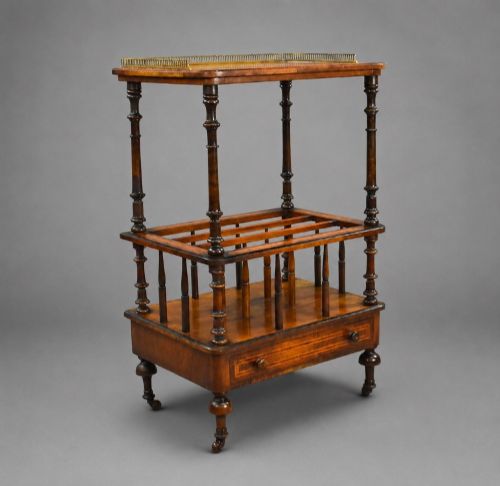
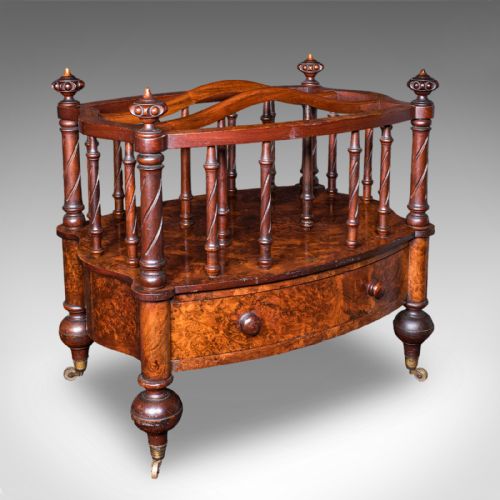
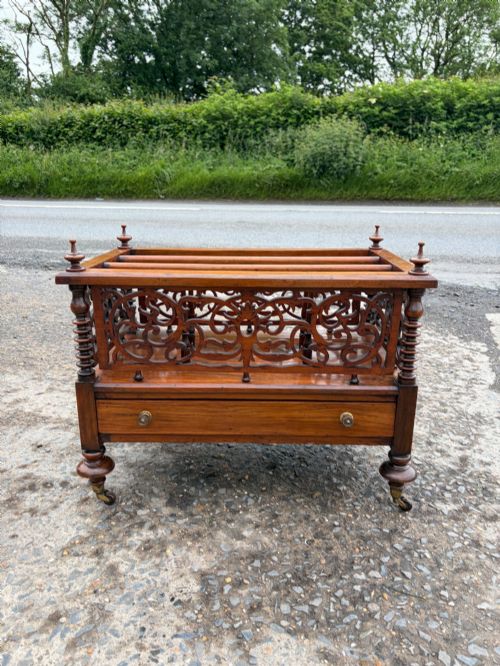
A victorian walnut music canterbury is a dedicated piece of nineteenth-century furniture designed to hold sheet music, periodicals, and books near the piano or sitting area. The examples seen on this page primarily date from the Victorian era, spanning decades such as the eighteen-fifties, sixties, seventies, and eighties, alongside occasional pieces attributed to the Regency period. Buyers encounter various forms, including freestanding magazine racks, combined whatnot tables, music stands, and music cabinets with fitted drawers.
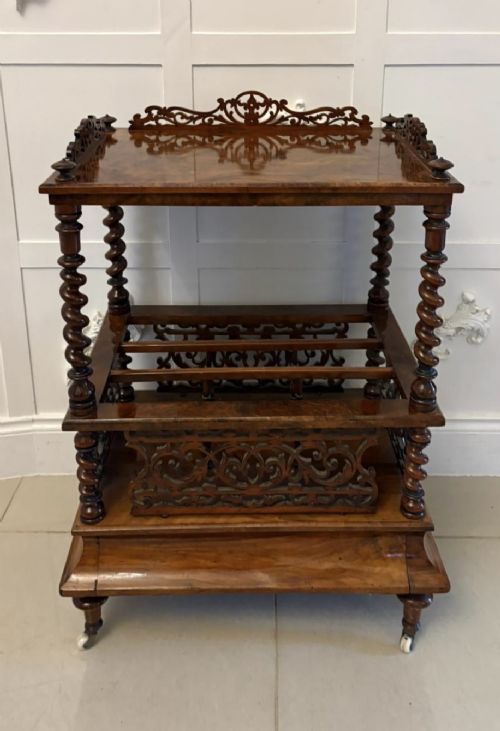
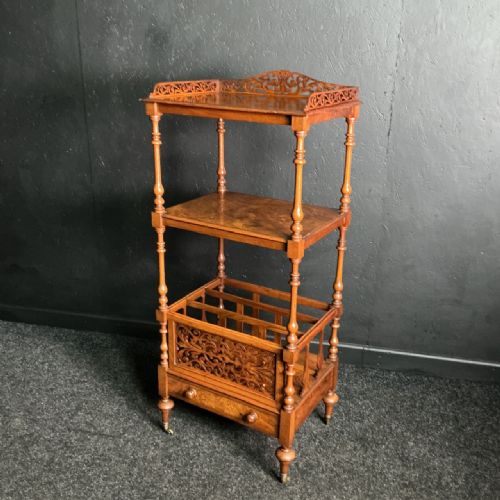
Many of these pieces double as occasional tables, lamp tables, or etageres, featuring partitioned divisions above turned supports and castors for mobility. The primary object types vary from simple three-section partitions to serpentine shapes, oval configurations, and multi-tier structures that incorporate work tops or book rests. They serve both as functional folio holders and as decorative display stands within period domestic interiors.
Materials and Construction
Makers utilised solid walnut and decorative burr walnut veneers to construct these items, often selecting highly figured timber for the main display surfaces. Details such as boxwood stringing, wood inlay, and marquetry enrich the panels, while contrasting ebony accents appear on specific examples. Structural stability relies on turned wooden supports, and fitted drawers occasionally sit beneath the slatted compartments to contain smaller accessories.
Metal components play a structural and decorative role, with brass castors allowing the freestanding furniture to move smoothly across carpets and floors. Ceramic elements occasionally appear in the design vocabulary, while leather inserts and pierced fretwork provide texture and visual lightness to the partitions and shelves.
Recorded forms span simple magazine racks, serpentine canterburys, music cabinets, and multi-tier whatnot tables.
Craftsmanship and Proportion
The distinction between standard pieces and exceptional examples rests on the selection of timber veneers and the intricacy of the decorative inlay. Burr walnut with rich figuring commands attention, especially when matched across serpentine or oval tops. Finer items exhibit precise marquetry work, delicate pierced fretwork, and well-executed turning on the upright supports rather than plain surfaces.
Structural integrity and maker attribution also elevate an item's standing. Pieces produced by recorded firms such as Edwards and Roberts or Shoolbred demonstrate superior joinery in the division partitions and drawer construction. The integration of functional elements, such as a drop-down book rest or a fitted work top, distinguishes elaborate multifunctional designs from simpler magazine racks.
Edwards and Roberts·Shoolbred
The Victorian Walnut Music Canterbury Glossary
- Canterbury
- A low stand with upright partitions designed for holding sheet music, folios, and newspapers. It typically includes a small drawer and rests on castors.
- Whatnot
- An open set of multiple shelves used for displaying ornaments and books. In these listings, it is frequently combined with the base of a music canterbury.
- Burr Walnut
- Timber taken from a tree growth that produces intricate, swirling grain patterns. It is sliced into fine veneers to adorn prominent furniture surfaces.
- Marquetry
- Decorative veneer work formed by fitting together small pieces of various woods to create pictorial or geometric patterns. It often embellishes the top surface of the stand.
- Pierced Fretwork
- Ornamental woodwork cut through to let light pass, creating open patterns along the partitions. This technique adds a sense of grace to the divisions.
Victorian Walnut Music Canterbury: Frequently Asked Questions
What is a music canterbury used for?
These stands were originally designed to hold sheet music and folios beside a piano or music stool in nineteenth-century parlours. The vertical divisions kept scores organised and accessible for musicians.
Today, they function well as decorative magazine racks or side tables in living rooms. Their partitioned sections hold periodicals and books while maintaining a tidy appearance.
How do I care for walnut furniture?
Walnut surfaces benefit from occasional dusting with a soft, dry cloth to prevent the accumulation of grit. Avoiding direct sunlight and extreme temperature fluctuations protects the polished finish and wood veneers from drying out.
Applying a quality natural wax sparingly helps nourish the timber and maintain its lustre. Care should be taken around inlaid details and boxwood stringing to preserve the crispness of the decoration.
Are these pieces sturdy enough for daily use?
Nineteenth-century canterburys were constructed from dense hardwood like walnut and designed for regular domestic service. The underlying frame and turned supports generally provide reliable stability for everyday items.
Because many examples feature delicate fretwork partitions or slender legs on castors, deliberate placement away from heavy traffic areas prevents accidental knocks. Moving the furniture by lifting it rather than pulling reduces strain on the joints.