





Victorian Walnut Armoire
A victorian walnut armoire brings rich timber grain and commanding scale to a bedroom, offering deep hanging space and fitted linen shelves.
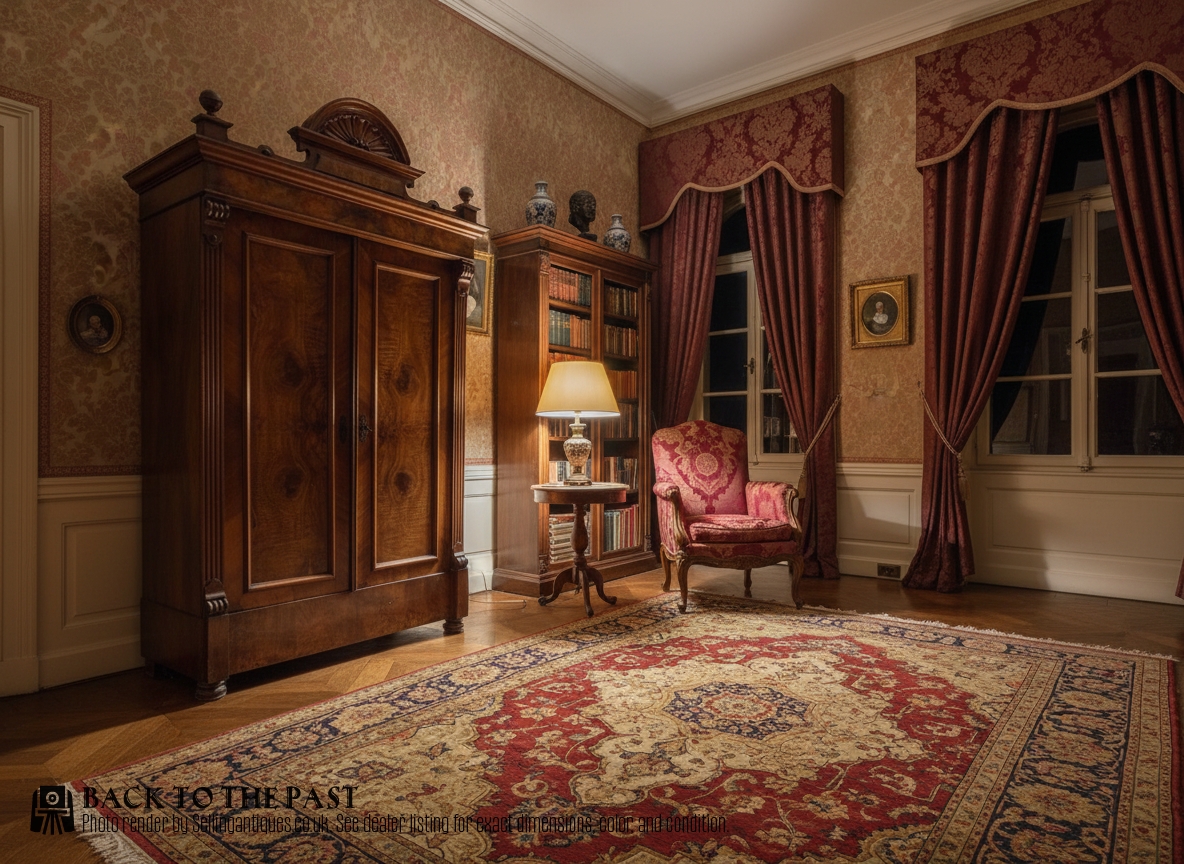
Victorian Walnut Armoire
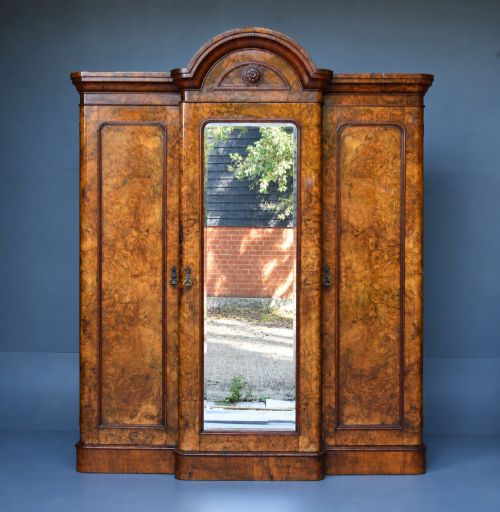
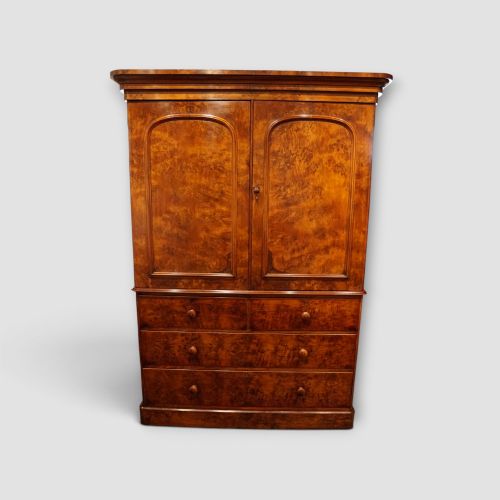
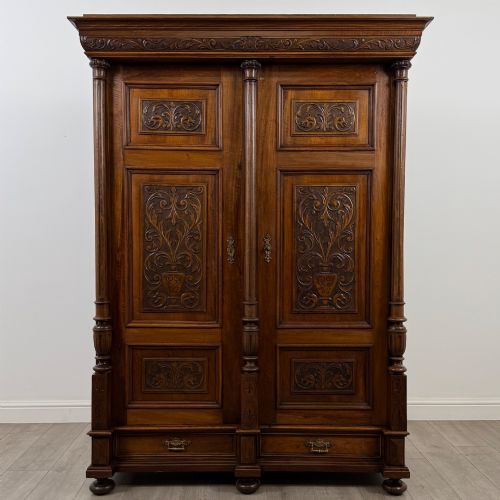
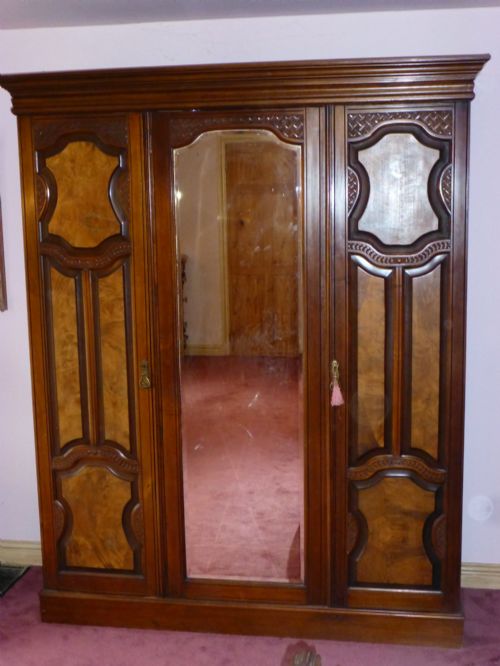
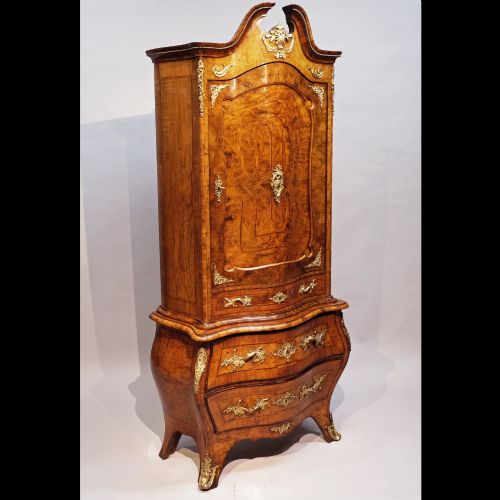
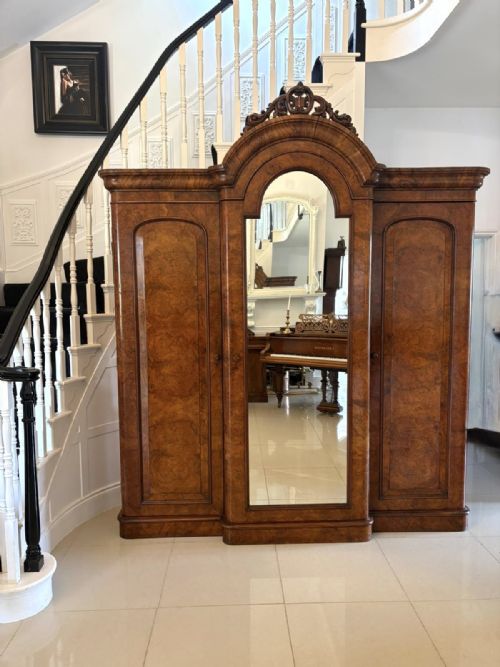
A victorian walnut armoire serves as a substantial storage piece, appearing across this selection as triple wardrobes, compactums, and linen presses. These large pieces dominate a room with their architectural presence, offering combination interiors with internal drawers, hanging space, and sliding trays.
The pieces on this page stem largely from the nineteenth century, spanning decades from eighteen fifty to eighteen ninety. Alongside British Victorian examples, the selection includes continental interpretations such as French Provincial and Grunderzeit styles.
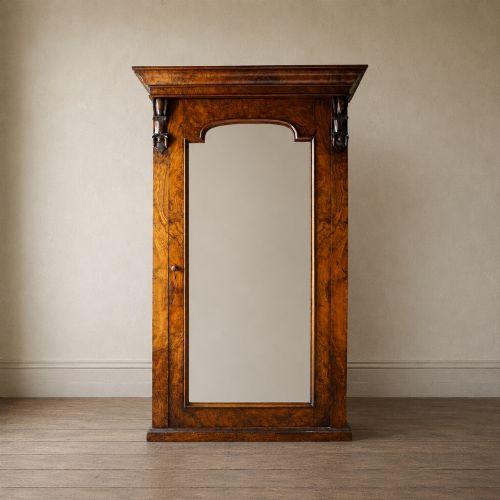
Makers and workshops utilised walnut and burr walnut extensively, often building configurations like the gentleman's wardrobe or the mirrored single wardrobe. Buyers find both double and triple door formats designed to house extensive Victorian garments.

Materials and construction
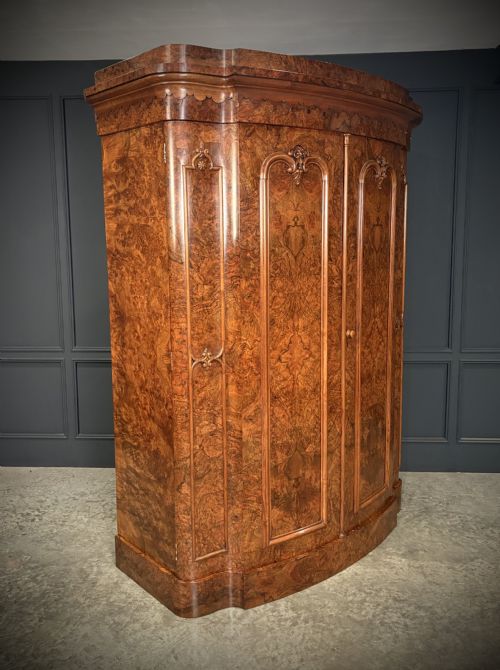
Cabinet makers utilised solid walnut and decorative walnut veneer over secondary timbers, selecting burr walnut for its swirling, highly figured grain patterns on primary door panels. These figured surfaces were carefully matched and laid to create symmetrical visual interest across large cupboard fronts.
Construction frequently incorporated auxiliary woods such as ash and maple for internal drawer linings and carcass framing. Metal elements like brass hardware, ormolu mounts, and mirrored glass panels were integrated into doors and internal fittings to add functional utility and reflective light.
Victorian Walnut Armoire Retail Price Guide 2026
Typical asking prices for victorian walnut armoire among the pieces listed under this phrase on Sellingantiques today, from the lower quarter to the upper quarter. They describe what is for sale here now, not the wider market.
Ayton Castle once housed a burr walnut wardrobe that now shares space with matching dressing tables from the eighteen-seventies.
Judging quality in walnut wardrobes
The distinction between standard examples and the finest pieces rests on the choice of timber and the ambition of the internal layout. Exceptional pieces incorporate figured burr walnut veneers applied with deliberate symmetry, while lesser examples rely on plain timber surfaces with minimal patterning.
Internal complexity separates simpler cupboards from superior compactum wardrobes. The inclusion of original fitted trays, sliding linen slides, and well-executed combination drawer arrangements signals higher workshop standards, whereas basic carcasses offer simple hanging space alone.
Holland and Sons·Shapland and Petter
The Victorian Walnut Armoire Glossary
- Armoire
- A large wardrobe or cupboard used primarily for hanging clothes. In nineteenth-century British usage, the term often overlaps with large fitted wardrobes and linen presses.
- Burr Walnut
- A distinctively figured timber derived from the growth excrescences on walnut trees. Cabinet makers prized this wood for its complex, swirling grain patterns on primary furniture surfaces.
- Compactum
- A fitted multi-section wardrobe combining hanging space, internal drawers, and shelves in a single unit. This configuration maximises storage efficiency within a unified architectural facade.
- Linen Press
- A tall storage piece featuring upper cupboard doors enclosing sliding trays, positioned above a chest of base drawers. These pieces were traditionally built to store folded textiles and bedding.
- Ormolu
- Gilded bronze mounts applied to furniture for decorative effect. Makers used these metal accents to enrich the appearance of doors and cornices on revival pieces.
Victorian Walnut Armoire: Frequently Asked Questions
What is a compactum wardrobe?
A compactum wardrobe is a multi-functional storage piece that combines hanging compartments, sliding trays, and internal drawers within a single carcass. These interiors were designed to house an entire gentleman's wardrobe efficiently.
They represent some of the most sophisticated internal joinery found in nineteenth-century bedroom furniture.
Do these wardrobes dismantle for transport?
Many nineteenth-century large wardrobes and armoires were constructed to dismantle into manageable sections, including a separate cornice, base, and flanking sides. This modular construction allowed large pieces to be moved between rooms and up stairs.
Buyers should verify whether a specific triple or double wardrobe retains its original knock-down framing bolts.
Where were these wardrobes placed in a Victorian home?
These large storage pieces stood principally in principal bedrooms and dressing rooms to accommodate extensive Victorian clothing requirements. Their substantial mirrored doors also served to reflect light in period sleeping quarters.
Today, they function effectively in modern bedrooms and hallways requiring substantial freestanding storage.