
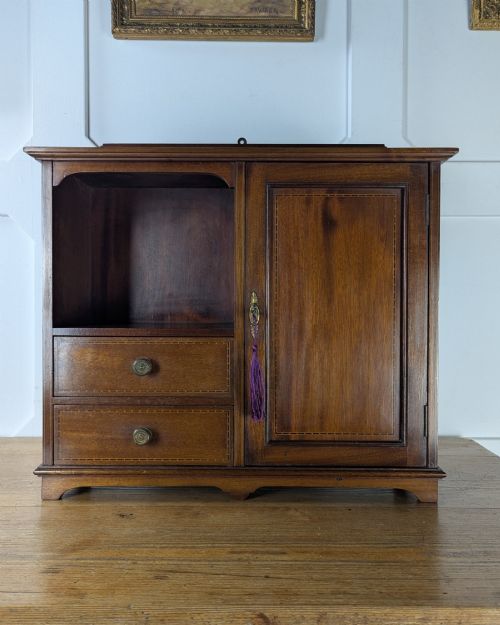
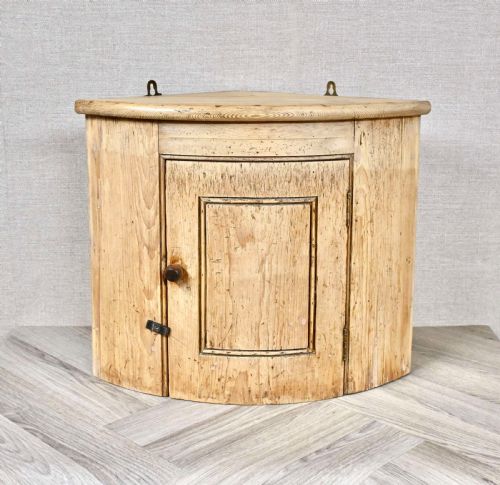
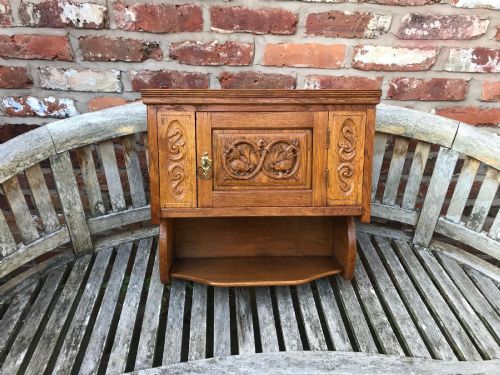
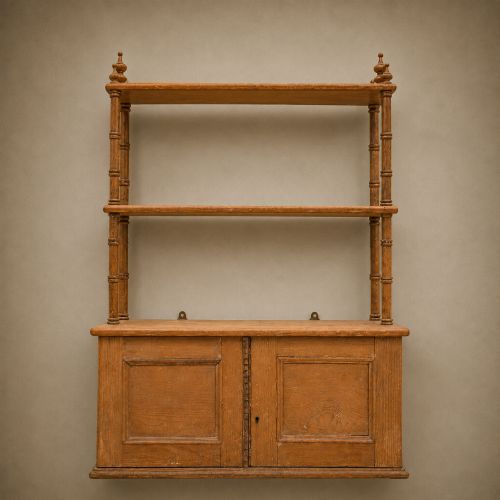



Victorian Wall Hanging Cabinet
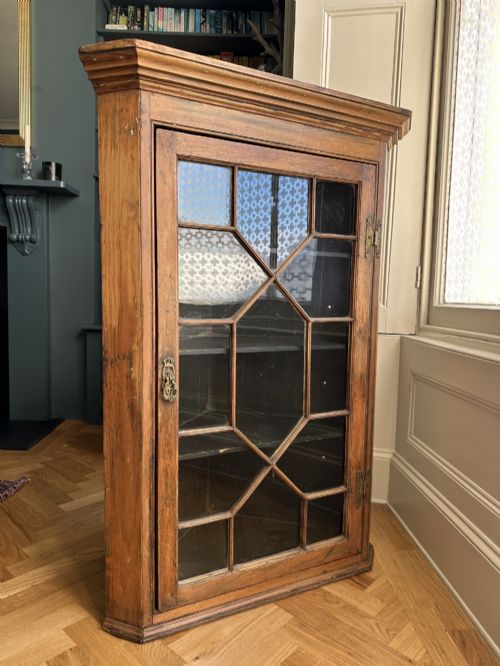
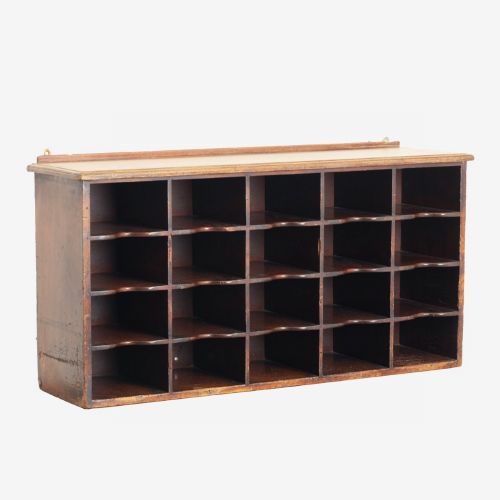
A victorian wall hanging cabinet is a compact timber case mounted to a room's surface to display treasures or store small commodities.
Victorian Wall Hanging Cabinet
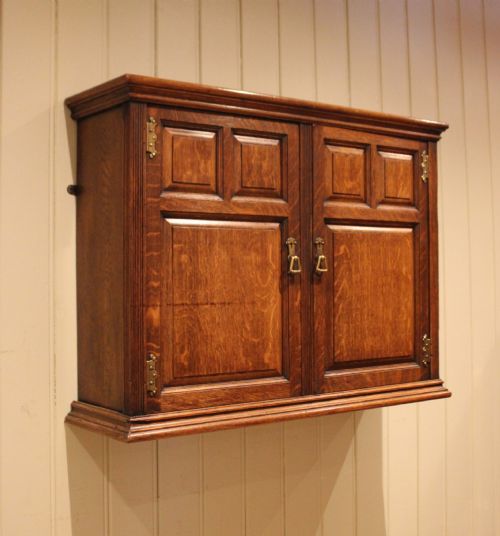
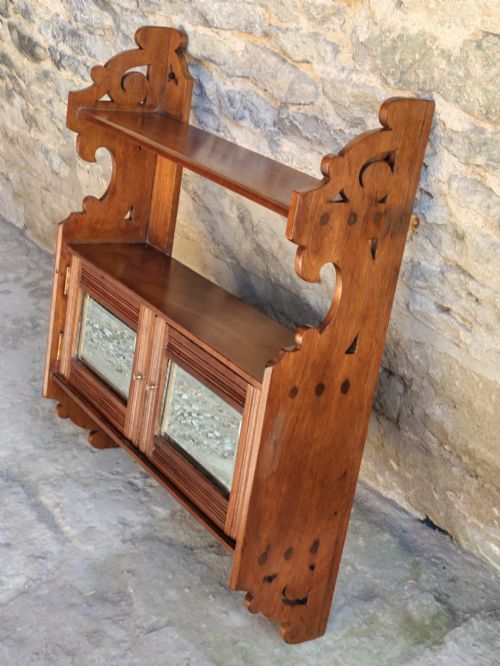
A victorian wall hanging cabinet serves to organise intimate domestic items while saving floor space in period rooms. Buyers find these pieces configured as corner cupboards, glazed display cases, open shelving combinations, and small smoker cabinets.
The material selection ranges from robust oak and mahogany to simpler deal and pine, often shaped to fit awkward angles or narrow hallways. Form follows utility, leading to pieces designed specifically for spices, pharmacy bottles, or books.
The aesthetic vocabulary spans straightforward country farmhouse pine to elaborate Gothic Revival and Aesthetic Movement expressions. Many examples reflect domestic life from the mid nineteenth century through to the Edwardian transition.
How they were made
Carpenters utilised dense hardwoods like walnut and mahogany alongside durable softwoods such as pine and deal, frequently applying decorative brass hinges, handles, and escutcheons. Joinery methods relied on dovetailed corners and pegged joints to sustain the weight of hanging storage.
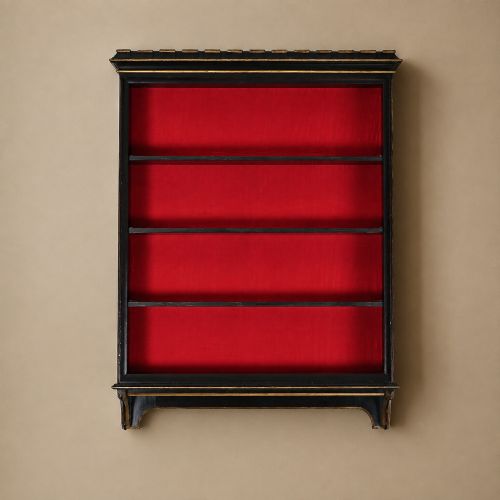
Surface treatments involved hand-waxing natural grain, ebonising timber for dramatic contrast, or applying intricate marquetry and inlaid satinwood details. Glazed doors utilised lead or timber muntins to secure glass panes for dust-free viewing.
Materials span brass, oak, glass, mahogany, pine, walnut, iron, and metal across the documented inventory.
What varies in quality
Quality rests upon timber selection and the precision of decorative carving, inlay, or structural joinery executed by the cabinetmaker. Superior pieces demonstrate crisp mouldings, tight dovetails, and carefully matched wood veneers.
Design ambition dictates distinction, separating plain utility cupboards from architecturally detailed pieces influenced by the Aesthetic Movement or Gothic Revival. Original hardware, intact glass, and untouched surface patination elevate the standing of any survivor.
George Edmund Street·William Yale·John Moyr Smith
The Victorian Wall Hanging Cabinet Glossary
- Corner cupboard
- A triangular storage unit designed to fit neatly into the ninety-degree angle of a room. This form maximises neglected space.
- Marquetry
- Decorative veneer work forming pictorial or geometric patterns using various tinted woods. Craftsmen cut these thin elements precisely to fit flush.
- Ebonisation
- The chemical or painted treatment of timber to imitate expensive ebony. This dark finish gained popularity during the nineteenth century.
- Whatnot
- A set of open shelves supported by slender pillars used for displaying ornaments. These tiered structures originated in the Georgian era and persisted through Victorian times.
- Escutcheon
- A protective plate surrounding a keyhole, frequently cast in brass or bronze. It prevents the timber around the lock from sustaining wear.
Victorian Wall Hanging Cabinet: Frequently Asked Questions
Where were these cabinets placed?
These storage units hung in kitchens, hallways, pharmacies, and parlours to keep necessary items at hand. Their elevated placement kept contents away from damp floors and busy household traffic.
Corner designs utilised dead space where two walls met, while flat-backed versions anchored above sideboards or desks.
How do I hang a heavy cabinet?
Original brass hanging loops or sturdy internal screw brackets provide the primary mounting points on antique timber frames. Modern wall anchors must match the weight of dense hardwoods like oak or walnut.
Professional installation into wall studs ensures the security of old glass doors and heavy contents.
Can I store heavy books inside?
Most hanging cases suit lighter objects such as china, spices, pharmacy bottles, or small curiosities. Wall attachment limits the total load capacity compared to floor-standing bookcases.
Checking the integrity of internal shelf supports and backboards prevents structural strain over time.
How do I distinguish revival styles?
Gothic Revival pieces display pointed arches, heavy mouldings, and medieval ironwork details. Aesthetic Movement examples favour clean lines, Anglo-Japanese motifs, and ebonised finishes.
Chippendale revival items incorporate carved scrollwork and intricate fretwork derived from eighteenth-century designs.