
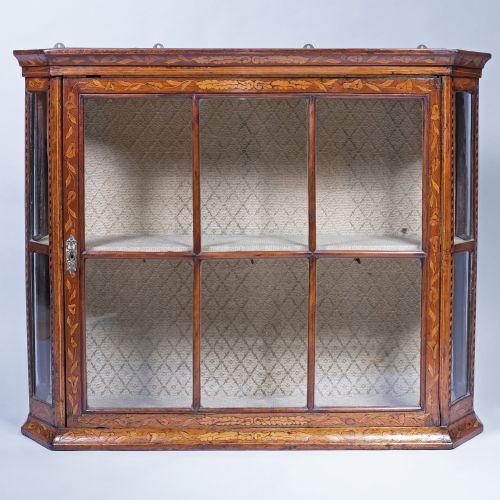


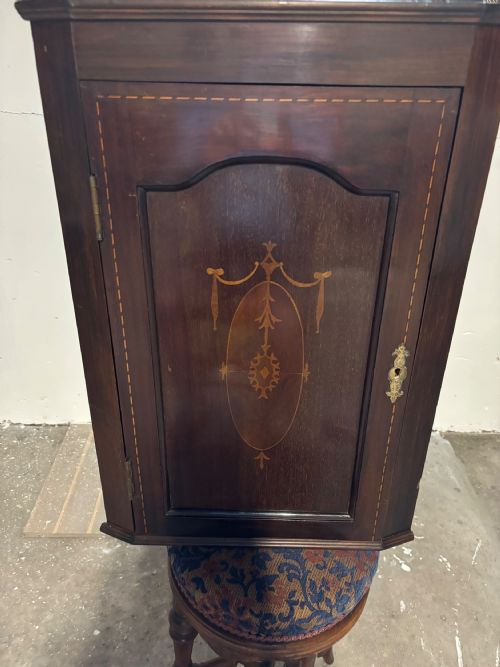
Small Wall Mounted Cabinet
A small wall mounted cabinet is a practical storage piece for tight spaces, offering period character and clean lines.
Small Wall Mounted Cabinet
When you search for a small wall mounted cabinet, you encounter compact hanging cupboards, corner units, and wall shelves designed to save floor space. These pieces serve to organise everything from keys to display items in domestic rooms.
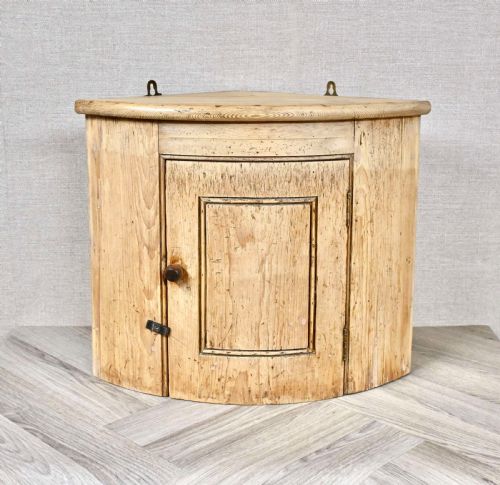
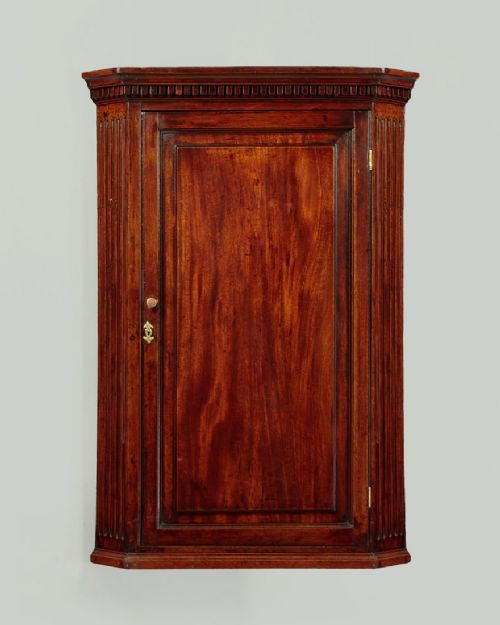
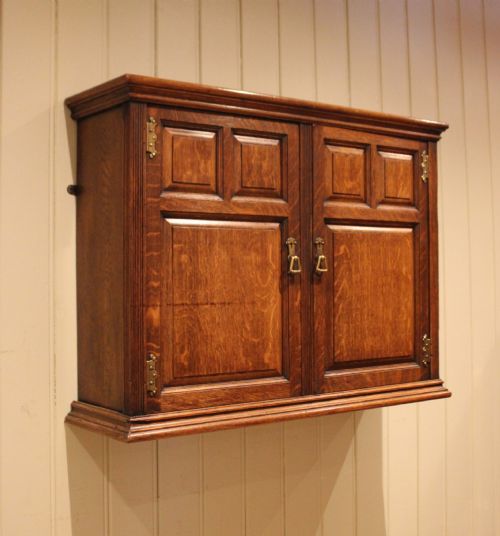
The versions most common on this page are mahogany and oak corner cupboards from the Georgian and Victorian periods. You also find walnut display pieces, Edwardian inlaid designs, and rustic farmhouse pine.
Makers produced these cabinets in various formats, including glazed doors, tambour fronts, and open wall shelves. They hang securely from walls to utilise room corners or narrow wall spaces.
How they were made
Cabinet makers utilised dense hardwoods such as mahogany, oak, and walnut to build durable hanging frames. Marquetry inlay, burr walnut veneers, and faux tortoiseshell finishes added decorative surface detail.
Brass hardware, including hinges and key escutcheons, secured doors and provided functional contrast against the timber. Glass panels were fitted into glazed display doors to protect contents while maintaining visibility.
Joinery techniques involved precise corner joints and fitted shelves capable of supporting weight while suspended on walls. Backboards were typically panelled in lighter woods to reduce overall hanging weight.
Listings feature oak, mahogany, walnut, and satinwood, spanning the Georgian, Victorian, and Edwardian eras.
What varies in quality
Quality depends on the selection of timber grain, particularly in figured mahogany and burr walnut veneers. Superior examples display balanced marquetry inlay and well-matched wood panels across the front.
Construction standards show in the tightness of the corner joints and the smooth operation of doors and drawers. Original brass hardware and intact glass panes elevate the standing of a piece.
Provenance and age influence desirability, with eighteenth-century pieces showing hand-cut joinery compared to later production methods. The proportion and balance of cornices and mouldings define the visual success.
The Small Wall Mounted Cabinet Glossary
- Bow Front
- A convex curved cabinet front that projects outward in a rounded sweep. This shape softens room corners.
- Tambour Front
- A sliding door made of narrow vertical strips of wood glued to a canvas backing. It runs in a track to open in tight spaces.
- Marquetry Inlay
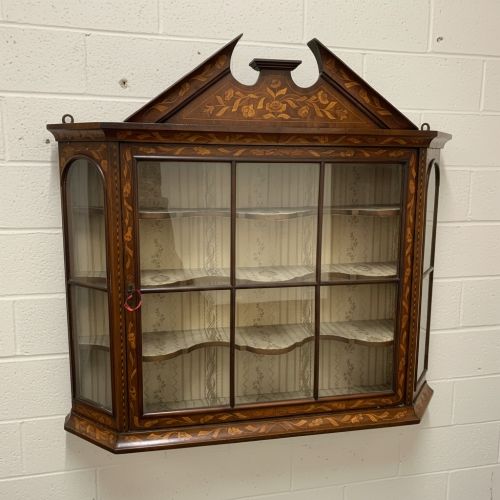
- Decorative patterns created by fitting thin slices of wood veneer into a contrasting wood background. It forms floral or geometric designs.
- Corner Cupboard
- A cabinet built with a triangular cross-section designed to fit snugly into a room corner. It maximises unused angles.
- Pokerwork
- A technique of burning designs into wood using a heated metal tool. It appears on Arts and Crafts pieces.
Small Wall Mounted Cabinet: Frequently Asked Questions
How do I hang a heavy antique cabinet safely?
Check the internal fixing points and ensure screws anchor directly into wall studs or masonry rather than just plasterboard.
Use heavy-duty brackets beneath the base if the cabinet lacks robust internal hanging loops.
Were these cabinets meant for corners or flat walls?
Both formats exist in equal measure depending on the room layout they served.
Corner units utilise dead space, while flat wall cabinets provide shallow storage in hallways or above tables.
How do I date an oak wall cupboard?
Examine the timber grain, construction marks, and hinges for signs of hand-working versus machine production.
Georgian and eighteenth-century pieces feature pegged joints and hand-planed backboards.
Can glass door cabinets hold heavy items?
Original shelves in antique glazed cabinets are often thin and designed for light display items rather than heavy books.
Distribute weight evenly and avoid overloading older timber brackets.