



Dark Wood Hanging Cupboard
These dark wood hanging cupboards provide compact wall storage in mahogany, oak, and walnut, bringing period character to smaller spaces.
Dark Wood Hanging Cupboard
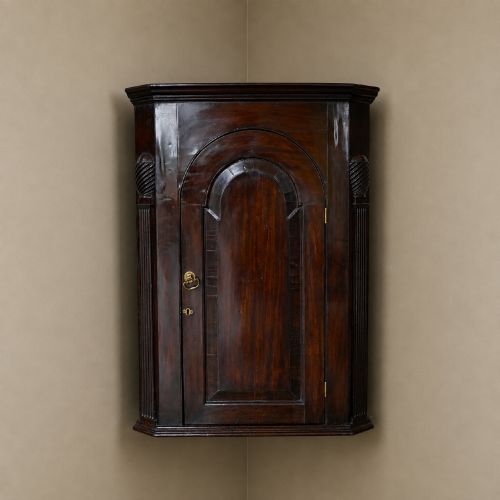
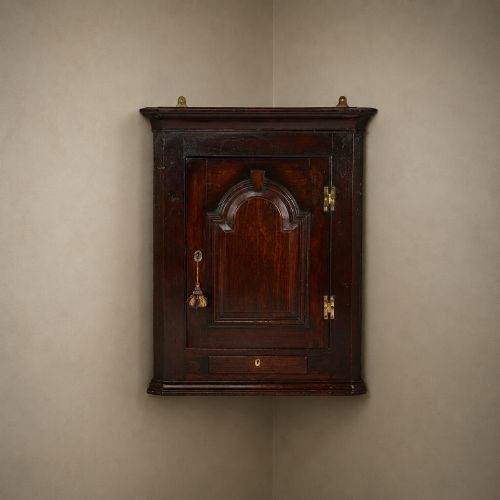
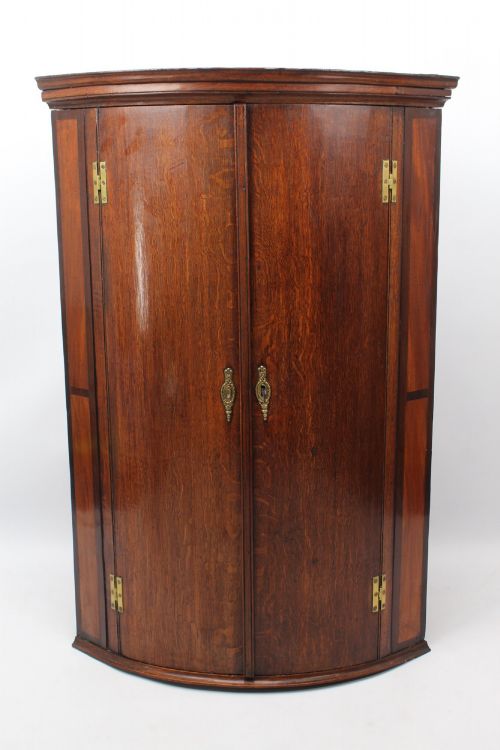
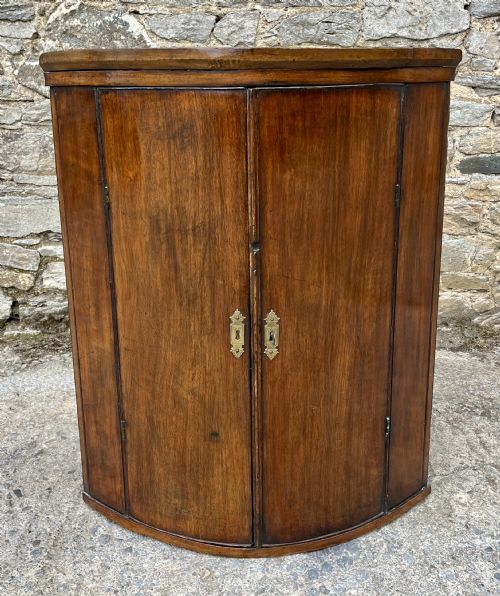
A dark wood hanging cupboard is a wall-mounted storage unit designed to save floor space while keeping items enclosed or displayed. When searching for a dark wood hanging cupboard, buyers encounter numerous corner cabinets, wall cabinets, and hanging wardrobes originating from the Georgian, Victorian, and Edwardian periods.
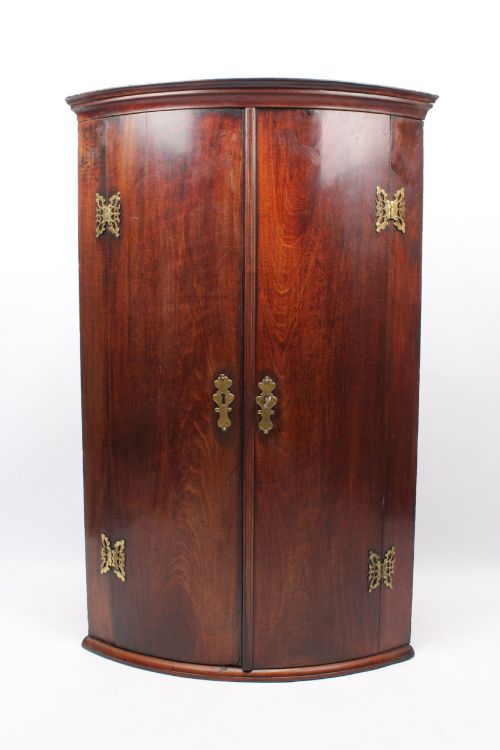
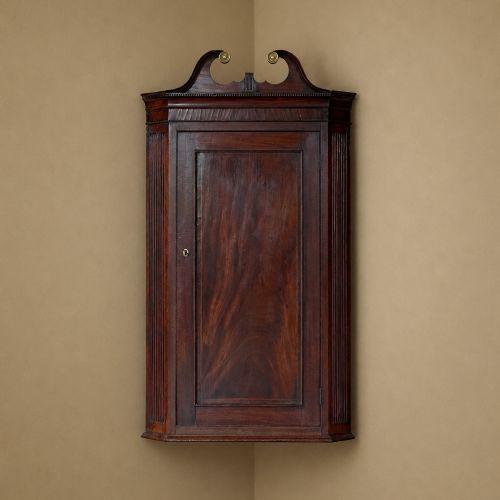
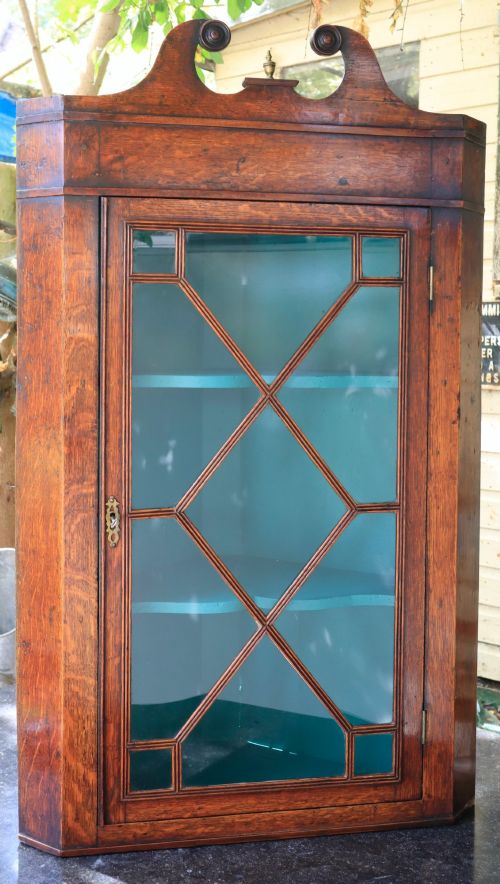
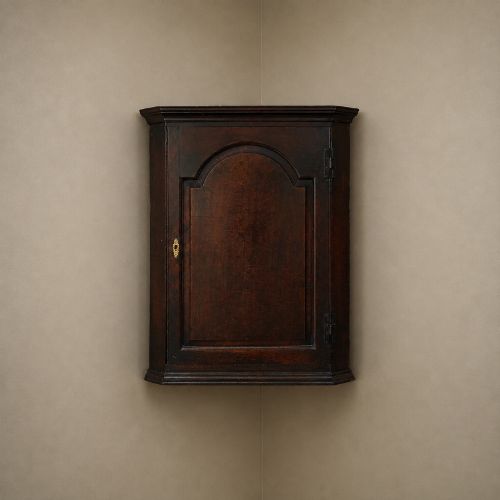
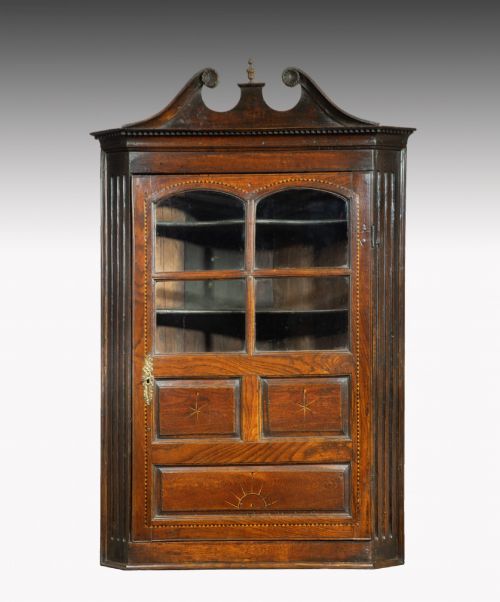
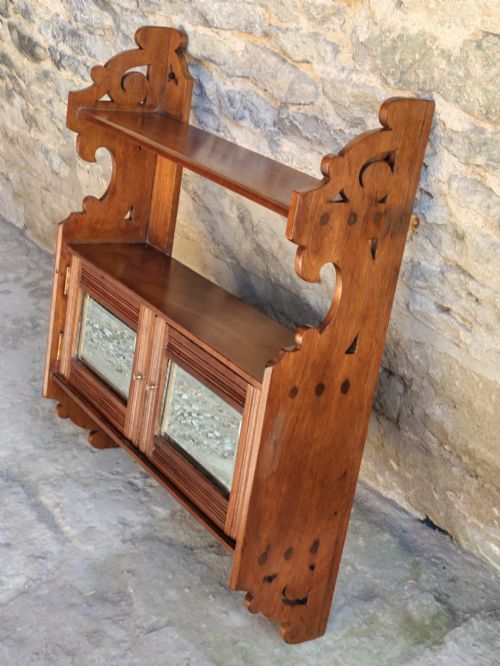
The selection ranges from mid-18th century mahogany and oak corner cupboards to later walnut and rosewood wall cabinets. Many feature single or double doors, internal shelves, and occasionally small drawers, while specific examples incorporate glass panels for display purposes.
How they were made
Cabinet makers utilised dense hardwoods such as mahogany, oak, and walnut, often selecting timber with rich grain patterns for the primary visible surfaces. Construction frequently involved panelled doors, dovetailed joints, and brass hinges or key escutcheons.
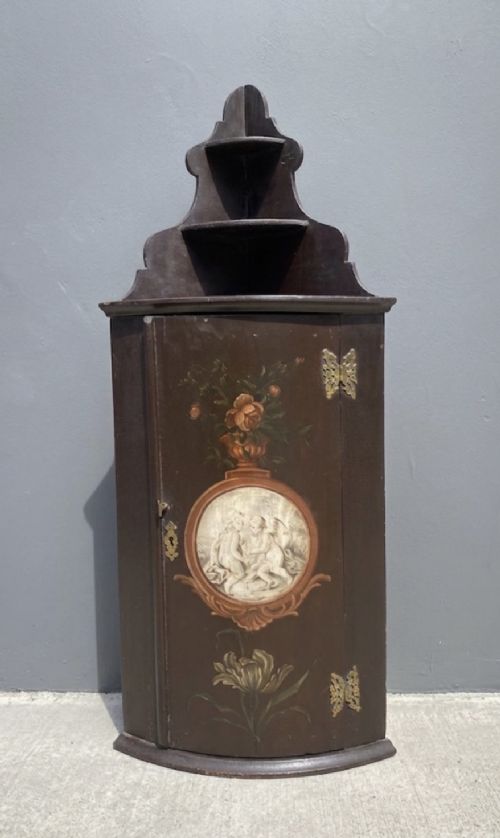
Surface finish varied from polished wood to painted or inlaid decoration, with some pieces showing decorative detailing such as broken arch pediments, glass glazing, and contrasting wood inlays.
Channel Island style wardrobes prove that even hanging cupboards like to take a little inspiration from the seaside.
What varies in quality
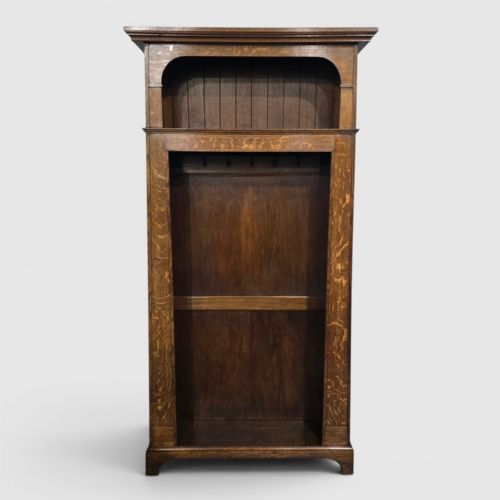
The distinction between standard examples and superior pieces rests on the selection of timber and the crispness of the joinery and carving. Finer cabinets display well-figured mahogany or quarter-sawn oak, alongside subtle architectural elements like dentil cornices or intact original brasswork.
Proportion and execution define the upper tier of the range. Pieces retaining original paint, clean interior shelving, and well-fitted doors demonstrate greater integrity than those altered or poorly restored over time.
The Dark Wood Hanging Cupboard Glossary
- Bow front
- A convex, outwardly curved front facade commonly found on Georgian corner cupboards and cabinets. This curved shaping requires advanced woodworking skill to match doors to the frame.
- Pediment
- The decorative architectural structure surmounting the top of a cabinet. Examples in this category include broken arch designs that draw the eye upward.
- Escutcheon
- A protective plate surrounding a keyhole, usually fashioned from brass. These small hardware fittings often help date a piece by their shape and metal composition.
- Glazed
- Fitted with glass panes to allow the display of contents within the cabinet. This treatment appears on various Edwardian and Georgian wall cabinets.
- Inlay
- A technique where pieces of contrasting timber or decorative materials are inserted into the primary wood surface. It creates ornamental patterns across the doors or body of the cupboard.
Dark Wood Hanging Cupboard: Frequently Asked Questions
Where should I hang a dark wood corner cupboard?
These wall-mounted cabinets suit unused room corners in hallways, dining spaces, or kitchens where floor area is limited. Their triangular footprint allows them to utilise dead space effectively.
Ensure the wall construction can support the weight of dense hardwoods like oak or mahogany before mounting the cabinet securely at eye level.
How do I tell a Georgian cupboard from a Victorian one?
Georgian pieces generally exhibit classical proportions, straightforward timber grains, and understated brass fittings. 18th-century examples often favour solid oak or figured mahogany.
Victorian and later cabinets frequently introduce darker walnut, heavier mouldings, inlaid decoration, or glazed doors designed for aesthetic display rather than purely utilitarian storage.
What were these hanging cupboards originally used for?
Earlier examples functioned as food cupboards, general wall storage, or secure places to keep household valuables. Corner cupboards made efficient use of domestic interiors.
Later Victorian and Edwardian variations served as display cabinets for ceramics, or as compact hall robes and wardrobes for hanging garments.
Do these cabinets come with working keys?
Many period cupboards retain their original locks, though functionality varies. Some listings specifically note the inclusion of keys.
Original brass escutcheons and operational locks add to the completeness of an antique cabinet, though older mechanisms can sometimes require gentle adjustment.