
Victorian Velvet Side Chairs
Victorian velvet side chairs combine robust nineteenth-century timber frames with tactile textile upholstery, offering lasting comfort and period character.
Victorian Velvet Side Chairs
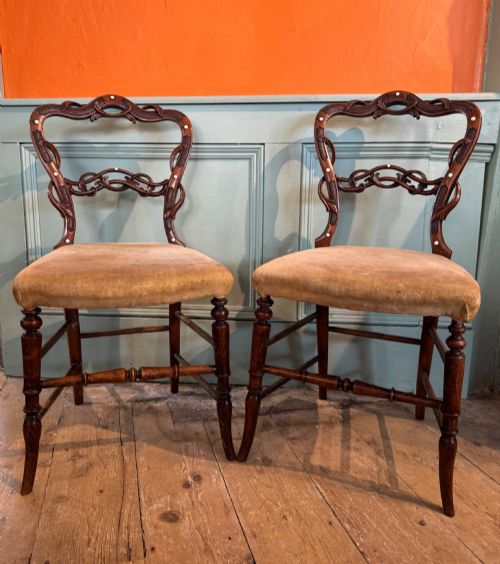
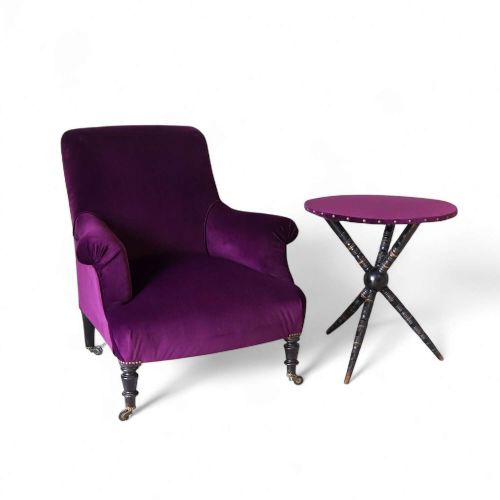
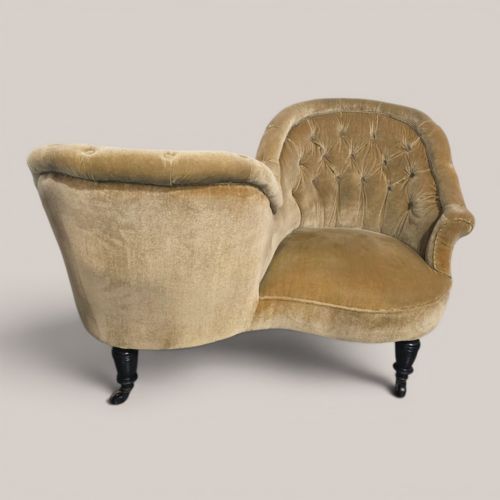
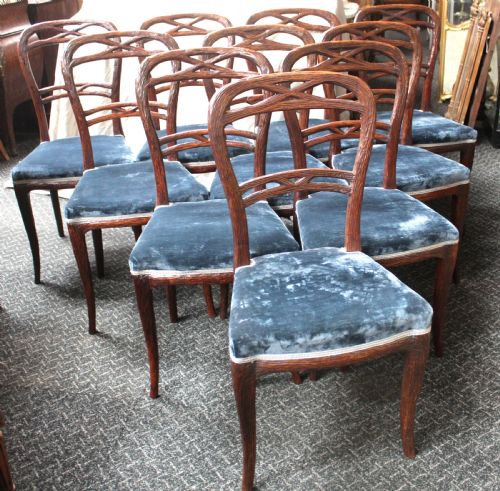
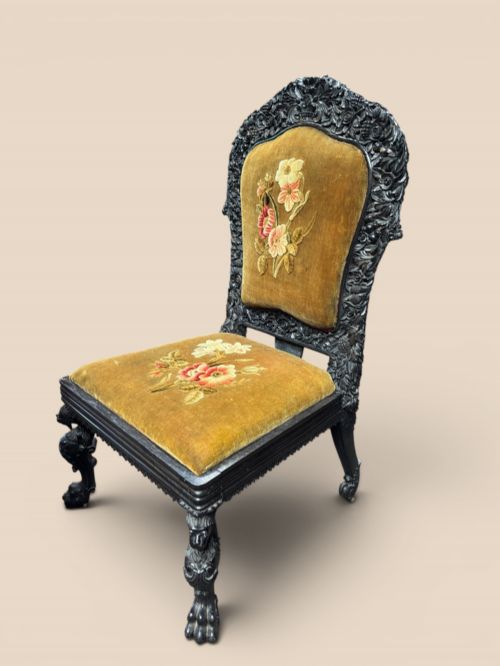
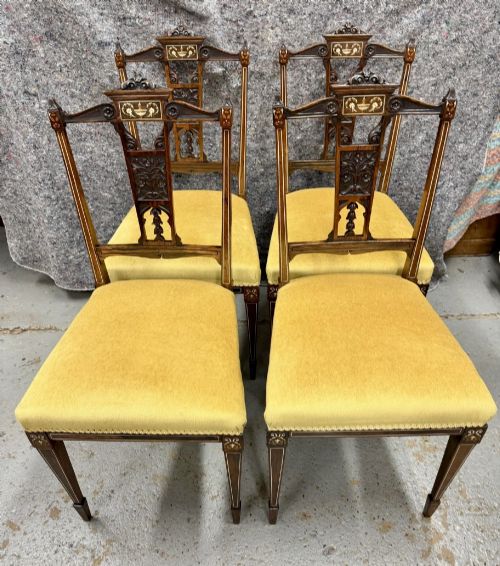
When buyers search for victorian velvet side chairs, they encounter a variety of nineteenth-century seating forms ranging from single parlor seats to large dining sets. The items on this page primarily span the Victorian period alongside related nineteenth-century designs such as William IV, Napoleon III, and Aesthetic Movement pieces.
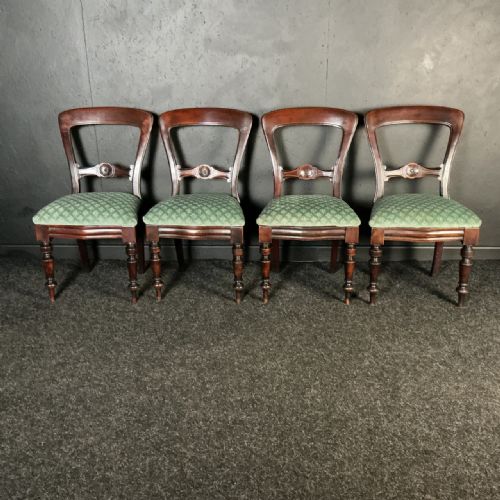
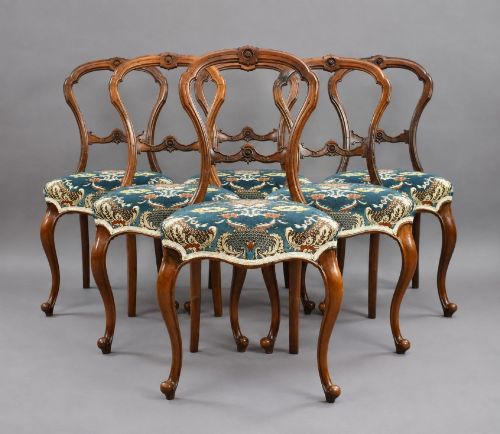
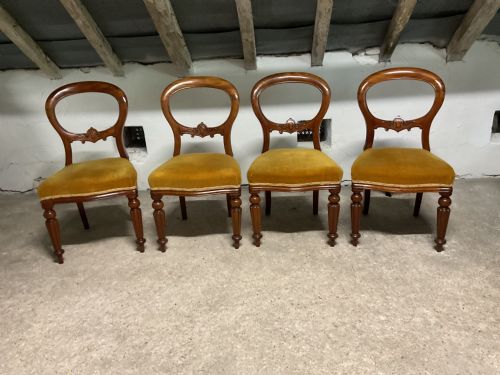
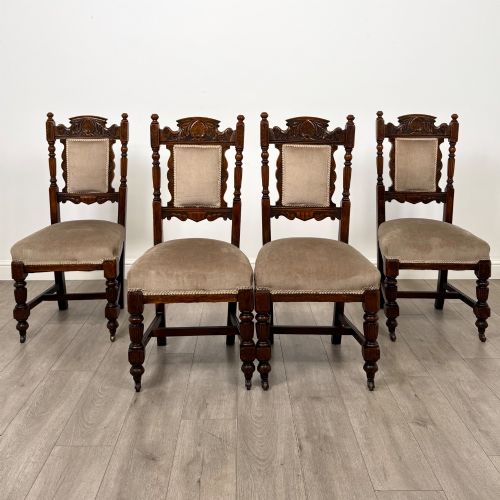
Side chairs and dining chairs form the core of the selection, accompanied by bedroom chairs, armchairs, and occasional seating. Frames typically reflect the era's preference for carved mahogany, rosewood, walnut, and oak.
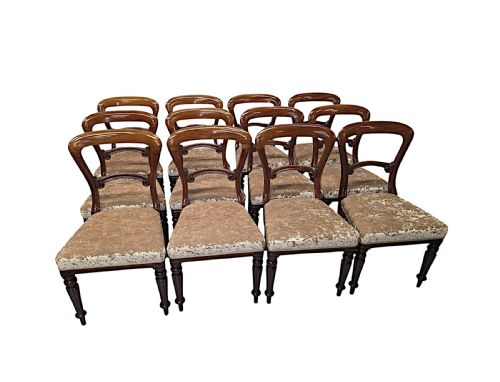
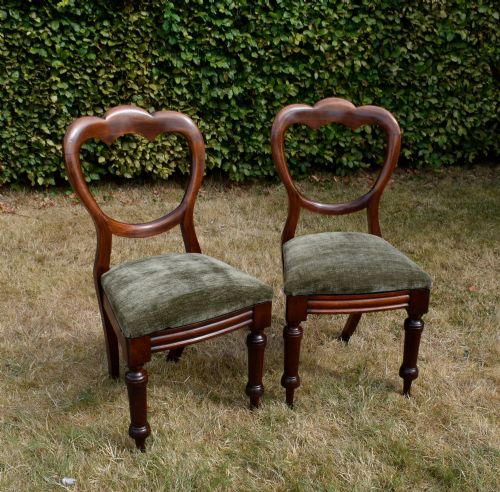
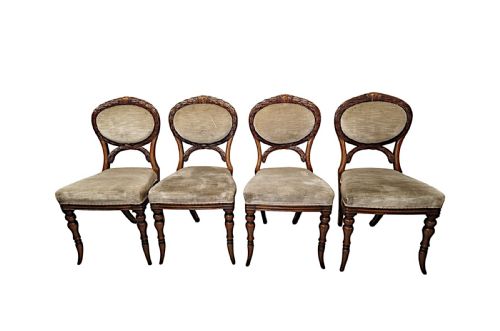
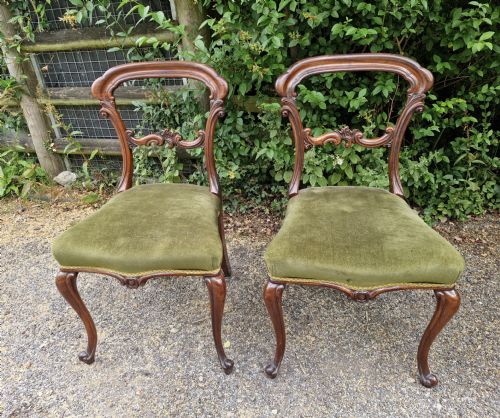
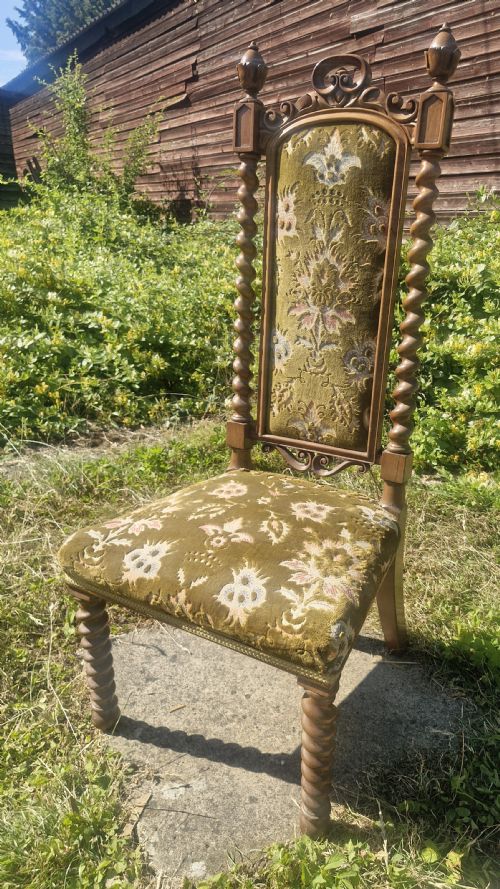
Upholstery materials include traditional textiles and modern designer velvets applied to period frames. Forms vary from balloon backs and crown backs to high backs and barley twist designs.
Materials and construction methods
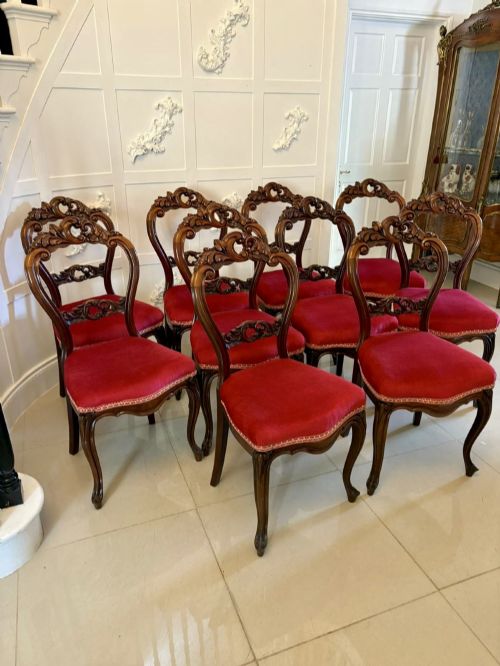
Cabinetmakers of the nineteenth century constructed frames using dense hardwoods like mahogany, rosewood, walnut, and oak, often shaped with scroll carvings, turned legs, or marquetry inlay. Timber selection dictated the structural stability and visual weight of each chair.
Upholstery involved securing fabric over supportive internal padding, utilising materials such as brass tacks and textile trims. Velvet coverings provided a soft, tactile surface that complemented polished timber frames.
Velvet surfaces invite guests to stroke the fabric repeatedly while pretending to listen closely to dinner table conversation.
Distinctions in quality and craftsmanship
The distinction between standard seating and superior examples rests on the depth of hand-carved detail, the symmetry of balloon or crown backs, and the richness of the timber grain. Finer sets display crisp joinery and substantial timber scantlings rather than thin veneers.
Matching sets command attention for their uniformity across multiple pieces, whereas single chairs or pairs rely on individual decorative merit such as barley twist turnings or intricate marquetry inlay.
Gillows·Strahan·Blyth & Sons
The Victorian Velvet Side Chairs Glossary
- Balloon back
- A curved, oval-shaped chair back resembling the profile of a hot air balloon, popular during the mid-nineteenth century. This design provided ergonomic support while showcasing the grain of rosewood or mahogany frames.
- Barley twist
- A spiral turning carved into chair legs or structural supports. This decorative technique added texture and visual movement to wooden furniture.
- Marquetry
- The art of applying decorative veneer pieces to form geometric or floral patterns on a timber surface. It appears on higher-tier Victorian occasional and side chairs.
- Napoleon III
- A nineteenth-century eclectic design style associated with the Second French Empire, often incorporating ebonised wood, gilding, and plush velvet upholstery.
- William IV
- A transitional design style bridging the late Regency period and early Victorian era, characterised by robust proportions and scrolled timber details.
Victorian Velvet Side Chairs: Frequently Asked Questions
How do I identify a Victorian chair?
Victorian chairs are identified by their nineteenth-century timber frames, typically made from mahogany, rosewood, walnut, or oak. Common design markers include balloon backs, carved scrollwork, and turned legs.
Examination of the joinery and upholstery style helps confirm the period. Many pieces reflect specific revivals or regional cabinetmaking traditions of the era.
Are these chairs comfortable for daily use?
Nineteenth-century side chairs were built with supportive timber frames and padded seats designed for formal dining or parlor use. Their upright posture suits dining tables and desks rather than lounging.
Upholstery condition varies across surviving pieces, with some retaining traditional padding and others updated with modern textiles. Buyers can check listings for specific cushion and fabric details.
How do I care for velvet upholstery?
Velvet upholstery requires gentle maintenance to preserve its pile and texture. Regular light brushing helps prevent dust accumulation and keeps the fabric looking plush.
Harsh cleaning chemicals should be avoided in favor of specialist textile care. Keeping antique seating away from direct sunlight protects both the velvet dye and the underlying timber.