

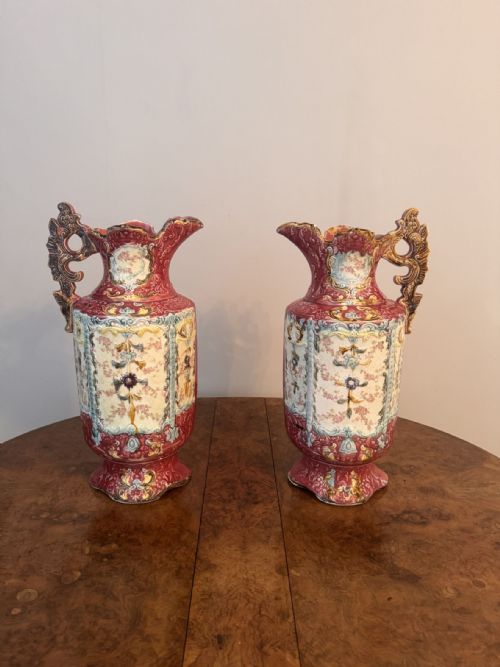
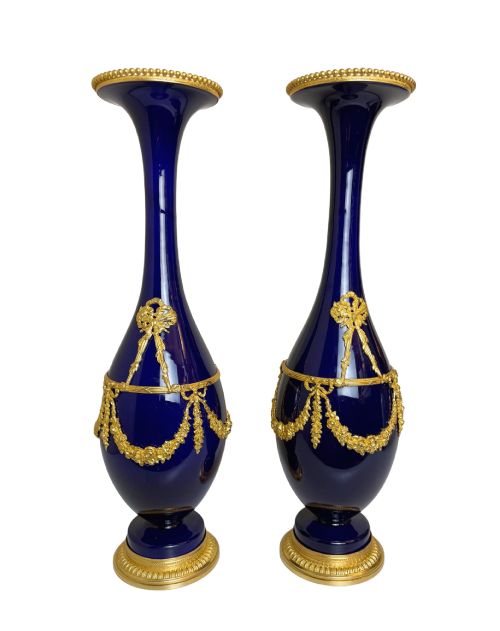
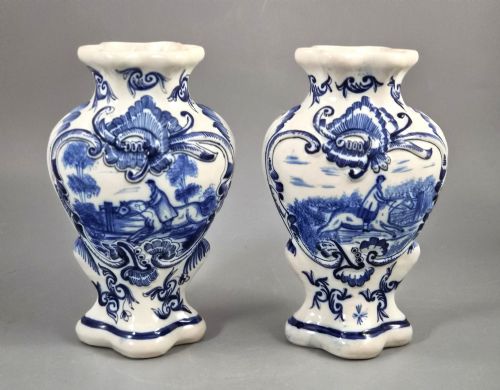
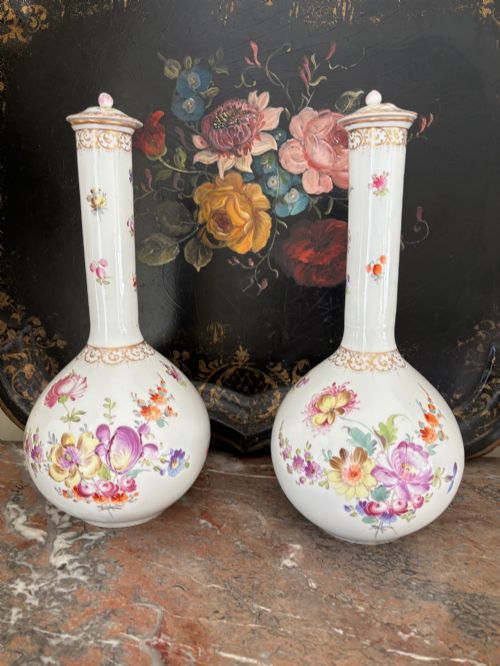
Victorian Urn Pair
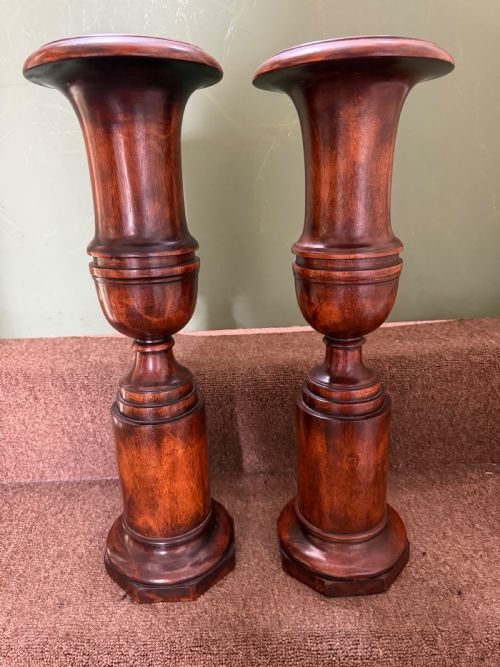
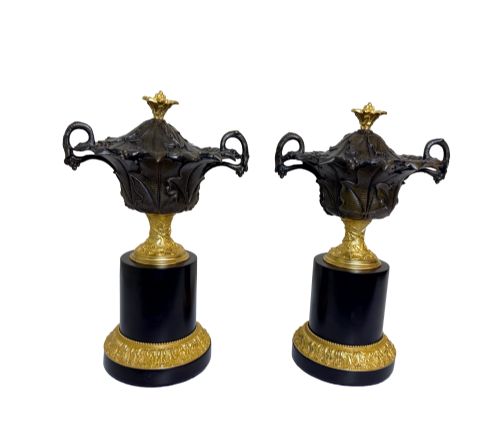
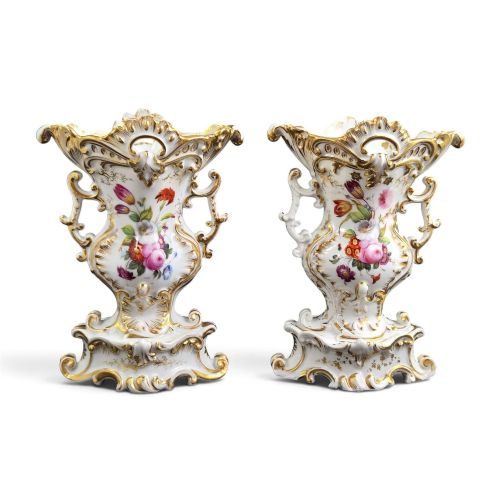
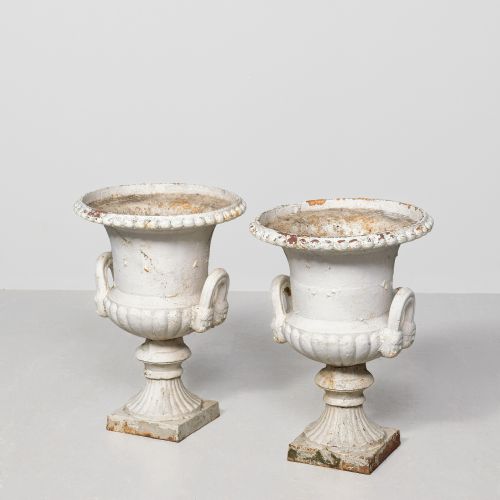
A victorian urn pair brings symmetry and classical dignity to a room or garden, offering matched decorative presence crafted in iron, bronze, or ceramic.
Victorian Urn Pair
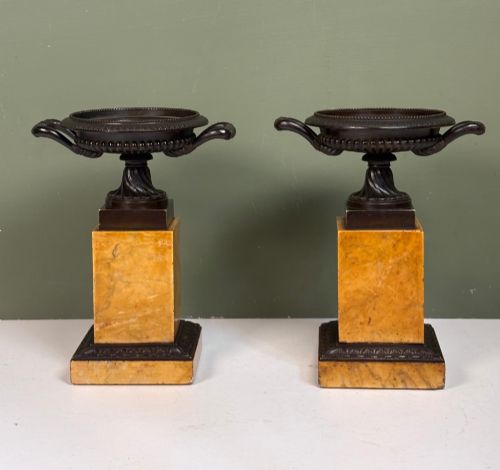
A victorian urn pair encompasses both interior decorative vessels and robust garden planters designed in matching sets. These objects draw heavily on classical antiquity, taking the form of campana shapes, handled vases, or pedestal mounted garnitures.
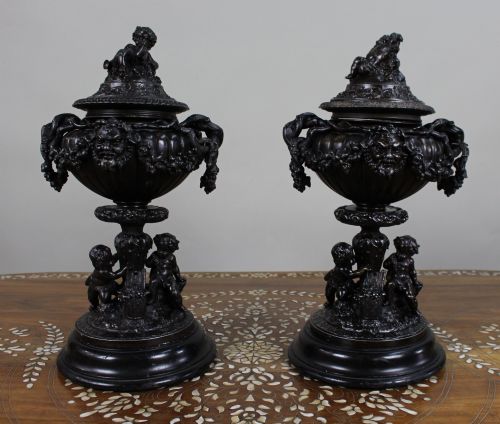
The selections span heavy cast iron pieces meant for lawns and terraces alongside delicate porcelain, earthenware, and bronze examples intended for mantelpieces and tables. Many examples reflect revivalist movements popular during the nineteenth century, including neoclassical and french rococo influences.
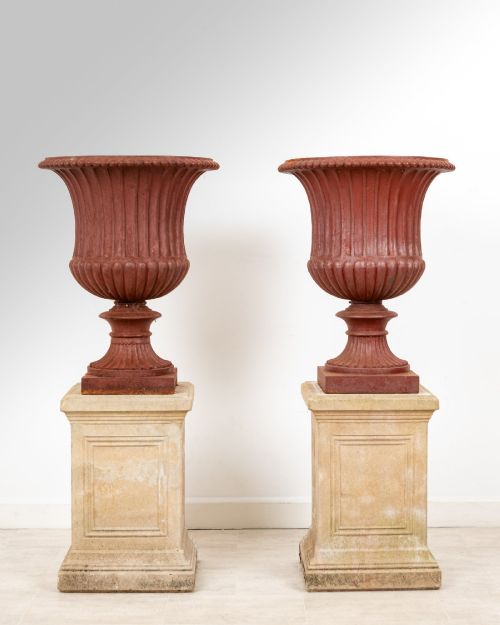
Buyers encounter everything from large garden campana urns on stone plinths to small ceramic mantel vases and gilt bronze coupes. This variety reflects the broad range of decorative and functional vessels produced during the period.
How they were made
Metal vessels rely on foundational foundry techniques, utilising cast iron, bronze, or spelter shaped into classical silhouettes, occasionally enhanced with gilt bronze trim, paint, or patinated finishes. Iron garden examples often display original distressed paint or structural casting seams from nineteenth century production.
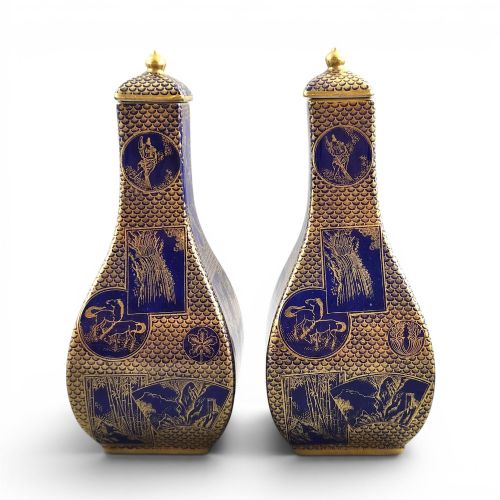
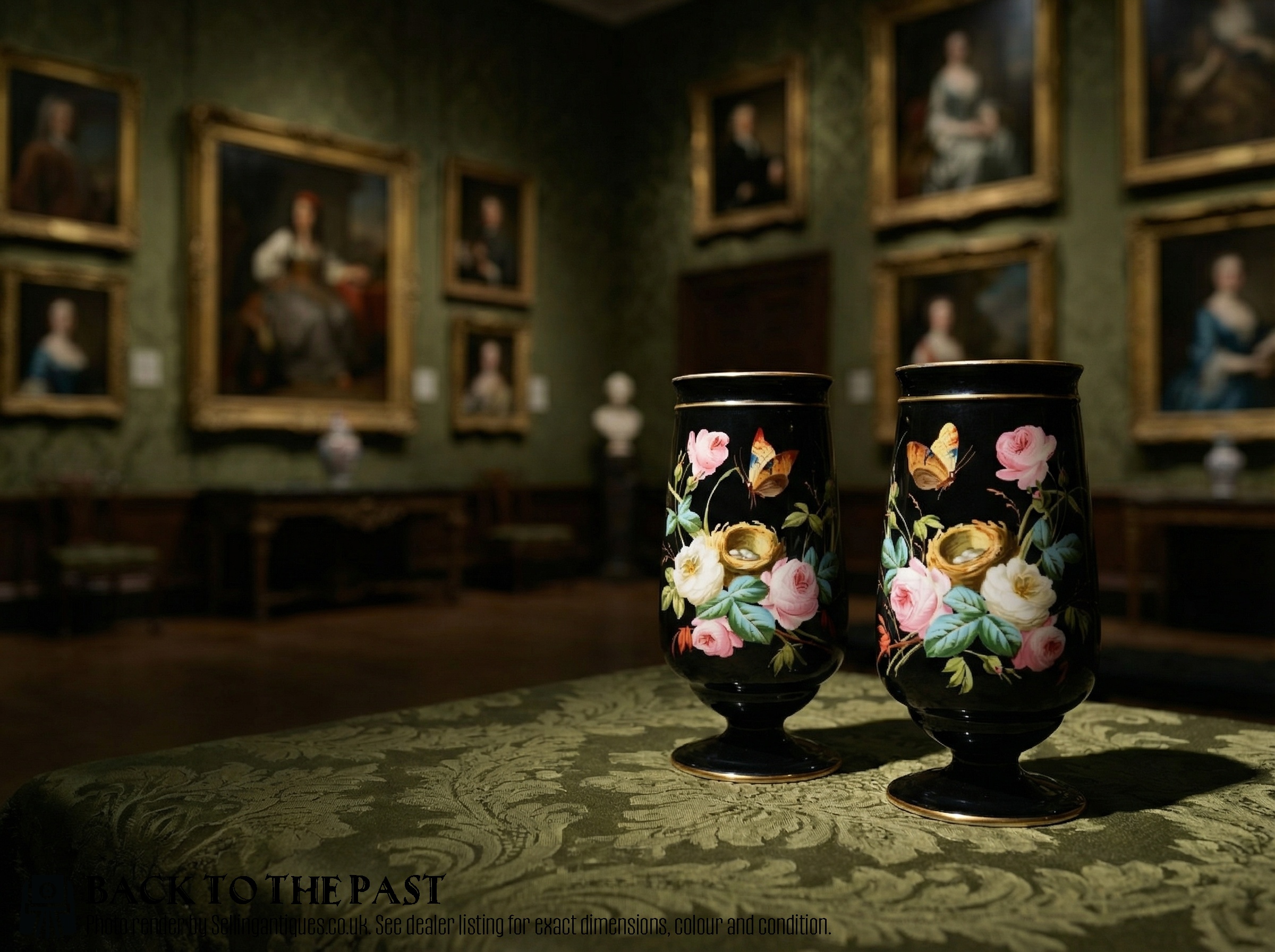
Ceramic and earthenware pieces employ traditional throwing and moulding methods, decorated with hand painted floral motifs, enamel work, or coloured glazes such as majolica and salt glaze. Porcelain varieties frequently incorporate detailed gilding and transfer printing alongside manual brushwork.
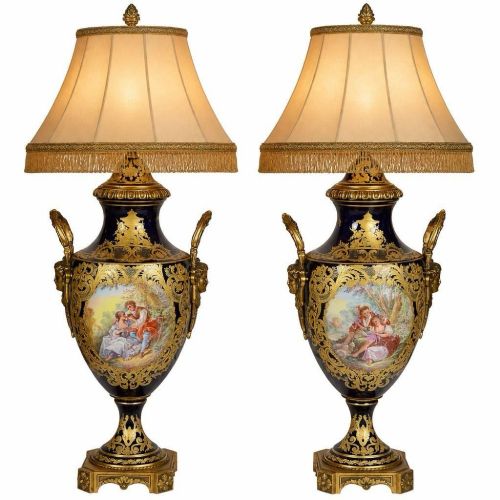
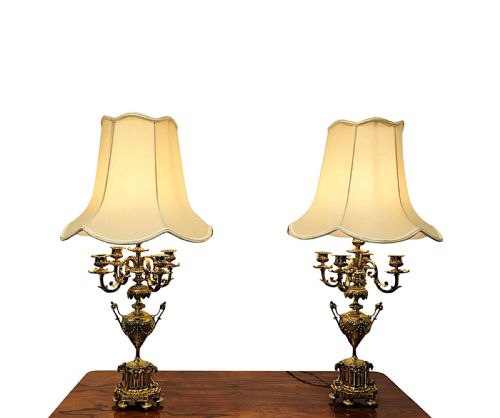
The inventory includes both monumental garden planters and delicate table lamps converted from nineteenth century brass candelabra.
What varies in quality
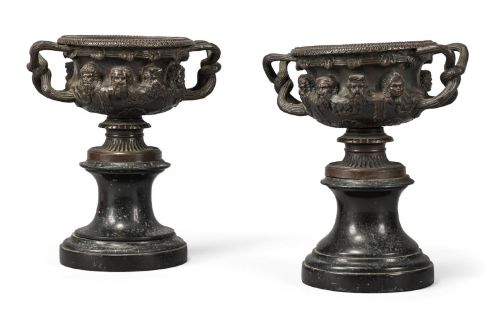
The caliber of a victorian urn pair depends on the crispness of the casting or the fineness of the ceramic body and hand painting. Superior examples exhibit sharply rendered classical motifs, well defined facial masks or floral details, and harmonious proportions across both objects.
Material composition and surface finish also distinguish finer pieces, such as heavy patinated bronze, finely crackled porcelain glazes, or intact original gilding and paint surfaces. Matching pedestals, original lids, and recognised factory marks further elevate the standing of a matched pair.
Coalbrookdale·Jacob Petit·Fourmaintraux Courquin·Sitzendorf·Mason·Helena Wolfsohn·Royal Worcester·Doulton Lambeth·Thomas Hope·Ridgeways
The Victorian Urn Pair Glossary
- Campana
- An inverted bell shaped vessel with an everted rim, commonly found in iron or terracotta for garden use. This classical silhouette originates from ancient Roman pottery and stone work.
- Garniture
- A set of three or more matching decorative objects, typically vases or urns, designed to sit together on a mantelpiece or sideboard. They often feature a central taller vessel flanked by two smaller companions.
- Spelter
- An alloy of zinc and lead used as a cheaper alternative to bronze for casting decorative figures and urns. It is usually given a bronze or patinated surface finish.
- Majolica
- A type of earthenware coated with an opaque tin glaze and painted with bright metallic oxide colours. It was widely used for colourful nineteenth century decorative vessels.
- Cassolette
- A decorative vase or urn with a reversible lid that functions either as a vessel or a burner for perfumes. These pieces often feature pierced metal mounts and enamel bodies.
Victorian Urn Pair: Frequently Asked Questions
Where should I place garden urns?
Heavy cast iron urns suit terraces, lawns, and formal garden entrances, particularly when elevated on matching stone plinths or pedestals.
Smaller terracotta or iron variants perform well on patio tables or flanking path edges where their classical silhouettes remain visible.
How do I care for bronze and iron?
Metal urns require gentle cleaning with soft cloths to preserve patinated surfaces, original paint, or applied bronze finishes.
Outdoor iron pieces benefit from protective wax or specialised coatings to manage weathering and moisture exposure over time.
Can ceramic urns hold water?
Many porcelain, earthenware, and faience vessels function primarily as decorative mantel pieces or garnitures rather than functional flower holders.
Checking the interior glaze and construction helps determine if a specific ceramic pair safely accommodates water and fresh stems.
What defines neoclassical style?
Neoclassical design draws direct inspiration from ancient Greek and Roman art, emphasising symmetry, restrained ornamentation, and classical urn shapes.
This aesthetic manifests in crisp foliate scrolls, Bacchic masks, handles, and clean architectural proportions across nineteenth century metal and ceramic pieces.