

Victorian Upholstered Settee
When choosing a victorian upholstered settee, you are selecting a substantial nineteenth-century seat designed for comfort and reception rooms.
Victorian Upholstered Settee
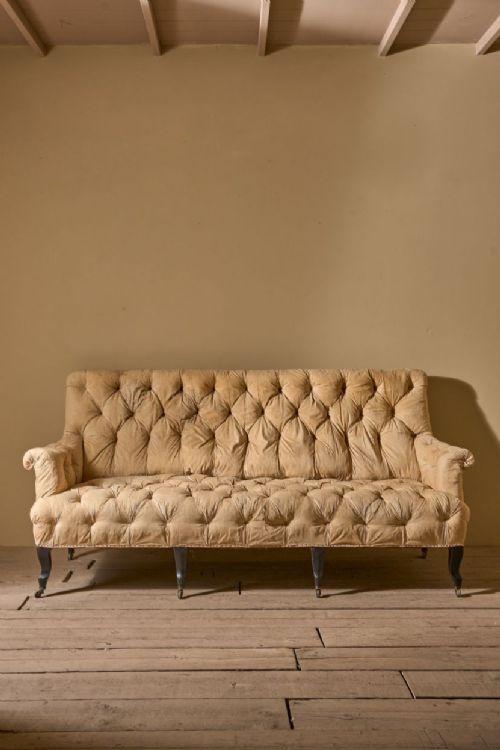
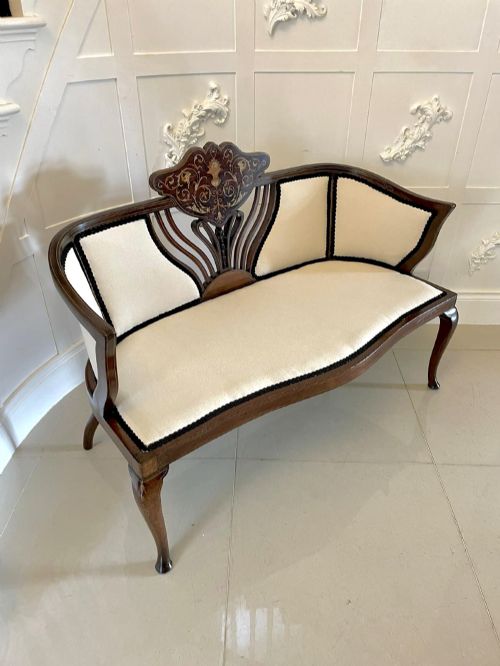
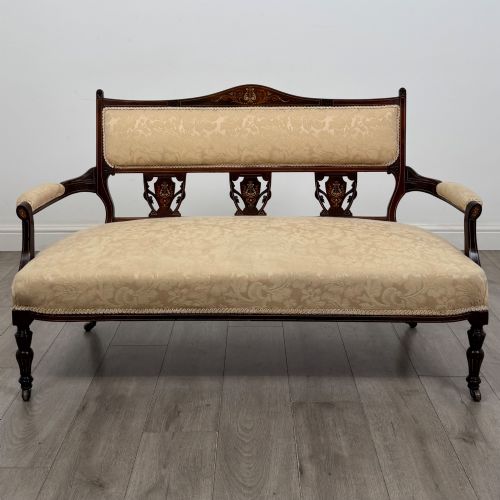
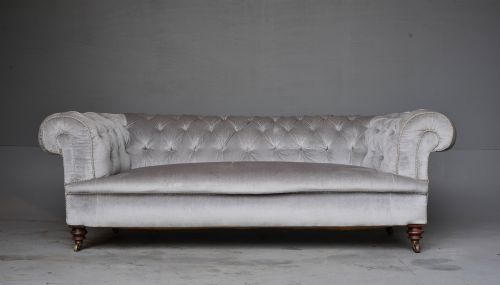
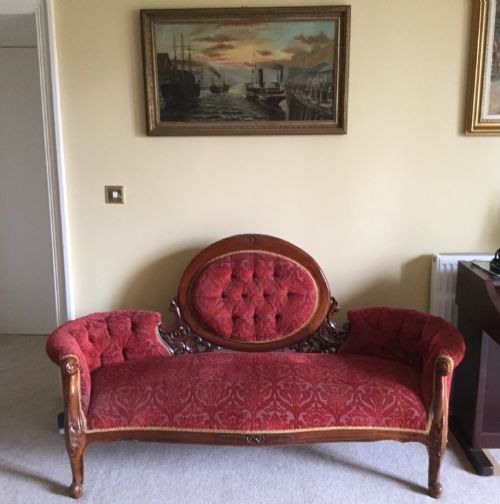
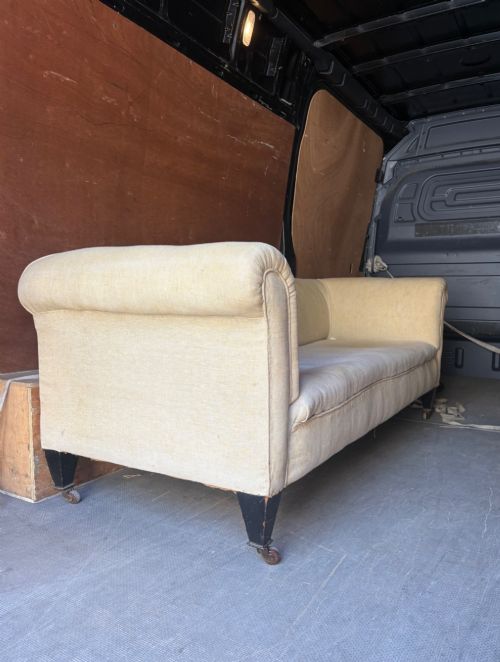
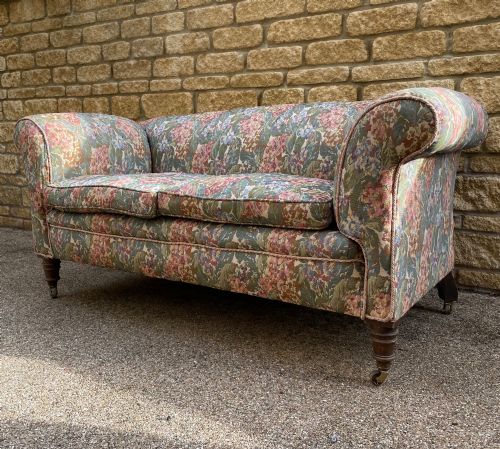
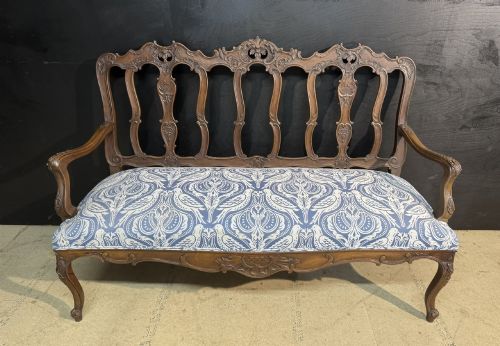
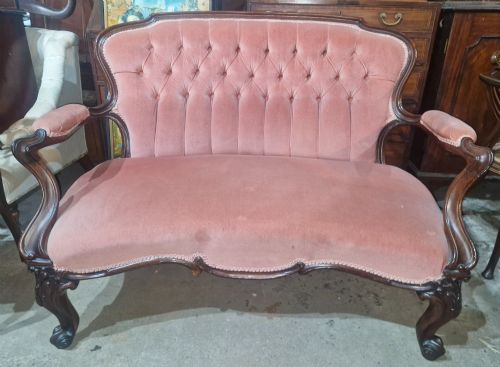
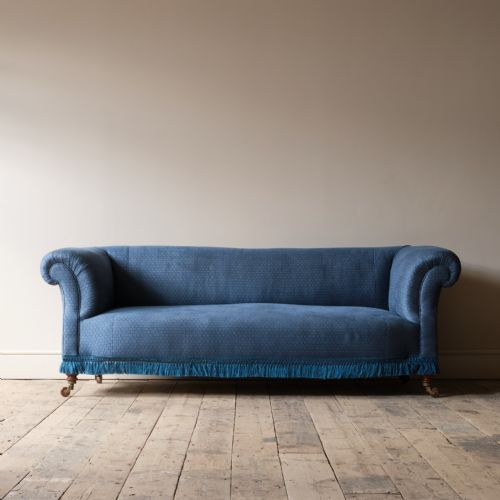
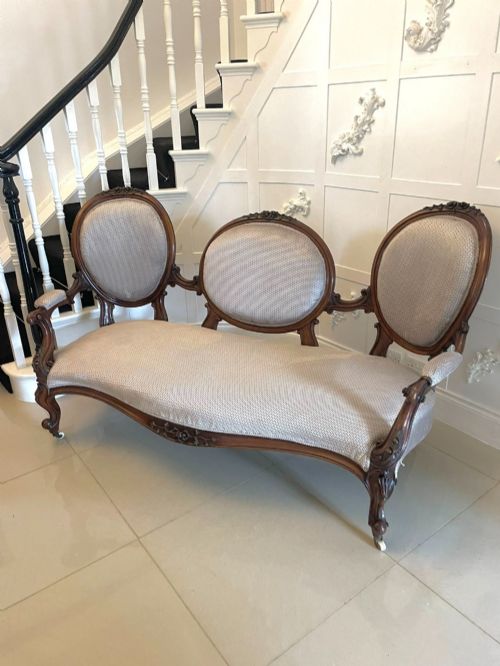
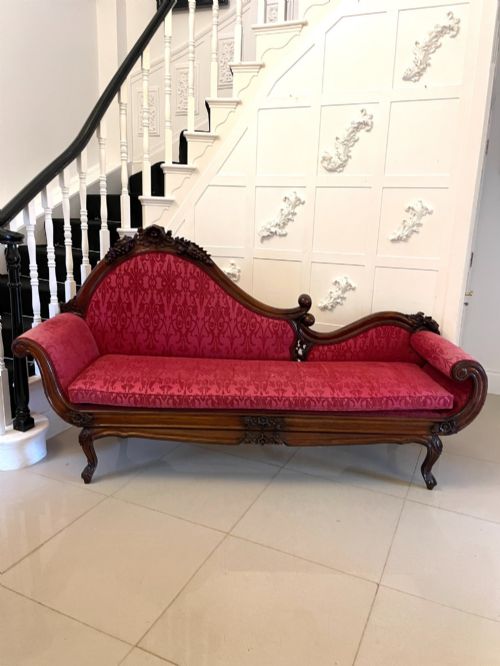
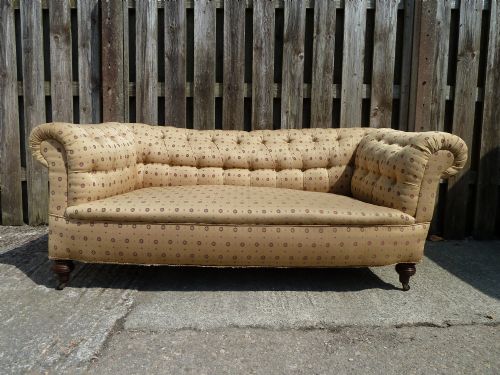
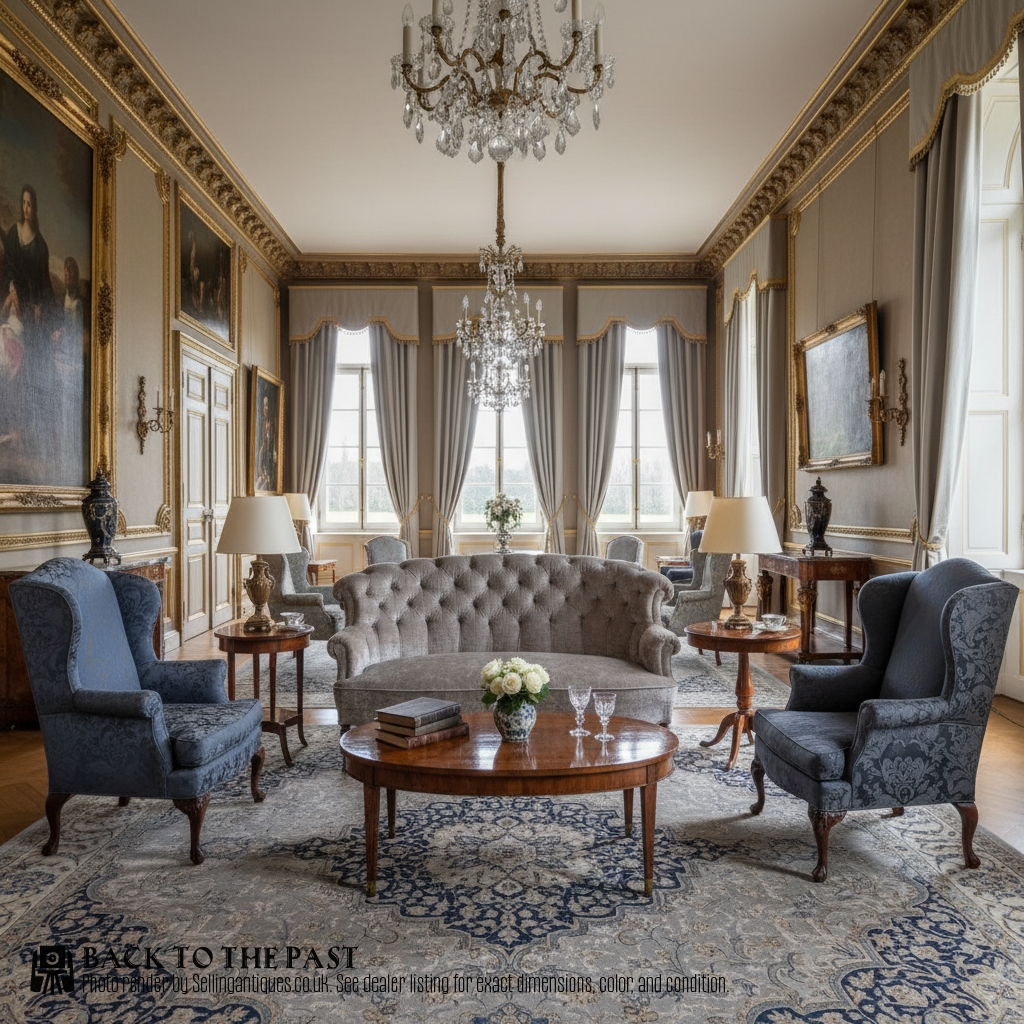
A victorian upholstered settee encompasses a range of nineteenth-century seating forms, from button-backed salon sofas to low drop-arm designs and deep-sprung Chesterfields. On this page, walnut and mahogany frames predominate, appearing alongside rosewood and ebonised wood.
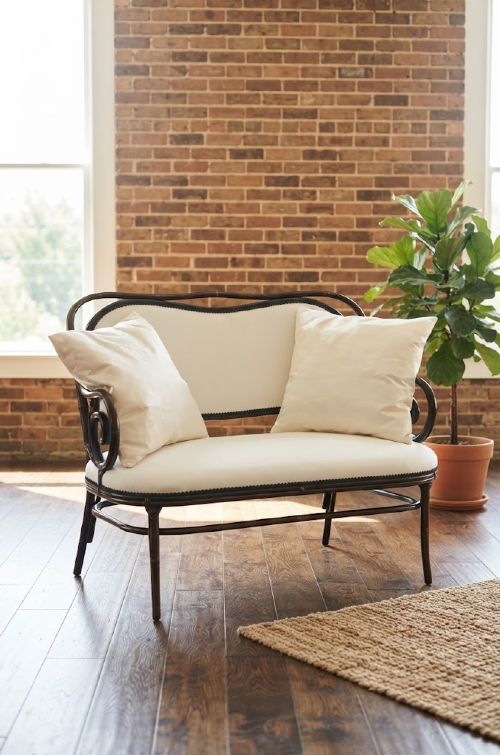
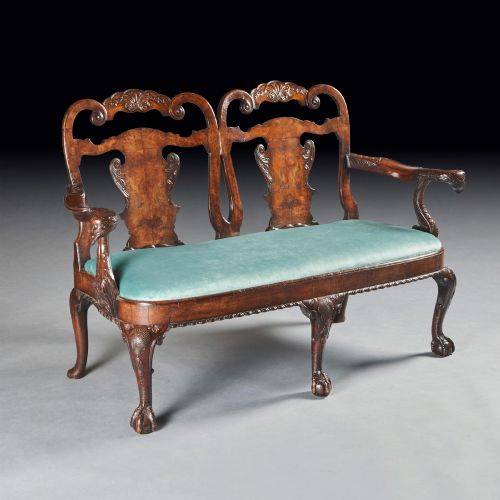
Makers and workshops of the period produced both formal reception pieces and relaxed parlour seating, utilising varied revival styles including Rococo and the Aesthetic Movement. The search phrase covers double-ended couches, chaise longues, and twin-chair back sofas built for domestic interiors.
How They Were Made
Cabinetmakers constructed the exposed timber framework using dense hardwoods such as mahogany, walnut, and rosewood, often incorporating hand-carved scroll ends, inlay, or turned supports on castors. Frames were jointed and shaped to reflect prevailing tastes from George II revivals to French Napoleon III designs.
Upholstery techniques relied on deep-sprung webbing bases, horsehair stuffing, and calico linings before finishing with top fabrics like velvet, brocade, plush, or floral embroidery. Buttoning and brass studding secured the padding while adding structural tension across camel backs and curved backrests.
Victorian Upholstered Settee Retail Price Guide 2026
Typical asking prices for victorian upholstered settee among the pieces listed under this phrase on Sellingantiques today, from the lower quarter to the upper quarter. They describe what is for sale here now, not the wider market.
The inventory spans the nineteenth century, including mid-Victorian carved rosewood and late-period inlaid mahogany pieces.
What Varies in Quality
The distinction between standard commercial production and superior workshop output lies in the crispness of the timber carving and the architectural balance of the frame. Maker attribution to established firms like Howard and Sons or Jackson and Graham indicates higher standards of joinery and internal padding.
Material selection dictates the grade of the piece, with figured walnut veneers, fine rosewood, and intricate mahogany inlay marking out better examples. The integrity of the original sprung base and the subtlety of the frame contours separate ordinary seating from exceptional salon suites.
Hampton and Sons·Howard and Sons·C. Hindley and Sons·Jackson and Graham
The Victorian Upholstered Settee Glossary
- Chesterfield
- A deep-buttoned, heavily padded sofa characterised by arms and back of the same height. This traditional form offers formal upright seating paired with sprung comfort.
- Drop arm
- A movable or hinged arm mechanism that lowers on one or both sides of a settee. This allows the seating to convert into a daybed or chaise lounge.
- Chaise longue
- An elongated upholstered chair designed for reclining, featuring a single raised backrest at one end. Examples from this era utilise carved rosewood or mahogany frames.
- Aesthetic Movement
- A late nineteenth-century design style emphasising simplicity, ebonised finishes, and Japanese-inspired decoration. Pieces from this movement move away from heavy Victorian ornamentation.
- Buttoned back
- An upholstery method where depressions are formed in the padding by stitching through to the frame in a diamond pattern. This secures the internal stuffing while creating a textured surface.
Victorian Upholstered Settee: Frequently Asked Questions
What is a victorian upholstered settee?
A victorian upholstered settee is a nineteenth-century wooden-framed seat designed for multiple occupants, featuring fully padded backs and sprung bases.
These pieces range from buttoned salon sofas to low drop-arm couches produced in walnut, mahogany, and rosewood.
How do I identify different styles?
Styles are identified through wood choice, carving detail, and silhouette, distinguishing between Rococo Revival curves and strict geometric lines.
Evidence shows pieces drawing inspiration from earlier Georgian designs alongside distinct Aesthetic Movement ebonised work.
How were these settees used?
They served as primary seating in nineteenth-century drawing rooms, parlours, and formal reception spaces for entertaining guests.
Drop-arm and chaise longue variations additionally provided comfortable options for daytime resting and lounging.
What fabrics were originally used?
Upholstery materials included heavy silk velvet, wool plush, damask, brocade, and printed cotton or floral embroidery fabrics.
Inner padding relied on calico linen layers over horsehair stuffing and deep-sprung coil bases.