

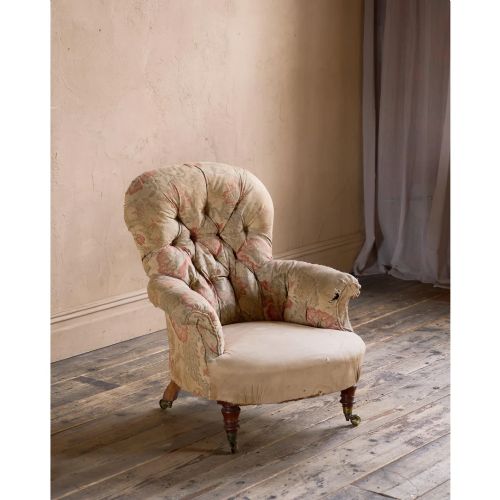
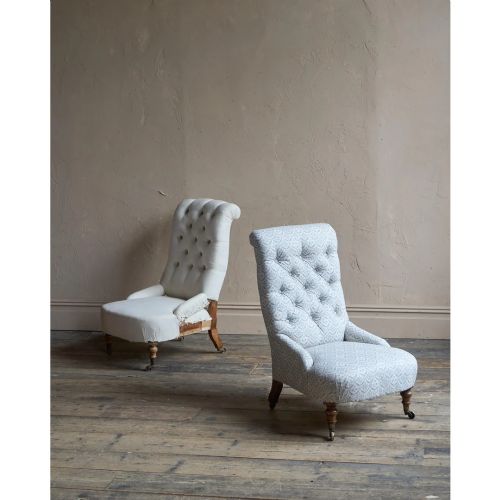
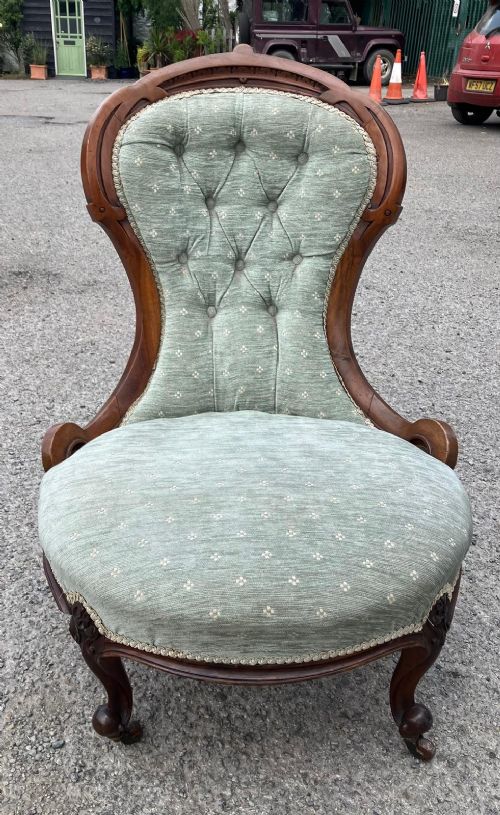
Victorian Upholstered Nursing Chair
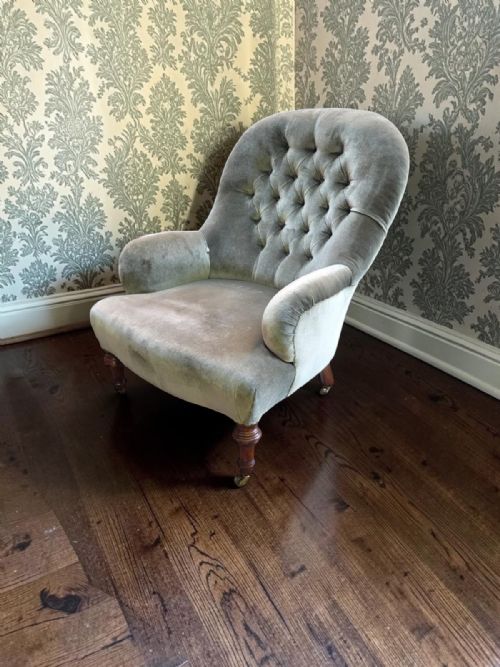
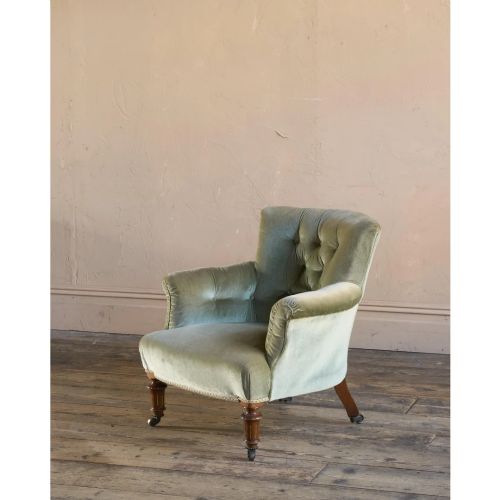
A victorian upholstered nursing chair offers a low-slung, supportive seat designed for comfort, combining period timber frames with tactile textile finishes.
Victorian Upholstered Nursing Chair
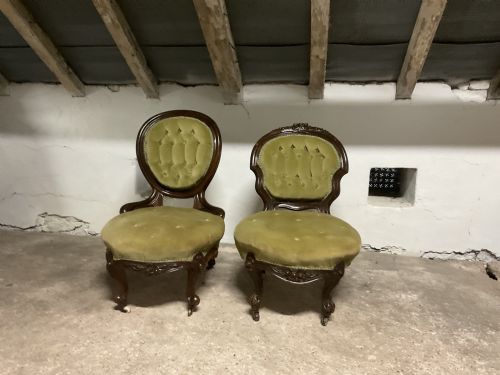
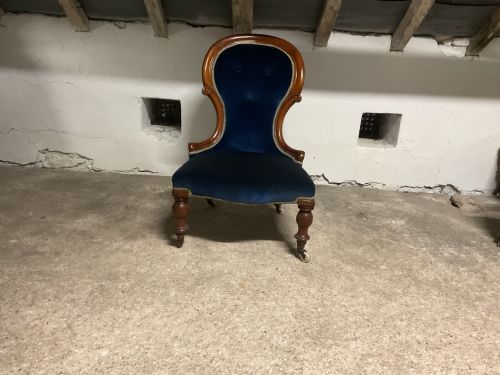
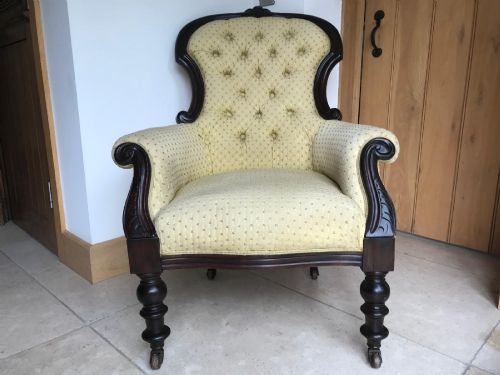
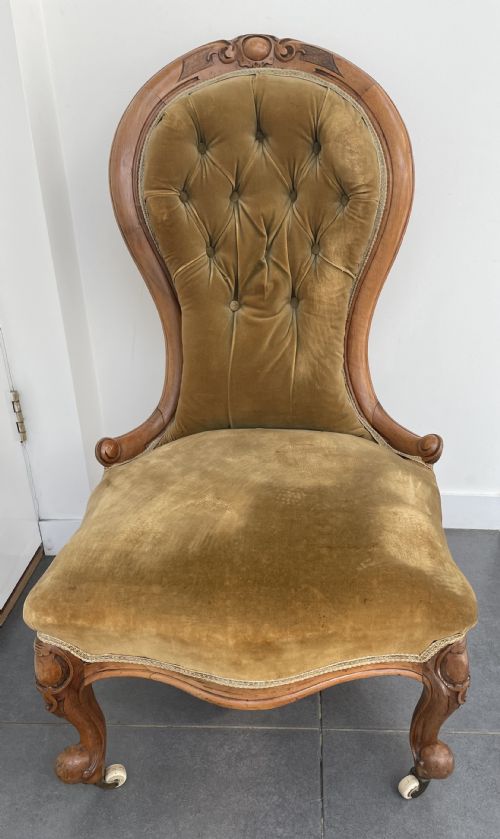
The versions most commonly met on this page include walnut and mahogany frames, often shaped with spoon backs or button upholstery. These low-profile seats sit closely to the floor and appear across various stylistic revivals from the mid-to-late nineteenth century.
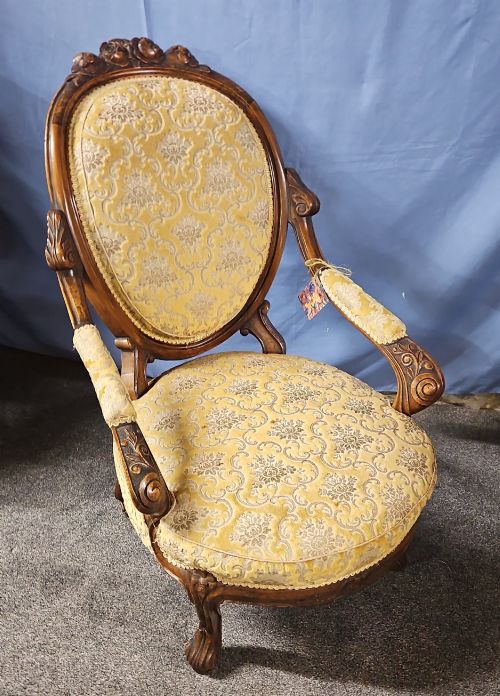
Makers and workshops constructed these seating forms using sturdy hardwoods, later pairing them with patterned needlework, beadwork, velvet, or modern patterned textiles. They survive today as versatile low chairs suited to living spaces and bedrooms alike.
What Varies in Quality
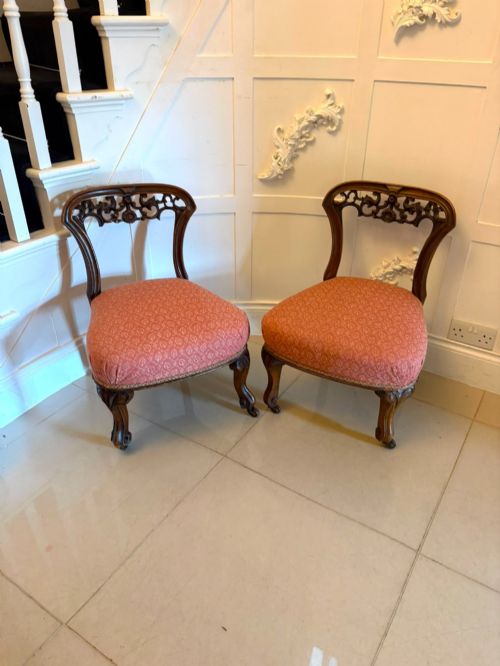
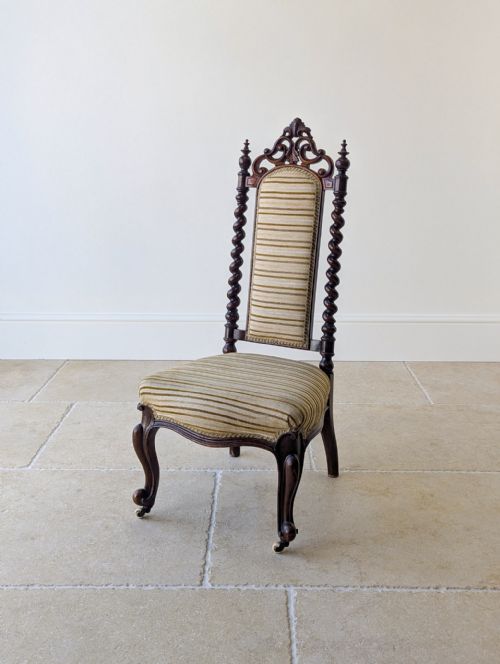
The distinction between standard examples and top-tier pieces lies in the crispness of the timber carving and the complexity of the frame's silhouette, such as serpentine rails or elaborate scroll backs. Superior examples retain robust joinery and highly figured wood grains.
Upholstery quality separates ordinary production from workshop masterpieces, where skilled hand-pleating, original deep buttoning, and high-grade textiles like silk velvet or period needlework elevate the piece. Maker attribution also plays a defining role in distinguishing workshop pieces.
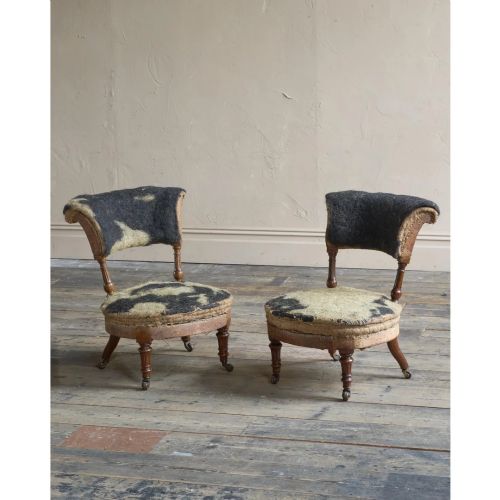
Many pieces retain secret marks left by Victorian upholsterers who scribbled their names hidden beneath the horsehair stuffing.
Gillows·Holland & Sons·Howard and Sons
The Victorian Upholstered Nursing Chair Glossary
- Spoon Back
- An oval-shaped, concave upholstered backrest resembling the bowl of a spoon, popular on mid-nineteenth-century chairs. This curved design fitted the contours of the sitter's spine.
- Button Back
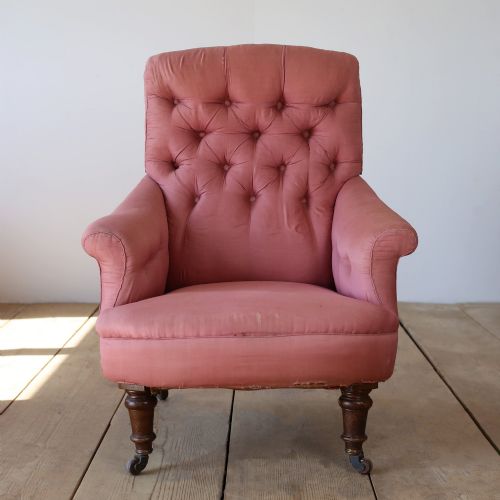
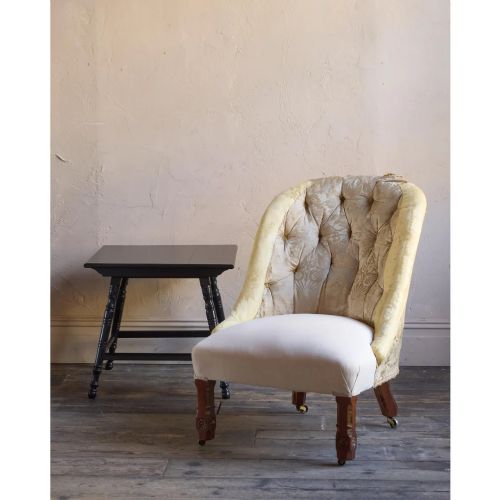
- An upholstery technique where deep buttons are pulled tight into the padding to form a geometric pattern of tufts. This secures the internal stuffing while creating a textured surface.
- Show-Wood
- The exposed, polished wooden framing of an upholstered chair that remains visible around the padded sections. It highlights the timber quality and cabinetmaker's skill.
- Slipper Chair
- A low-slung, typically armless chair originally designed for bedrooms to aid in dressing. Their modest height made them practical for domestic spaces.
- Castor
- A small wheel attached to the base of furniture legs to allow easy movement across carpets and floorboards. These were often made of brass and turned wood.
Victorian Upholstered Nursing Chair: Frequently Asked Questions
Why were nursing chairs built so low?
These low seats were originally designed to assist women with domestic tasks and infant care near the fireplace or bedside.
The shortened legs placed the sitter at a comfortable height for holding infants or tending to fires without obstructing the room.
Can I use these chairs in a modern living room?
These compact seats fit easily into contemporary sitting rooms as accent pieces beside sofas or fireplaces.
Their diminutive proportions allow them to add period character to smaller spaces without overwhelming the room layout.
How do I date a Victorian chair?
Dating relies on identifying stylistic shifts in the timber frame, carved details, and upholstery methods across the nineteenth century.
Early pieces often display robust mahogany or walnut frames with scroll or spoon shapes, while later examples incorporate ebonised finishes or aesthetic movement details.
What is the difference between a nursing chair and a slipper chair?
Both forms share a low profile, but nursing chairs traditionally feature taller, padded backs suited for supportive seating.
Slipper chairs tended to be simpler bedroom seats utilised while changing shoes or garments in dressing rooms.