


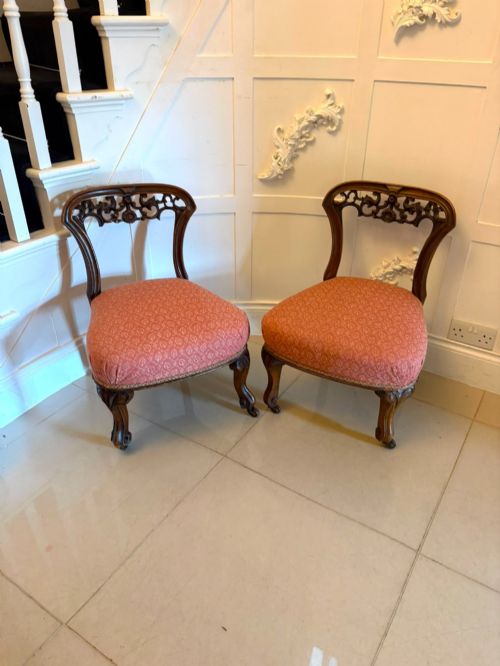
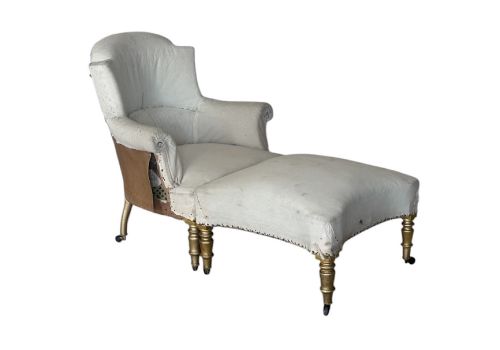
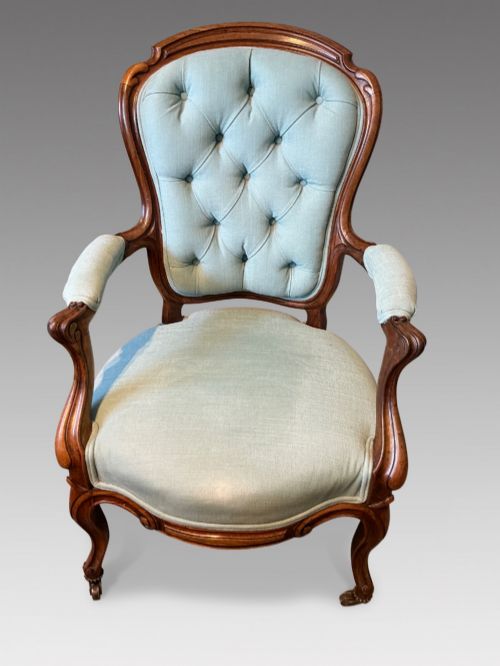
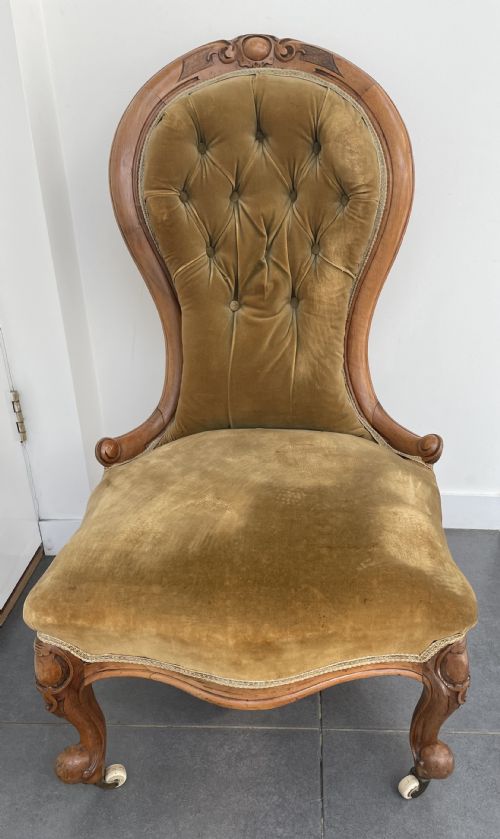
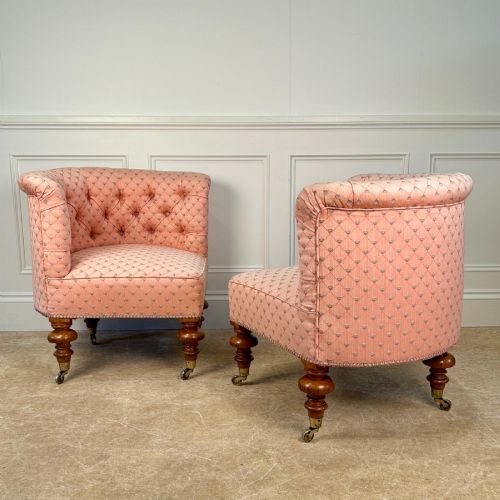
Victorian Upholstered Bedroom Chair
When you search for a victorian upholstered bedroom chair, you seek a compact, padded seat designed for private chambers in the nineteenth century.
Victorian Upholstered Bedroom Chair
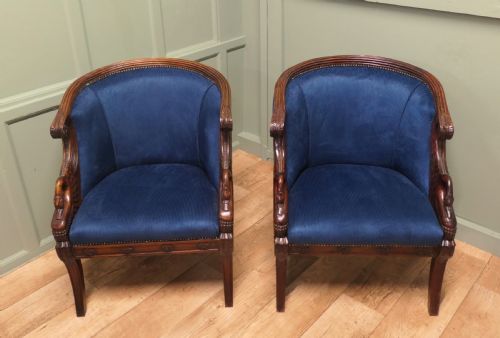
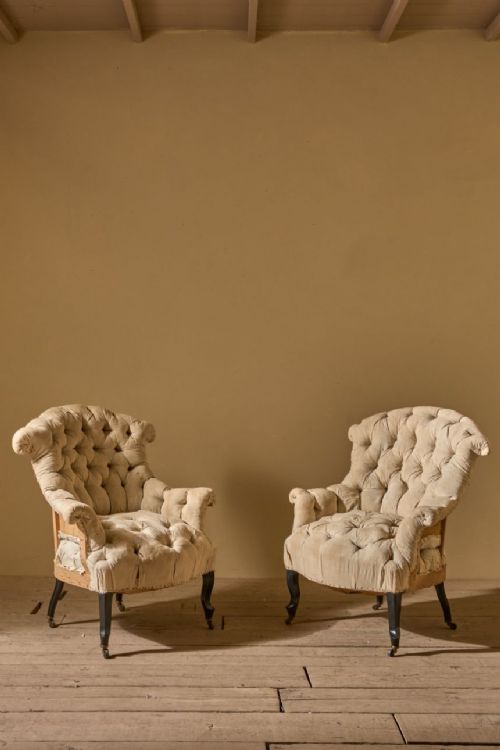
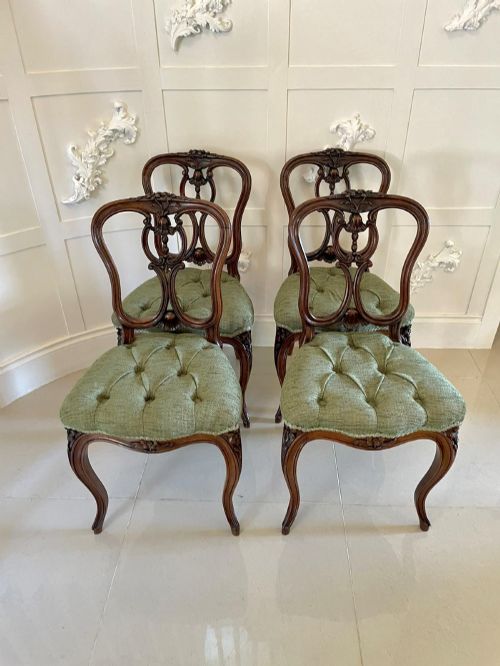
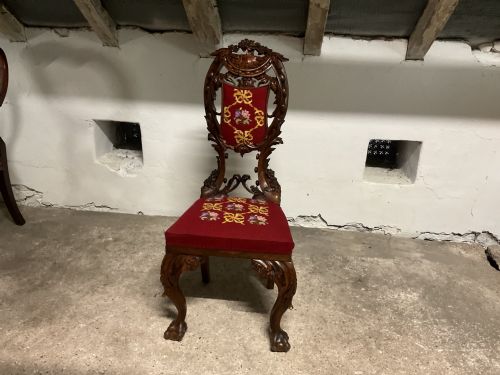
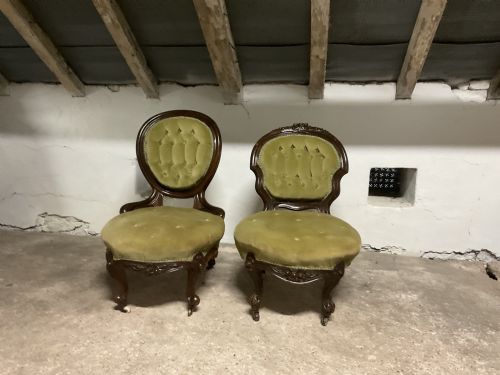
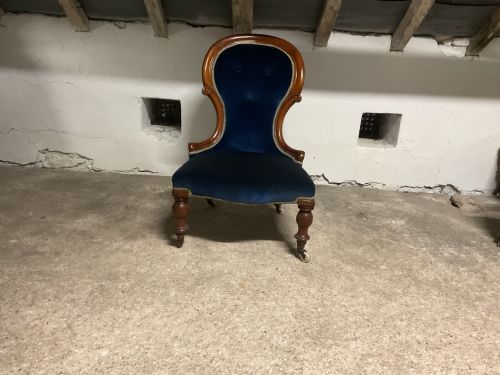
You will most frequently encounter walnut, mahogany, or rosewood frames, often supported on castors and finished with buttoned fabric or velvet upholstery. These pieces reflect the varied aesthetic of the period, spanning from early revival designs to later aesthetic movements.
Materials and construction
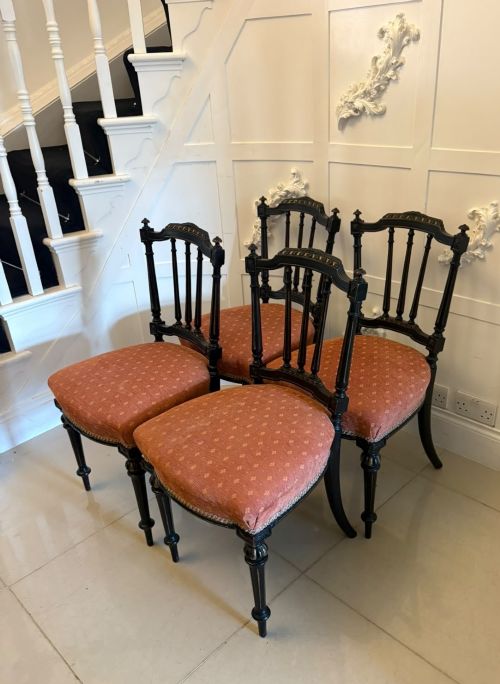
Makers built these frames using dense timbers like walnut, mahogany, oak, and rosewood, frequently shaping the wood with carved details or scroll backs. Ebonised finishes and brass elements also appear across the selection.
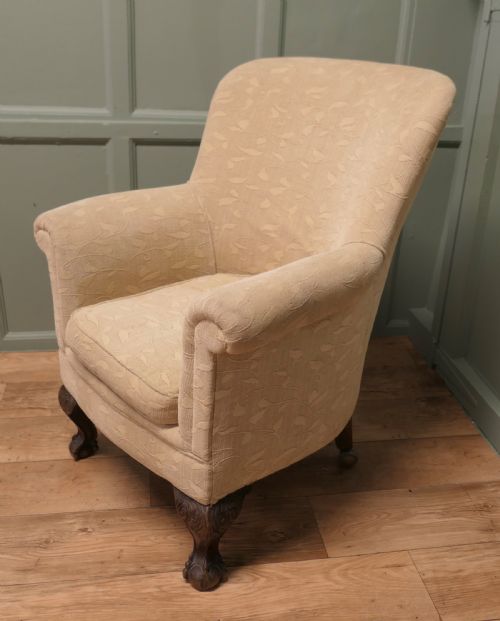
Upholstery was central to the construction, utilising fabrics such as velvet and tapestry stretched over internal stuffing. Many examples incorporate turned wooden legs fitted with brass castors for mobility on carpets.
Listings feature 19th-century frames in walnut, mahogany, and rosewood, alongside Edwardian and Victorian styles.
Judging quality
Quality rests in the sculptural confidence of the timber frame and the precision of the carved details. Finer examples display crisper mouldings and superior joinery in woods like figured walnut or rosewood.
The integrity of the internal stuffing and the proportion of the low seat shape also separate standard pieces from exceptional ones. Well-executed buttoning and balanced proportions distinguish the finer workshops.
Holland and Sons·Howard and Sons·Gillows
The Victorian Upholstered Bedroom Chair Glossary
- Spoonback
- An oval padded chair back shaped like the bowl of a spoon, conforming to the human spine. This form emerged during the mid-nineteenth century.
- Nursing chair
- A low-seated chair designed for infant feeding or personal grooming. These items traditionally feature low profiles and padded upholstery.
- Button back
- An upholstery technique where depressions are formed in the padding by pulling twine through to the frame, secured with buttons. This creates a tufted surface.
- Castor
- A small wheel mounted in a swivel housing attached to the base of a chair leg. They allowed heavy nineteenth-century seating to move easily across carpets.
- Fauteuil
- An open-armed French armchair with an exposed wooden frame and upholstered arm pads. These pieces reflect continental influences on British seating design.
Victorian Upholstered Bedroom Chair: Frequently Asked Questions
Where were these chairs placed?
These low seats belonged in private chambers, dressing rooms, and boudoirs rather than formal reception rooms. Their compact proportions suited intimate domestic spaces.
Victorian occupants used them for dressing, resting, or nursing infants near bedroom fires, which explains their low stature.
Why are they so low?
The reduced height served a practical domestic purpose in nineteenth-century dressing routines. Sitting closer to the floor made tending to garments and footwear much easier.
This low profile also kept the user beneath the level of drafts while adding a sense of cozy informality to the bedroom.
How do I date these chairs?
Dating relies on observing shifts in timber choice, carved ornamentation, and structural silhouette. Earlier examples often feature rosewood and elaborate rococo revival curves.
Later Victorian pieces introduce ebonised finishes, aesthetic movement details, and simpler structural lines leading towards the Edwardian era.
Can I use them daily?
These historic seats suit regular daily use provided the internal webbing and padding remain sound. Many survive with sturdy hardwood frames that withstand modern sitting.
Buyers often place them in bedrooms, studies, or corners where their compact dimensions and historic character add distinct presence.