
Victorian Upholstered Arm Chair
When you select a victorian upholstered arm chair, you choose a seating form defined by nineteenth-century craftsmanship and comfort.
Victorian Upholstered Arm Chair
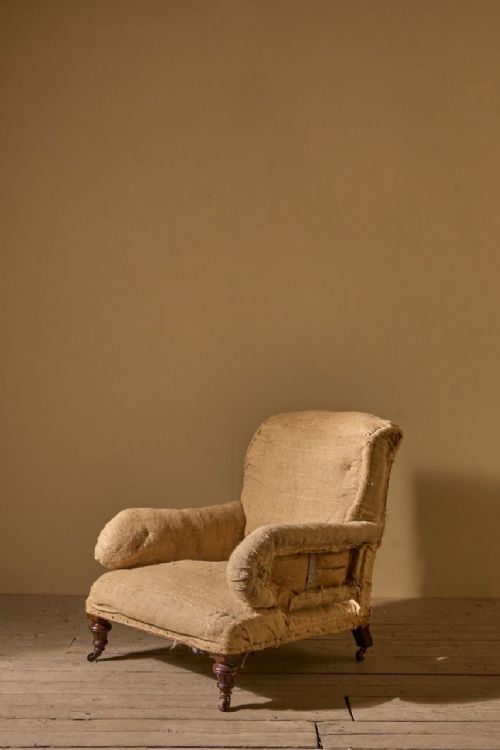
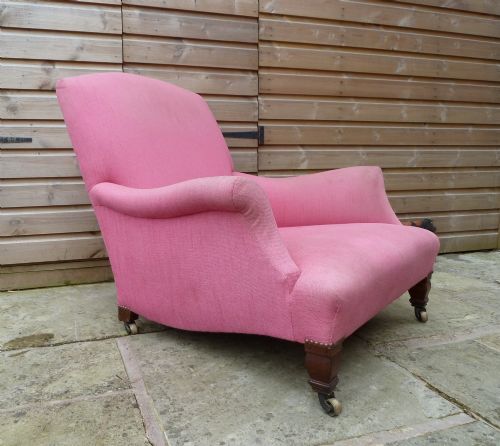
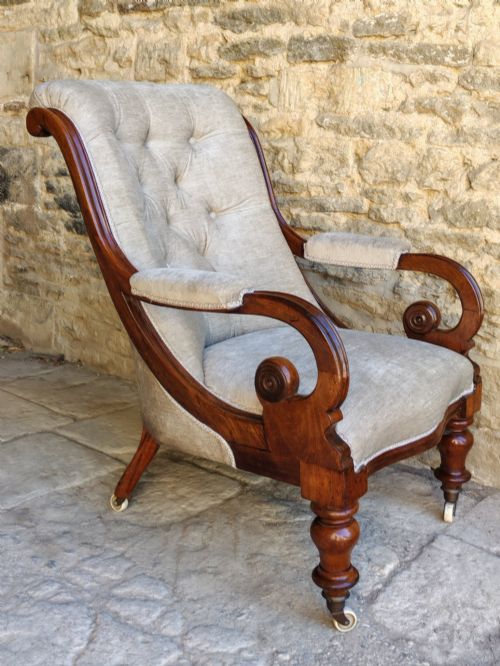
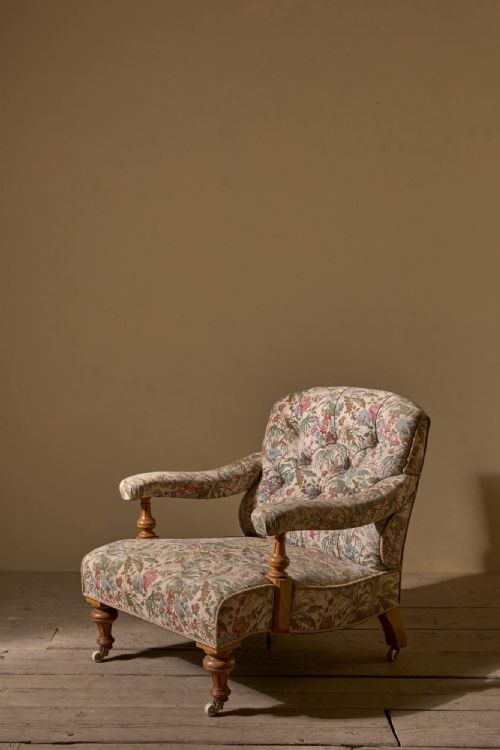
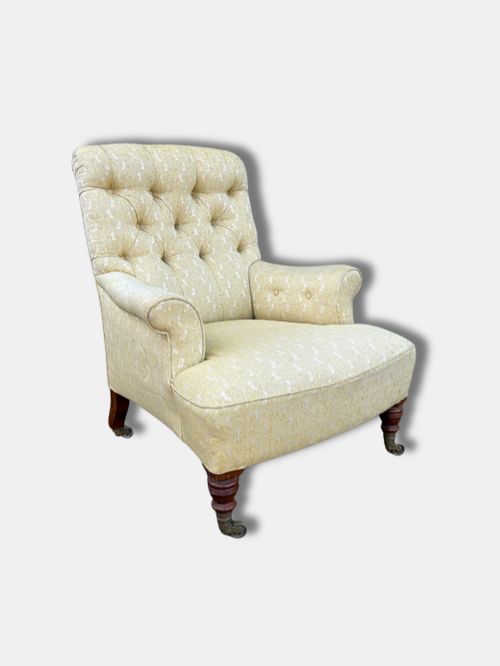
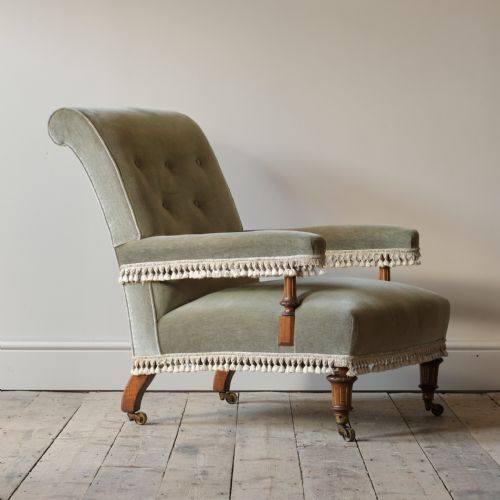
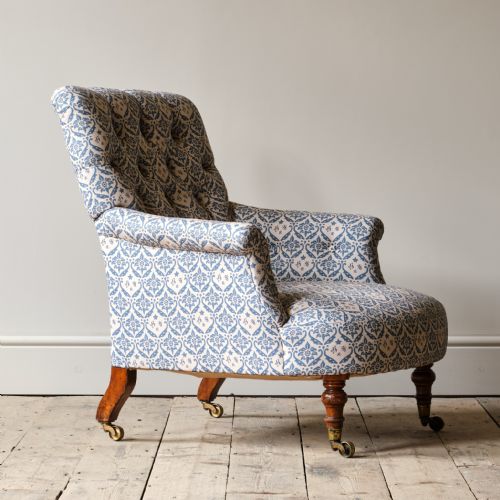
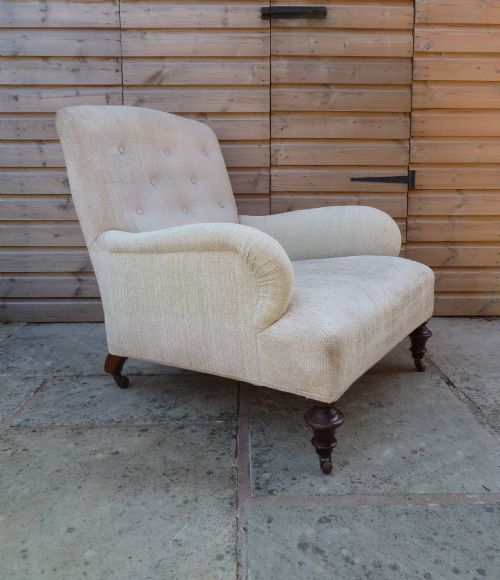
A victorian upholstered arm chair encompasses diverse forms ranging from library tub chairs and low salon seats to generous lounge designs. The pieces frequently emerge from the nineteenth century, bearing styles that span early Victorian proportions to late-century revival work.
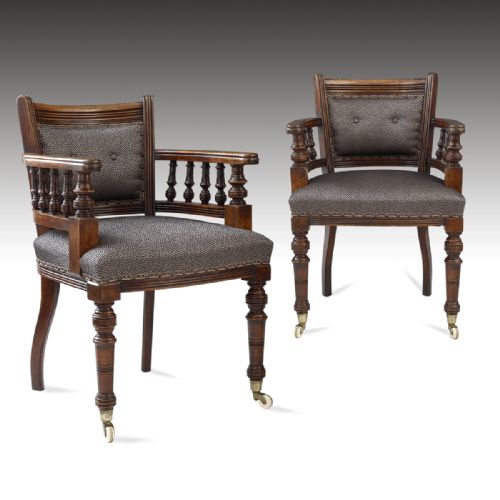
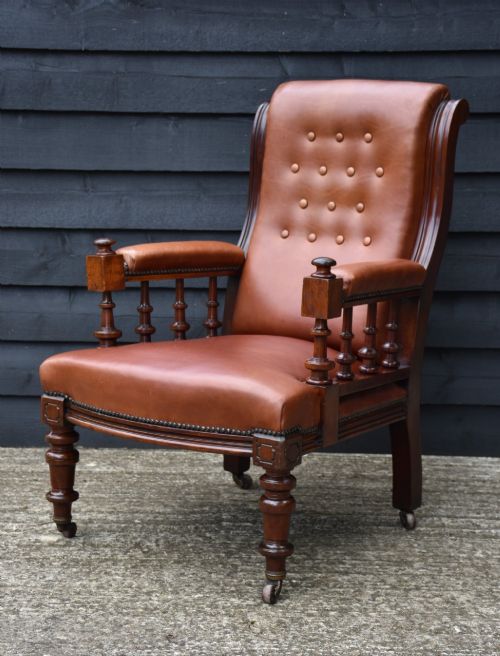
Makers and workshops produced these armchairs in mahogany, walnut, oak, and rosewood frames, often outfitted with brass castors and deep springing. Library and club variants typically feature leather, whilst salon and bedroom pieces utilise velvet, calico, or textile coverings.
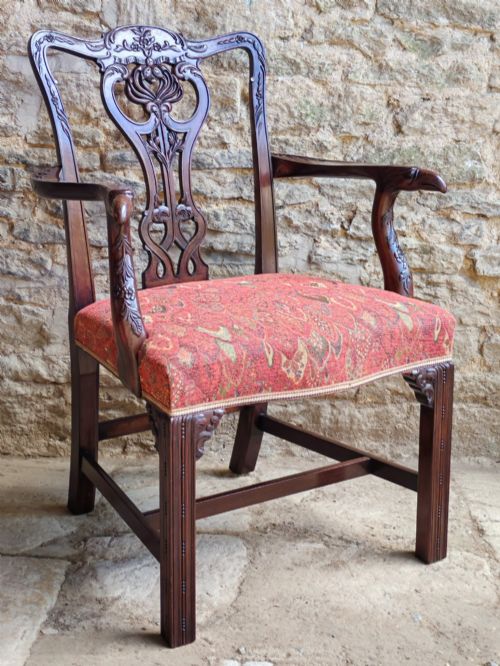
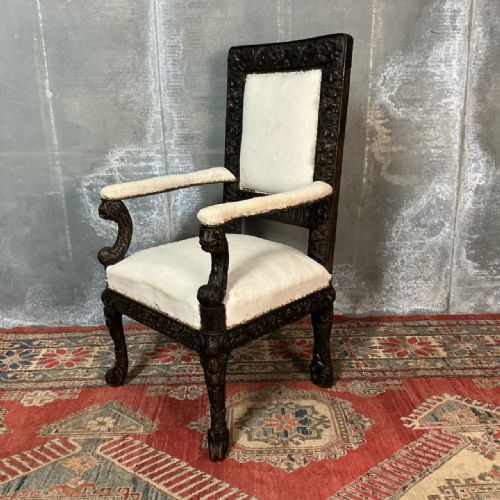
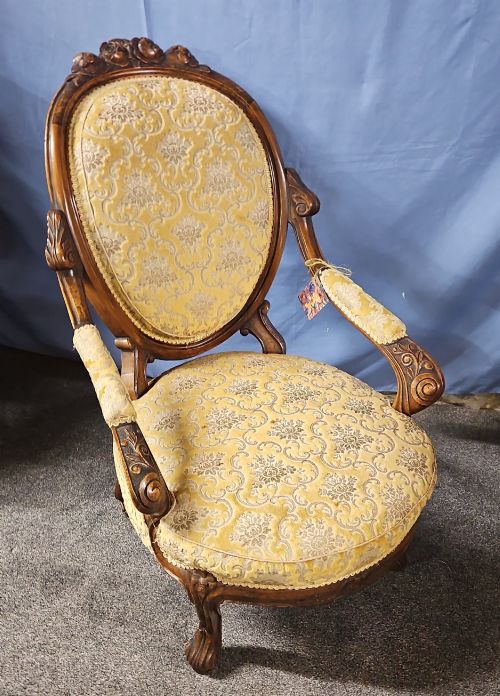
Country house open armchairs and structured wing backs appear regularly across the listings. Buyers encounter both restrained mahogany frames and elaborately carved walnut structures influenced by historicism.
Materials and Construction
Timbers such as mahogany, walnut, and oak form the structural skeletons of these seats, providing the rigid framework required for heavy upholstery. Turnings, reeding, and hand-carved details adorn the wooden show-frames.
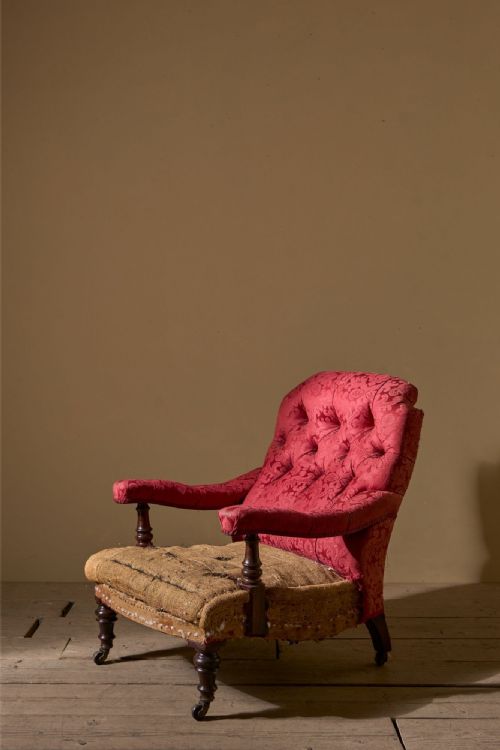
Traditional stuffing relied on hessian webs, coiled springs, and horsehair padding to build resilient seat cushions and supportive backs. Outer layers of leather, velvet, calico, or decorative textiles were then secured with brass tacks.
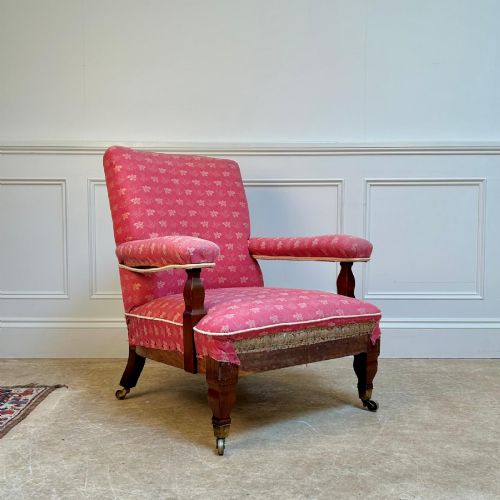
Brass castors frequently support the legs of library and desk variants, allowing smooth movement across heavy carpets. Stamped markings on wooden legs or brass fittings occasionally record the workshop of origin.
Some nineteenth-century armchairs retain hidden stamps on their brass castors, quietly whispering the names of long-forgotten foundry workers.
Assessing Quality and Merit
The integrity of the underlying timber frame and the depth of the original joinery dictate the longevity of the seat. Superior examples maintain rigid joints without structural looseness in the arm supports or back legs.
Upholstery execution separates standard production from exceptional output, particularly in the precision of buttoning, sprung tension, and edge-rolling. Premium pieces utilise high-grade leather or heavy textiles that complement the carved or polished wood grain.
Maker attribution and documented provenance elevate specific armchairs significantly above anonymous workshop output. Pieces bearing stamps from notable firms command particular attention from collectors.
Howard and Sons·George Jack For Morris and Co·Gillows·Hampton and Sons·Cope and Collinson
The Victorian Upholstered Arm Chair Glossary
- Calico
- A plain-woven cotton fabric often used as an initial upholstery layer or under-cover before decorative textiles are applied. It provides a stable foundation for tighter outer coverings.
- Hessian
- A coarse woven fabric typically manufactured from jute fibres, utilised inside the frame for webbing and internal padding support. This material conceals and secures the internal stuffing.
- Tub chair
- An armchair featuring a rounded, enclosed back that curves continuously into low arms. This form offers a cocooning seat shape popular in nineteenth-century studies and libraries.
- Barley twist
- A turning technique resembling a spiral rope, carved or lathed into wooden legs and structural stretchers. This decorative motif appears frequently on mid-nineteenth-century furniture frames.
- Fauteuil
- An open-armed wooden-framed armchair originating in French design, featuring upholstered back and arm pads with exposed woodwork. The style was adopted by Victorian makers working in revival modes.
Victorian Upholstered Arm Chair: Frequently Asked Questions
How do I identify a Howard and Sons armchair?
Look for low proportions, deep springing, and specific stamped markings on the castors or wooden frame. Many bear distinctive loose feather cushions and specific ticking fabric undersides.
Compare the arm profile and leg turning against documented nineteenth-century catalogued examples to confirm the workshop origin.
What is the difference between a library chair and a salon chair?
Library chairs are built for sturdy utility, frequently utilising heavy mahogany or oak frames upholstered in durable leather. They prioritize robust daily use and reading comfort.
Salon chairs are lighter in scale, often constructed from walnut or rosewood with decorative carving, velvet, or needlework intended for formal reception rooms.
Are these armchairs suitable for everyday modern seating?
Nineteenth-century armchairs offer robust construction and ergonomic proportions that suit modern living spaces well. Their traditional coil springing provides firm support.
Buyers should inspect the internal webbing and padding condition to determine whether re-upholstering is necessary for daily comfort.
How do I distinguish early Victorian styles from late Victorian designs?
Early Victorian pieces often display restrained mahogany frames influenced by William IV or late Regency traditions. The woodwork tends to be heavier and more sombre in finish.
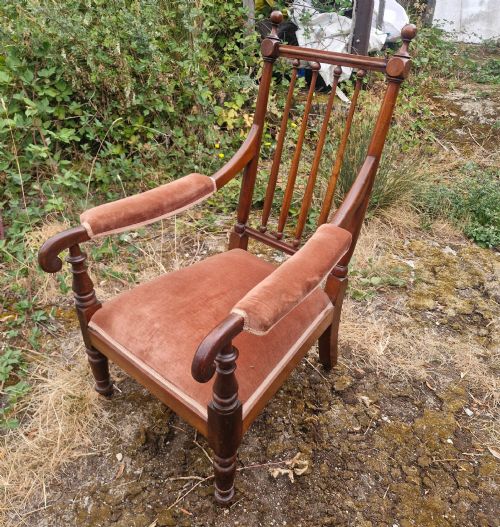
Late Victorian examples frequently embrace revivalism, featuring lighter walnut frames, spindle backs, or elaborate carving associated with Arts and Crafts or aesthetic movements.