


Victorian Turquoise Pendant
These Victorian turquoise pendants bring together vibrant blue stones and rich gold, offering a tangible piece of nineteenth-century sentiment.
Victorian Turquoise Pendant
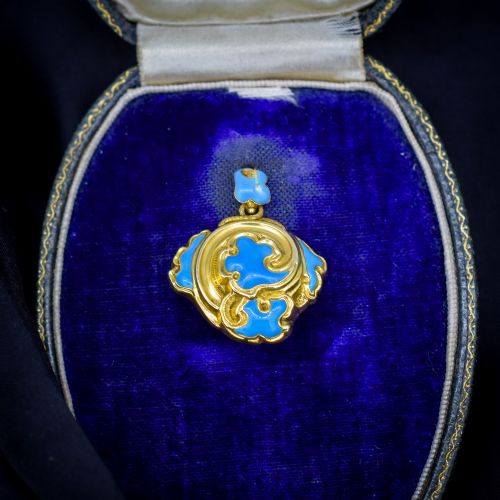
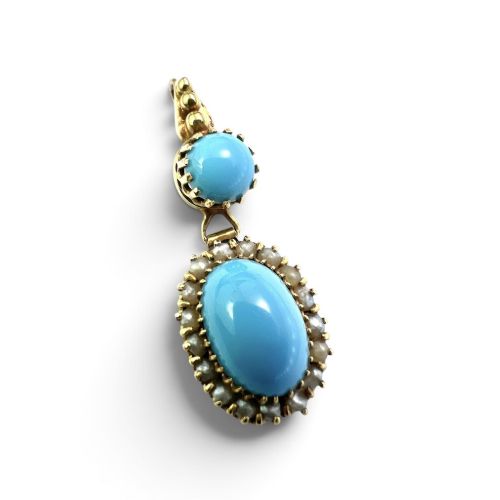
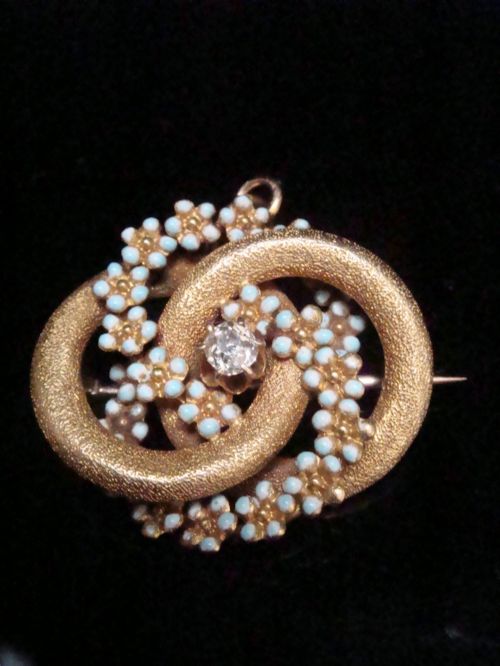
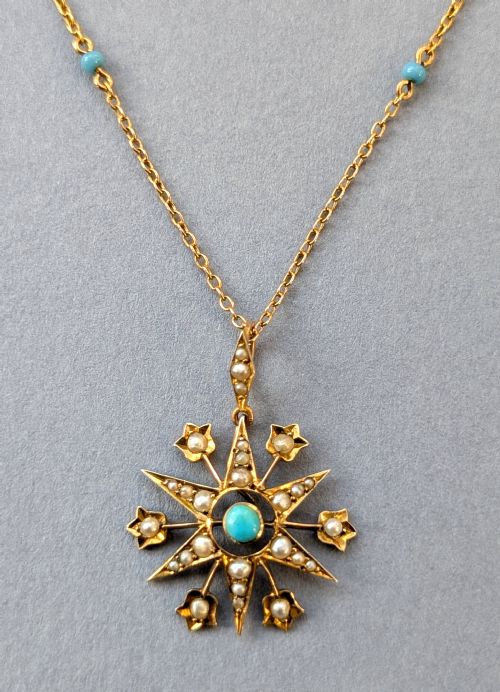
A victorian turquoise pendant typically takes the form of a heart, cross, or cluster, often combining bright blue stones with seed pearls. These pieces reflect the romantic and sentimental jewellery tastes of the nineteenth century, functioning as both decorative adornments and personal tokens.
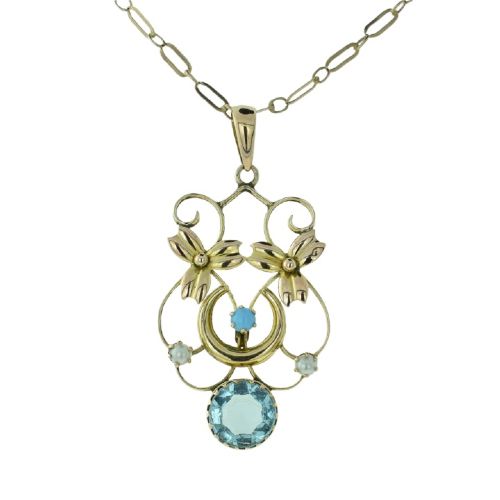
The versions most commonly met on this page span the Victorian and Edwardian periods, stretching into the Arts and Crafts style. Forms range from simple gold drops to convertible brooch pendants and double heart designs set in high carat yellow or rose gold.
How they were made
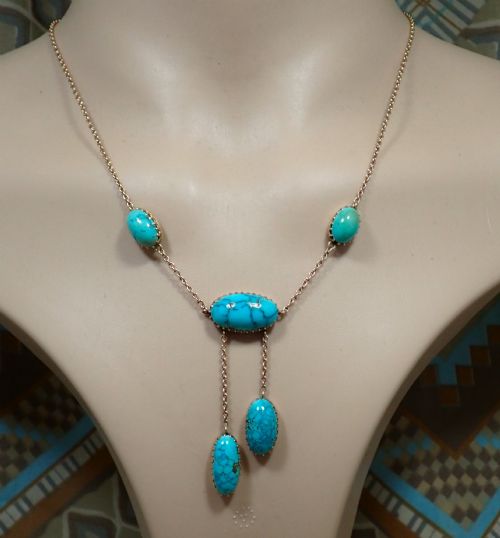
Goldsmiths utilised a range of purities, shaping nine carat, fifteen carat, and eighteen carat gold into intricate settings, sometimes pairing the metal with silver or employing silver gilt techniques. Stones include both uniform blue cabochons and natural matrix turquoise.
Many designs incorporate delicate details such as rose cut diamonds, seed pearls, and applied leafed foliage. Construction often accommodated multiple uses, allowing a single item to function as both a pendant and a brooch.
The listings span the Victorian and Edwardian eras, incorporating materials from nine carat rose gold to silver, diamond, and matrix turquoise.
What varies in quality
The distinction between standard examples and the finest pieces often lies in the weight of the gold and the complexity of the design. Heavier high carat mounts and sophisticated motifs, such as Etruscan Revival work, demand greater skill from the maker.
Stone selection and supplementary materials also play a part. The integration of matched seed pearls, rose cut diamonds, or distinct matrix turquoise elevates a piece beyond simpler turquoise and metal combinations.
The Victorian Turquoise Pendant Glossary
- Cabochon
- A gemstone shaped and polished with a smooth, rounded surface rather than faceted. This cut is traditional for turquoise, highlighting the natural colour and texture of the stone.
- Matrix turquoise
- Turquoise that still contains portions of the host rock, creating webbed or mottled patterns within the blue stone. It offers a distinct visual texture compared to uniform stones.
- Negligee necklace
- A style of necklace featuring asymmetrical drops suspended from a main chain, popular during the Edwardian period. They often incorporate delicate gem set motifs.
- Etruscan Revival
- A nineteenth-century design movement inspired by ancient archaeological discoveries, characterised by fine granulation and intricate goldwork. This style adds architectural depth to pendant designs.
- Seed pearl
- A very small, natural or saltwater pearl used extensively in Victorian jewellery as an accent. They are typically threaded or set in clusters around larger central stones.
Victorian Turquoise Pendant: Frequently Asked Questions
How do I wear a convertible pendant brooch?
These versatile pieces feature a fold-down loop and a pin finding on the reverse, allowing you to suspend the item from a chain or fasten it directly to clothing.
Ensure the pin catch is secure when wearing it as a brooch, or tuck the pin flat when hanging it around the neck.
Are these pendants made from solid gold?
The evidence shows items fashioned from nine carat, fifteen carat, and eighteen carat gold, alongside silver gilt and rolled gold variations.
Examining the metal content helps determine the specific tier and period of the jewellery piece.
What does a heart motif signify?
Heart shapes in nineteenth-century jewellery frequently symbolised romantic attachment, affection, or betrothal.
When paired with turquoise and pearls, these motifs carried layered meanings popular in Victorian sentimentality.
How do I care for antique turquoise?
Turquoise is a relatively soft and porous stone that can absorb oils, cosmetics, and water, which may alter its blue colour over time.
Clean the metal gently with a soft cloth and avoid submerging the turquoise in liquid cleaning solutions.