


Antique Turquoise Locket
An antique turquoise locket is a small hinged keepsake holder set with turquoise stones, offering a tangible link to past sentiments and personal histories.
Antique Turquoise Locket
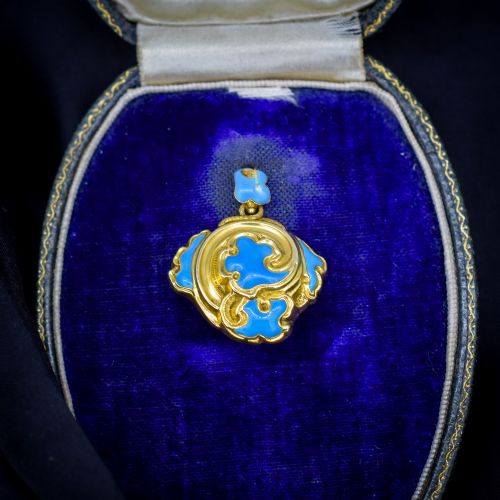
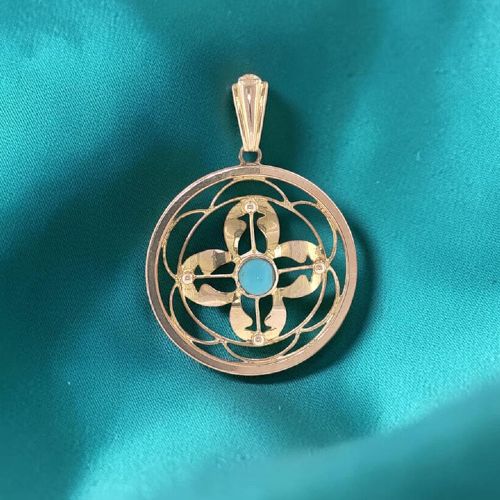
The versions most commonly met on this page combine gold settings with turquoise stones, sometimes arranged in forget-me-not flower patterns or paired with seed pearls and enamel. Alongside standard lockets, related forms include double photo lockets, pendants with tassels, and occasionally earrings or charms featuring the same characteristic stones.
Materials and construction methods
Metals utilised in these pieces range from high carat 15ct and 18ct yellow or rose gold down to 9ct gold, rolled gold, and silver. Goldsmiths set turquoise stones directly into the metalwork, frequently combining them with seed pearls and blue enamel details.
Construction techniques include hinged photo compartments, glass fronts for portrait miniatures, and intricate stampings or casting for heart and star frames. Enamelling is applied to metal surfaces to create contrasting backgrounds for the turquoise settings.
The recorded periods span the Georgian era, the Victorian reign, and the Edwardian period.
Factors that distinguish individual pieces
The grade of the gold, moving from lower gold standards and rolled gold up to solid 15ct and 18ct gold, establishes the baseline quality of the mounting. Heavier metal weights and substantial construction distinguish the more robust examples from lighter pieces.
The skill involved in setting the turquoise stones, the inclusion of supplementary materials such as pearls and enamel, and the complexity of the design - such as star motifs or double photo compartments - separate standard production from finer workmanship.
William Wood
The Antique Turquoise Locket Glossary
- Locket
- A small hinged pendant designed to open and enclose a photograph, lock of hair, or miniature portrait. These pieces are secured with a small clasp.
- Turquoise
- An opaque, blue-to-green mineral utilised in jewellery for centuries, often cut into cabochons or small beads. It forms the primary decorative element across these listings.
- Seed pearl
- A very small, naturally formed or cultured pearl used to accent jewellery designs. They frequently surround turquoise stones in flower or star motifs.
- Mourning jewellery
- Pieces created to commemorate a deceased person, often incorporating hair, enamel, or specific motifs. These items served as tangible reminders of personal grief.
- Cabochon
- A gem polished to a smooth, rounded convex top rather than faceted. This cut preserves the natural colour and opacity of turquoise.
Antique Turquoise Locket: Frequently Asked Questions
What fits inside an antique turquoise locket?
These pieces were traditionally designed to hold small paper photographs, painted miniature portraits, or locks of human hair. The interior often contains a glass cover or a small metal rim to secure the keepsake.
Buyers today continue this practice by placing tiny printed photographs or meaningful mementos inside the hinged compartments. The depth of the cavity varies depending on the overall thickness of the metal frame.
How do I care for turquoise in old jewellery?
Turquoise is a relatively soft and porous stone that can absorb oils, cosmetics, and water. Cleaning requires only a soft, dry cloth without liquid immersion or chemical dips.
Store the locket away from direct sunlight and hard gemstones to prevent surface discolouration and scratching. Removing the piece before swimming or applying lotions preserves the integrity of the stones.
How can I tell a Victorian locket from an Edwardian one?
Victorian pieces, produced during the nineteenth century, frequently feature heavier gold weights, deeper rose or yellow gold hues, and sentimental motifs like hearts, stars, and mourning elements. Enamel work and seed pearl clusters are also common in this era.
Edwardian items, associated with the early twentieth century around nineteen ten, tend towards lighter constructions and refined, delicate settings. The stylistic shift moves away from heavy sentimentality towards airier, graceful designs.
Were all of these lockets worn as pendants?
While the majority function as pendants suspended from necklaces, the evidence shows variations including brooch conversions, charms, and paired earrings. Some listings record items functioning simultaneously as lockets and brooches.
Chain options also vary, with certain pieces accompanied by matching turquoise set clasps. The suspension loops on top of the frames accommodated different styles of neck chains over time.