




9ct Rose Gold Pendant
A 9ct rose gold pendant carries that distinct warm, coppery hue found across Victorian, Edwardian, and later Georgian designs.
9ct Rose Gold Pendant
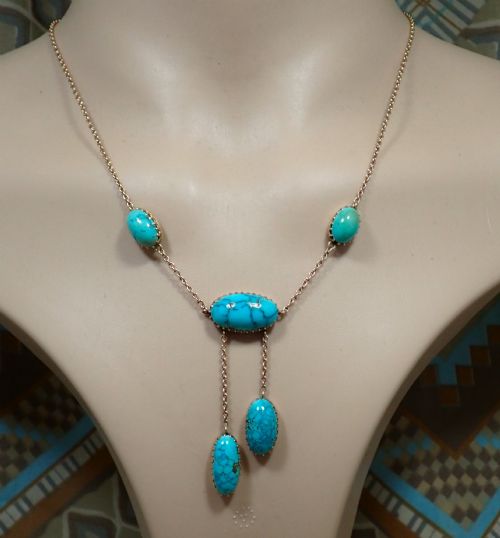
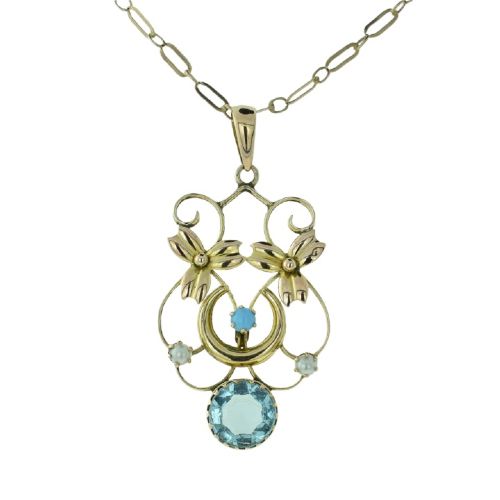
A 9ct rose gold pendant encompasses diverse antique and vintage forms, ranging from hinged lockets and spinning fobs to gem-set lavalier necklaces. You will frequently encounter lockets, padlocks, and drop pendants created during the Victorian and Edwardian eras, often accompanied by pearls, garnets, or turquoise.
The selection ranges from sentimental heart-shaped padlocks and masonic items to elaborate Art Nouveau floral drops and Georgian round lockets. Pieces span the nineteenth and twentieth centuries, reflecting changing tastes from heavy chased fob pendants to delicate seed pearl negligee necklaces.
Materials and construction methods
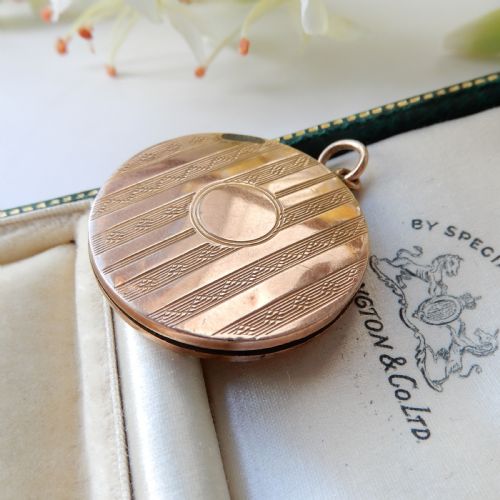
These items rely on nine-carat gold alloyed with a higher proportion of copper to achieve the characteristic warm pink tone. Many larger lockets utilise a hollow box construction described as gold back and front, while structural components like spinning fobs integrate internal swivels.
Gemstones such as almandine garnets, turquoise cabochons, and seed pearls are secured via claw settings, bezel mounts, or delicate seed pearl framing. Surface decoration often includes engine-turned engraving, hand-chased floral motifs, and glass-backed compartments designed for hair.
Listings feature items spanning the Victorian, Edwardian, and Georgian periods, incorporating materials such as turquoise, garnets, seed pearls, and bloodstone.
Distinguishing quality in period pieces
Quality rests in the crispness of hand-engraving, the symmetry of wirework in lavaliers, and the structural integrity of hinges on lockets and fobs. Superior examples retain sharp detail on chased surfaces and secure stone settings without excessive solder visible at joint lines.
The weight of the gold and the complexity of the design separate standard production items from exceptional workshop pieces. Finer specimens often combine multiple gemstones, such as matched garnets and pearls, within balanced Edwardian or Art Nouveau compositions.
Cropp & Farr
The 9ct Rose Gold Pendant Glossary
- Lavalier
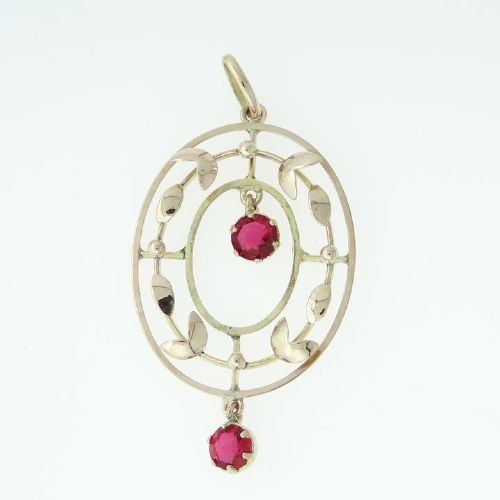
- A pendant featuring a primary stone or motif with one or more suspended drops hanging below it. These designs became particularly popular during the Edwardian and Art Nouveau periods.
- Back and front
- A construction method where the exterior sheets are nine-carat gold while the internal core consists of a base metal or supportive filling. This technique provided rigidity to large lockets without excessive weight.
- Spinner
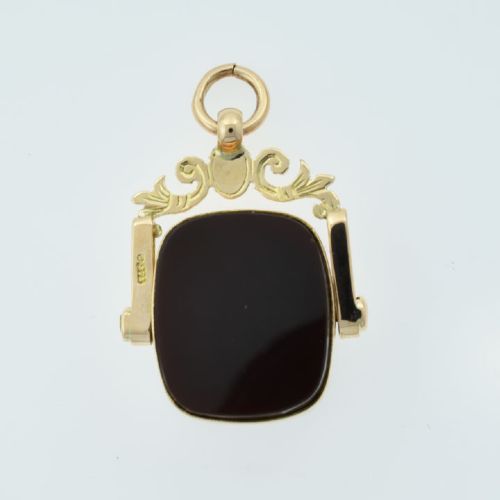
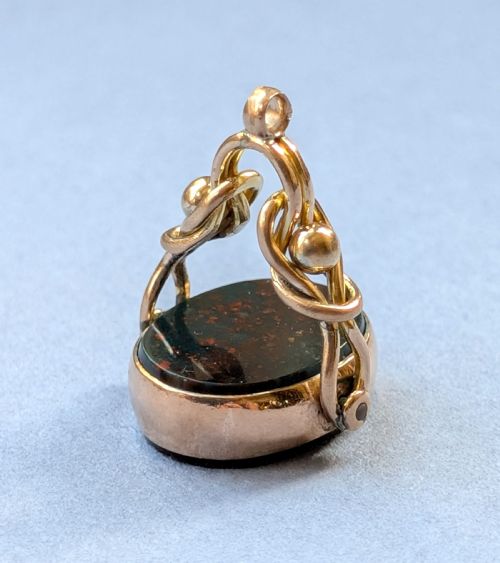
- A revolving fob or pendant mounted on a central axis allowing the piece to turn and display two different faces. Examples frequently combine hardstones like bloodstone and cornelian.
- Negligee necklace
- An asymmetrical pendant style featuring two drops ending in tassels or stones suspended at slightly different lengths from a central bow or motif.
- Padlock pendant
- A clasp-form charm shaped like a functional padlock, frequently decorated with engraving or set with gemstones during the Victorian and Edwardian eras.
9ct Rose Gold Pendant: Frequently Asked Questions
How do I date a rose gold pendant?
Dating relies upon the stylistic markers of the piece, such as the flowing organic lines typical of Art Nouveau or the heavy chased ornamentation characteristic of the Victorian period. Hallmarks, where present, provide specific assay office marks and date letters.
Construction details like glass-backed hair compartments and hollow back-and-front techniques also indicate nineteenth-century origins.
Were fobs worn as pendants originally?
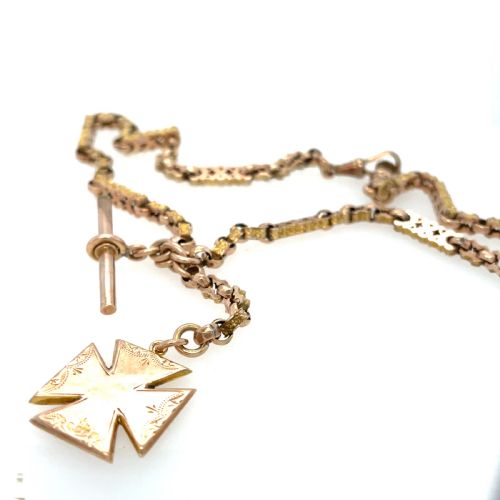
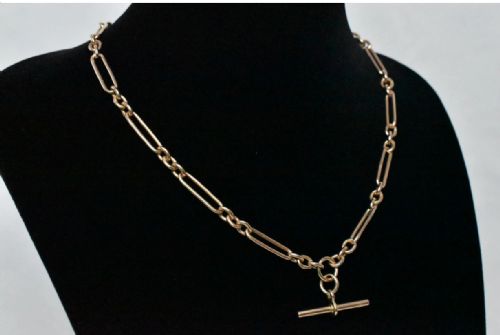
Fobs and swivel seals were originally suspended from watch chains or Albert chains worn by both men and women in the nineteenth century. Over time, many of these items transitioned into standalone pendants.
Their substantial loops and spinning mechanisms made them well-suited for adaptation onto modern neck chains.
What stones are common in antique rose gold pendants?
Almandine garnets, seed pearls, and turquoise cabochons appear frequently in pieces from the Victorian and Edwardian eras. These stones were often chosen for their contrast against the coppery tone of the metal.
Later Edwardian and 1920s examples occasionally incorporate peridots, opals, and paste stones.