

Victorian Tub Back Armchair
These Victorian tub back armchairs offer enveloping comfort and solid timber frames that suit both study and drawing room.
Victorian Tub Back Armchair
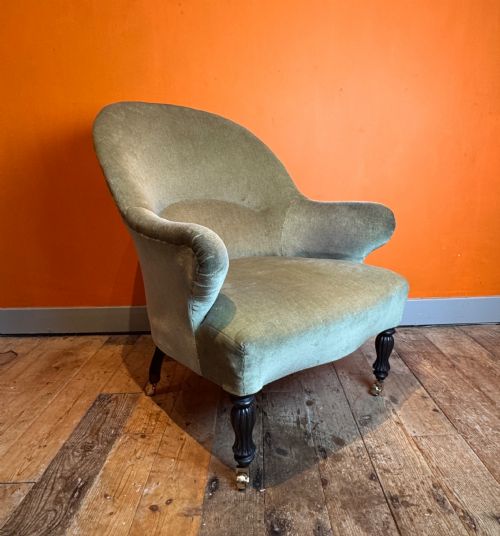
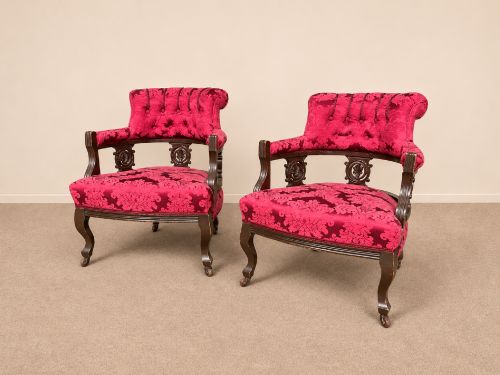
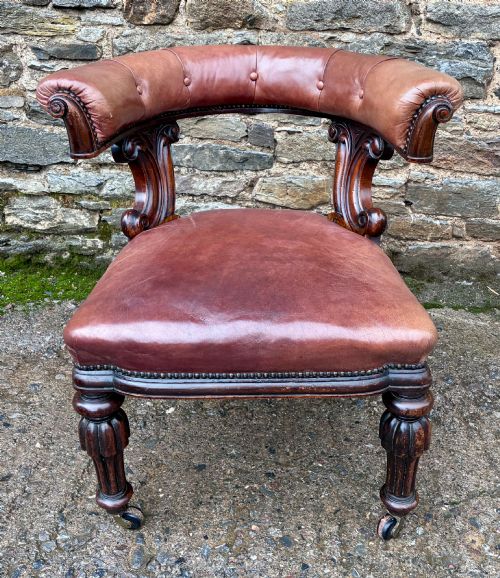
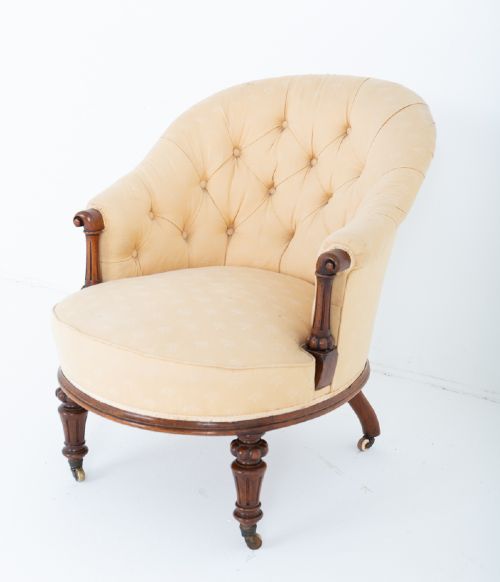
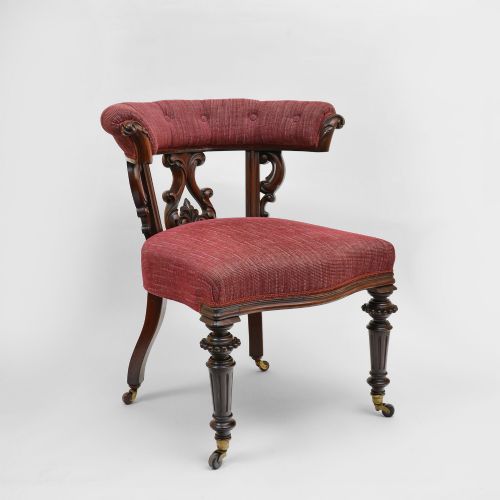
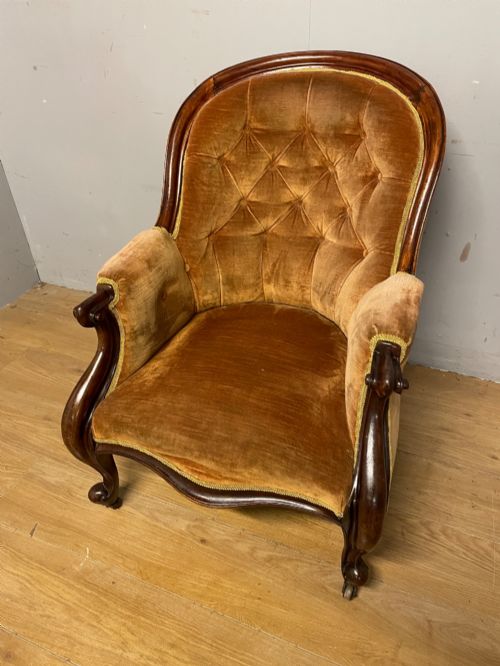
A Victorian tub back armchair brings together a rounded, enclosing backrest and a low seat designed for prolonged sitting. The form appears in various guises across the nineteenth century, ranging from buttoned drawing room examples to sturdy library chairs.
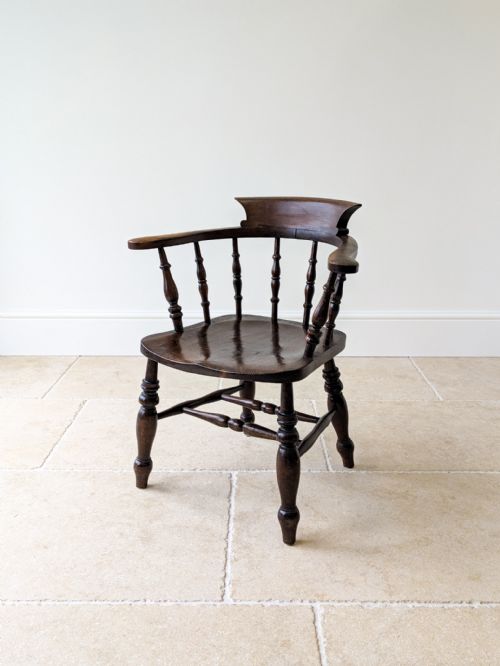
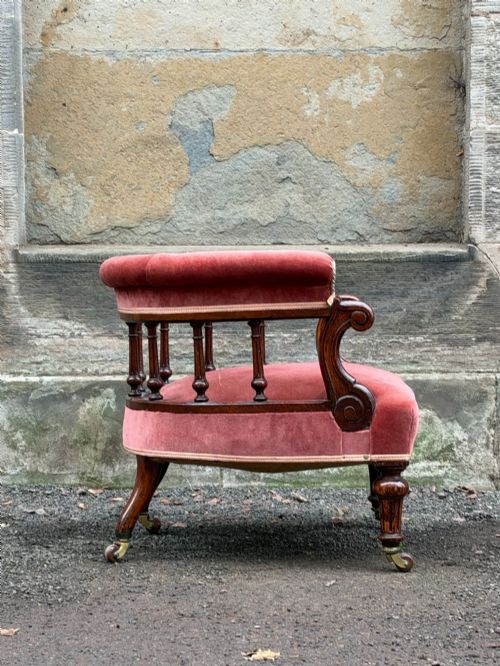
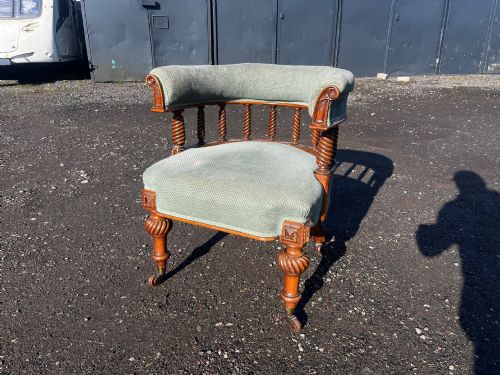
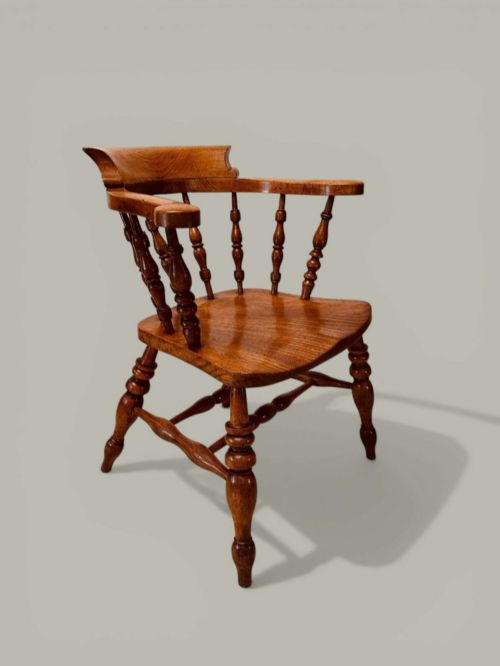
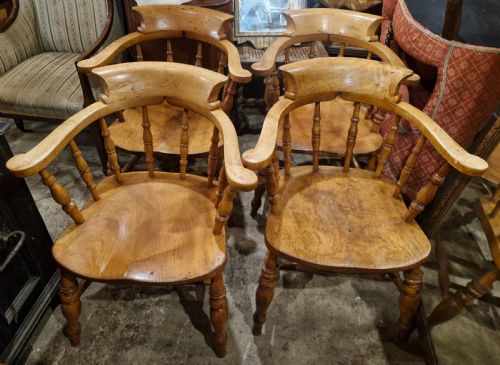
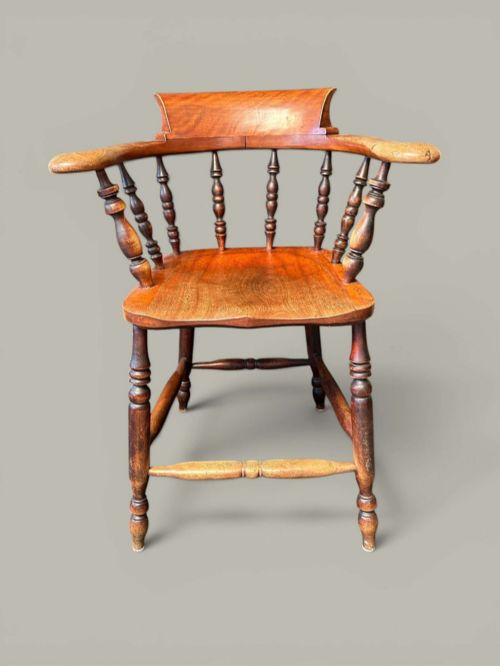
Most pieces seen here originate from the Victorian and Edwardian eras, utilising traditional timbers like mahogany, elm, and oak. Alongside standard armchairs, related seating such as captain's chairs, smokers bows, and desk chairs frequently share the characteristic curved profile.
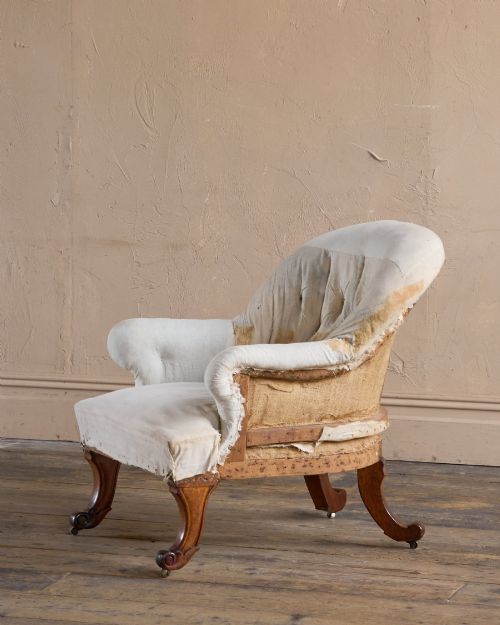
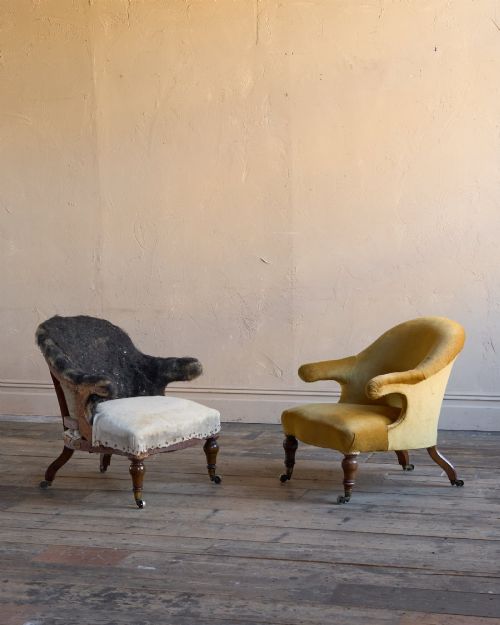
Makers and workshops of the period, including notable firms, adapted the basic tub shape for domestic parlours, offices, and country houses. Buyers encounter both fully upholstered variants and exposed wood frames showcasing the grain of walnut or mahogany.
Materials and construction
Frames rely on hardwoods such as mahogany, oak, walnut, and beech, often paired with elm or ash for country vernacular seating. Turners and cabinetmakers utilised steam-bending techniques to create the continuous curved backrail characteristic of the tub and Windsor forms.
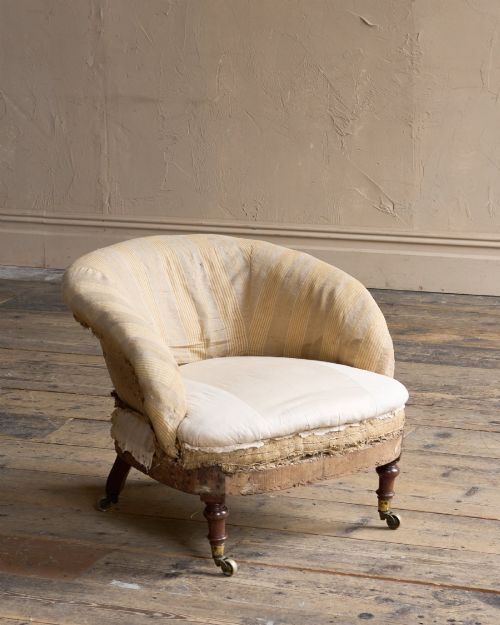
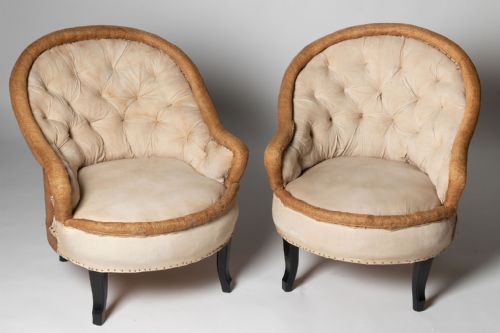
Upholstered versions employ traditional stuffing and deep buttoning secured through webbing and hessian foundations. Brass castors frequently support the legs of library and desk chairs, aiding movement across heavy carpets.
Victorian Tub Back Armchair Retail Price Guide 2026
Typical asking prices for victorian tub back armchair among the pieces listed under this phrase on Sellingantiques today, from the lower quarter to the upper quarter. They describe what is for sale here now, not the wider market.
Periods represented span from the mid nineteenth century through the Edwardian era, encompassing William IV and Aesthetic Movement styles.
Assessing quality and character
Superior examples display crisp carving on the wooden frame and tightly executed deep buttoning that maintains tension across the curved back. The choice of timber also dictates quality, with burr elm, figured mahogany, and richly grained walnut marking out finer pieces.
Proportion and structural integrity separate standard utility seating from commissioned library chairs bearing maker attributions. Original leather upholstery or well-chosen fabric enhances the visual weight and period authenticity of the piece.
Howard and Sons·Hindley and Sons·John Taylor of Edinburgh·Gillows
The Victorian Tub Back Armchair Glossary
- Tub chair
- An armchair featuring a continuous curved backrest that wraps around to form low arms. This shape provides enclosed seating and support.
- Smokers bow
- A sturdy vernacular wooden armchair with a low curved back and turned spindles. These chairs often appear in ash, elm, and beech.
- Captain's chair
- A low-backed wooden armchair designed for office or domestic use. They frequently incorporate a revolving mechanism or high legs.
- Deep buttoning
- An upholstery technique where indentations are formed in the padding by pulling thread through to the frame in a diamond pattern. This secures the filling and adds texture.
- Vernacular
- Objects made by regional craftsmen using local materials rather than following formal metropolitan styles. These pieces often show robust, functional construction.
Victorian Tub Back Armchair: Frequently Asked Questions
What defines a tub back armchair?
A tub back armchair is distinguished by its semicircular enclosing backrest that flows directly into the armrests. This continuous curve creates a cocooning shape intended for comfortable lounging.
Such chairs appear in both fully upholstered parlor formats and exposed timber library variants.
Where were these chairs used?
These armchairs served multiple domestic and professional environments during the nineteenth century. Library and desk versions furnished studies, while buttoned velvet examples suited drawing rooms and parlours.
Sturdier elm and ash variants were common in country houses and rural settings.
How do I care for leather upholstery?
Leather upholstery benefits from regular dusting with a soft, dry cloth to prevent grit accumulation. Applying a suitable leather conditioner periodically helps maintain suppleness and prevents cracking.
Keep antique leather away from direct sunlight and heat sources.
How are different periods identified?
Period attribution relies on timber choice, turning styles, and upholstery methods characteristic of specific decades. Early Victorian pieces often showcase heavy mahogany frames, whereas Edwardian variants can feature lighter woods or simpler lines.
Construction marks and attribution stamps provide definitive dates.