

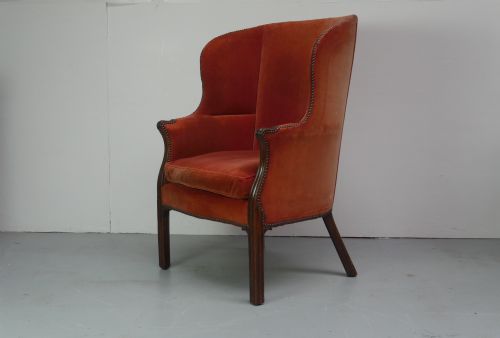
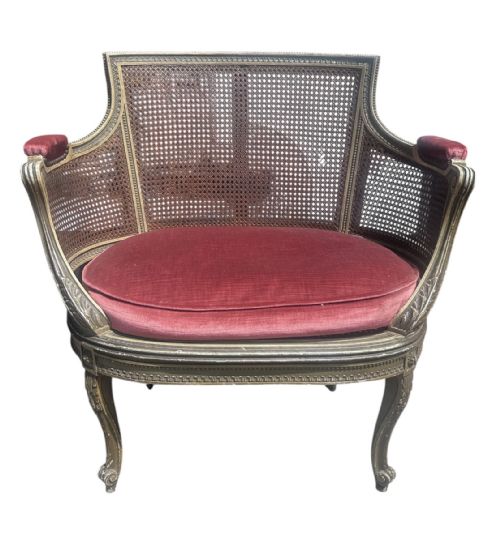


Velvet Barrel Chair
A velvet barrel chair brings enclosed comfort and classic lines to a room, offering deep-seated support wrapped in soft pile.
Velvet Barrel Chair
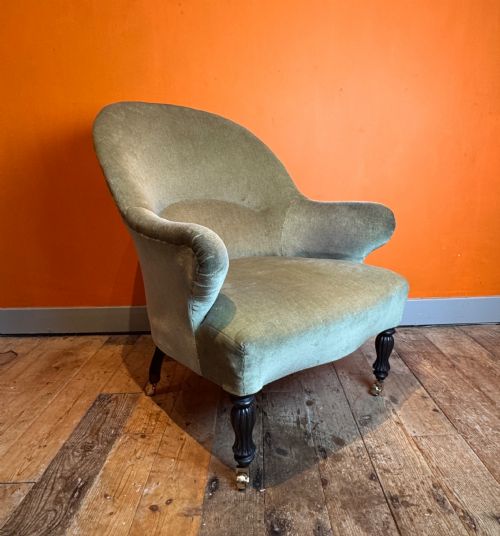
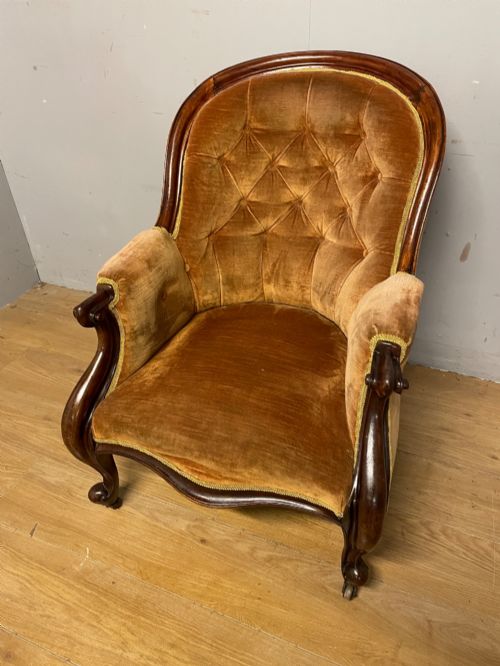
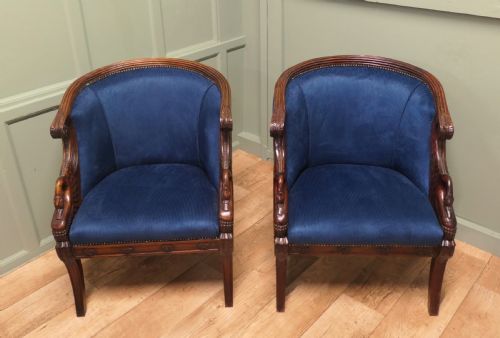
When you search for a velvet barrel chair, you are looking at upholstered seating defined by a rounded, curved back that wraps continuously around the sitter. These pieces appear across several distinct periods, most commonly taking the form of Victorian and Edwardian tub chairs, drawing room armchairs, and desk chairs.
The selection includes 18th-century Georgian examples alongside 19th-century mahogany and oak framed pieces, French Louis XV style chairs, and early 20th-century designs. You are most likely to meet Victorian and Edwardian tub chairs upholstered in fabric or velvet, often supported by timber frames made from mahogany, oak, walnut, or beech.
How they were made
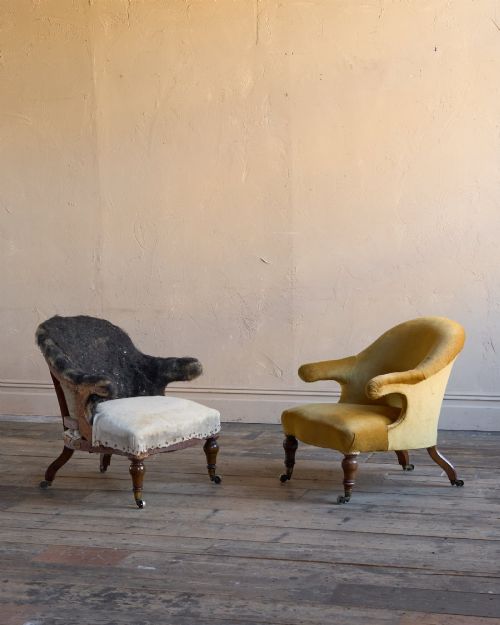
Makers built the structural frames of these chairs using hardwoods such as mahogany, oak, walnut, and beech, sometimes incorporating cane panels or brass castors. Timber components were shaped to form the signature curved tub or barrel back, providing a rigid skeleton for the upholstery.
Textiles like velvet and other fabrics were then stretched and secured over the sprung or padded interiors. Details such as carved wooden frames and specialised wood framing set the foundation for the soft pile of the velvet exterior.
Velvet Barrel Chair Retail Price Guide 2026
Typical asking prices for velvet barrel chair among the pieces listed under this phrase on Sellingantiques today, from the lower quarter to the upper quarter. They describe what is for sale here now, not the wider market.
Listings feature timber frames in mahogany, oak, walnut, and beech, paired with velvet and cane materials across the Victorian and Edwardian eras.
What varies in quality
The distinction between tiers of quality rests on the integrity of the timber frame and the precision of the joinery shaping the curved back. Solid hardwoods like mahogany and walnut offer superior structural endurance compared to simpler timbers.
Upholstery execution and the preservation of original framing materials further define the standard of the piece. Matching pairs and items retaining period wood frames and specific stylistic details demonstrate higher levels of original craftsmanship.
Hindley & Sons
The Velvet Barrel Chair Glossary
- Barrel back
- A chair design featuring a semicircular rounded backrest that encloses the sitter. This shape provides enclosed support and characterises tub chairs.
- Tub chair
- An armchair with a deep seat and a continuous curved back and arms forming a tub-like shape. These frequently appear in Victorian and Edwardian drawings rooms.
- Bergere
- An enclosed armchair with a wooden frame where the sides and back are typically filled with cane work. Walnut framed examples appear among turn-of-the-century library seating.
- Fauteuil
- An open-framed upholstered armchair originating in France, often featuring exposed wooden armrests and carved details. French variants in this category often display Louis XV styling.
- Louis XV style
- A decorative style inspired by 18th-century French design, known for curved lines and ornamental woodwork. Revival pieces from the 19th century adopt these characteristic shapes.
Velvet Barrel Chair: Frequently Asked Questions
What defines a barrel chair?
A barrel chair is characterised by a semicircular backrest that curves continuously around to form the arms. This enclosed design creates a tub-like profile intended to keep drafts away and offer cozy support.
Historically, these pieces served multiple domestic settings, functioning as drawing room armchairs, library seats, and study desk chairs.
How do I identify an Edwardian piece?
Edwardian chairs, typically dating from around the early 20th century, often present lighter timber frames and restrained ornamentation compared to earlier Victorian furniture. They balance traditional forms with a refined, domestic elegance suitable for sitting rooms of that era.
Examining the wood species, such as oak or mahogany, alongside the specific upholstery style helps distinguish these pieces from older 19th-century variants.
Where were these chairs used?
These chairs originally occupied drawing rooms, studies, and libraries as comfortable seating for reading or conversation. Their enclosed backs made them practical for sitting near fires or writing desks.
Today, their compact yet supportive shape allows them to fit easily into modern living spaces, bedrooms, or reading corners.
Are French style chairs different?
French style chairs, including Louis XV revival pieces and fauteuils, often feature exposed wooden frames with carved details and sweeping lines. They lean towards decorative elegance while maintaining the core upholstered armchair structure.
These continental designs contrast with the simpler, heavier lines of standard English Victorian and Edwardian tub chairs.