


English Country House Armchair
These heavy, deep-seated seats built for long hours by the fire make up every english country house armchair you encounter here.
English Country House Armchair
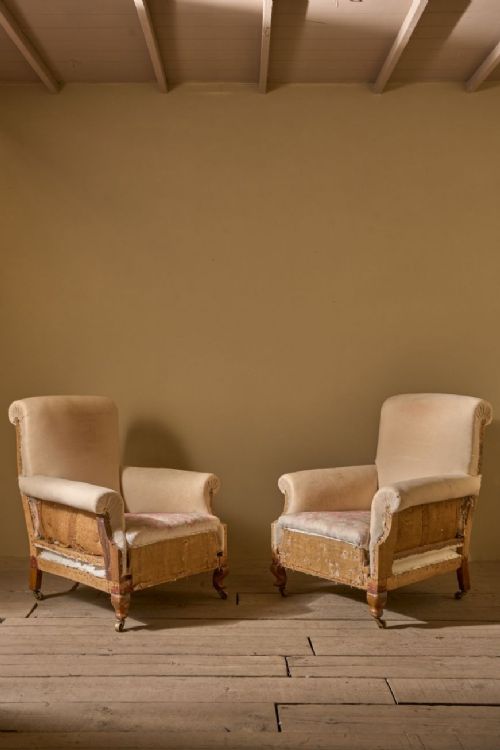
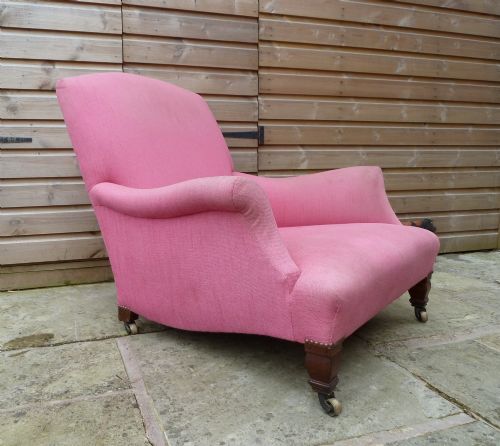
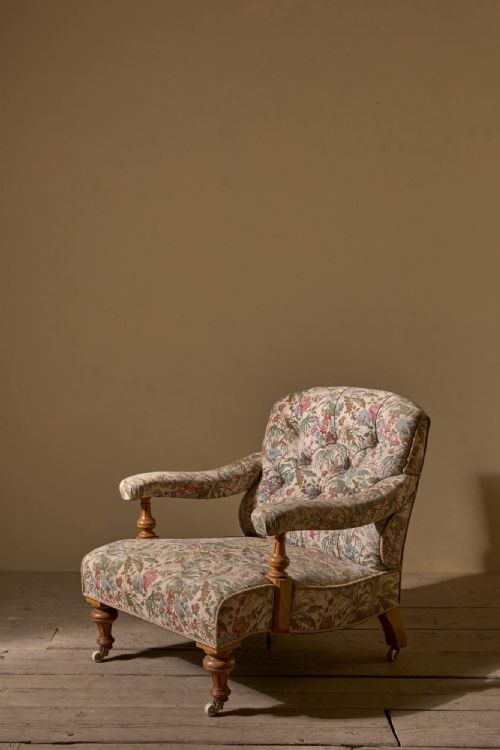
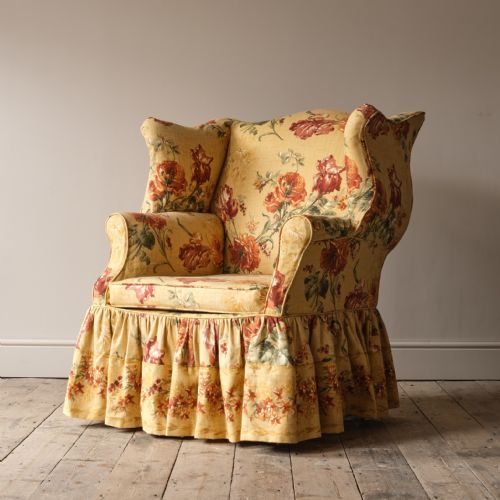
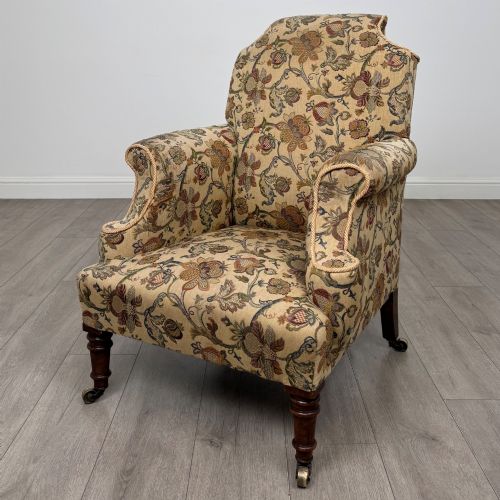
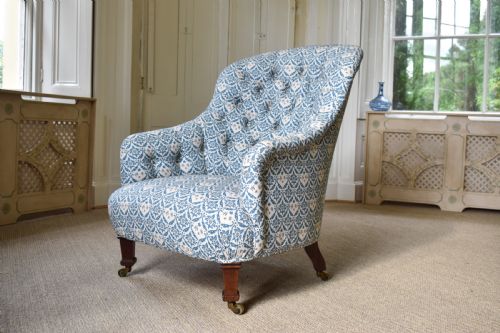
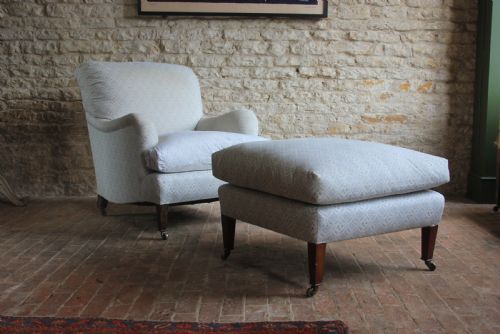
An english country house armchair serves as the traditional seat for libraries, drawing rooms, and studies, designed primarily for deep comfort. The examples appearing on this page span the nineteenth century, the Victorian and Edwardian eras, up into the early twentieth century.
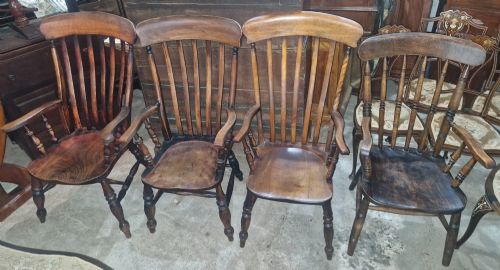
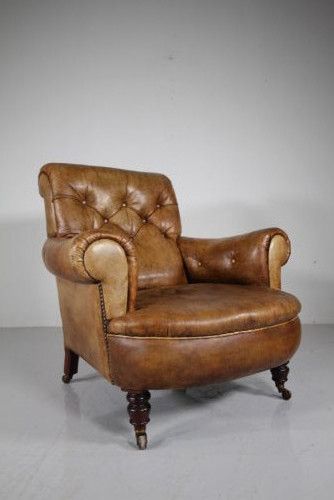
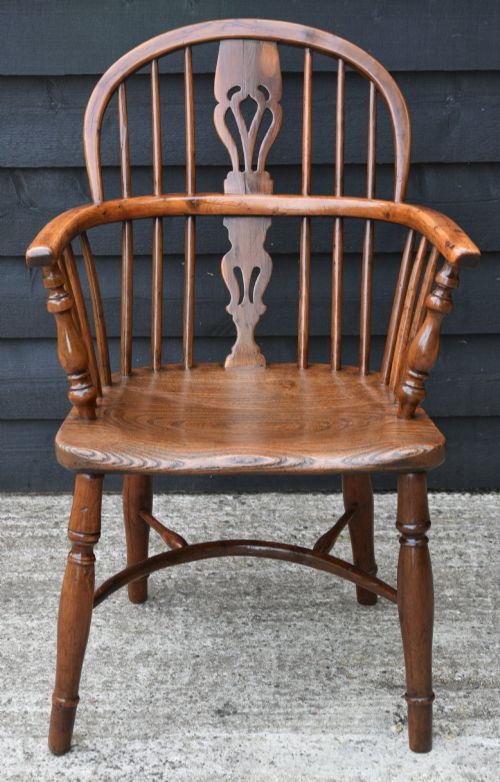
Most entries comprise upholstered easy chairs, wingbacks, and low club styles, alongside wooden Windsor and farmhouse elbow chairs. Makers such as Howard and Sons and Gillows emerge in the records, alongside various vernacular pieces built for rural domestic use.
How They Were Made
Frames rely on sturdy timbers including mahogany, walnut, oak, elm, and yew, shaped into scroll backs, hoop backs, or open armchairs with show wood frames. Cabinetmakers joined these structural elements using traditional joinery to withstand decades of heavy use in large estates and farmhouses.
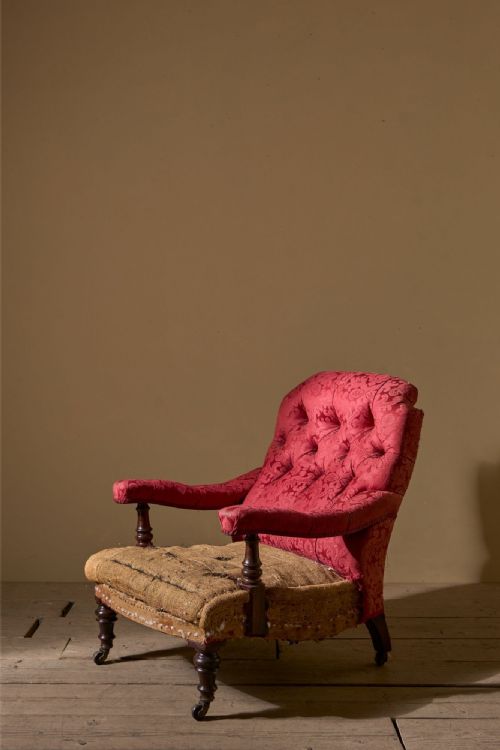
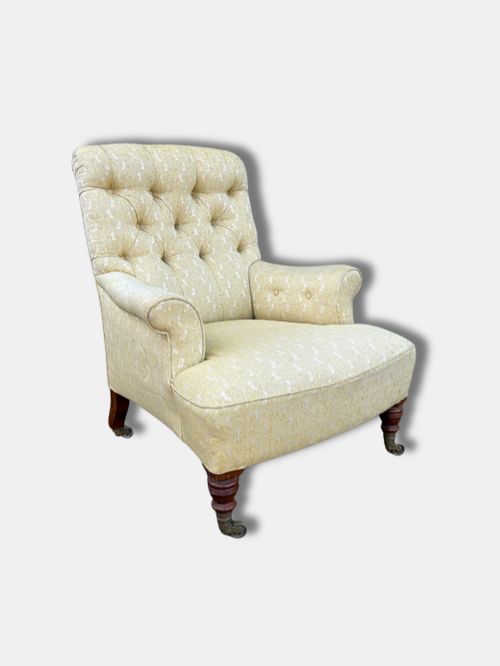
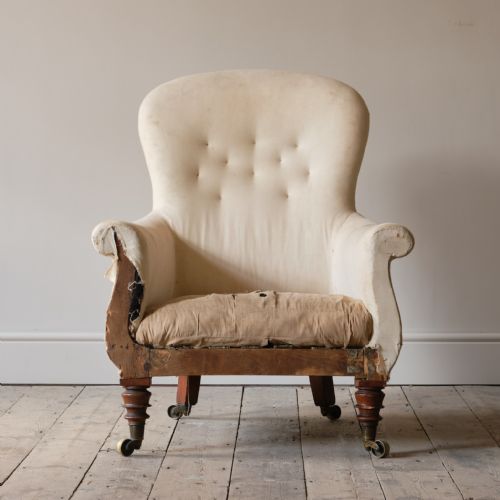
Upholstered forms depend on complex internal webbing, horsehair stuffing, and heavy metal springs to achieve deep, resilient seating. Outer covers utilise durable materials ranging from supple leather and buttoned fabric to striped ticking and brass castors for mobility.
Listings feature timber frames in mahogany, walnut, elm, oak, and yew alongside upholstered pieces in leather and fabric.
What Varies in Quality
The integrity of the internal stuffing and the resilience of the original springing dictate the physical comfort and structural longevity of upholstered easy chairs. Pieces retaining their original manufacturer markings, stamped castors, or untouched ticking command greater interest among collectors.
Wooden frames separate themselves through the crispness of carved details, the choice of dense hardwoods like figured walnut or mahogany, and the survival of untouched original surfaces or paint.
Howard and Sons·Waring and Gillow·Gillows
The English Country House Armchair Glossary
- Windsor chair
- A wooden chair constructed with a solid elm or ash saddle seat into which turned legs and spindle backs are wedged. These vernacular seats became staples of country house kitchens and libraries.
- Wingback armchair
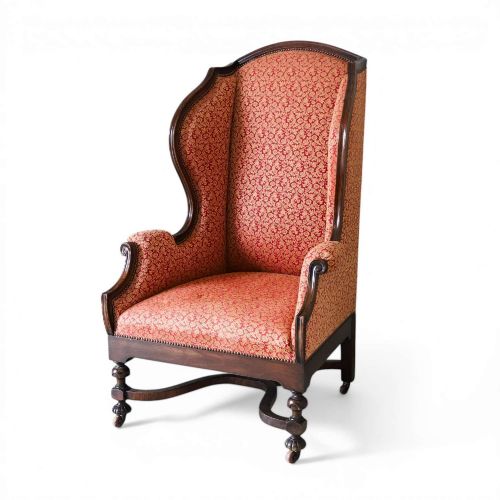
- A high-backed upholstered seat featuring protective side panels designed to shield the occupant from drafts. This form dates back centuries and remains common in nineteenth-century country house inventories.
- Show wood
- Exposed timber framing on an upholstered armchair that reveals the polished mahogany, walnut, or oak beneath the padding. It highlights the craftsmanship of the cabinetmaker alongside the upholsterer.
- Smoker's bow
- A low-backed wooden armchair with a rounded continuous rail and thick spindle turned supports, frequently found in country settings. They offer sturdy, compact seating for daily domestic tasks.
- Ticking
- A tightly woven heavy cotton or linen fabric traditionally utilised as a durable inner casing for mattress and upholstery stuffing. In country house interiors, it often serves as the primary outer loose cover.
English Country House Armchair: Frequently Asked Questions
What defines an english country house armchair?
These seats prioritize relaxed domestic comfort over rigid formality, featuring generous proportions, deep seats, and accommodating armrests designed for country living.
They combine vernacular wooden Windsor forms with heavily padded upholstered easy chairs built for long hours of reading or resting.
How do I identify Victorian examples?
Nineteenth-century pieces often display heavier proportions, buttoned upholstery, and turned wooden legs fitted with brass castors.
Makers from this era frequently utilised durable leather, rich mahogany frames, or stamped components that clarify their production period.
Are these chairs comfortable for daily use?
Upholstered varieties rely on traditional horsehair stuffing and sprung bases designed specifically for prolonged sitting.
Their deep seats and supportive backs make them practical for modern living rooms and studies alike.
What woods were commonly used?
Cabinetmakers selected durable native and imported timbers including mahogany, walnut, oak, elm, and yew for structural stability.
Softer woods rarely appeared in the primary load-bearing frame components of these country house seats.