
Victorian Travel Clock
These robust victorian travel clock designs offer portable precision, combining polished brass frames and glass panels to accompany journeys across the nineteenth century.
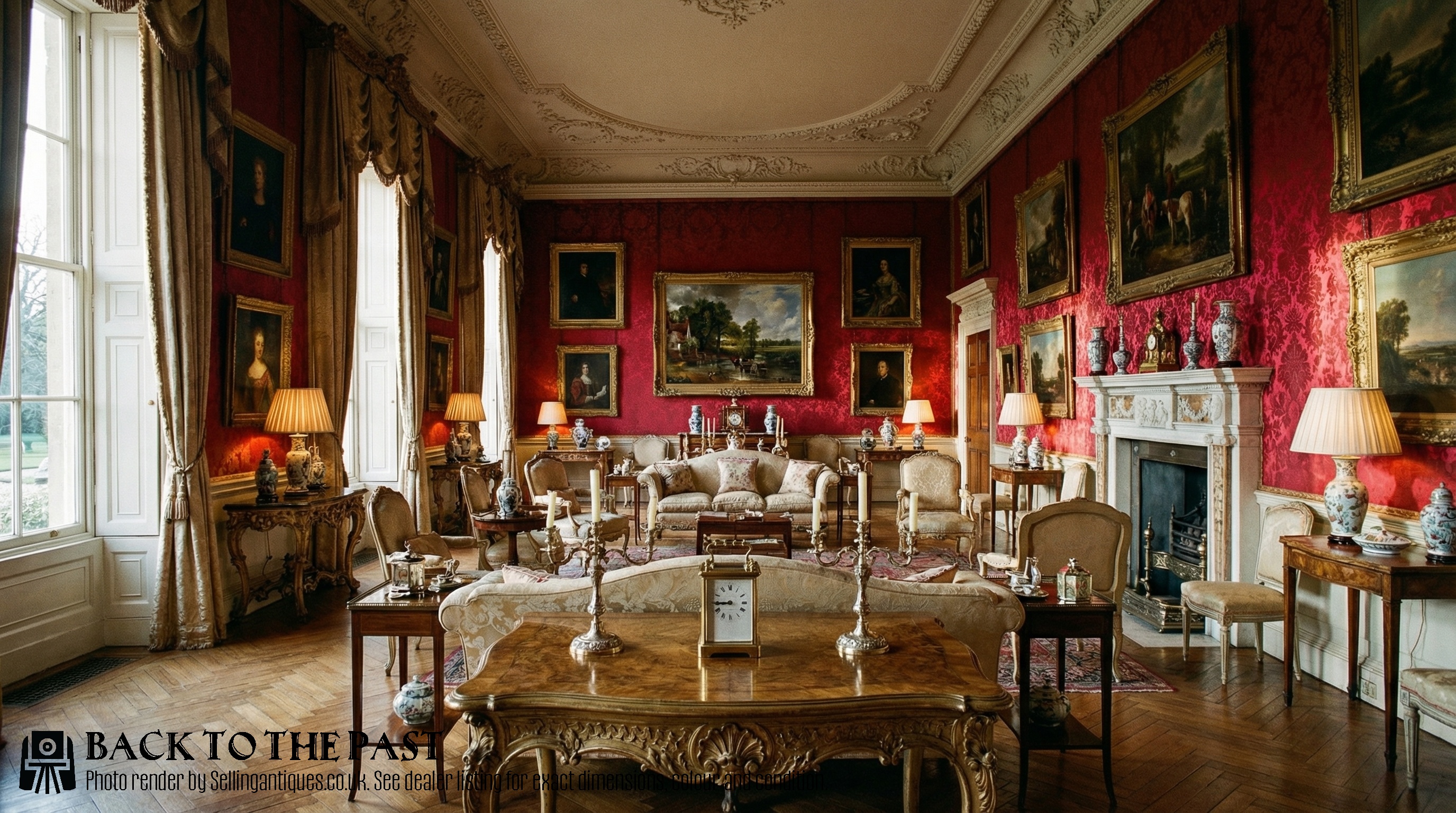
Victorian Travel Clock
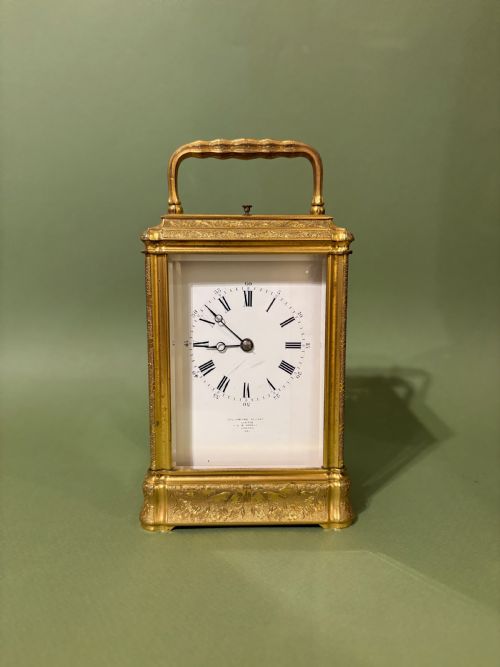
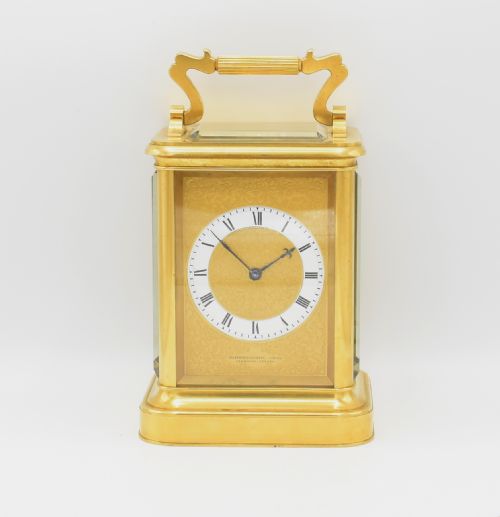
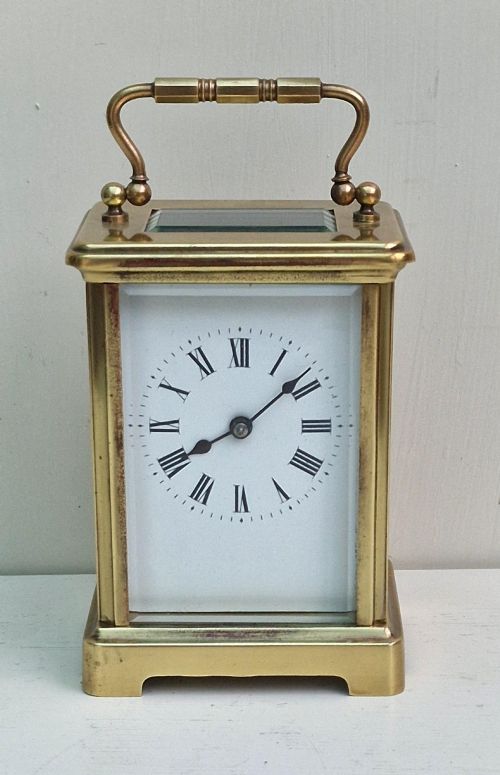
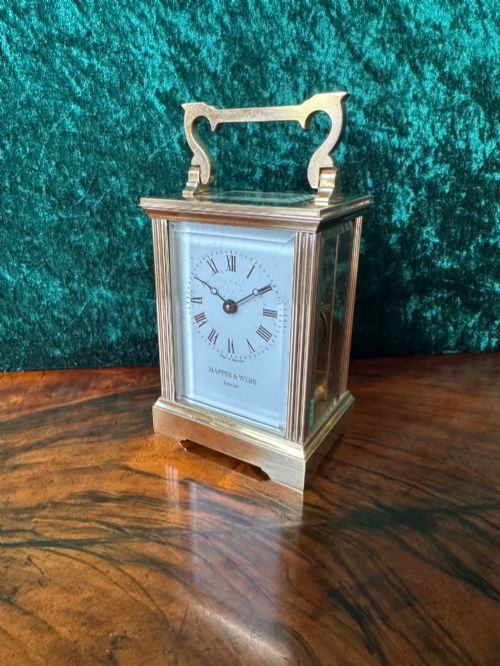
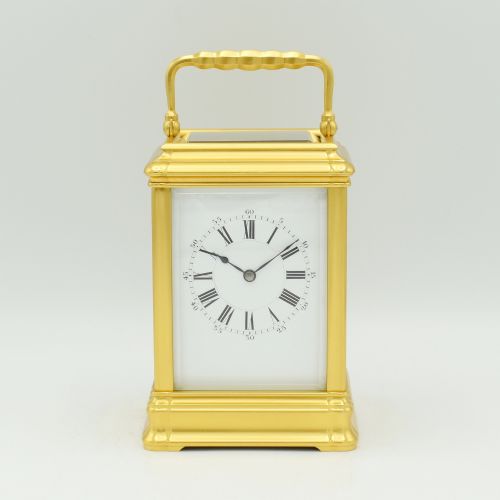
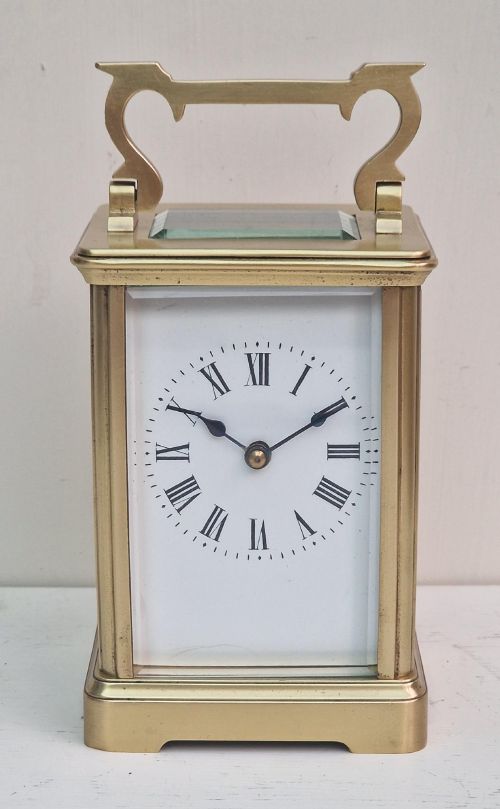
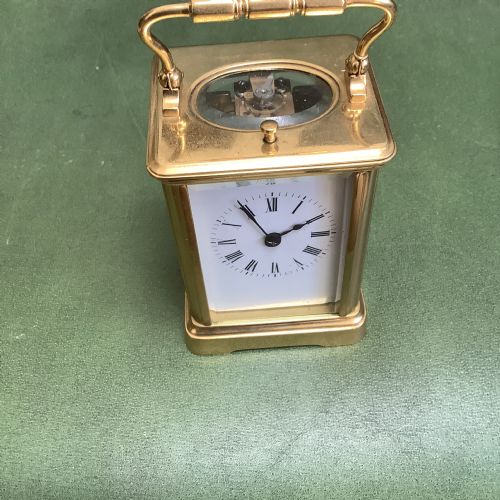
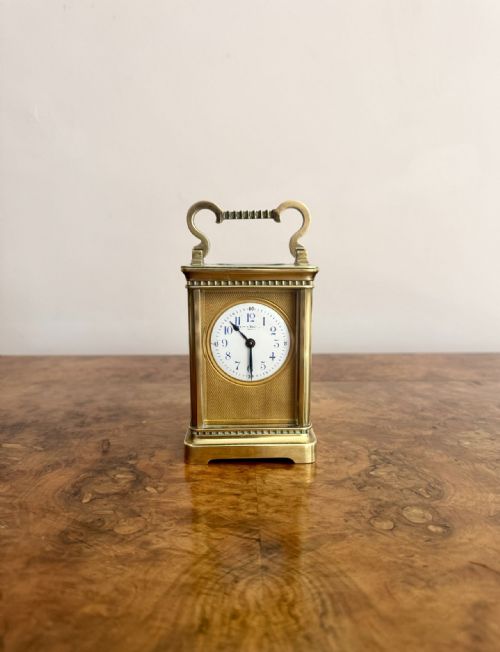
A victorian travel clock is a portable timepiece designed for movement, combining a robust frame with protected glass panels to withstand journeys. The pieces seen here encompass carriage clocks, desk clocks, and travel pieces spanning the nineteenth century, with French workshops contributing heavily to the surviving variety.
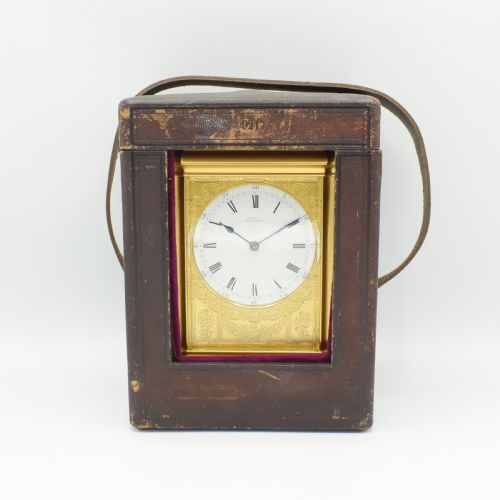
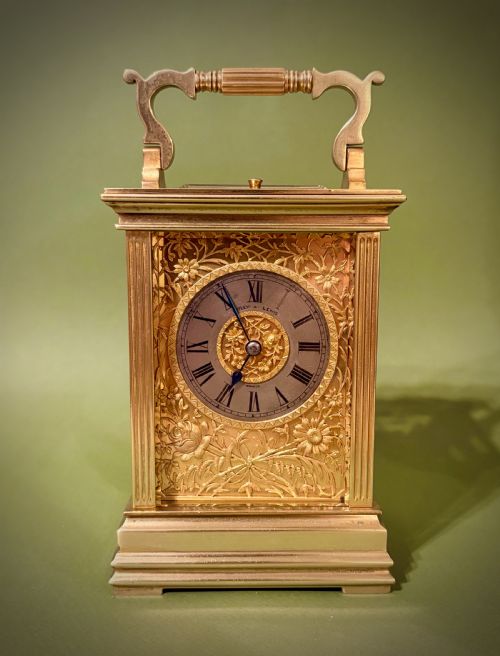
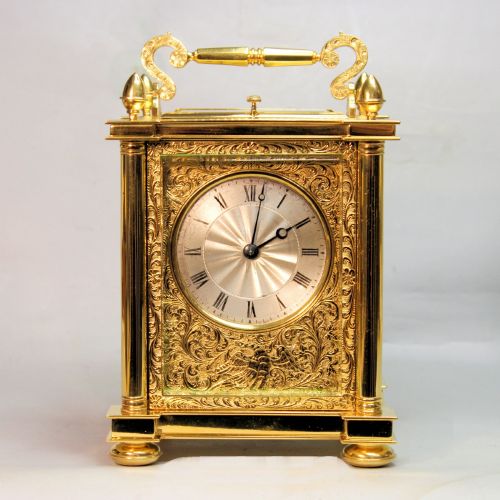
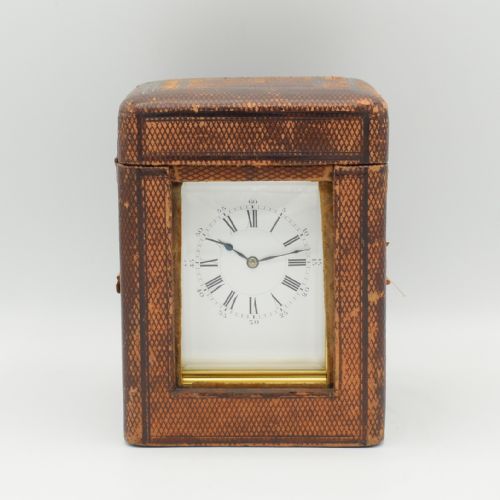
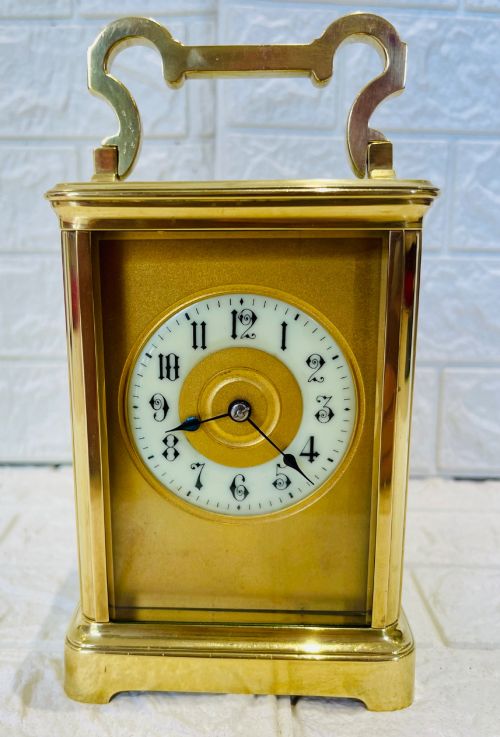
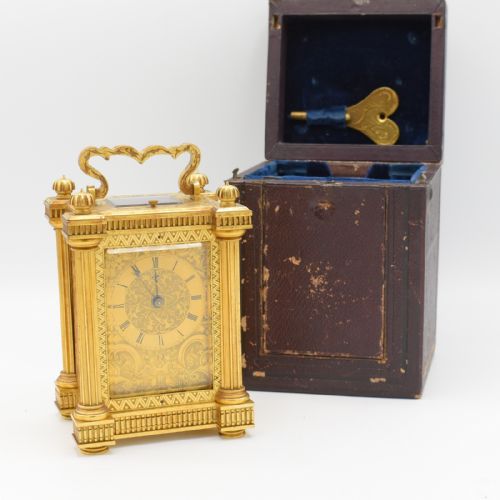
Buyers will most frequently encounter brass and gilt brass carriage clocks housed in traditional gorge or engraved cases. These vary from standard timepieces to complex repeating and striking mechanisms, often accompanied by their original leather travel cases.
Originating largely from French centres like Paris alongside English makers, these portable clocks reflect a period when mechanical reliability mattered as much as polished exterior metalwork and enamel dials.
Materials and construction
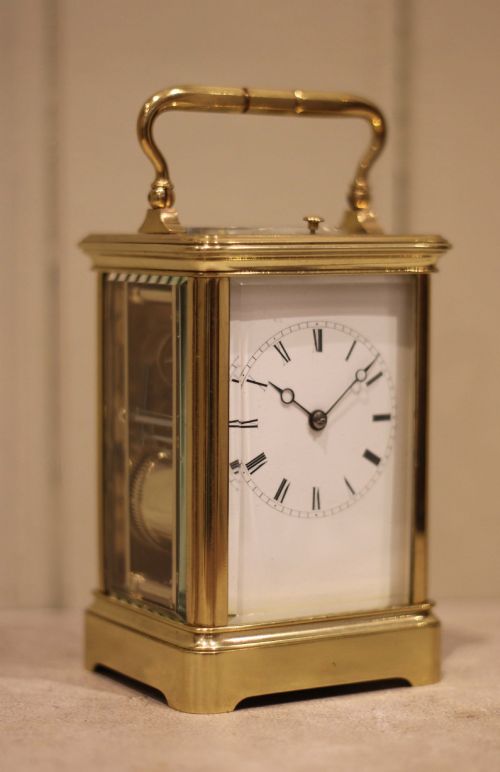
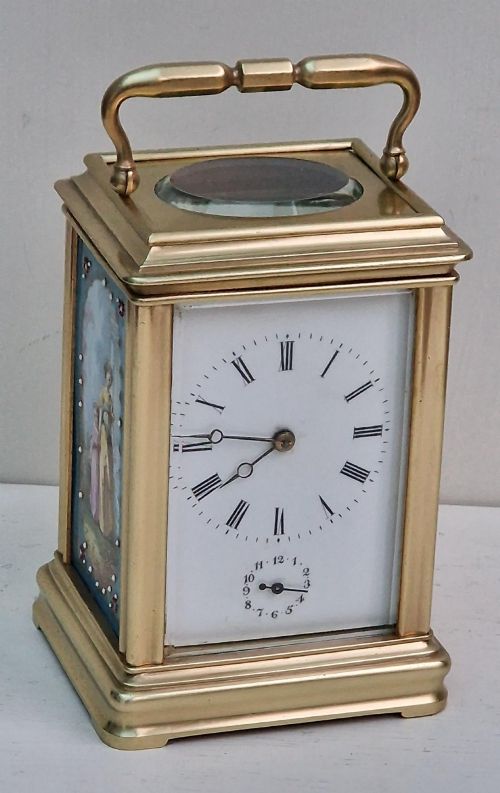
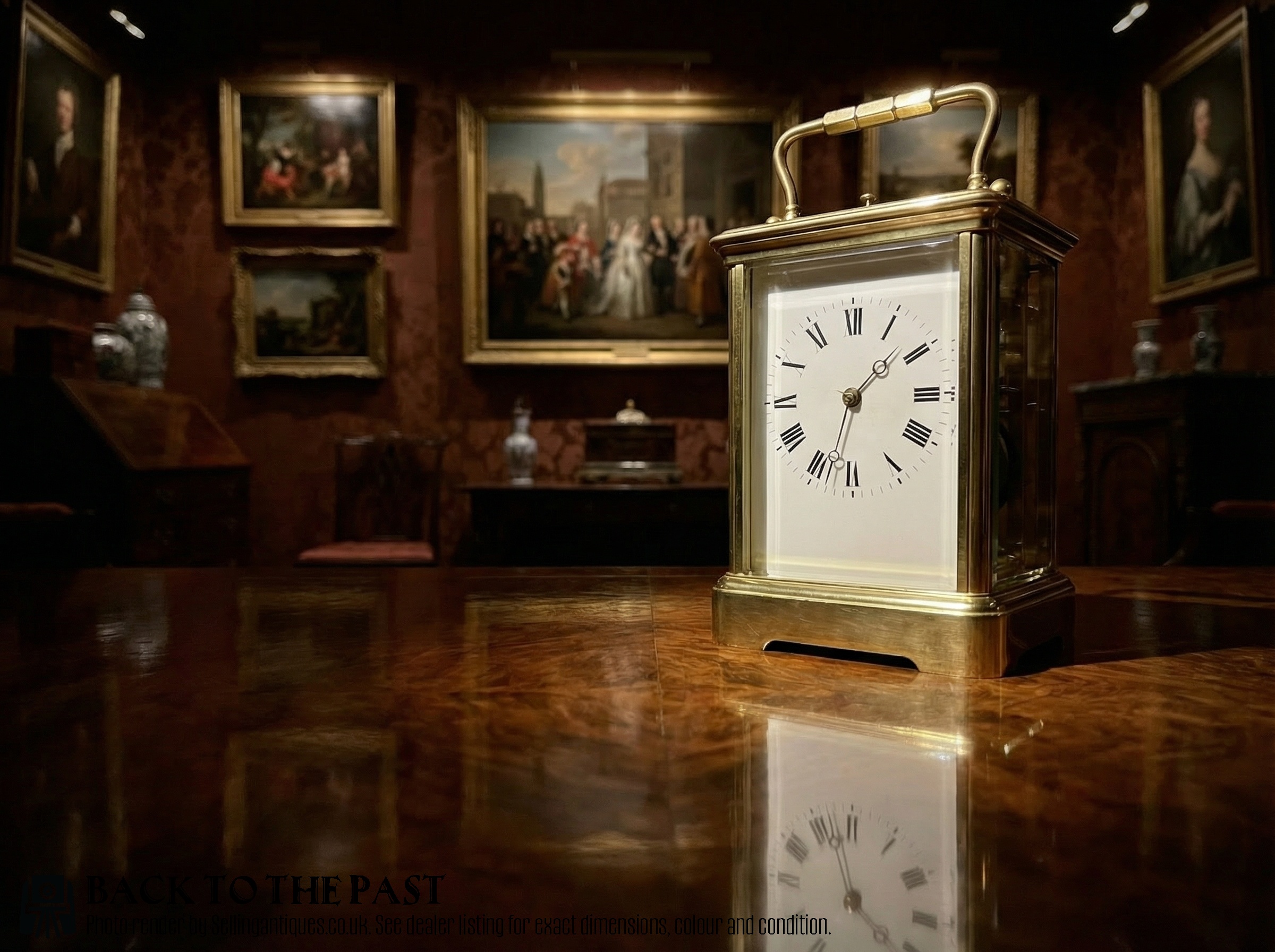
Makers built these pieces using heavy brass or gilt brass frames fitted with bevelled glass panels to protect the delicate internal gear trains from dust and knocks. Enamel dials and painted porcelain panels provided a clear face for reading the time in varying light conditions.
Movements relied on steel components and brass wheels, often incorporating platforms for the escapement mechanism to maintain accuracy during transit. Leather cases lined with velvet or silk offered an additional layer of protection for owners on the move.
Victorian Travel Clock Retail Price Guide 2026
Typical asking prices for victorian travel clock among the pieces listed under this phrase on Sellingantiques today, from the lower quarter to the upper quarter. They describe what is for sale here now, not the wider market.
Listings for this phrase feature materials including glass, enamel, brass, gilt brass, leather, steel, porcelain, and gilt.
Quality and execution
The distinction between standard models and superior examples lies in the crispness of the brass engraving and the complexity of the internal movement. Plain brass cases sit at the lower end, while fully engraved gilt brass housings with repeating mechanisms and alarm functions represent finer production.
The inclusion of original leather travel cases and signed backplates by known makers elevates a piece. Furthermore, porcelain panels decorated with detailed hand-painted scenes indicate higher workshop ambition than plain white enamel dials.

Henri Jacot·Cousens And Whiteside·Howell And James·Mappin And Web·Drocourt Paris·T Martin And Co·C Detouche Paris·Antoine Redier·Margaine Of France·Brunelot·Pickford Of London
The Victorian Travel Clock Glossary
- Carriage clock
- A portable spring-driven timepiece designed for travel during the nineteenth century. They typically feature a rectangular brass case with glass panels and a swing handle on top.
- Repeater
- A clock mechanism that chimes the hours and quarters upon pressing a button on the case. This function allowed owners to check the time in the dark without lighting a candle.
- Gorge case
- A distinct stepped brass case style commonly found on French carriage clocks. The architectural moulding adds structural rigidity and aesthetic depth to the exterior.
- Escapement
- The internal mechanism that controls the release of power from the mainspring to the gear train. In travel clocks, a platform escapement ensures steady timekeeping despite motion.
- Fusee
- A conical pulley used in English clocks to maintain equal force on the train as the mainspring unwinds. This mechanical addition ensures consistent precision over the entire running period.
Victorian Travel Clock: Frequently Asked Questions
What is a victorian travel clock?
A victorian travel clock is a portable mechanical timepiece enclosed in a brass and glass case, featuring a handle for carrying. These devices were engineered to keep accurate time while moving across the nineteenth century.
They range from simple timepieces to complex striking and repeating mechanisms housed in leather outer cases for protection during transit.
How do repeating carriage clocks work?
Repeating carriage clocks use an internal mechanism that chimes the last hour and quarters on demand. Pressing a button on the top of the case activates hammers against gongs or bells inside.
This function was particularly useful for travellers wishing to know the hour during the night without striking a match.
Why do some clocks have leather cases?
Original leather travel cases protected the polished brass exterior and glass panels from the bumps and scrapes of nineteenth century transport. They were custom fitted to the dimensions of the clock.
Finding a piece with its original fitted case adds considerable historical completeness to the set.
How do I wind a travel clock?
Travel clocks use a dedicated winding key inserted into arbors on the backplate or dial face. Turning the key winds the mainspring housed within the brass plates.
Care must be taken not to over-wind the spring, stopping as soon as resistance is felt to preserve the antique mechanism.
Were these clocks made in England or France?
The majority of carriage clocks from this era originated in French workshops, particularly in Paris. Makers like Henri Jacot and Drocourt produced vast quantities of high quality movements.
English makers such as Cousens and Whiteside also produced substantial fusee carriage clocks, though they appear less frequently.