





Victorian Tiered Sideboard
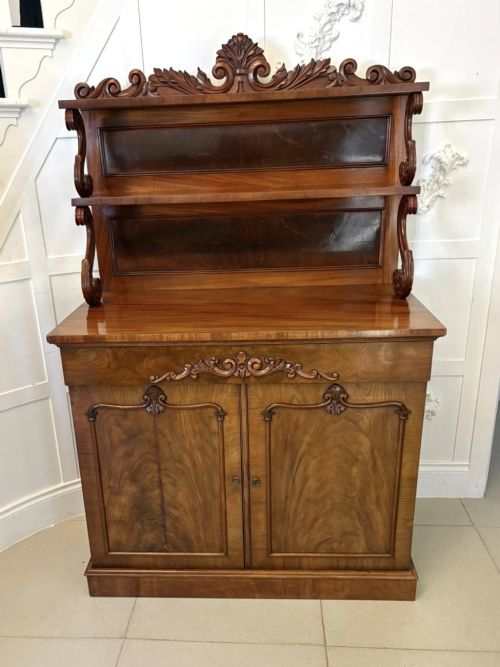
A victorian tiered sideboard offers tiered serving surfaces in rich timber, combining display space with practical storage for the dining room.
Victorian Tiered Sideboard
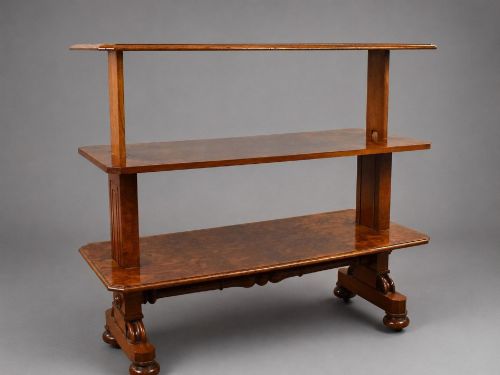
A victorian tiered sideboard combines the serving function of a buffet with stepped shelves or tiers above the main surface. These pieces emerge in various forms across the nineteenth century, including dumbwaiters, chiffoniers, and serving tables.
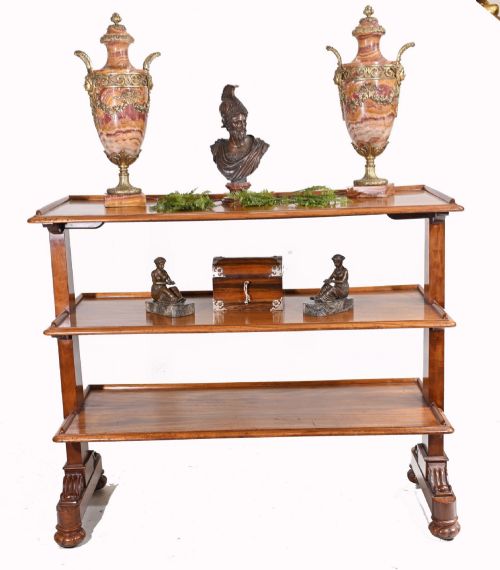
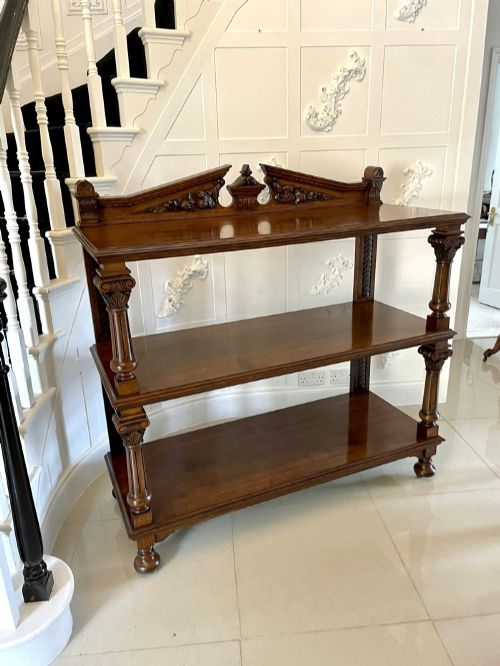
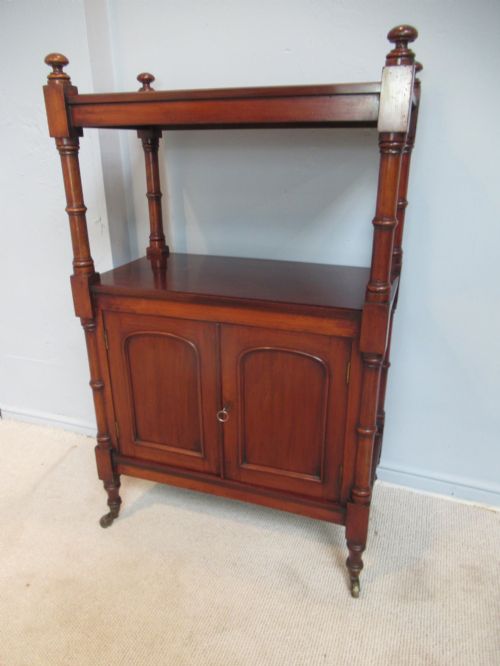
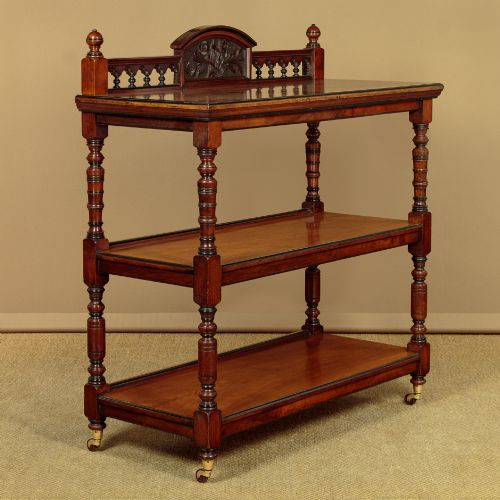
The version most commonly met on this page is the multi-tiered mahogany or oak buffet featuring turned supports and shelf tiers. Pieces span the Victorian period alongside related nineteenth-century examples in walnut and oak.
Makers adapted these tiered designs for country houses and morning rooms, utilising the extra tiers for display plates or serving dishes. Regional variations from the West Country and Wales sit alongside formal London-made items.
Materials and construction
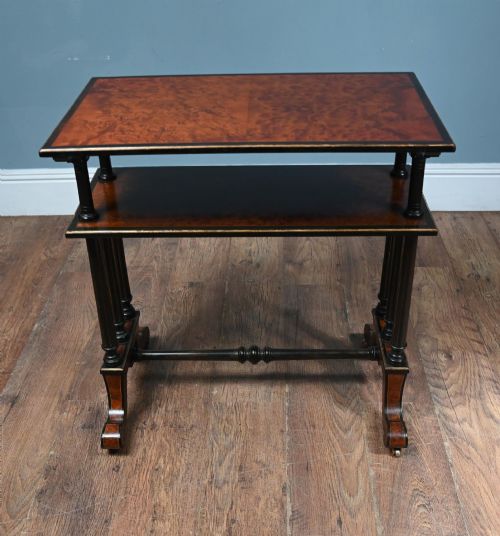
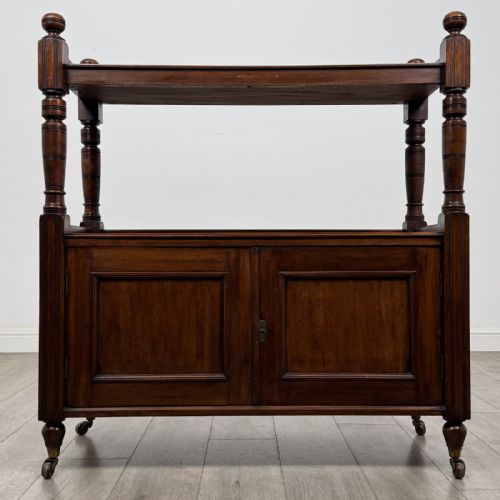
Cabinet makers constructed these sideboards primarily from solid and figured hardwoods, notably mahogany, oak, and burr walnut. Secondary woods appear in internal linings, while brass fittings and original castors provide mobility to heavier tiered dumbwaiters.
Carving and turning define the structural supports, with sturdy columns and balusters holding aloft the upper tiers. Joinery relies on traditional techniques to bear the weight of stacked timber shelves and heavy serving vessels.
Victorian Tiered Sideboard Retail Price Guide 2026
Typical asking prices for victorian tiered sideboard among the pieces listed under this phrase on Sellingantiques today, from the lower quarter to the upper quarter. They describe what is for sale here now, not the wider market.
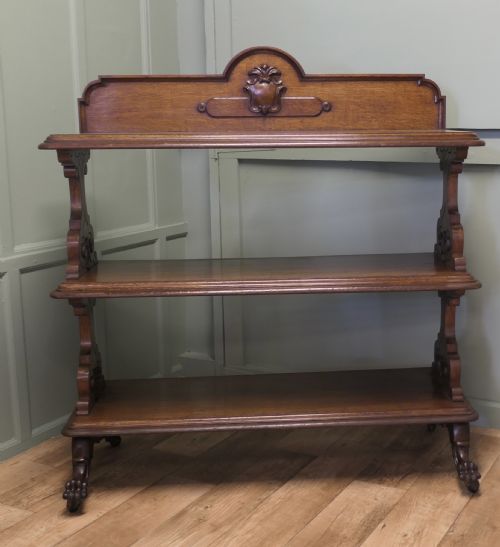
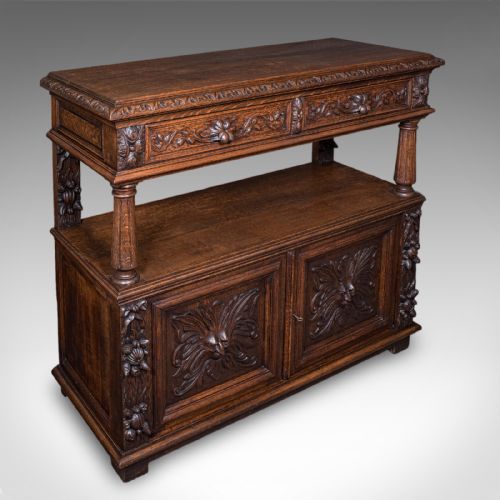
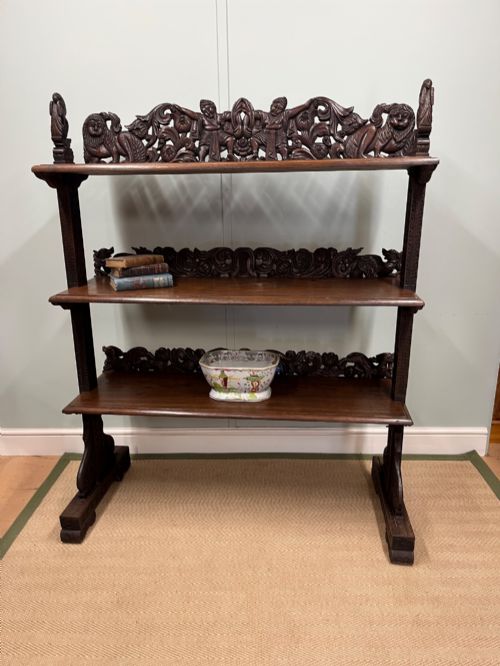
Several oak pieces feature carved Green Man motifs keeping watch over the dining room.
Evaluating craftsmanship
Quality rests in the selection of timber figures, such as highly figured mahogany or burr walnut veneer. Superior examples display crisp, deep relief carving on the oak panels and well-turned structural columns.
The integrity of the original tiers, supporting spindles, and underlying castors distinguishes an unaltered piece from one with later replacements. Refined cabinet work shows in tight joints and balanced proportions across multiple levels.
The Victorian Tiered Sideboard Glossary
- Buffet
- A side table or low cabinet designed for serving food and displaying plate. It often incorporates multiple tiers or open shelves in Victorian examples.
- Dumbwaiter
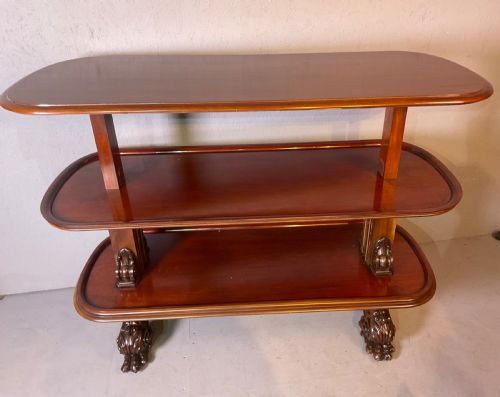
- A tiered piece of furniture with revolving or stationary shelves used for holding dishes. Victorian versions frequently run on original castors.
- Chiffonier
- A low cabinet resembling a small sideboard, usually featuring a raised shelf or small cupboard above the main surface. They appear in mahogany and burr walnut.
- Pollard oak
- Oak timber showing distinctive cluster knots and circular markings caused by pollarding the tree. Cabinet makers valued this wood for decorative drawer fronts and panels.
- Aesthetic Movement
- A late nineteenth-century design style focusing on artistic reform and simplicity. Pieces from this movement often utilise ebonised details or distinctive walnut construction.
Victorian Tiered Sideboard: Frequently Asked Questions
What is a victorian tiered sideboard?
A victorian tiered sideboard is a multi-level serving piece with stepped shelves rising above a central cabinet or table surface. These items provided functional space for dining rooms and morning rooms during the nineteenth century.
They appear in various timber selections including mahogany, oak, and burr walnut. The tiers allowed households to display ceramics while keeping serving dishes close at hand.
How do I use a tiered sideboard today?
These pieces function well in modern dining spaces or living rooms as display surfaces and storage consoles. The upper tiers suit glassware, books, or decorative objects.
The lower cabinets and main surface offer practical storage for tableware or linens. Their varied heights accommodate different styling arrangements in contemporary interiors.
Are these sideboards made of solid wood?
Most examples utilise solid hardwoods for structural members, frames, and carved elements. Timbers like oak and mahogany provided the necessary strength for supporting multiple tiers.
Finer decorative surfaces often employ figured veneers, such as burr walnut or pollard oak. These veneers were applied over stable timber bases to create striking grain patterns.