





Inlaid Walnut Whatnot
An inlaid walnut whatnot brings tiered elegance and surface display to a room, offering multiple open shelves enriched by contrasting wood details.
Inlaid Walnut Whatnot
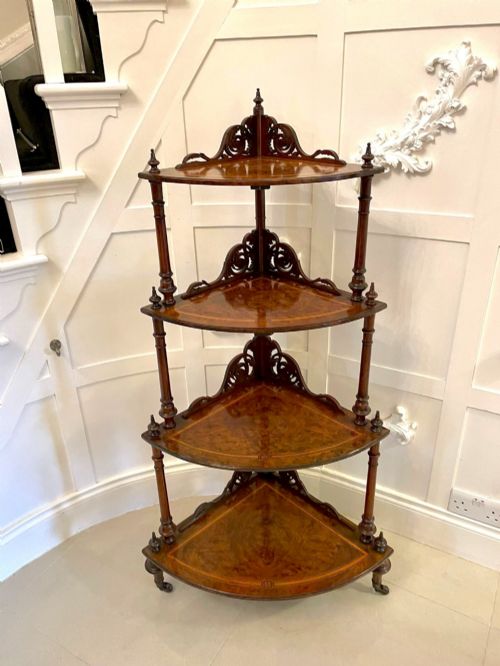
An inlaid walnut whatnot serves as an open tiered display stand for ornaments, books, and collections. These pieces emerge predominantly from the Victorian and Edwardian periods, stretching from the mid-nineteenth century into the early twentieth century.
The form appears frequently as a corner whatnot designed to fit snugly into room angles, alongside multi-tier freestanding units, Canterbury combinations with fitted partitions, and occasional tables with display shelves. French influences also surface through sophisticated etageres featuring ormolu mounts and delicate marquetry.
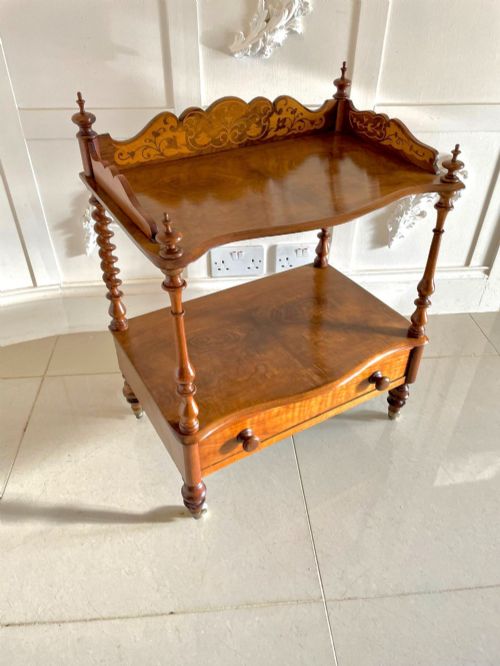
Makers utilised rich walnut timbers to construct multi-level shelving units supported by turned uprights, columns, and finials. Buyers encounter standard standing shelves alongside hybrid forms that incorporate drawers, music cabinets, or jewellery compartments.
How they were made
Cabinet makers constructed these pieces primarily using solid walnut and highly figured burr walnut veneers applied to carcases, creating rich surface movement across the shelves. Ebonised wood often provides dark structural contrast to the warm brown tones of the walnut.
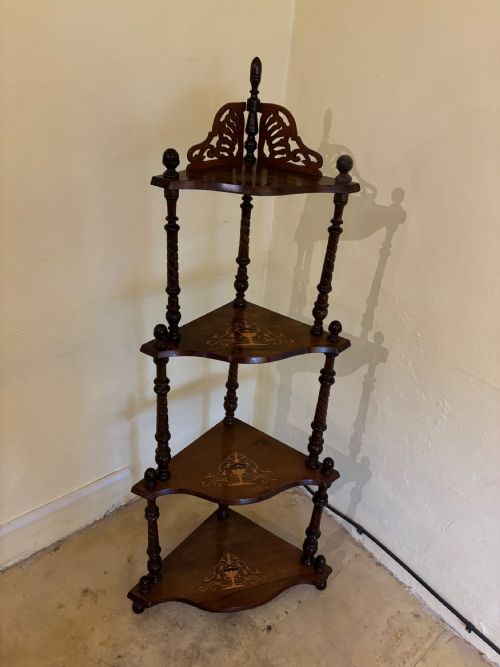
Decorative surface enrichment relies on intricate marquetry, boxwood inlay, and brass detailing. Artisans cut delicate floral or geometric patterns into the wood, embedding contrasting lighter veneers into the darker walnut backgrounds.
Structural verticality is achieved through turned wooden support columns, pillared tiers, and decorative finials. Metal elements such as ormolu mounts appear on specific French-influenced pieces to frame the shelving tiers.
Inlaid Walnut Whatnot Retail Price Guide 2026
Typical asking prices for inlaid walnut whatnot among the pieces listed under this phrase on Sellingantiques today, from the lower quarter to the upper quarter. They describe what is for sale here now, not the wider market.
Turned wooden finials crown the upright posts of these stands, serving no structural purpose other than adding a triumphant little spike to the top shelf.
What varies in quality
The sophistication of the marquetry and inlay work dictates the visual distinction of an individual piece. Precise boxwood detailing and complex floral marquetry require skilled hand-cutting that elevates standard shelving into decorative art.
Timber selection creates a clear division in execution. High-grade burr walnut displays dense, swirling grain patterns across wide surfaces, whereas plainer walnut timber yields a more uniform appearance.
Form complexity influences distinction, separating simple three-tier open stands from elaborate multi-functional pieces that integrate drawers, music storage, or carved corner quadrants.
The Inlaid Walnut Whatnot Glossary
- Whatnot
- An open multi-tiered piece of furniture designed for displaying ornaments and small objects. It originated in the eighteenth century and remained popular through the Victorian era.
- Burr Walnut
- Timber taken from a tree growth or burr, producing highly figured, swirling grain patterns. It was sliced into veneers for decorative cabinet fronts and tabletops.
- Marquetry
- The art of applying decorative pieces of veneer to a structure to form intricate patterns or pictures. Craftsmen use contrasting woods to create detailed pictorial designs.
- Etagere
- A piece of furniture consisting of a set of open shelves for displaying small objects. The term derives from French furniture traditions.
- Canterbury
- A low stand with partitioned vertical sections designed for holding sheet music, folios, or books. When combined with a whatnot, it provides both display shelves and compartment storage.
- Ormolu
- Gilt bronze ornamentation mounted onto furniture surfaces. It provides metallic contrast against dark wood and marquetry.
Inlaid Walnut Whatnot: Frequently Asked Questions
What is an inlaid walnut whatnot?
An inlaid walnut whatnot is a tiered open shelving unit made from walnut wood and decorated with contrasting veneer inlay. These pieces were designed to display ornaments, books, and collectibles in Victorian and Edwardian reception rooms.
They combine practical storage tiers with decorative marquetry, often utilising corner designs or freestanding structures to maximise display space in domestic interiors.
How were these stands used originally?
Victorian households utilised these multi-level shelves to exhibit decorative ceramics, clocks, silver, and small prized possessions. They acted as focal points for display in parlours and drawing rooms.
Certain variations included integrated partitions or drawers, functioning simultaneously as music cabinets, jewellery storage, or miniature bookcases alongside their primary display role.
What is the difference between a whatnot and an etagere?
A whatnot is traditionally a British tiered shelving unit intended for general display and occasional compartment storage like a Canterbury. An etagere leans towards French cabinet-making traditions, frequently incorporating ormolu mounts and elaborate marquetry.
Both forms provide open shelving tiers, though etageres often emphasise decorative display over utilitarian compartments.
How do I care for antique walnut furniture?
Antique walnut requires stable indoor humidity away from direct sunlight and heat sources to prevent the burr veneer from drying out. Regular dusting with a soft, dry cloth preserves the polished wooden surface.
Avoid applying modern silicone polishes, opting instead for traditional beeswax formulations to nourish the historic timber and maintain its natural lustre.