
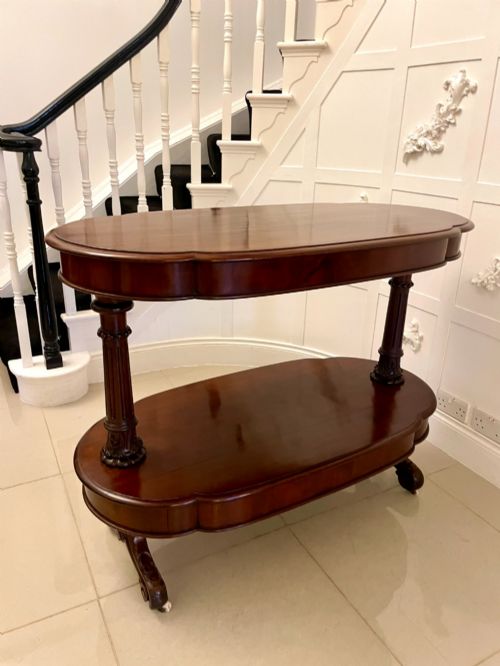
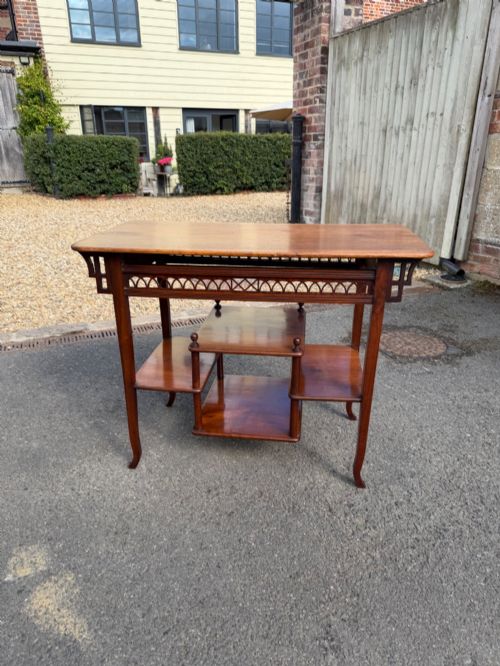
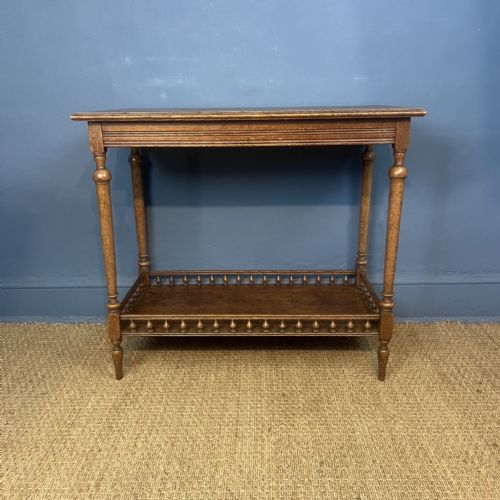
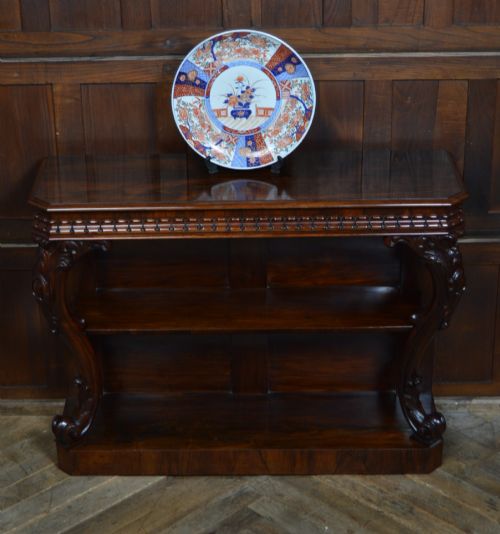


Victorian Tiered Console
A victorian tiered console brings layered surface space and architectural presence to a room, offering both practical display and period character.
Victorian Tiered Console
When you search for a victorian tiered console, you encounter multi-level furniture designed for display and serving during the nineteenth century. These forms encompass console tables, etageres, whatnots, side tables, and buffets with multiple shelves or tiers.
Makers and styles represented range from Aesthetic Movement oak and Gothic Revival carved walnut to refined mahogany and burr walnut pieces. Many incorporate structural tiers, mirrored backs, or secondary display shelves above the main surface.
Materials and construction
Timbers dictate the primary construction, utilising mahogany, walnut, burr walnut, rosewood, oak, amboyna, ebony, and ebonised wood. Cabinetmakers selected these dense hardwoods for structural integrity and rich grain patterns.
Decorative enhancements include marquetry inlay, parcel gilt, brass hardware, and carved details such as Green Man motifs and Gothic Revival tracery. Gilt wood and gesso appear on mirrored display shelves, adding reflective depth to the design.
The listings here encompass nineteen-century periods including Victorian, 1850, 1860, 1880, and 1910, utilising mahogany, walnut, oak, and rosewood.
Qualities that separate examples
Construction fidelity distinguishes standard items from exceptional pieces, particularly in the joinery of multiple tiers and upright supports. Superior examples exhibit precise timber selection, such as mirrored burr walnut veneers or finely figured mahogany.
Carving depth and decorative restraint define the visual success of a piece. Crisp hand-carved details, integrated marquetry, and balanced proportions elevate a console or buffet beyond utilitarian manufacture.
Robert Strahan·Gillows of Lancaster and London·Donald Ross
The Victorian Tiered Console Glossary
- Tiered console
- A multi-level table designed to stand against a wall, combining a primary surface with one or more upper display shelves. This configuration maximises vertical display space.
- Etagere
- A piece of furniture consisting of a set of open shelves for displaying small objects or ornaments. These usually feature slender supports.
- Demi-lune
- Half-moon shaped furniture designed to sit flush against a wall. This profile is frequently seen on walnut and mahogany examples.
- Dumb waiter
- A tiered serving table or stand historically used for holding dishes or silverware without requiring servant attendance. They often incorporate revolving or fixed tiers.
- Burr walnut
- Timber taken from the warted growth of a walnut tree, yielding highly decorative swirling grain patterns. Cabinetmakers prized this veneer for principal surfaces.
Victorian Tiered Console: Frequently Asked Questions
What is a tiered console used for?
Tiered consoles served multiple domestic functions in Victorian interiors, acting as serving tables in dining rooms or display surfaces in reception rooms. The upper tiers held ceramics, clocks, and ornaments while the main surface provided immediate utility.
In modern rooms, they function well in hallways or living spaces to display collections and manage surface clutter without taking up excessive floor space.
How do I identify an Aesthetic Movement console?
Aesthetic Movement pieces from this era typically feature ebonised wood or oak construction, often incorporating geometric lines and simplified structural forms. They reflect a shift away from heavy Victorian ornamentation towards artistic simplicity.
Look for contrasting wood tones, minimal carved details, and structural emphasis on the upright tiers and shelves.
What is the difference between a buffet and a console?
A buffet generally provides robust storage or serving space with solid timber construction, often used in dining contexts. A console focuses more on decorative display and architectural form against a wall.
Tiered examples bridge this distinction by adding shelves above the primary board, combining the display function of an etagere with the weight of a serving table.
How should I care for a walnut or mahogany tier?
Maintain nineteenth-century polished wood surfaces by avoiding direct sunlight and excessive humidity fluctuations. Regular dusting with a soft, dry cloth preserves the finish without chemical buildup.
Condition the timber periodically using appropriate traditional wax to nourish the grain, particularly on figured burr walnut and rosewood veneers.