



Mid 19th Century Server
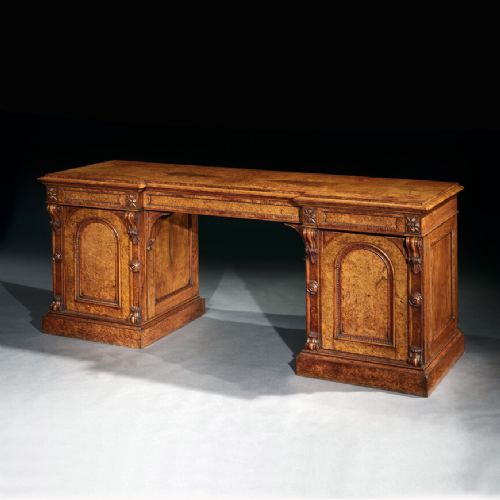
A mid 19th century server is a substantial dining room piece designed for holding food and silver.
Mid 19th Century Server
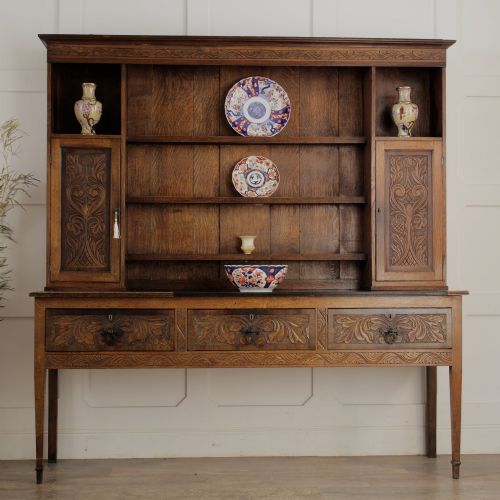
A mid 19th century server encompasses large dining furniture such as sideboards, buffets, chiffoniers and serving tables built during the Victorian period and the broader eighteen-fifties and sixties. These items served dining rooms by providing surface space for dishes and storage for serving ware.
The pieces appearing under this search include English mahogany and pedestal examples alongside continental variations in Swedish birch, French cherry wood and palisander. While sideboards dominate the selection, related dining room forms like chiffoniers and serving tables also emerge.
How they were made
Cabinet makers utilised dense timbers such as mahogany, oak, pine, cherry wood and birch, frequently applying mahogany veneer or pollard oak to prominent surfaces for visual depth. Construction often relied on solid secondary woods for interior framing and drawer linings.
Decorative work on these items involved carved elements, applied mouldings and mirrored backs on chiffonier variants. Iron and brass hardware provided structural reinforcement and operational fittings for drawers and doors.
Some servers hide cutlery drawers lined in baize for silver.
What varies in quality
The standard of a mid 19th century server depends upon the selection of timber and the precision of its grain matching across drawer fronts and doors. Superior examples display carefully chosen mahogany veneer or figured pollard oak rather than plain utility woods.
Construction methods dictate durability, seen in the tightness of joints and the stability of pedestal bases or carved backboards. Finer pieces maintain original hardware and glass or mirrored components without modern replacements.
The Mid 19th Century Server Glossary
- Chiffonier
- A low sideboard or cabinet featuring shelves or a mirror superstructure, designed for the dining room or parlour.
- Pedestal sideboard
- A heavy dining room piece with flanking column or pedestal cupboards joined by a central table base.
- Palisander
- A dense tropical timber resembling rosewood, utilised for decorative dark grain effects on nineteenth-century furniture.
- Veneer
- A thin layer of figured wood applied over a stable secondary timber base to create an ornamental surface.
Mid 19th Century Server: Frequently Asked Questions
Where did people put a server?
A mid 19th century server stood against the dining room wall to hold platters, dishes and silverware during meals.
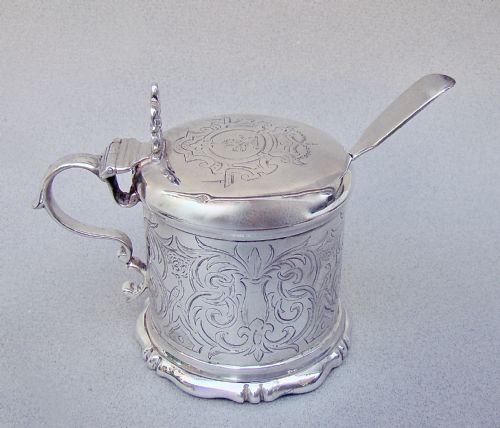
Hostesses used the top surface for carving joints or setting out wine jugs and mustard pots before service.
How do I clean mahogany?
Dust the polished mahogany surfaces regularly with a dry, soft cloth to prevent grit accumulation.
Apply occasional coats of quality beeswax to nourish the timber and maintain the natural lustre.
Can I use it for storage?
The interior cupboards and drawers suit modern dining rooms for storing table linens, cutlery and glassware.
The wide top surface functions well for serving food during dinner parties or displaying decorative objects.
How do I date these pieces?
Examine the construction methods, secondary woods like pine or oak, and handle fixings to determine the manufacturing period.
Stylistic cues such as Victorian pedestals or Swedish birch veneers help narrow the origin to the eighteen-fifties and sixties.