
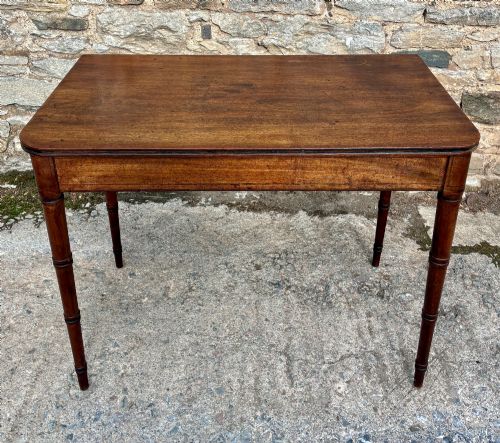
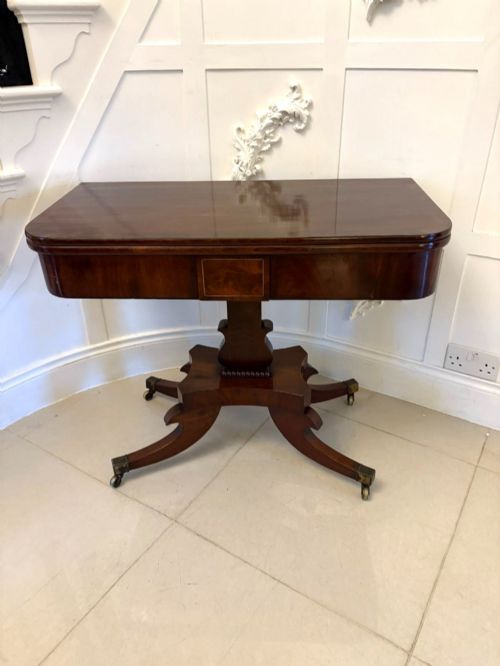
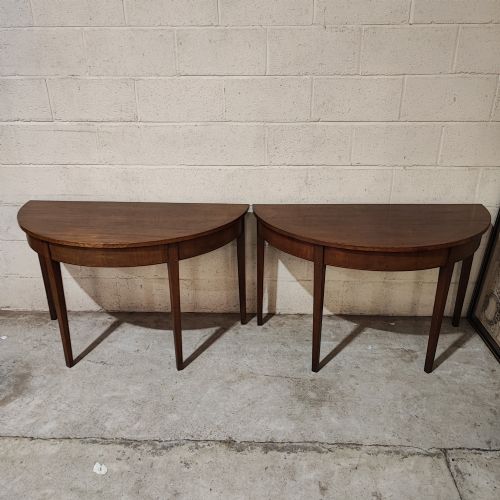
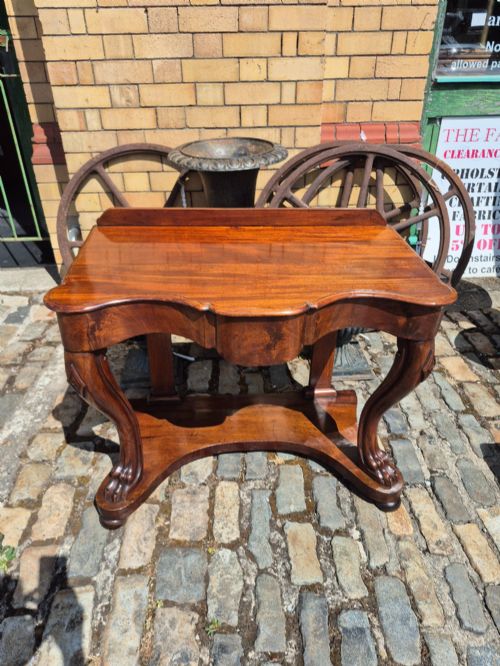



Rich Mahogany Hall Table
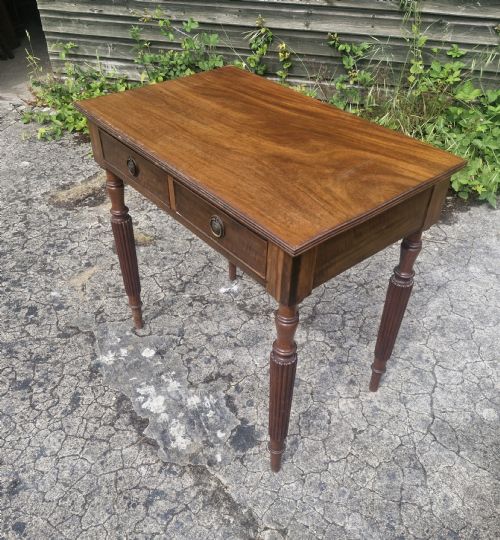
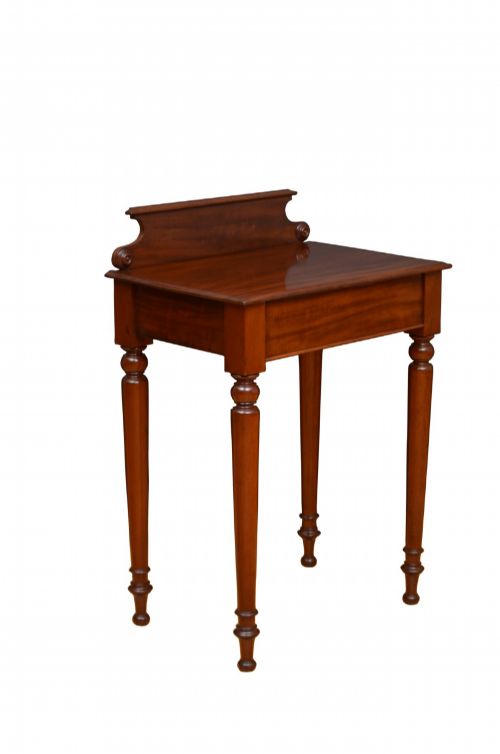
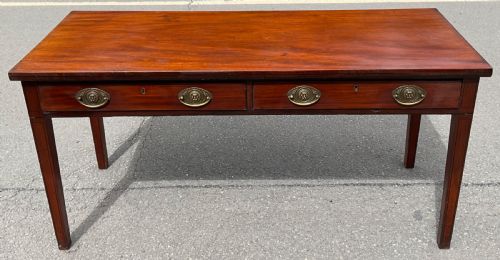
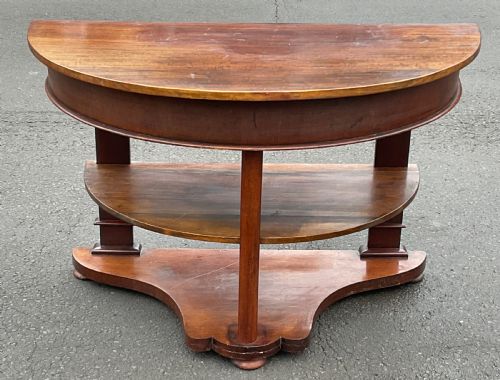
A rich mahogany hall table brings deep timber warmth and elegant proportion to an entranceway, offering a practical surface for everyday use.
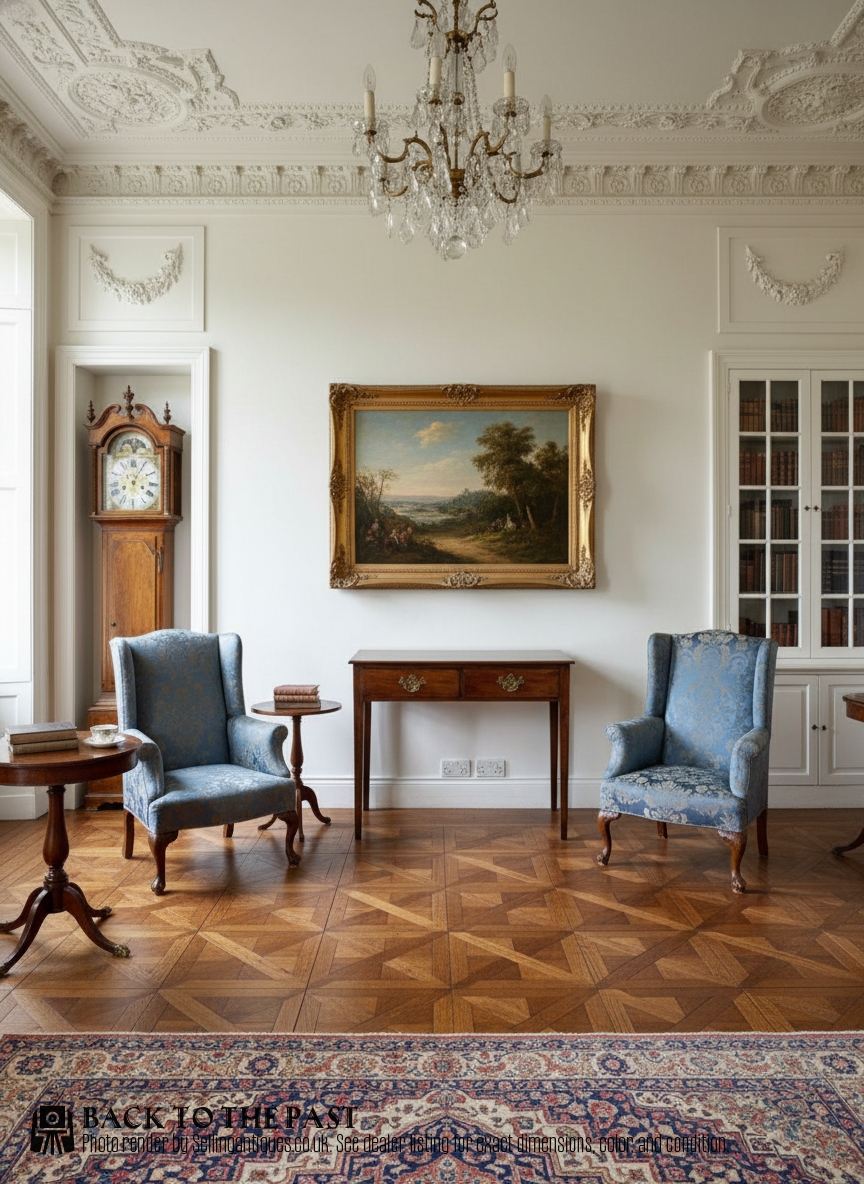
Rich Mahogany Hall Table
The versions most commonly encountered on this page date from the Georgian era through to the mid nineteenth century, frequently taking the form of console or side tables designed to sit flush against a wall.
Makers often utilised figured timber and boxwood stringing to create visual interest on the top surface, whilst retaining the slender legs characteristic of entrance furniture.
Construction and materials
Makers built these pieces using solid mahogany and flame mahogany veneer applied to secondary timbers, often accentuating the grain pattern on the top surface.
Decorative details such as boxwood stringing and cast brass fittings were integrated by cabinet makers to elevate the finish of the timber.
Many a Victorian butler inspected his reflection in the hall table polish before the master of the house came down.
Distinguishing quality
Quality rests primarily in the selection of the mahogany timber, with figured and flame veneers marking the upper tier of production compared to plain stock.
Refinement of proportion and the crispness of carved or inlaid details distinguish standard utility furniture from pieces produced by skilled workshops.
Druce and Co
The Rich Mahogany Hall Table Glossary
- Console table
- A table designed to be fixed against a wall, often supported by front legs with the rear secured to the wall structure. These pieces are typical of hallway and drawing room interiors.
- Flame mahogany veneer
- A figured wood veneer sliced from timber where the branch meets the trunk, creating a distinctive flickering flame pattern. It was favoured for high status cabinet work.
- Boxwood stringing
- A narrow inlay of pale boxwood set into contrasting darker timber to create decorative borders. This technique highlights the geometric outlines of the table top.
- Serving table
- A large rectangular table used in dining rooms or grand halls for the presentation of food and plate. They share similar proportions with heavy side tables.
Rich Mahogany Hall Table: Frequently Asked Questions
What is a rich mahogany hall table used for?
These tables provide a convenient surface in an entrance hall for placing keys, correspondence, and decorative items upon entering the home.
Their slender depth ensures they do not obstruct narrow corridors whilst still offering functional surface area.
How do I identify a Georgian hall table?
Georgian examples are characterised by restrained classical proportions, straight or slightly tapering legs, and dense, dark mahogany timbers.
They often lack the heavier carving found on later Victorian iterations, relying instead on clean lines and superior wood selection.
Where should I place a console table?
Console tables sit flat against a hallway wall, frequently positioned beneath a mirror or painting to create a balanced focal point.
Because they are shallow, they fit easily into transitional spaces without impeding the flow of movement.
How do I care for antique mahogany?
Maintenance requires regular dusting with a soft, dry cloth and the occasional application of traditional beeswax to nourish the timber.
Keep the surface away from direct sunlight and radiators to prevent the mahogany veneer from drying out or splitting.