
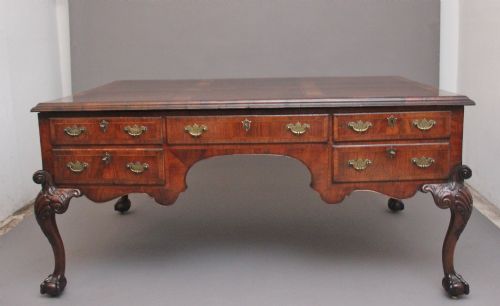
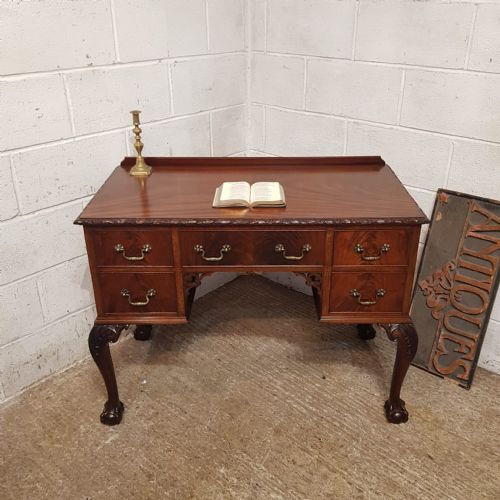

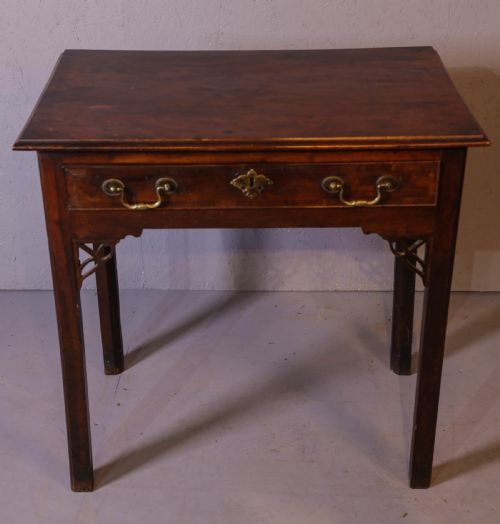


Chippendale Brass Handle Table
These pieces known as a chippendale brass handle table are refined timber desks and side tables fitted with classic metal pulls.
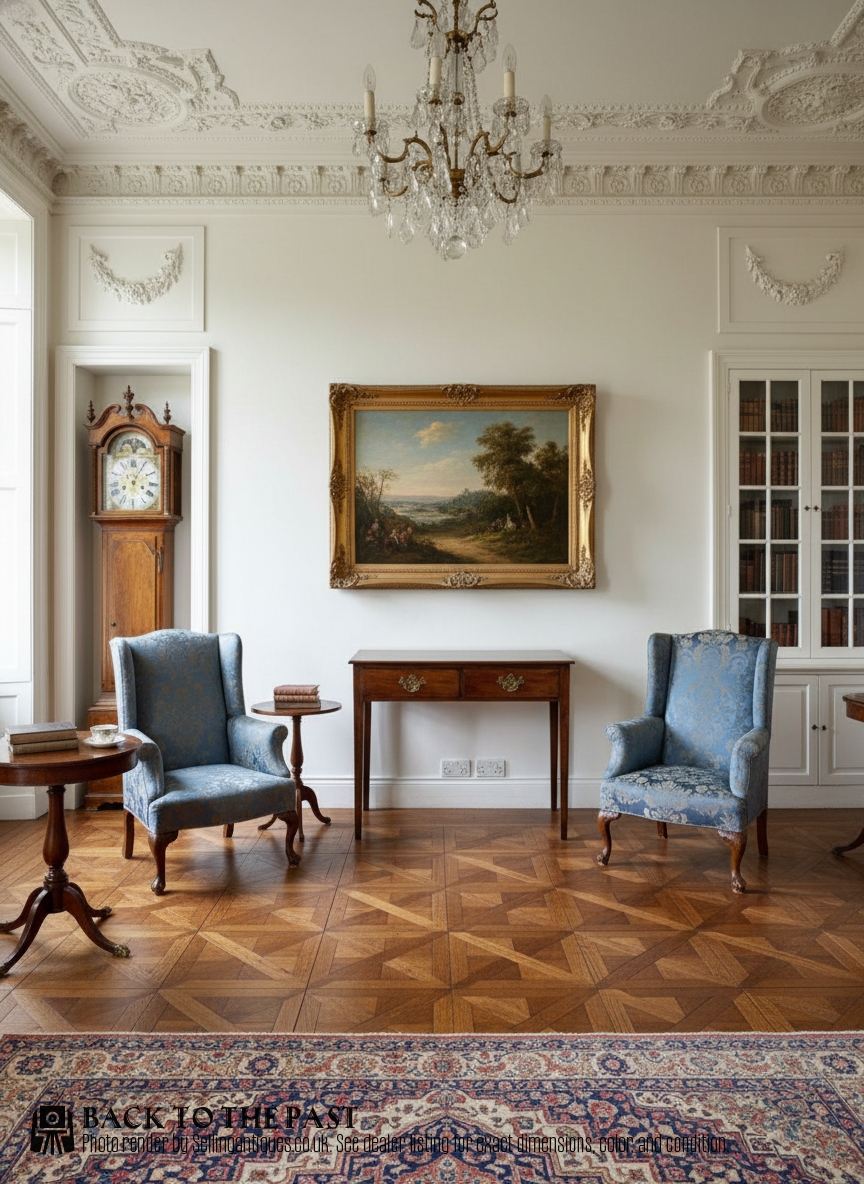
Chippendale Brass Handle Table
The dominant forms meeting this description are lowboys, side tables, writing desks, and dressing chests. These pieces typically feature working drawers fitted with characteristic brass handles, linking them to the classic cabinet-making traditions of the eighteenth century.
Buyers are most likely to encounter nineteenth-century revival pieces alongside genuine Georgian examples. These items served as functional desks and side surfaces in domestic interiors, combining sturdy timber construction with considered proportions.
How they were made
Cabinet-makers constructed these tables using solid hardwoods such as mahogany, walnut, and yew, often selecting figured timbers for primary surfaces and drawer fronts. Secondary woods provided structural framing for drawers and internal carcases.
Metalworking techniques produced the distinctive brass handles and backplates that secure the drawer fronts. These hardware elements were cast and chased before being fixed to the timber with pins or threaded fasteners.
Joinery methods relied on traditional techniques including dovetailing for drawer construction and mortise and tenon joints for frames and legs. Surfaces were finished to highlight the natural grain of the timber.
Several pieces include secret drawers designed to outwit curious guests.
What varies in quality
The quality of these pieces depends upon the selection of the timber and the precision of the cabinet-making. Superior examples display carefully matched grain across drawer fronts and top surfaces, whereas simpler versions utilise plain boards.
The refinement of the hardware and the execution of the joinery distinguish finer specimens from standard workshop production. Original brass fittings and crisp carving on the woodwork indicate a higher grade of manufacture.
Muirhead Moffat & Co·Druce & Co
The Chippendale Brass Handle Table Glossary
- Lowboy
- A small side table or dressing table with one or more rows of drawers, typically standing on four legs. These low-standing pieces often functioned as writing surfaces or dressing tables in eighteenth-century rooms.
- Chippendale Revival
- A late nineteenth and early twentieth-century style that reinterprets the mid-eighteenth-century designs associated with Thomas Chippendale. Cabinet-makers of this period reproduced classic forms with contemporary tools.
- Kneehole desk
- A desk or dressing table featuring a central recess for the user's knees, flanked by pedestals of small drawers. This form provides substantial storage while maintaining a compact footprint.
- Figured mahogany
- Timber exhibiting distinctive grain patterns such as flame, fiddleback, or curl, prized for decorative surfaces. Craftsmen utilised these cuts for prominent display areas on high-status furniture.
- Drop flap side table
- A table equipped with hinged leaves that fold down to save space or lift to extend the surface area. This mechanism offered flexibility in room layout and daily use.
Chippendale Brass Handle Table: Frequently Asked Questions
How do I identify a revival piece?
Revival pieces date from the late nineteenth or early twentieth centuries, adopting the proportions and decorative vocabulary of earlier Georgian furniture.
Examination of the secondary woods, internal construction methods, and tool marks usually reveals the later date of manufacture.
What is a lowboy used for?
A lowboy served historically as a small dressing table or a side table for holding personal items and writing materials.
Today, buyers use them as compact desks, hall tables, or bedside surfaces in smaller rooms.
Are these tables made of solid mahogany?
Many examples utilise solid mahogany for structural parts and primary surfaces, while some incorporate secondary timbers like oak or pine for drawer linings and internal framing.
Cabinet-makers frequently applied figured mahogany veneers over stable softwood or hardwood cores for large flat areas.
How should I care for a polished timber surface?
Polished wood surfaces require protection from direct sunlight, excessive heat, and sudden changes in humidity to prevent timber movement and cracking.
Routine maintenance involves dusting with a soft, dry cloth and occasionally applying traditional wax polish to nourish the finish.