

Victorian Tier Display Stand
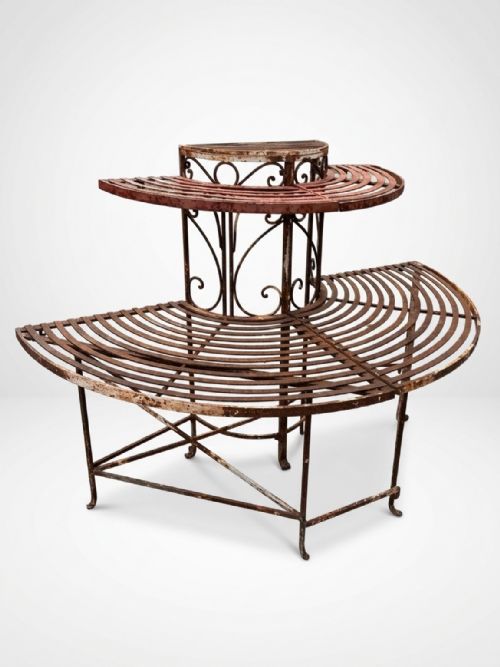
When you search for a victorian tier display stand, you find multi-tiered wooden furniture created to hold ornaments and books.
Victorian Tier Display Stand
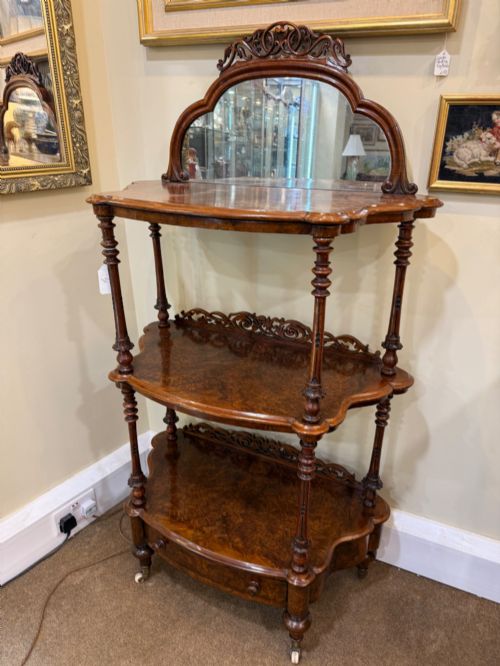
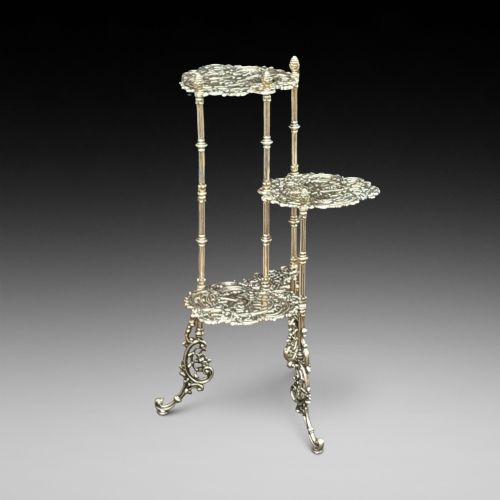
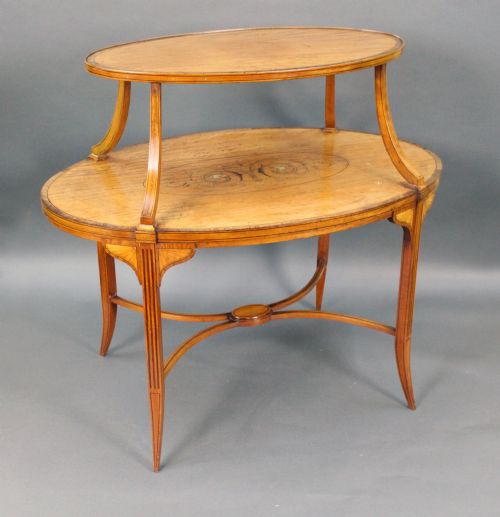
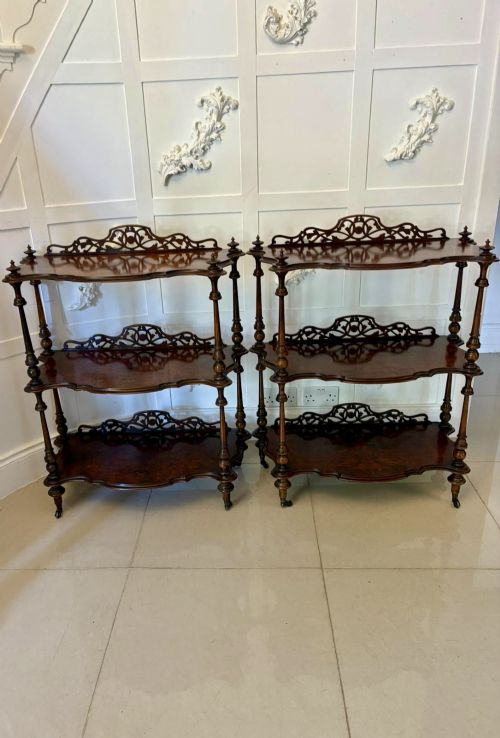
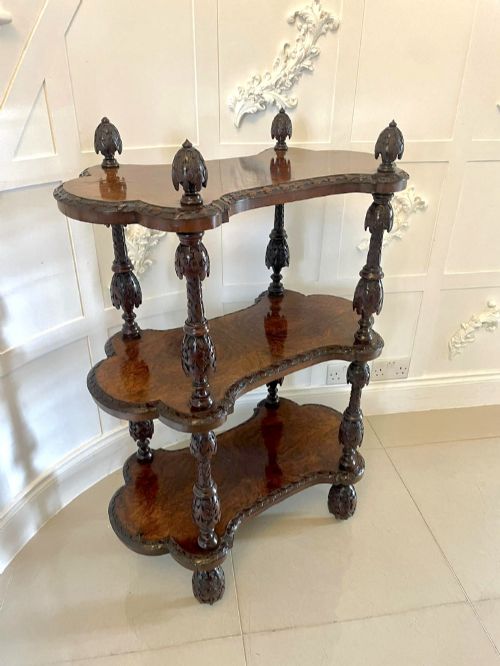
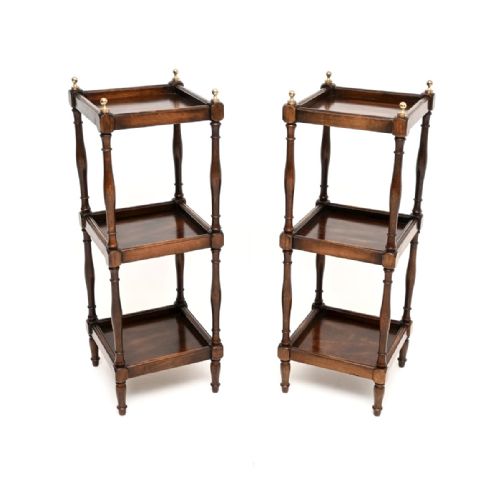
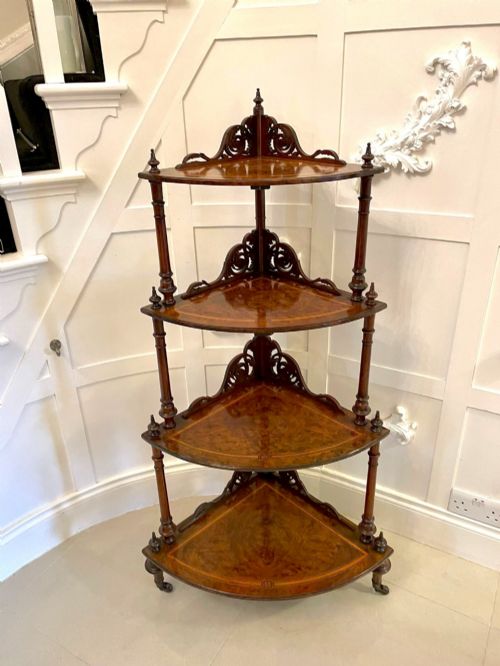
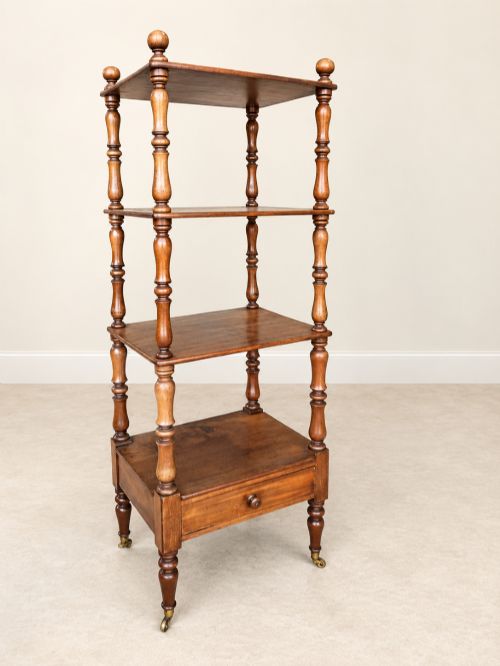
A victorian tier display stand takes the form of tiered shelving units, whatnots, and étagères designed for vertical storage in nineteenth-century interiors. These multi-level pieces allow collectors to exhibit decorative objects across stacked platforms without occupying excessive floor space.
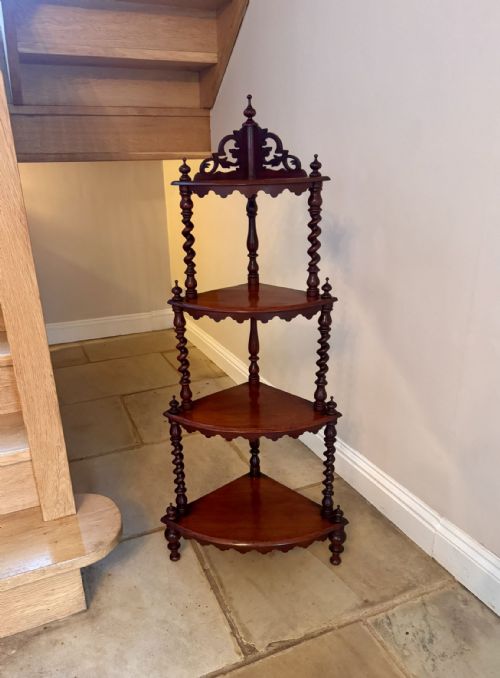
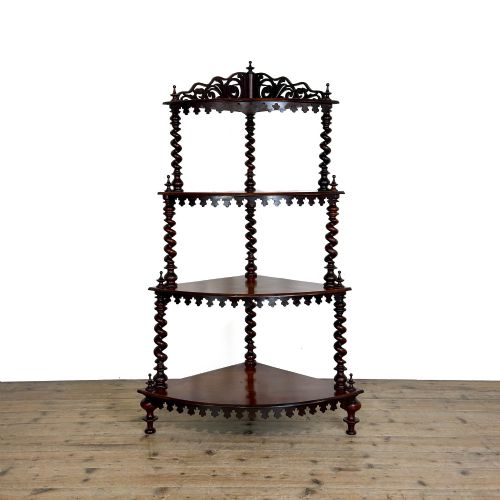
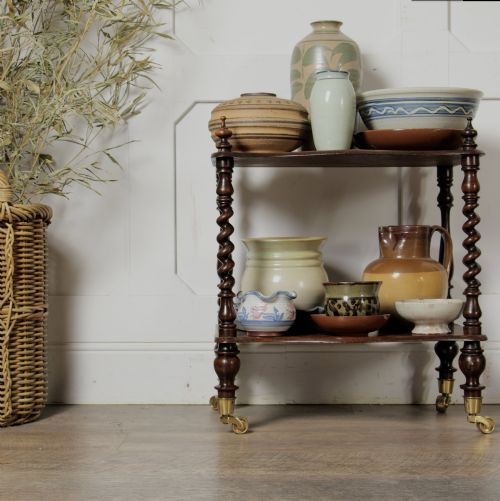
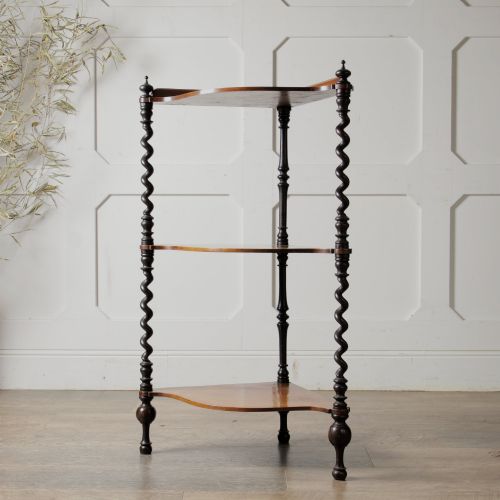
The version most commonly met on this page is the mahogany or walnut three-tier whatnot, often featuring turned supports or barley twist columns. Pieces emerge from the Victorian and Edwardian periods, alongside examples reflecting French Rococo Revival and Anglo-Indian styles.
Makers utilised corner configurations, serpentine frontages, and bamboo frames to adapt these tiered stands for different rooms. Surviving examples range from simple bedside tables with shelves to elaborate six-tier dumb waiters and inlaid display cabinets.
How they were made
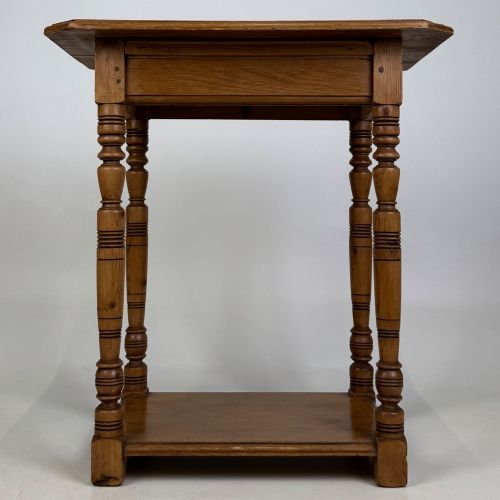
Makers constructed these tiered pieces using dense timbers such as mahogany, walnut, rosewood, and burr walnut, frequently pairing them with ebonised wood or bamboo. Cabinet makers shaped supports through turning, producing barley twist columns and slender uprights that held the shelves in fixed positions.
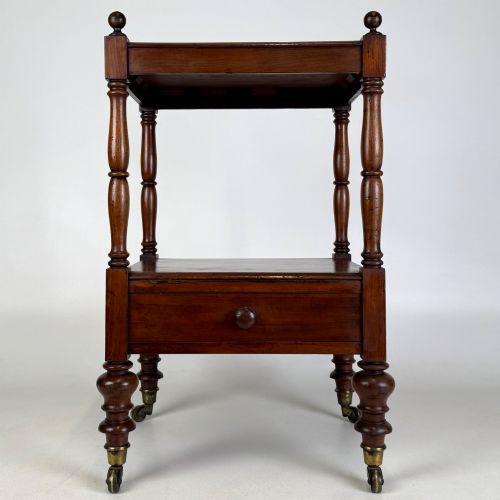
Surface decoration involved marquetry inlay, parcel gilding, and brass mounts, reflecting French and Gothic influences on British workshops. Structural joinery secured multiple tiers above cupboards, drawers, or brass castors.
Listings feature woods spanning mahogany, walnut, rosewood, burr walnut, bamboo, and ebonised finishes across nineteenth-century forms.
What varies in quality
The standard of timber selection dictates visual depth, separating plain utility boards from figured burr walnut and richly grained rosewood veneers. Superior craftsmanship appears in the precision of turned barley twist uprights and the tightness of joints across multiple tiers.
Detailing determines distinction, marked by marquetry inlay, brass mounts, and the integration of functional drawers or cabinet bases. Pieces produced by documented firms display refined proportions and stable weight distribution across all levels.
Edwards & Roberts
The Victorian Tier Display Stand Glossary
- Whatnot
- A piece of furniture consisting of several open shelves for displaying small objects. This form gained popularity during the nineteenth century for parlour and drawing-room use.
- Étagère
- A piece of furniture with a set of open shelves for displaying ornaments. Originating in France, the form translates closely to the British whatnot.
- Barley Twist
- A type of turned wooden support resembling a helix or rope. Cabinet makers utilised this technique extensively on nineteenth-century table legs and uprights.
- Marquetry
- Decorative woodwork where pieces of veneer are fitted into a ground to form floral or geometric patterns. Makers applied this technique to top surfaces and friezes.
- Serpentine
- A curved line of furniture frontages that bends outward in the centre and inward at the sides. This contour adds movement to nineteenth-century cabinet work.
Victorian Tier Display Stand: Frequently Asked Questions
What is a whatnot?
A whatnot is an open-shelved piece of furniture designed for holding ornaments, books, and small decorative items.
Nineteenth-century households placed them in drawing rooms and parlours where vertical display space was needed.
How were tier display stands used?
Owners used these pieces to exhibit ceramics, silver, and decorative objects across multiple stacked platforms.
Some variations incorporated enclosed cupboards or small drawers at the base for additional storage.
How do I live with one?
Position these stands against solid walls or in corners to ensure stability, avoiding overloaded top shelves.
Keep timber surfaces away from direct heat sources to protect nineteenth-century veneers and polishes.
How do I tell periods apart?
Early examples often feature heavy rosewood or mahogany timbers with simpler architectural turnings.
Later Victorian and Edwardian pieces frequently introduce bamboo, ebonised finishes, or intricate marquetry inlay.