





Victorian Terracotta Statue
A victorian terracotta statue brings warmth and character to interior spaces and gardens through modelled earthenware forms.

Victorian Terracotta Statue
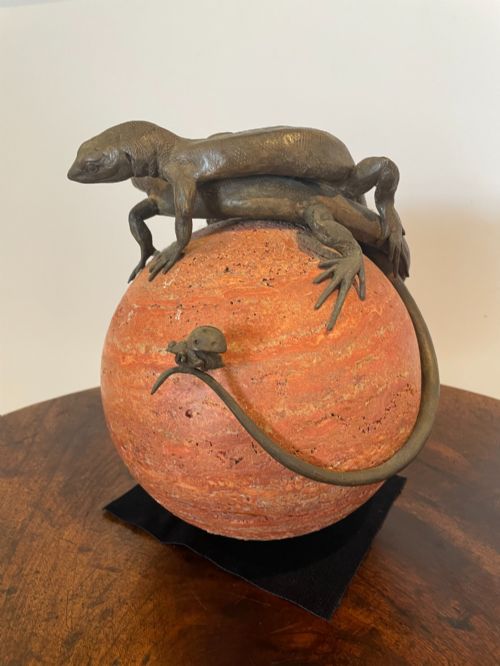
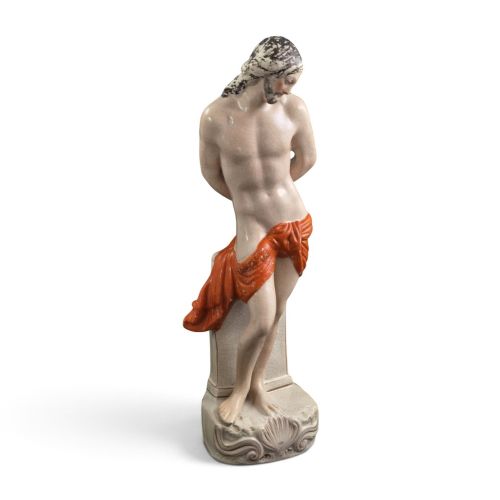
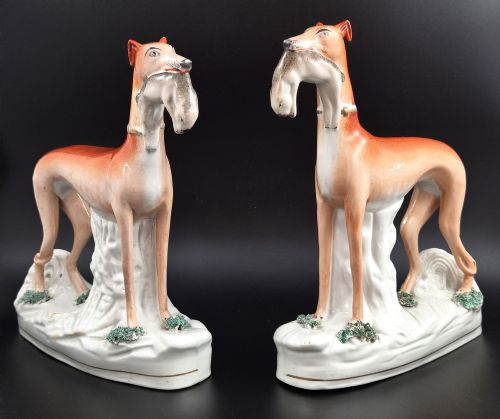
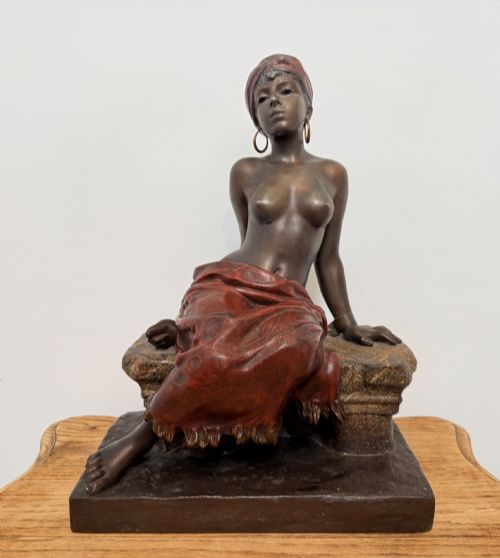
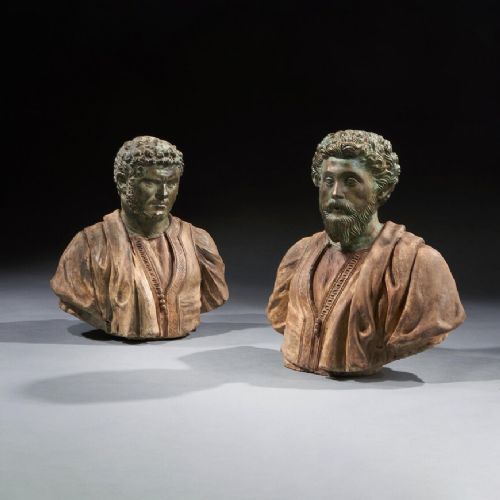
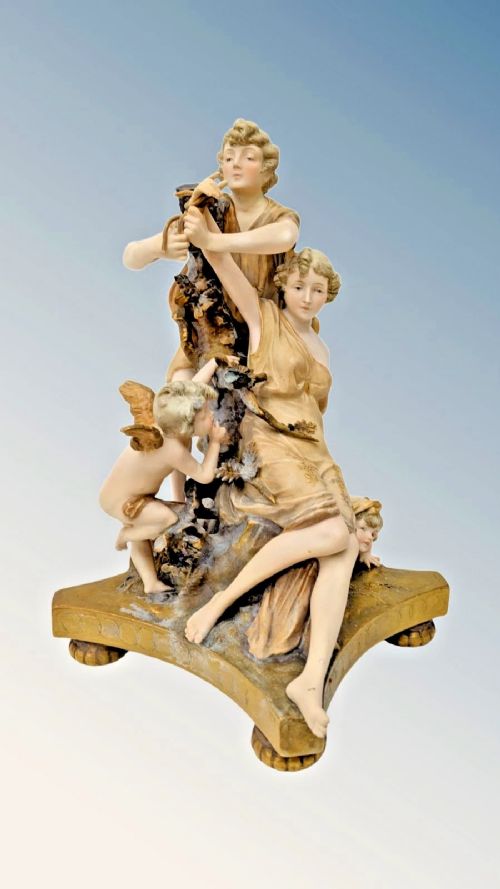
A victorian terracotta statue encompasses sculpted figures, busts, animals and garden ornaments dating primarily from the nineteenth century. Buyers encounter a mix of domestic figures, monumental gateway lions and portrait studies originating from British, Austrian and Italian workshops.
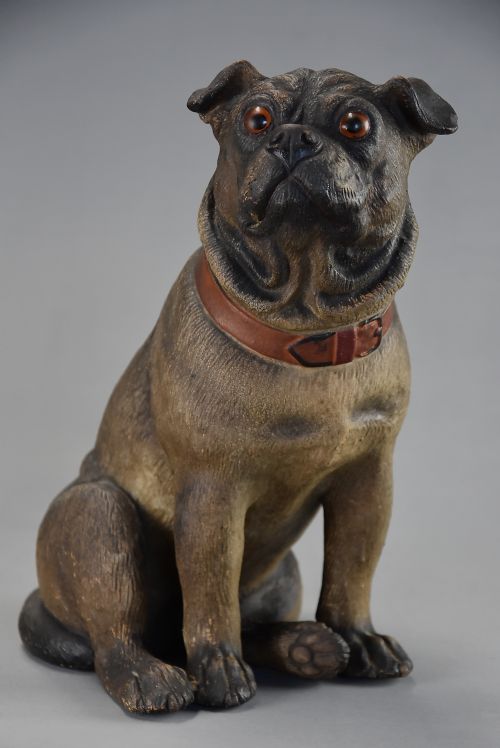
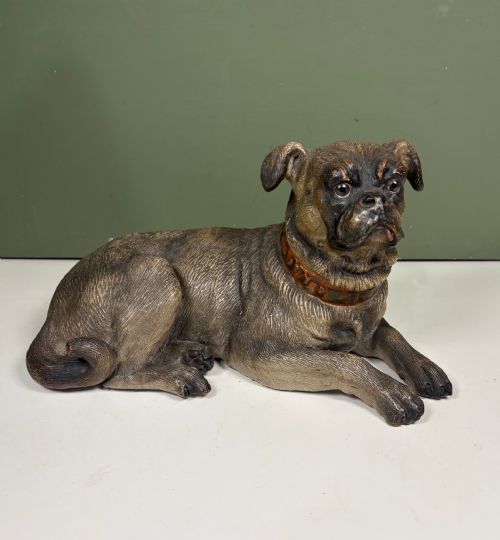
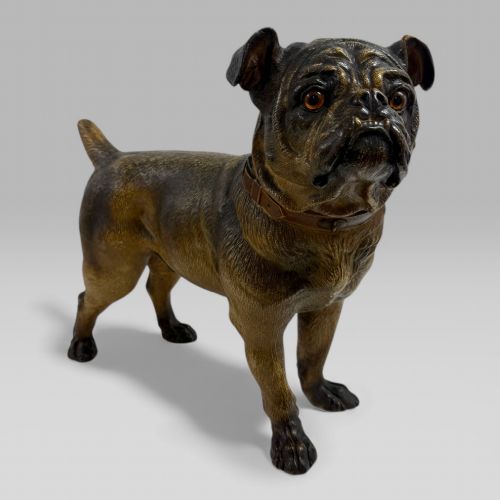
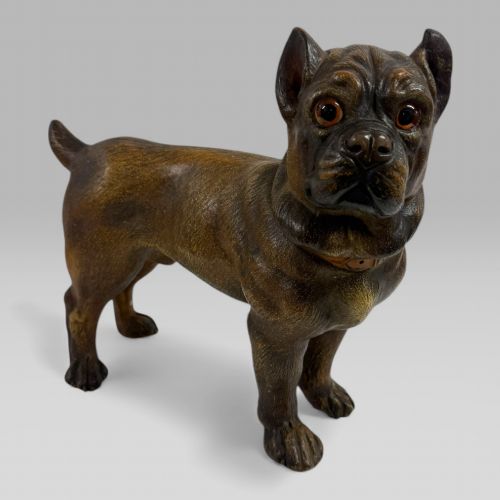
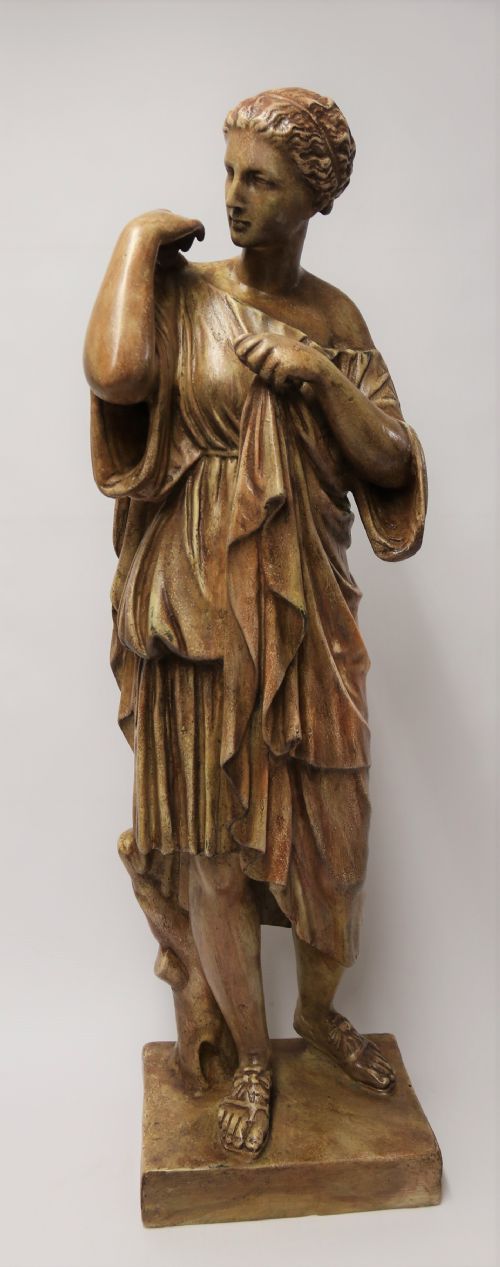
The selection ranges from small shelf-sized pugs and bookends to life-size figures and classical subjects such as Diana the Huntress. Many pieces reflect contemporary tastes for animalier subjects, orientalist themes and classical revivals executed in buff or painted earthenware.
How they were made
Makers shaped these sculptures from porous fired clay, often applying cold paint, glaze or faux marble finishes to emulate more costly bronze or stone materials. Larger figures required sectional moulding and internal supports to maintain structural stability during kiln firing.
Pug dogs dominated Victorian sculptural affections, appearing here as life-size sentinels, seated companions and bookends.
What varies in quality
Quality rests in the crispness of the modelling and the sensitivity of the hand-finishing, where finer examples preserve sharp facial expressions and deep relief in drapery. Lesser pieces often exhibit softer contours and flat, uniform surfaces that obscure the artisan's hand.
The integrity of the fired body and the preservation of original cold painted or glazed surfaces separate standard production items from workshop masterworks. Scale also dictates standing, with substantial life-size animals and portrait busts representing major sculptural efforts.
E Villanis·Goldscheider·Ernst Wallace·Bernard Bloch·Pietro Calvi·Royal Dux
The Victorian Terracotta Statue Glossary
- Terracotta
- Fired unglazed or glazed earthenware of a brownish-red or buff colour used for sculpture and pottery. It provides a durable medium for both interior display and garden statuary.
- Animalier
- Nineteenth-century art depicting realistic animals in naturalistic poses. This style gained immense popularity across European ceramic and bronze sculptures.
- Cold painted
- Pigment applied to a cured or fired object without subsequent kiln firing. This technique allowed for intricate polychrome finishes on terracotta figures.
- Buff
- A pale brownish-yellow colour characteristic of certain unglazed ceramic bodies. It served as a favoured neutral base for Austrian figural sculpture.
- Plinth
- A heavy base or pedestal supporting a statue, bust or vase. Many nineteenth-century sculptures sit upon matching stoneware or faux marble plinths.
Victorian Terracotta Statue: Frequently Asked Questions
How do I care for terracotta outdoors?
Terracotta is porous and vulnerable to frost damage if moisture penetrates the fired body during freezing temperatures. Garden statues require lifting onto feet or paving slabs and protection during severe winter weather.
Interior pieces need only occasional dusting with a soft brush. Avoid liquid cleaners on cold painted surfaces, as moisture lifts applied pigments.
Were these statues painted originally?
Many nineteenth-century continental figures left the workshop with cold painted decoration over the terracotta body. Pigments highlighted clothing, eyes and animal markings to achieve a lifelike appearance.
Over decades, original paint layers frequently sustained wear or overpainting. Examining the surface under magnification helps determine the extent of surviving pigment.
How do I identify Austrian terracotta?
Austrian works from centres like Vienna often feature refined buff terracotta bodies combined with naturalistic modelling of dogs, human figures and orientalist subjects. Workshops such as Goldscheider and Bloch marked their productions with impressed stamps or numbers.
These pieces typically demonstrate superior crispness in moulding compared to standard domestic utility wares. The palette of cold painted finishes also points towards continental manufacturing traditions.
What is the difference between earthenware and stoneware?
Earthenware is fired at lower temperatures, leaving the ceramic body porous and absorbent unless glazed. Terracotta forms a specific type of unglazed earthenware utilised widely for sculptural figures.
Stoneware undergoes firing at higher temperatures until the clay vitrifies, producing a denser, non-porous material suitable for heavy gardenware and architectural elements.