


Victorian Telescopic Floor Lamp
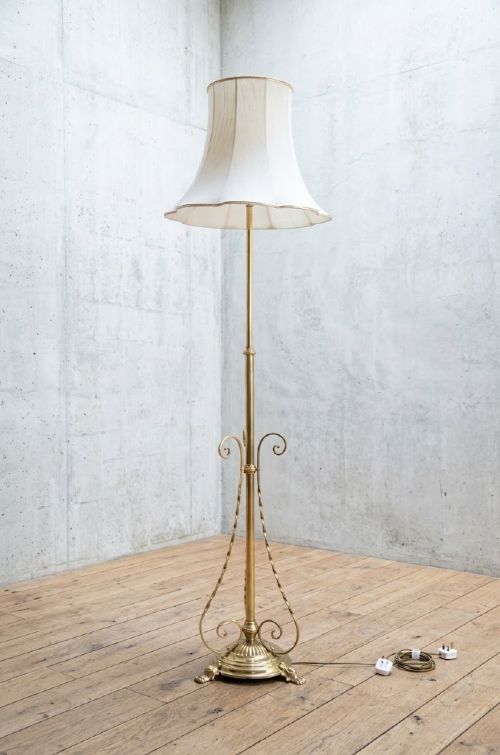
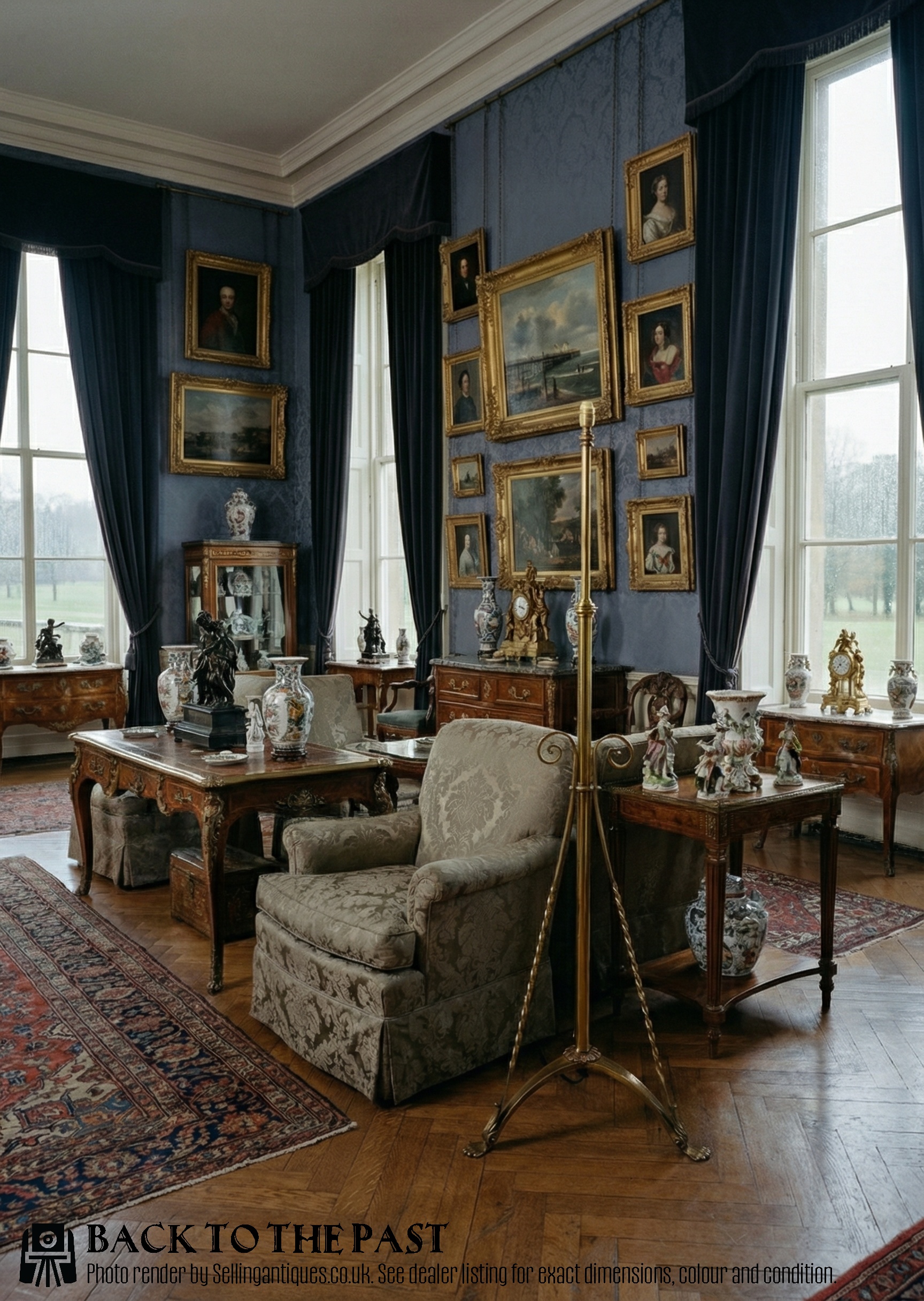
A victorian telescopic floor lamp brings adjustable height and period weight to a room, shifting from a low reading glow to a high ambient spread.
Victorian Telescopic Floor Lamp
A victorian telescopic floor lamp is a tall lighting standard designed to raise and lower its height through an inner sliding shaft. These pieces emerge from periods spanning the nineteenth century into the early twentieth, encompassing Victorian, Edwardian, and Arts and Crafts aesthetics.
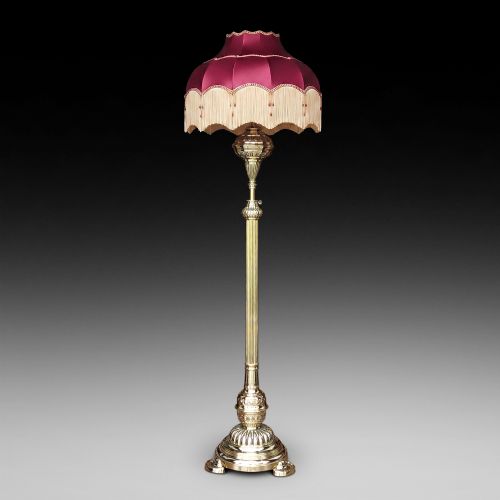
Most examples found here appear in polished brass or copper, standing on heavy weighted bases to maintain balance when extended. Forms range from simple utilitarian iron standards to ornate Corinthian columns and French onyx designs.
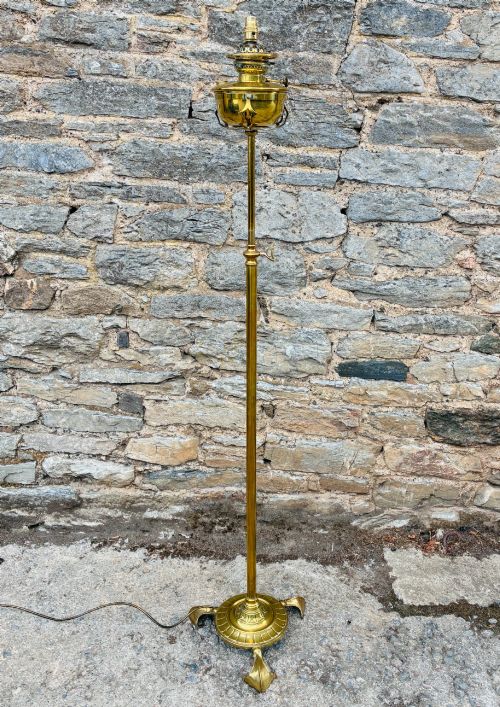
Many of these stands began life as oil lamps before later conversion to electricity during the twentieth century. The conversion retains the original rise-and-fall mechanism while adapting the burner assembly to take modern bulbs.
Materials and construction
Makers relied primarily on heavy gauge brass and copper for the tubular standards, shaping columns and collars by hand or on early lathes. Wrought iron appears in specific vernacular pieces, providing a darker, more tactile finish than polished metal.
Bases often incorporate lead weighting or marble slabs to anchor the upward pull of the sliding mechanism. Ormolu mounts, onyx inserts, and ebonised metal details furnish decorative contrast on French and high Victorian models.
Listings feature standard lamps spanning the nineteenth and early twentieth centuries, with brass and copper dominating the material selection alongside occasional wrought iron and marble.
Factors affecting quality
Quality rests in the engineering of the extending mechanism and the gauge of the metal used in the telescoping column. Substantial brass tubes and robust internal locking screws keep the lamp stable at full height without wobbling.
Makers sign some of the finest standards on the brass key or burner mechanism, marking the distinction between standard workshop production and branded manufacturing. The integration of decorative elements like Corinthian capitals or cast ormolu feet further separates ordinary standards from exceptional pieces.
Hinks of B'ham·Messenger
The Victorian Telescopic Floor Lamp Glossary
- Telescopic
- An arrangement of concentric tubes allowing a lighting standard to extend vertically and lock at various heights. This mechanical adjustment forms the core utility of the design.
- Standard Lamp
- A term historically applied to a floor-standing lamp rather than a table model. These fixtures provide background or task illumination from a fixed floor position.
- Rise and Fall
- An alternative description for an adjustable height mechanism operating on a counterweight or sliding friction collar. It allows swift positioning of the light source.
- Corinthian Column
- A classical architectural column form featuring acanthus leaf ornamentation around the capital. Victorian makers adapted this motif for prestigious brass floor standards.
- Ormolu
- Gilded bronze or brass mounts applied for decorative effect. Found on select French-influenced pieces to enrich the silhouette.
Victorian Telescopic Floor Lamp: Frequently Asked Questions
How do I adjust the height safely?
Most models use a central thumb screw or friction collar on the outer shaft to hold the inner brass tube in place. Support the top section with one hand while loosening the screw with the other to prevent sudden drops.
Ensure the power cable has enough slack to move freely as the pole rises and falls. Yanking the standard upward without releasing the locking mechanism damages the internal brass stop.
Were these originally electric?
Almost all nineteenth-century examples started as oil-burning lamps featuring brass fonts and burners at the top. Craftsmen adapted them for electricity later by running wiring down through the hollow telescopic stem.
Converted lamps retain their original height-adjusting utility while meeting modern lighting standards. The conversion process often leaves the vintage burner galleries intact above the bulb holder.
Are heavy bases necessary?
A heavy base provides essential counterweight when the lamp extends to its maximum height. Without sufficient weight at the bottom, the high centre of gravity makes the tall standard prone to tipping.
Cast iron weights hidden beneath brass domes or solid marble plinths keep the floor lamp grounded. Check that the base sits flat on floorboards without rocking.
How do I clean old brass?
Victorian brass develops a natural oxidation over decades that many collectors prefer to leave undisturbed. Light dusting with a dry cloth keeps the surface clear of grit without removing the historic patina.
Avoid harsh chemical metal polishes that strip away the mellow tones built up over centuries. Gentle application of appropriate conservation wax protects the finish from further tarnishing.