

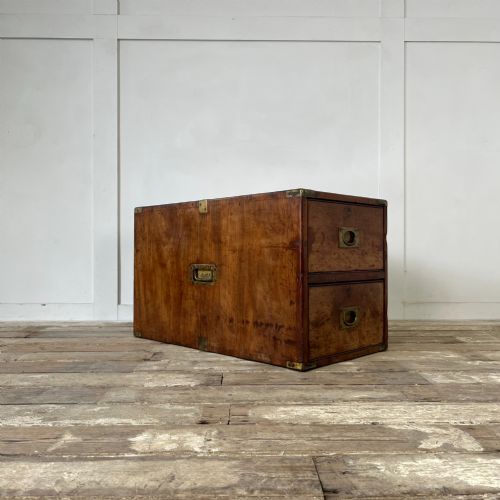


Victorian Teak Chest
When you search for a victorian teak chest, you enter a utilitarian world of campaign furniture built for travel across the British Empire.
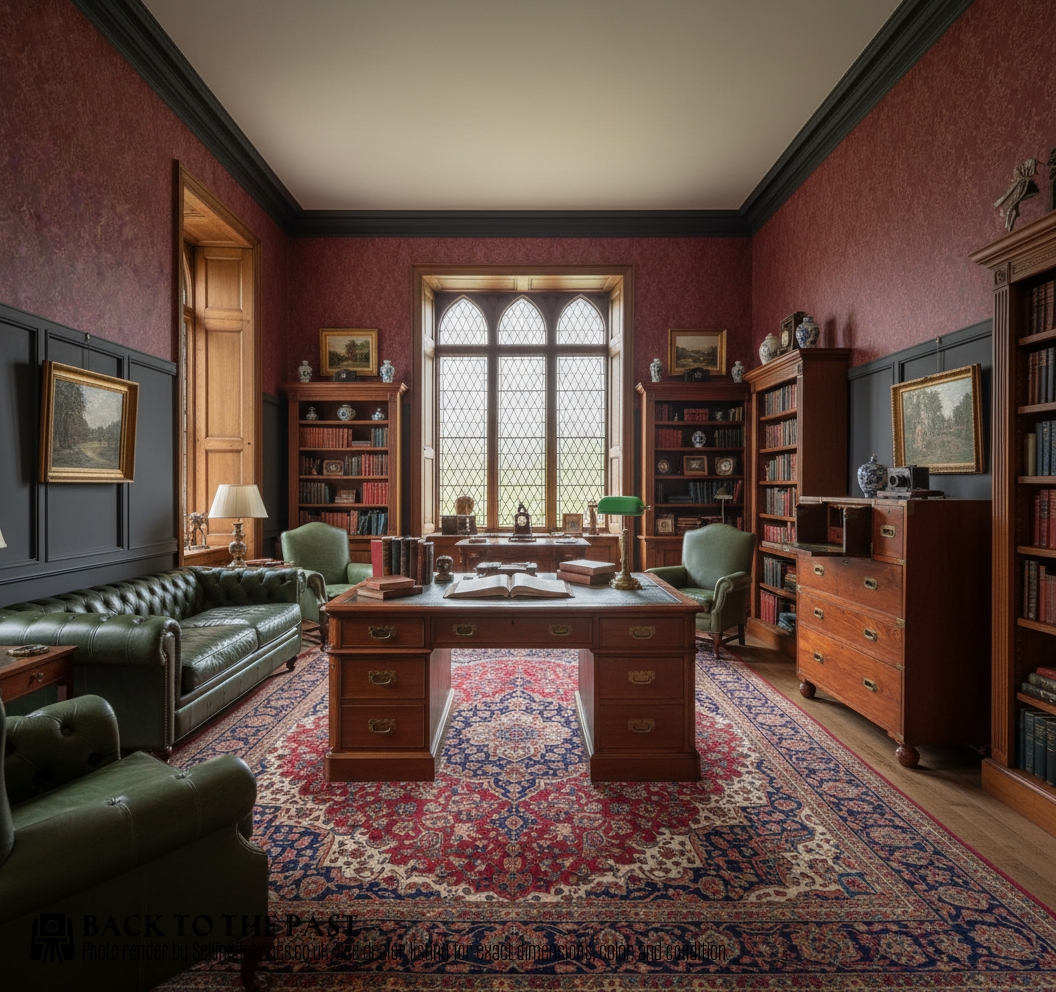
Victorian Teak Chest
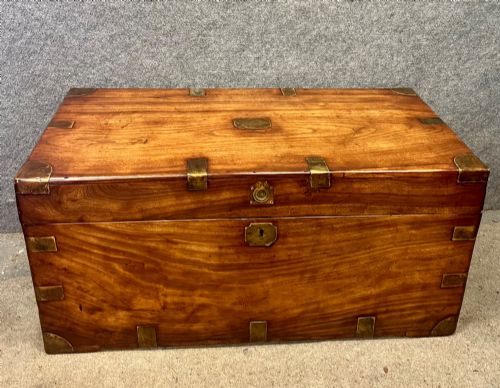
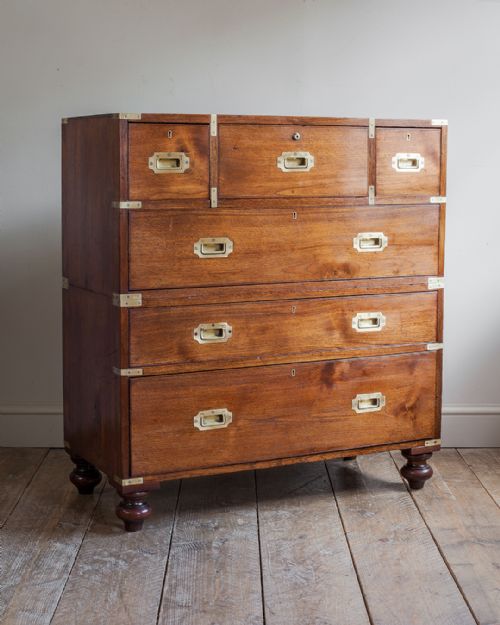
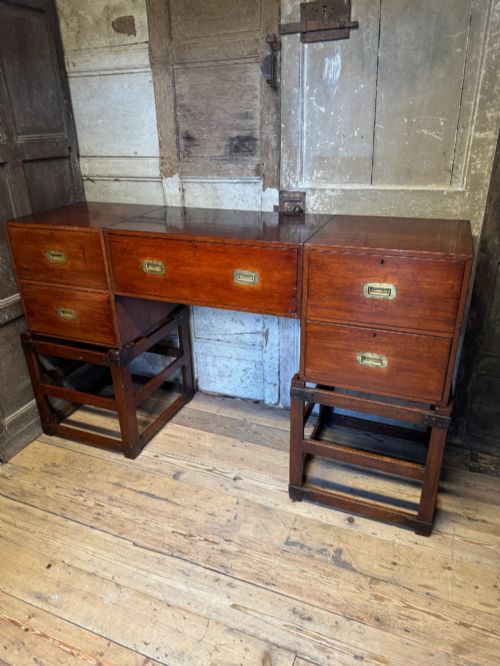
A victorian teak chest serves as sturdy storage designed to withstand the rigours of military campaigns and long sea voyages during the nineteenth century. These pieces emerge in various forms, including two-part chests of drawers, blanket boxes, dowry chests, and specialised secretaire units.
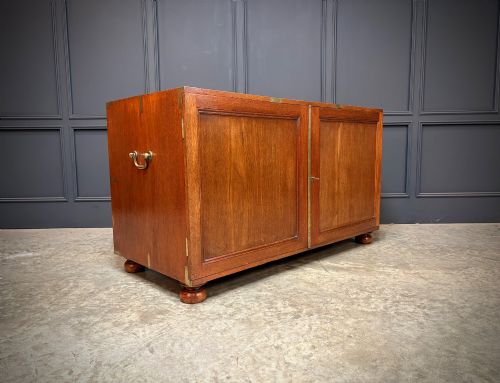
The most common examples on this page are military campaign chests constructed in two separate sections for ease of transport. They reflect colonial expansion, featuring robust hardwoods and fitted hardware suited for officers on the move.
How They Were Made
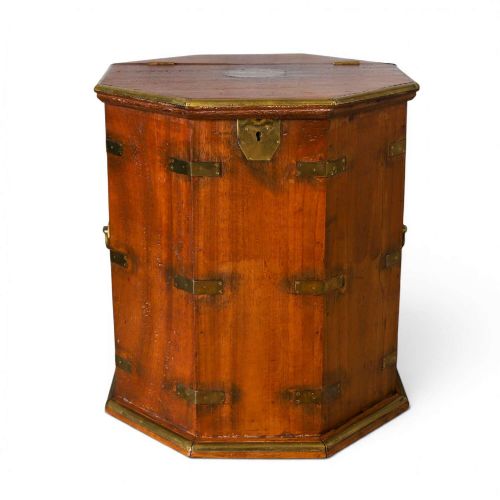
Joiners built these chests primarily using dense teak, selected for its natural resistance to moisture and tropical climates. Workshops reinforced the corners and edges with brass straps and flush-mounted handles to prevent snagging during transit.
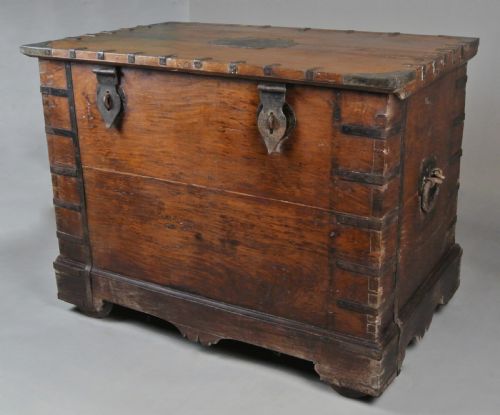
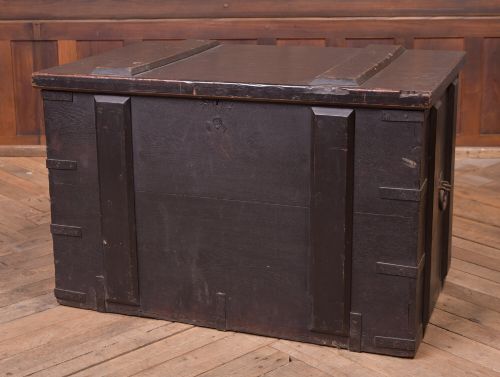
Many drawer units incorporate clever internal writing compartments or secret drawers operated by concealed mechanisms. Iron bindings and studded decorations frequently appear on heavier trunks and dowry boxes originating from Anglo-Indian or East African trade routes.
The listings span the nineteenth century, with forms ranging from simple blanket boxes to multi-drawer campaign cabinets.
What Varies in Quality
The standard of a piece depends heavily on the integrity of its brass hardware, the crispness of the flush fittings, and the symmetry of the timber grain. Finer examples retain their original recessed drop handles, working locks, and matching inset corner brackets.
Construction methods also dictate worth, particularly the presence of dust flaps between drawers and whether the carcass divides cleanly into two properly sealed halves. Pieces featuring fitted secretaire drawers with pigeonholes demand closer inspection for original interior components.
Army And Navy
The Victorian Teak Chest Glossary
- Campaign chest
- A modular chest of drawers built in two or more sections with recessed handles and reinforced corners for military transport.
- Secretaire
- A cabinet or chest containing a pull-out writing drawer fitted with small compartments, pigeonholes, and small drawers.
- Zanzibar chest
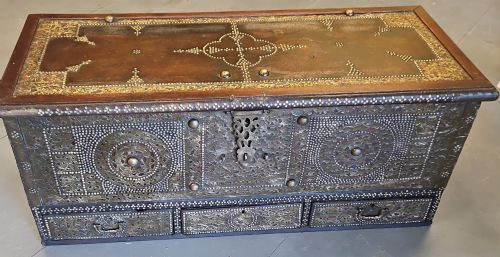
- A heavy storage chest featuring brass studding, strapwork, and elaborate hardware associated with East African and Indian trade routes.
- Dowry chest
- A large celebratory trunk intended to hold household goods or valuables for a wedding, often heavily decorated with metal mounts.
- Brass bound
- A method of reinforcing box corners and edges with metal strips to protect the wood from heavy impact during travel.
Victorian Teak Chest: Frequently Asked Questions
Why are campaign chests built in two parts?
Makers divided the cabinet into upper and lower sections to make loading onto pack animals, wagons, and ships manageable for travelling officers.
Each half fitted securely onto the other using brass brackets or locking pins, creating a stable tower once assembled at the destination.
How do I identify a true military chest?
Genuine examples feature flush-mounted brass handles that do not protrude past the drawer face, protecting them from damage during transit.
They also utilise solid teak timbers, removable turned feet, and side carrying handles designed for military use.
What is the difference between a trunk and a chest of drawers?
A trunk opens from the top via a hinged lid, serving as a deep well for bulkier garments, blankets, or personal equipment.
A chest of drawers provides horizontal storage accessed through multiple pull-out drawers, often including specialised writing or locking compartments.
Where were Anglo-Indian chests manufactured?
Workshops across the Indian subcontinent constructed these items for British colonial officers and merchants stationed abroad.
They combined British furniture forms with local carving traditions, dense regional teak, and elaborate brass studding.